Showing posts with label Alfred Hitchcock. Show all posts

The Conversations #17: "Minor" Hitchcock


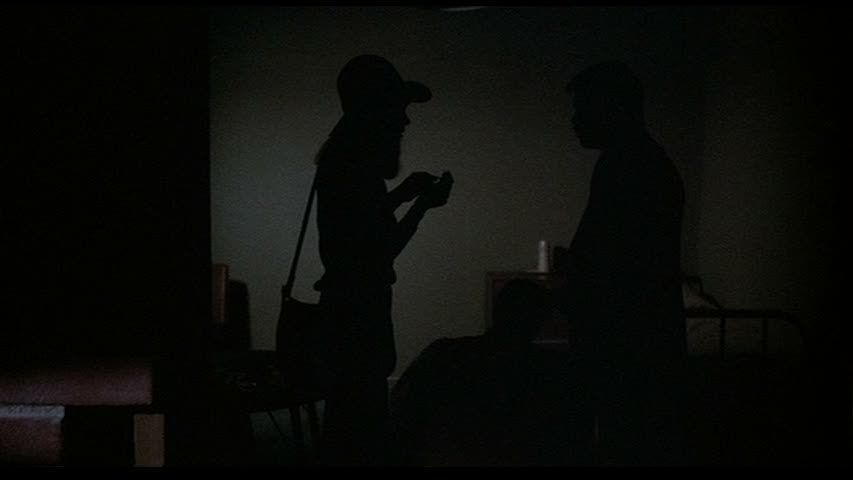
My latest conversation with Jason Bellamy is a discussion about two Hitchcock films that are often considered, rightly or wrongly, to be "minor" entries in the great director's career: To Catch a Thief and Rope. In talking about these two very different films, we get to deal with Hitchcock's oft-overlooked range, his humor, his use of actors and stars, his treatment of sexuality, and of course his aesthetics. We also touch on what it means for a film to be deemed "minor," and how these particular films might be enjoyed on deeper levels.

As usual, our conversation is only the beginning; head on over to the House Next Door to read the discussion and join in with your own thoughts in the comment section.

Continue reading at The House Next Door

Sabotage


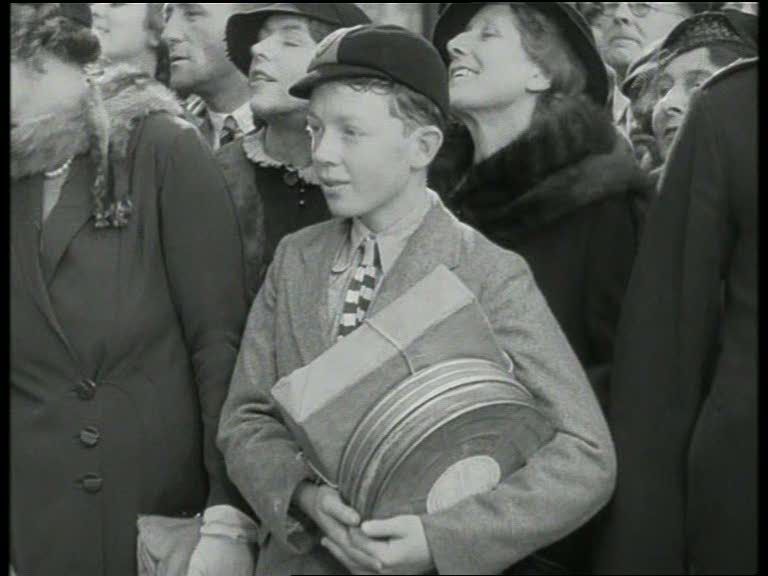
Alfred Hitchcock's Sabotage is best known for a plot device that Hitch himself regretted using, a suspense sequence that the Master of Suspense later deemed a failure in his oeuvre. Indeed, the film is dominated by this particular set piece, a lengthy scene in which a young boy carries a package across London, not knowing that there's a bomb beneath the unassuming brown paper wrapping. The boy is Stevie (Desmond Tester), the younger brother of Sylvia (Sylvia Sidney), and he was given the deadly package by his sister's Eastern European emigré husband, Verloc (Oskar Homolka). Verloc is a saboteur, working against the British war effort at the behest of shadowy employers who urge him towards increasingly horrible crimes. When his initial acts of sabotage, like disrupting London's electrical power for a few hours, are deemed "laughable" by his superiors, Verloc is instructed to deliver a bomb instead.

The sequence in which young Stevie carries this package across town for his sinister brother-in-law is a typically masterful Hitchcockian suspense set piece, despite Hitch's later disavowal of the scene. The tension builds steadily as Stevie is continually delayed in his journey. He was told to get his package to a cloak room by a certain time, but obviously not told why or what was inside, so he doesn't really feel the urgency of the mission. Instead, he dawdles along the way, admiring the goods at an open-air market, getting pressed into a toothpaste demonstration by an aggressive street hawker and stopping to watch a parade that prevents him from crossing a street. Throughout the sequence, Hitchcock frequently cuts back to the package that the audience knows carries a sinister cargo, and also inserts shots of clock faces to show the passage of time as the minute of the bomb's detonation ticks slowly closer. It's a harrowing scene, and by the end each stoplight, each delay that keeps the boy from his destination, only makes the pulse pounder harder and faster. As the final moment draws closer, the cutting accelerates, faster and faster, until the economical final montage: a few quick shots of the package in the boy's arms, followed by a shot of the tram he's on exploding.

This shocking denouement destroys the audience's expectation that a filmmaker would never kill off an adorable kid so callously — especially after really jerking on the audience's heartstrings by having a cute little puppy playing with the boy in his final moments. It's a startling and horrifying scene, and in fact Hitchcock was probably right to disown it despite its undeniable power; it unbalances the film, elevates its stakes to a level that it would be pretty much impossible for a light thriller to justify. In the aftermath of this scene, the film struggles to find its feet again, and never quite does. Actually, Hitchcock is never really able to conjure up much credible drama here at all. Verloc is being investigated by the Scotland Yard detective Ted Spencer (John Loder), who poses as a vegetable seller and constantly hangs around outside the cinema Verloc owns. Ted takes an interest in Sylvia, who's married to the older Verloc not out of love but because he's good to her brother and provides them with stability and security. It's a familiar 30s story, the romantic triangle of the young woman, the handsome man her own age, and the older man who she respects and feels indebted to, here given a twist by making the older husband a sinister, criminal figure.


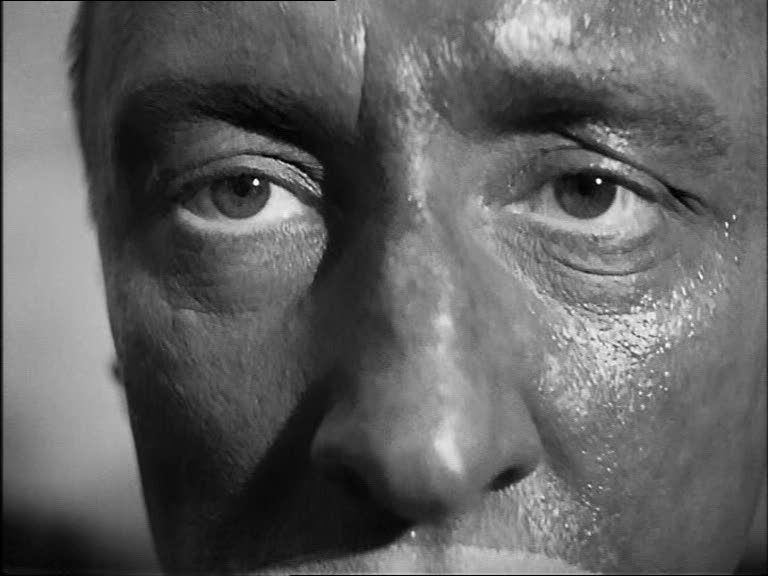
The plot is relatively inert, since from the beginning the audience knows that Verloc is a saboteur working for a foreign power, that Ted is a detective, and that by the time the film is over Sylvia will have to realize what's going on with her seemingly harmless husband and switch her affections to the other man. With not much happening on the story level, Hitchcock gets as much as he can from the pure visual storytelling possibilities of the situation. In fact, at times the film seems to consist of little besides exchanges of charged glances and slowly tracking dramatic closeups. Hitchcock encodes the drama in alternating closeups, focusing on the eyes: Sylvia looking suspiciously at her husband, wondering what's going on with him as strange men meet with him in the cinema's back room; Verloc glaring, his heavy brows arched as he contemplates his next devious and desperate step.

This approach reaches its apex in the climactic dinner scene after Stevie has been killed in the explosion. Sylvia knows what happened and about Verloc's role in it, and as Verloc cravenly tries to act as though everything is normal, Sylvia's eyes are burning holes in him. Hitchcock accentuates the tension by patiently drawing out the moment, capturing that look of hatred and rage in Sylvia's eyes, and honing in on the details that reveal what's going through her mind. Hitchcock's camera pinpoints her fingering her wedding ring, thinking about what it now represents, and eyeing the knife she's using to serve dinner, thinking about what other uses it could be put to.

Despite the dark material, Hitchcock also still finds some space for comic relief and humorous asides. Sometimes these diversions come in the form of offhand jokes, as when a couple walks by during Verloc's rendezvous with an enemy agent at an aquarium, and Hitchcock takes the opportunity to toss in a joke about oyster sex changes. But there's also the character of the bomb-maker A.F. Chatman (William Dewhurst), who disguises his real profession behind the front of a pet shop and quarrels with his bitter daughter (Martita Hunt), implicitly insulting her right to her face. It's deliciously funny, naughty material, and Dewhurst delivers a juicy performance in a small role, clearly having fun with this nebbishy terrorist. Indeed, the performances in general — excepting perhaps Loder's thankless role as the bland Ted — are strong, from Homolka's vaguely foreign evil to Sidney's wide-eyed innocence, reminiscent of fellow Hitchcock heroine Nova Pilbeam. The film falls apart after Stevie's death, struggling to find the proper tone and ultimately finding that there is no way to salvage a lightweight thriller after such a devastating event. But even so, Hitchcock's keen eye for entertaining performances and subtle visual storytelling keeps the film interesting even when it's not wholly satisfying.

Films I Love #44: Rear Window (Alfred Hitchcock, 1954)


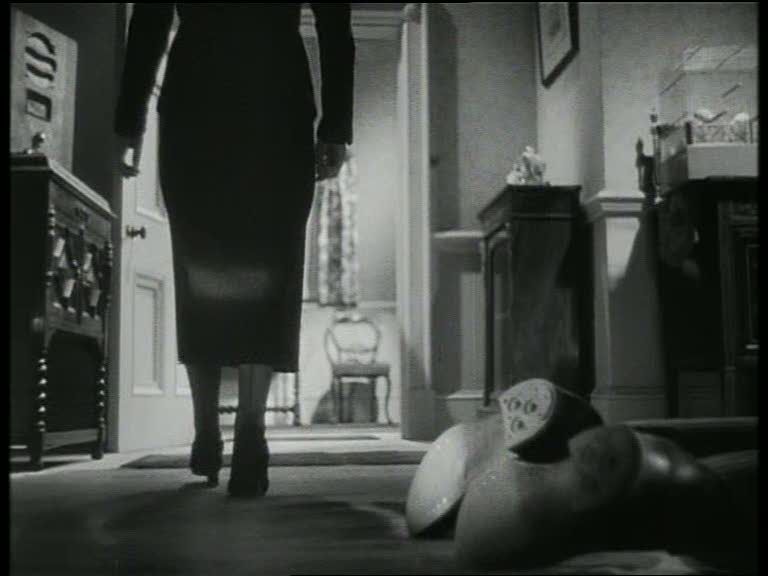
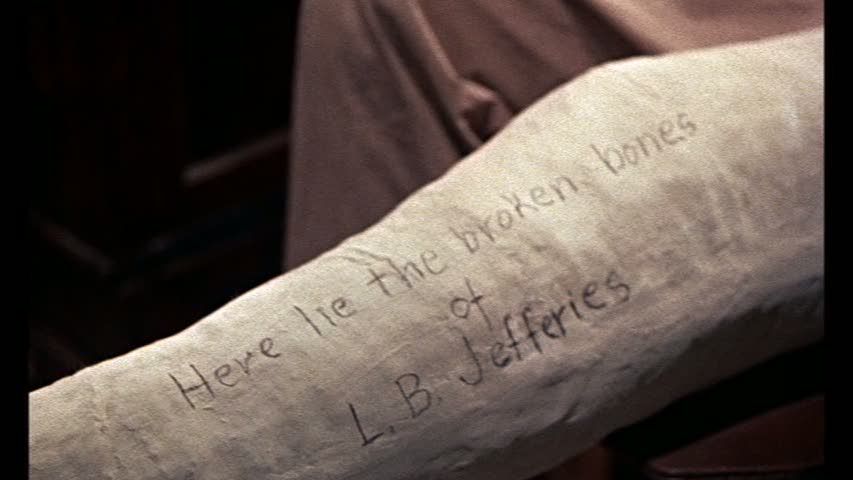
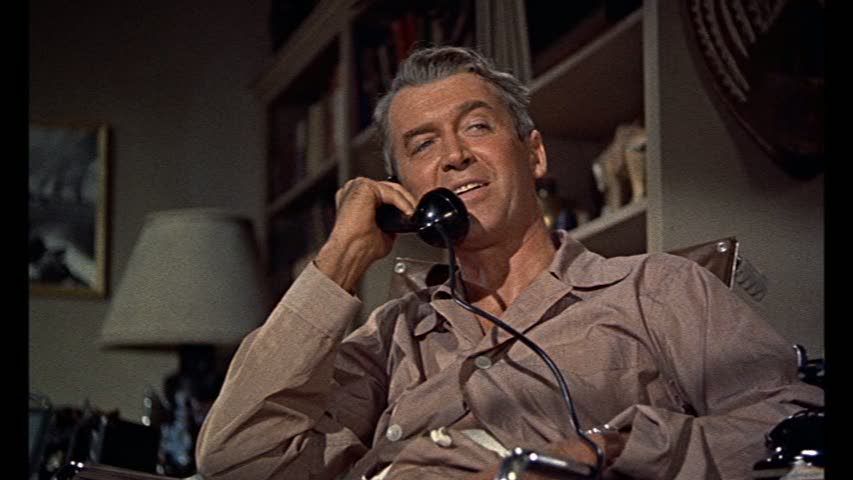
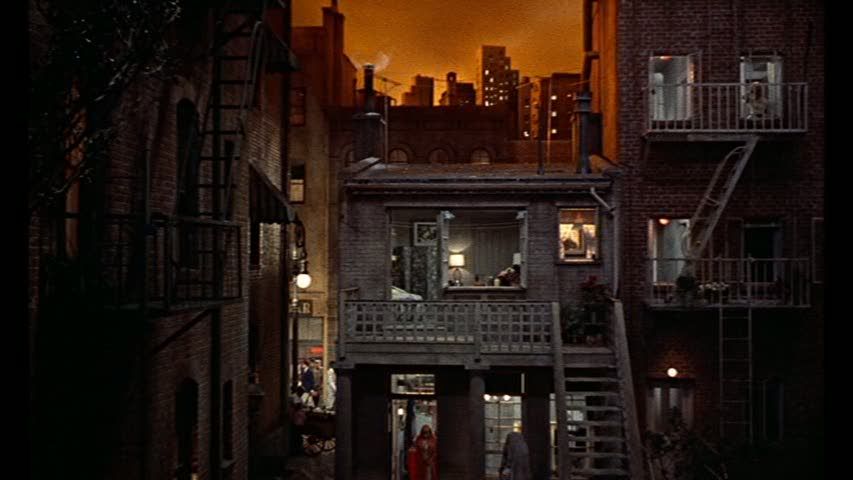
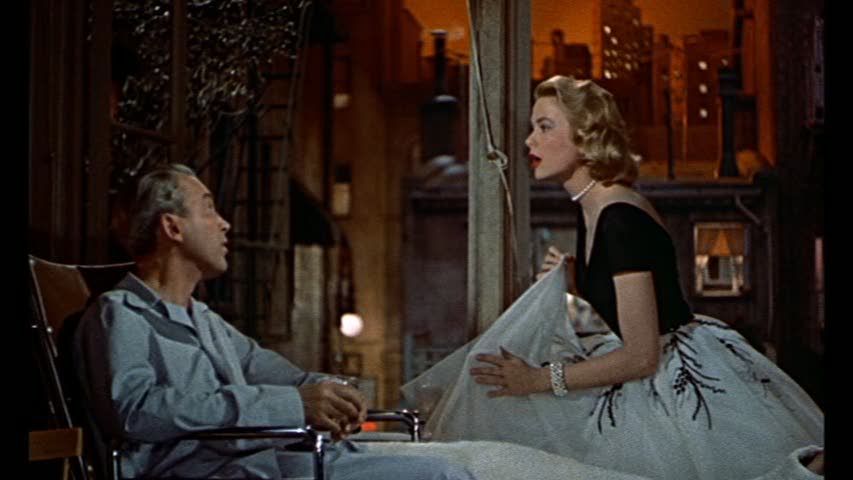
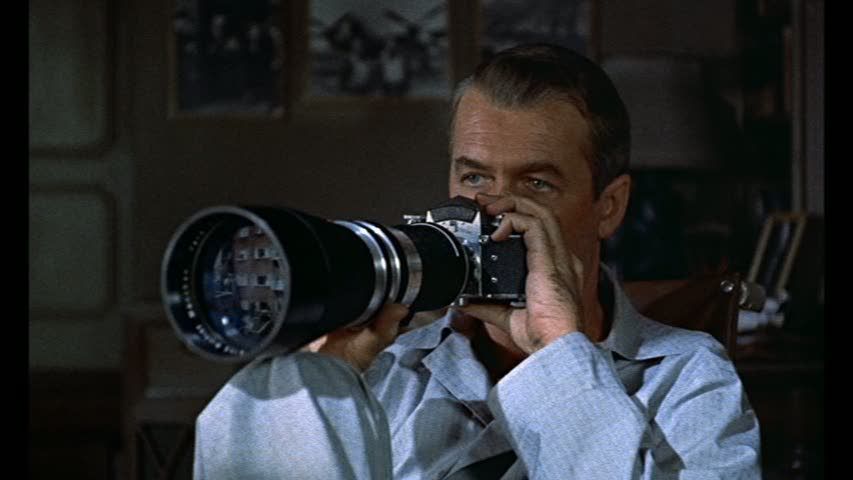
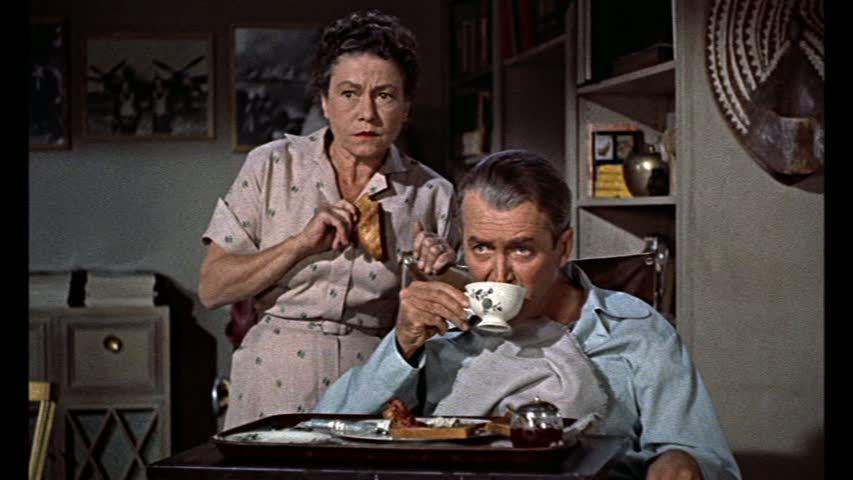
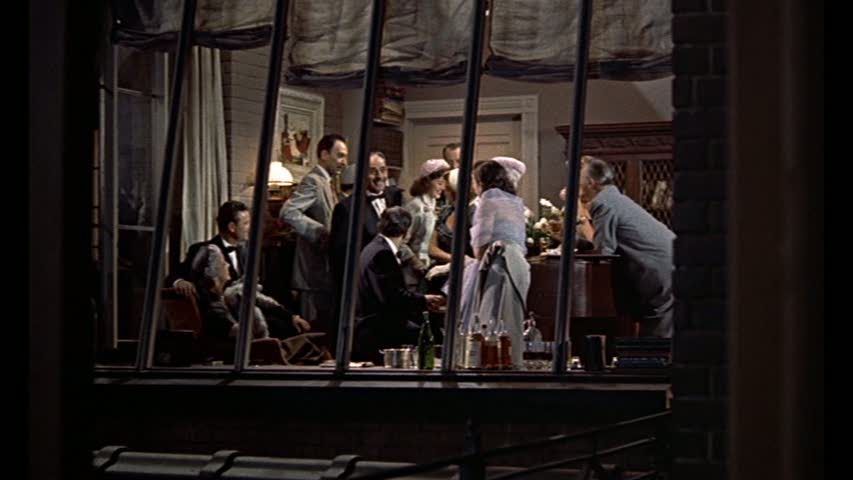
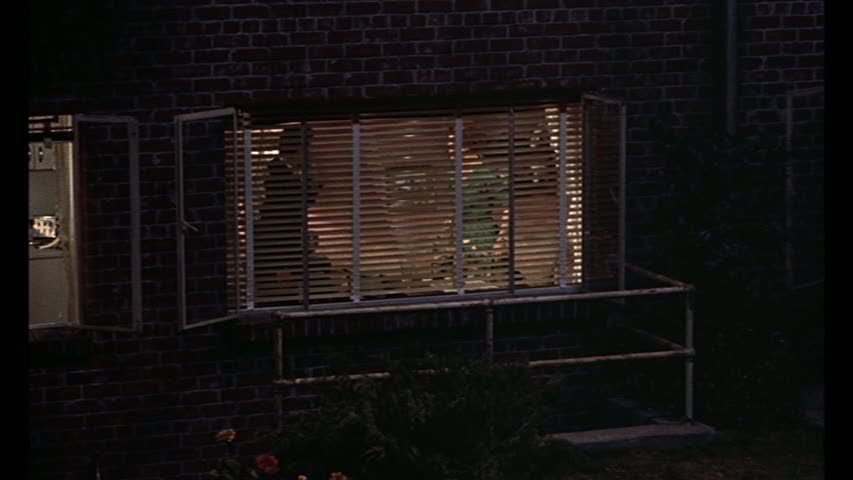
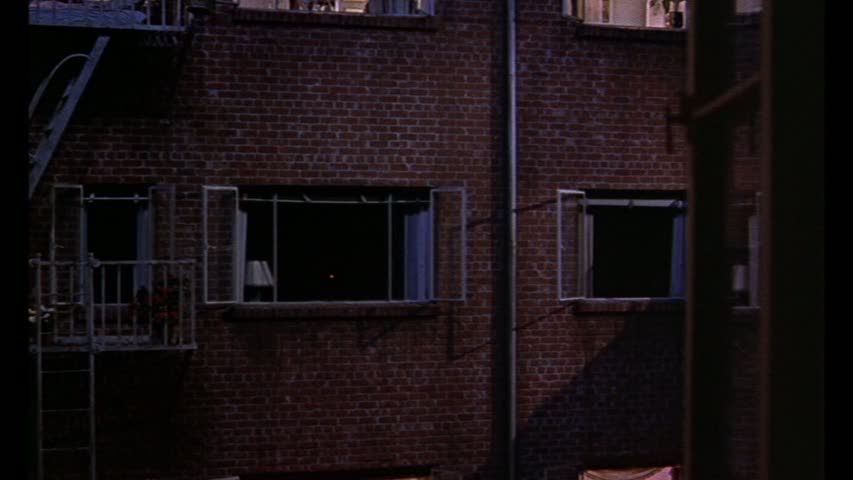
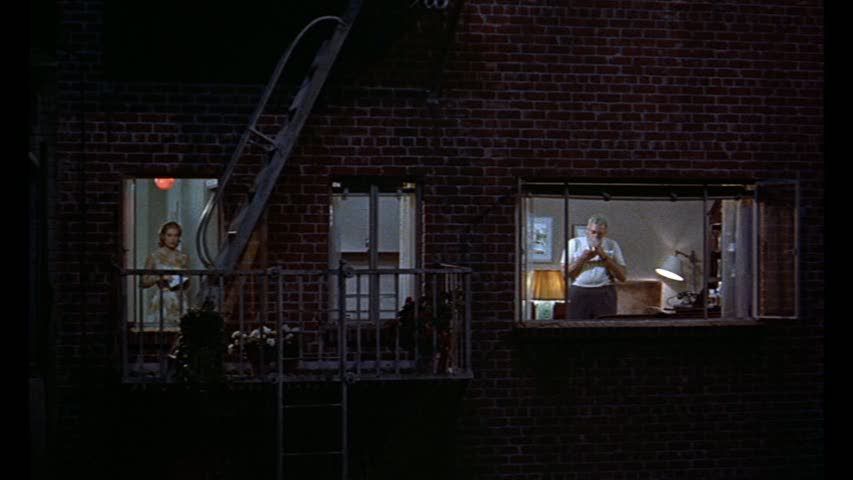
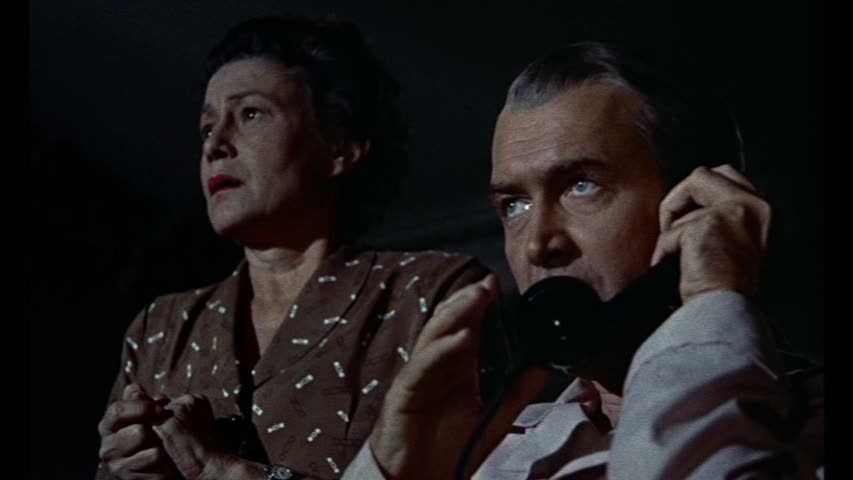
Alfred Hitchcock's Rear Window is not just a film about a murder mystery, but a film about voyeurism, about how and why we watch other people — and by extension, how and why we watch films themselves. It is one of the greatest of meta films, although it is on its surface not about the cinema at all. Its plot concerns the adventurer/photographer Jeff (James Stewart), who is confined to a wheelchair with a broken leg after an accident (brilliantly conveyed by Hitchcock, entirely visually, by panning across a series of photos and objects at the start of the film). Locked up in his apartment, Jeff is unable to work or move around much. So whenever he's not being visited by his nurse Stella (Thelma Ritter) or his glamorous lover Lisa (Grace Kelly), Jeff takes to spying on his neighbors through a pair of binoculars. Jeff's window faces the courtyard of his apartment complex, and from this vantage point he can see into the windows of his neighbors across the way. Through these portals, he catches glimpses of their lives in action, their daily routines and private little peculiarities. He doesn't see anything particularly fascinating in itself, other than the contortions of the statuesque blonde dancer across the way. Mostly, he just loves to watch. It has often been remarked that Jeff's experience mirrors that of the cinema audience, uniquely situated between passivity and activity: he is confined to one spot and given a choice of spectacles, and he turns his gaze on those corners of the image that he wishes to observe at any given moment.

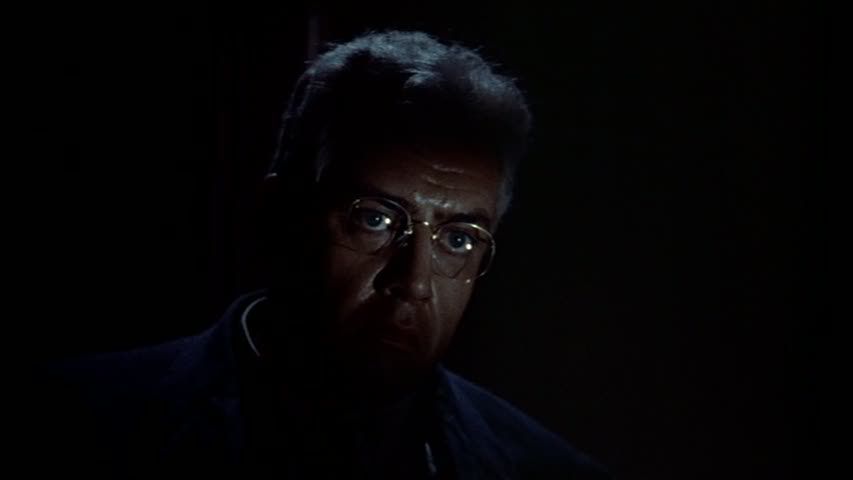
One of these images turns out to be a murder mystery story, in which Jeff begins to suspect that one of his neighbors (Raymond Burr) has murdered his invalid wife. This story slowly comes together and begins to occupy more and more of Jeff's attention, causing him to fixate on his neighbor's often-darkened window, with the man's cigarette ominously sparking in the blackness inside. Jeff even enlists Lisa to help him in his amateur investigation. The actual thriller aspects of the film are almost inconsequential, however, in comparison to the simple pleasures of voyeurism that Hitchcock offers up here. The film implicitly makes its audience complicit in Jeff's peeping tom habits, unifying the protagonist's gaze with the audience's. We love watching, along with Jeff, as miniature narratives play out within all the windows across the way, fragments of people's lives. And at the same time, we love watching James Stewart at his wittiest and Grace Kelly at her sexiest, the voyeurism of watching movie stars be movie stars, an enthusiasm that Hitchcock, with his love of working with big stars, again shared with his audiences.

Family Plot


Alfred Hitchcock's final film is the light, enjoyably fluffy Family Plot, which balances Hitchcock's flare for suspense against the kind of airy, slightly goofy comedy that propelled his autumnal masterpiece The Trouble With Harry. If this final film isn't quite worthy of being compared to the master of suspense's best thrillers, nor to his best comedic work, it's certainly a reminder that few directors could handle mood and tone as agilely as Hitchcock, who could control his audiences' every reaction. Throughout Family Plot, Hitch cuts deliberately between two different stories, one a gritty thriller about a pair of expert kidnappers, the other an airy Hardy Boys-esque mystery about a ditsy psychic and her oafish boyfriend, investigating a mystery for a rich patron. It's painfully obvious, almost right from the beginning, just how these two stories are going to collide, how they'll eventually link up, so the film's delight lies in Hitchcock's utter mastery of tone, how deftly he transitions from comic bumbling to sinister plotting.

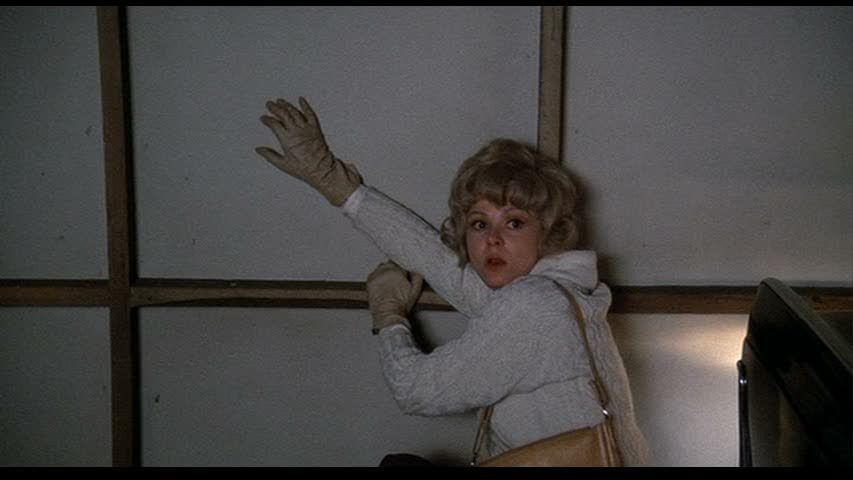
The film opens with the psychic Blanche (Barbara Harris) agreeing to take on a case for the aging socialite Julia Rainbird (Cathleen Nesbitt): it seems that Julia's long-deceased sister had once given away an illegitimate son for adoption, and a remorseful Julia wants to locate the poor child, who is now her sole heir. To help her find this mysterious man, Blanche enlists the help of her taxi driver boyfriend George (Bruce Dern), a bumbling goofball who's actually much shrewder than he looks. He walks with a loping, slightly drunken gait, always on the verge of bopping his head on a hanging tree limb or stumbling over his own feet, and yet always just barely retaining his balance; in the same way, he has flashes of insight, sugary guile and investigative prowess that suggest his bumpkin demeanor is just a façade. His comic investigation into Julia's lost nephew is just one of the threads running through the film, though. During the opening scenes, after Blanche has learned about the missing heir and the promise of a hefty reward if she finds him, Hitchcock deftly switches the focus away from Blanche and George when the latter's taxi nearly hits an elegant blonde woman crossing the street. This turns out to be Fran (Karen Black), a kidnapper nicknamed the Trader for her habit of kidnapping important men and then trading them back in exchange for massive diamonds.

As the car with Blanche and George drives away from this chance encounter, Hitchcock's camera lingers behind, taking up a floating position, following Fran (much as he'd followed the titular heroine in the opening scenes of Marnie) as she walks into a police station and silently passes notes with her instructions. In her all-black outfit and floppy hat, with her platinum blonde hair the only hint of color in her appearance, she is a striking, unforgettable figure, and from the moment Hitchcock begins following her the audience is intrigued. He observes the mechanics of the hostage exchange with precision and grace, as Fran smoothly accomplishes the trade-off and is reunited with her partner and lover, Arthur (William Devane). Within the first half an hour of the film, Hitchcock has introduced two stories, each equally complex, populated with fascinating characters, stories with entirely different tones that nevertheless seem fated to collide eventually; the only question is whether the comic lightness or grim criminality will win out in the end.

Beyond the mechanics of the plot and the compelling characters, however, Hitchcock seems primarily interested in having fun with his elaborate set pieces. Some of these are rather perfunctory, like a playful and brief recreation of the famous crop duster strafing sequence from North By Northwest, here staged with Blanche and George running from a killer car and capped with a tragicomic, anticlimactic resolution. But throughout much of the rest of the film Hitchcock's visual verve and wit are continually on display. The latter is especially apparent in a scene where George attempts to corner a grieving widow for some information at her husband's funeral, a scene that Hitchcock, of course, plays for morbid comedy. His camera takes an aloof high angle that turns the cemetery's grid into a maze of paths and graves, and he watches as the widow and George try to outflank each other in this maze, evasively dodging along the trails while maintaining a polite walking pace. Hitch also inventively stages Fran and Arthur's kidnapping of a bishop, with Arthur comically disguised as an altar boy, looking hilarious in the flowing robes with his Neanderthal's angry face and bushy facial hair.


The film moves at a brisk pace, and Hitchcock's visual imagination is continually filling the frame with off-kilter, compelling images, cramming in little details like the ornate, cluttered decor in Mrs. Rainbird's palatial home, or the naughty humor of a priest's furtive meeting with a pretty brunette in a bright red dress, or the kidnappers' ingenious hiding place for their stolen gems, a touch that would've been at home in any classic Hitchcock thriller. Even so, despite the film's overall charm and verve, it's far from perfect, and displays some of the same problems with performances that plagued Hitchcock through virtually all of his late films, excepting the British-made Frenzy. The performances here are inconsistent and often stiff, as though the actors weren't sure what was wanted of them. The normally controlling Hitchcock uncharacteristically allowed the actors to improvise much of the dialogue here, and one can detect this in the hesitant quality of the acting, the occasionally bland dialogue and lazy rhythms of the conversations. It doesn't really work, and it especially afflicts George and Blanche, who get some of the film's best pattering, naughty (and lovably corny) sexual innuendos, but also frequently stumble through passages of aimless meandering.

Despite these lulls, Harris' performance as a whole is cute and endearing, with an appealingly fuzzy quality, as though she's always half-asleep. During Blanche's psychic sessions, she exaggeratedly mugs and does silly voices, gesturing wildly and only occasionally taking a sly sideways peek at how her client is reacting. During one session, she catches a glimpse of George gesturing to her from the next room, and has to go into a bit of psychic wandering, speaking to an invisible spirit as she slowly makes her way over to him, then frantically searches for her car keys while periodically yelling back to the next room as if still in a spirit trance. She's such a fun, likable character that it's especially disappointing when Hitchcock subjects her to some of his nastier impulses towards women, treating her like a useless nuisance. In one of the film's most uncomfortable sequences, the brakes go out on George and Blanche's car as they're speeding around the curves on a treacherous mountain road. While George desperately tries to keep the car on the road and think of a way to stop it, Blanche simply thrashes around, hanging off him, throwing herself across his lap, berating him the whole time for his horrible driving. It's staged like slapstick, as though it's supposed to be funny, but instead it comes across as a nasty portrayal of a stupid woman who can't realize what's going on and becomes hysterical under pressure.

Moments like this sabotage the film's easygoing charm, but Hitchcock makes up for it with a taut, perfectly executed final act, with a chilling suspense sequence in which Blanche's oblivious good cheer finally comes face to face with the deadly Arthur. And it all ends with a wink to the camera that indicates Hitchcock's disarmingly casual approach to his final film. Family Plot may not rank among his finest work by any means, but it's a minor pleasure in which the suspense master is clearly having fun, and passing on that fun to his audience.

Frenzy


Alfred Hitchcock's penultimate film, Frenzy, was also his return to his native England after a lengthy absence. The familiar territory seems to have done him some good, as Frenzy is a self-assured, energetically made film. It's certainly an improvement on his previous two pictures, Torn Curtain and Topaz, undeniable low points in which the director seems to have been only sporadically engaged by his own material, demonstrating mere flashes of his previous brilliance. Which is not to say that Frenzy returns Hitch to the top of his form, but it does display his characteristic wit and verve, his morbid humorous streak and eye for striking compositions; despite the subject, one of the suspense master's darkest, Hitch actually seems to be having fun again.

Of course, this fun is problematic, since the film is about a sexual deviant raping and killing women in London. Hitch has a rather perverse idea of fun, and this is perhaps the film that most clearly displays his own deviancy: his ambivalence towards women, his simultaneous repulsion from and fascination with sex, his masochism towards his characters. In many ways, Hitchcock's own perspective on this material is best represented by the early scene in which a group of pub patrons discuss the "necktie murders" and speculate about what's going on. They're clearly excited and particularly interested in the sexual component of the crime. An elderly bar maid seems almost turned on when she asks a customer, "he rapes them first, doesn't he?" A pair of customers, meanwhile, trade quips about the murders before one of them concludes that the whole thing is good for tourism: "Foreigners somehow expect the squares of London to be fog-wreathed, full of hansom cabs and littered with ripped whores, don't you think?" One can sense Hitchcock's dry, morbidly blunt wit in these lines, and in many others like them scattered throughout the film. Not since The Trouble With Harry has Hitch joked so blithely about death.

But this is a much darker film than The Trouble With Harry, in which the titular corpse was merely an inconvenience for a group of easygoing country folk. Frenzy is decidedly more ambivalent about death: Hitchcock's gallows humor rubs uncomfortably up against some of the most startlingly violent sequences in his entire filmography, scenes reminiscent in their grim, realistic violence of the brutal farmhouse assassination at the center of Torn Curtain. The two different approaches to violence are apparent even in the very first scene, in which, after Hitch's roving camera pans majestically down the length of a London river during the credits, he takes up a vantage point looking down at a politician's speech. The speech, about purifying the river of its pollution and garbage, is interrupted when the body of a naked woman comes floating up to shore; the scene is both bitterly ironical and horrifying.

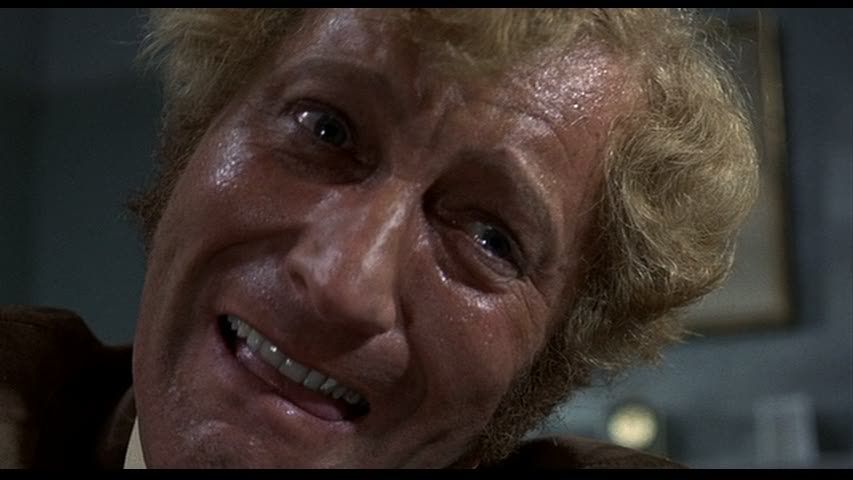
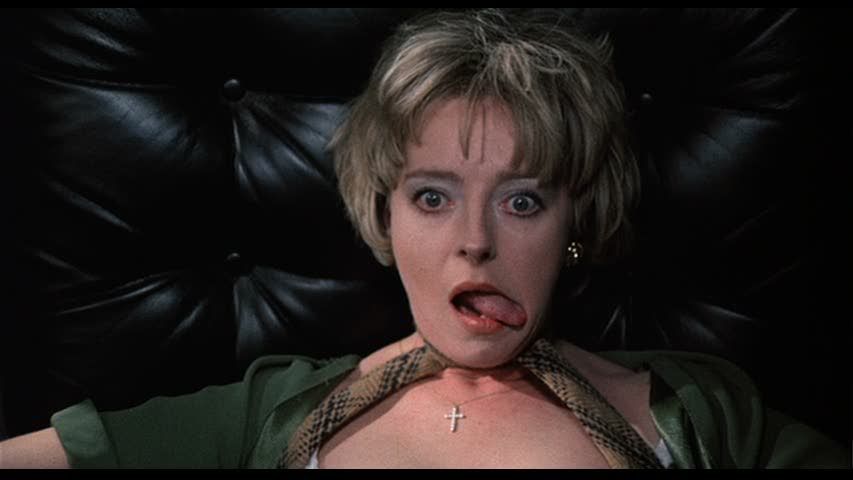
Later, there's certainly no trace of this dark humor in the scene where the necktie killer, Bob Rusk (Barry Foster) rapes and then strangles a young woman named Brenda (Barbara Leigh-Hunt). Hitch shoots the scene almost entirely in alternating closeups between the increasingly sweaty, contorted face of the killer and the dispassionate look on Brenda's face as she's raped, quietly reciting prayers and trying to distance herself from what's happening to her. The scene is horrifying, as much for its small details as anything: Hitch inserts closeups of Bob removing his victim's bra and then, later in the scene, another of her discretely covering up again, trying to salvage her dignity even in the midst of a rape. The actual murder is then filmed in tight closeups, cutting briskly between the killer's distorted face and his victim's gasping sputterings, her hands scraping at the tie wrapped around her throat. Hitchcock caps off this horrific sequence with a shot of Brenda's corpse, the tie still wrapped around her throat, her mouth gaping open with her tongue sticking off to the side. It's a cartoonish, grotesque image, following up on the queasy horror of the rape and murder itself, and visually it rhymes with the closeups of Bob during the murder, his tongue protruding slightly from between his lips in his excitement. The whole sequence is one of Hitchcock's most unsettling and explicit, replacing the artful misdirection of many of the master's earlier films — like the famous shower scene in Psycho — and instead forcing his audience to confront this violence directly: face to face, as it were.


In spite of the especially dark and lurid approach to the violence, in other ways the film is familiar territory for Hitchcock. It's a "wrong man" thriller, since the murdered Brenda is in fact the ex-wife of down-and-out former military man Dick Blaney (Jon Finch). Blaney is the focus of the film's opening, as he loses his job as a bartender, flirts with his girlfriend Babs (Anna Massey), and goes to visit his ex-wife, having several very public arguments with her that will, to say the least, look very bad when she's murdered the next day. Naturally, Blaney instantly becomes the top suspect as the necktie killer, and he goes into hiding while trying to figure out how to clear his name and catch the real murderer. Actually, though, in many ways Hitchcock seems to be only going through the motions of his usual wrong man storyline, perhaps because Finch is such a bland actor and Blaney such an uninteresting, unsympathetic everyman hero, a whiny jerk who treats the women in his life rottenly. Hitchcock seems much more interested in the charming but sinister Bob, who occasionally slips subtle misogynist comments into his conversations, indications of the inner darkness that otherwise only appears during his murders; mostly, he's a well-respected businessman, running a fruit stand where he chats amiably with everyone in the neighborhood.

Hitchcock also gets a lot of fun out of the Scotland Yard detective investigating the case, Inspector Oxford (Alec McCowan). This fine chap doesn't seem to do much actual policework, mostly just hanging around thinking and waiting for the solution to fall into his lap, which eventually of course it does. In the meantime, Hitchcock takes great delight in the inspector's domestic dilemma: Oxford's wife (Vivien Merchant) has developed a passion for gourmet cooking, and has stopped making the simple, substantial meals he enjoys, opting instead for bizarre delicacies like a grotesque-looking soup with huge chunks of black and tentacled seafood floating in its murky broth, or pigs' feet served in a creamy white sauce, or tiny little roast birds with virtually no meat on them. Hitchcock lingers over these odd, unappetizing meals, and the inspector's teeth-gritted reaction as he struggles to choke them down (or dispose of them otherwise) without indicating his displeasure to his wife. The food is baroque and ugly, and as he eats the inspector invariably discusses the particulars of his case, adding to the nauseating quality of these scenes.

Food and murder are also mixed memorably in an outlandish sequence in which Bob, after murdering a woman, realizes that she had grabbed a potentially incriminating tie pin off his jacket and still held it in her rigor mortis death grip. The trouble was, he'd just thrown her in a sack of potatoes and left her in the back of a truck, and when he goes back out to retrieve the pin, the truck driver heads off onto the road with Bob and the body still in the back. The scene is staged as an almost comic suspense sequence, which is interesting since it places the audience in the position of rooting for the killer to hide the evidence of his horrible crime. The driving score suggests suspense, but the action of the scene itself is absurd, as Bob digs through a bag of potatoes, trying to uncover the body, getting the stiff feet rammed into his face, scrambling among rolling potatoes, and finally finding that the girl's hand is wrapped so tightly around the pin that he has to actually break her fingers one by one to retrieve the evidence. It's just another example of how unusual Hitchcock's perspective on death is here: he certainly has no respect for the dead, no discretion, and his portrayals of death are messy and ugly and brutal, as well as somewhat silly. Maybe that's the point, that there's no dignity in death, no sense in appealing to "good taste" when it comes to such horrid things. Instead, he wallows in the ridiculous and horrifying aspects of these crimes, never flinching away no matter what happens.

Young and Innocent


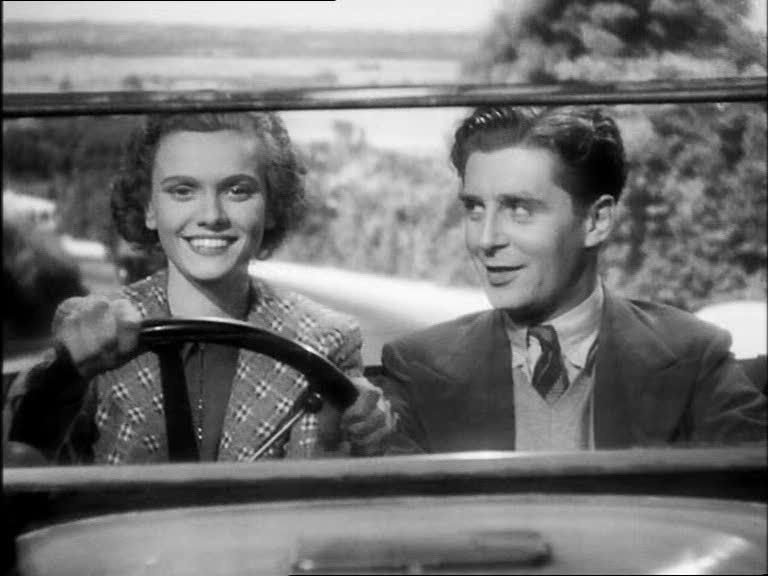
Alfred Hitchcock primarily made his reputation with his many "wrong man" thrillers, chase adventures in which men were wrongly accused of horrible crimes and went on the run while trying to prove their innocence. His early film Young and Innocent is in some ways an example of this specialized genre that Hitch helped create, but more accurately it could probably be called a wrong man comedy. Of course, most of Hitch's films have their share of humor and wit, and his British work in particular is often light and funny. But this film is almost completely lacking the texture of a murder mystery or thriller. It's more like a farce, a caper flick about a pair of young people who meet and have a wild series of adventures, obviously falling in love along the way. That the young man is accused of murder, and the young woman is the local chief constable's daughter, is almost incidental to the film's free-spirited good humor and sense of fun. All that matters is that they're young and attractive and quick to smile, and they head off traipsing around the countryside together.

At least, that's what the film becomes, but its opening is a different matter. The first scene is a prime example of Hitchcock's inventive staging, his way of catching the audience's attention right from the start. The film's first image is a closeup of a woman, right in the middle of an obviously angry conversation. She steps aside, out of the closeup, her form shifting out of focus as she steps back within the frame, and as she does a man steps forward into a closeup of his own, pausing to light a cigarette before continuing the argument. Within a single shot, Hitchcock has already established a kind of chase motif, with the man sinisterly pursuing the woman, even following her through the sequence of her blocking within the shot. When the woman turns up dead the next morning, strangled with a belt from a raincoat and then thrown in the ocean, the audience already knows exactly who did it, even though they didn't see it. Everyone within the film, however, suspects the young Robert Tisdall (Derrick De Marney), who shows up at the scene and happens to know the dead woman, an actress who'd been helping him out because of some writing work he'd done for her. It doesn't help that the grateful woman left him some money in her will, supplying Robert with a convenient motive, and that he had (and lost) a raincoat just like the one whose belt was used in the murder.

Things don't look good for Robert, but he quickly (and cleverly) escapes, hiding in plain sight by slipping away from his guards and sitting in the audience at the courtroom where he was supposed to appear, then in the confusion posing as one of the volunteers looking for himself. Soon enough, he falls in with Erica (Nova Pilbeam), the daughter of the local constable who is initially distrustful of Robert but soon comes to believe in his innocence. The two then proceed to wander around the country, looking for Robert's missing raincoat. As soon as one stops to think about it, this is really one of Hitchcock's most preposterous McGuffins — does Robert expect to run into the police station yelling "I've found a raincoat" and simply be set free afterward? The whole thing is silly and contrived, so it's a good thing that Hitchcock mostly pays it little mind. He's having too much fun setting up even sillier and more contrived situations for Robert and Erica to deal with while on their search. Erica's attempt to concoct an alibi for her disappearance backfires when her nosy, gossipy Aunt Sally (Mary Clare) ropes her and Robert into a child's birthday party, from which they continually attempt to disentangle themselves while playing games like blind man's bluff.


There's even more fun to be had once the duo pick up the tramp Old Will (Edward Rigby), who supposedly might be able to pick out the real murderer but who's really just there because he's funny. Robert and Erica dress up the old guy in fancy duds so they can sneak him into a hotel where they think the murderer is staying — don't ask why, it doesn't make any more sense than anything else in the plot. Hitchcock gets a lot of mileage out of Rigby's comic performance, his fumbling with his shirt cuffs and deer-in-the-headlights stare when he has to ask for a table or order tea. And the sequence of him trying to dance around the room with Erica while keeping an eye out for the murderer is downright hilarious, as he waddles duck-like through his dance steps. More problematic is the fact that the final sequence prominently features a band in outrageous blackface, complete with heavy lips circled around their mouths. And among them is the murderer, hiding behind the facepaint. The film's climax is essentially centered around an extended blackface gag. Despite the formal inventiveness of the scene — a series of lengthy tracking shots that establish the murderer's location within the large ballroom — this is a really uncomfortable way to close out such a spritely, good-humored film.

The blackface does serve Hitchcock well in that its offensiveness distracts, at a crucial moment, from the complete absurdity of his story, which after all Robert and Erica's investigation and struggles, ends with the murderer simply giving himself away and screaming his confession out to the whole room. It's an absurd deus ex machina, but no more absurd than the question of the murderer's whereabouts throughout the whole rest of the story. After all, the opening scene establishes that he's the murdered woman's husband, or ex-husband, a fact that the film then dismisses rather quickly.

This is all very far from being one of Hitchcock's tightest or most elegantly made films, though there's still a rough ingenuity to the comedic scenes and the small touches Hitch brings to the scenario. At the beginning of the film, he repeats the trick from The 39 Steps where a scream blends into the sound of a train whistle; this time, two women's shrieks of horror are interrupted by a quick insert of a flock of cawing seagulls. There's a similar playfulness to offhand gags like the way the fleeing couple throw a teacup out of the window of their car and, without realizing it, foil some pursuing cop cars. The couple themselves are certainly having a lot of fun through it all. De Marney and Pilbeam seem to be lightweight but appealing actors, from that particular school of British acting that's all earnest good humor and broad grins and "cheerio chap," but their unpretentious manners are perfectly suited to their naïve young characters. This is unquestionably minor Hitchcock, but it shows the director at his most flippant and easygoing, carelessly mashing together his characteristic elements into a silly but entertaining little trifle.

Secret Agent


Alfred Hitchcock's Secret Agent, one of his early British thrillers, is an odd, off-kilter World War I spy story, its tone largely light and carefree but with some very dark, macabre notes scattered throughout. It's the story of a British spy whose first cover story, as a novelist, is killed off with great ceremony so that he might assume a new identity as Ashenden (John Gielgud). He's sent on a mission to track down a certain enemy agent, whose identity is currently unknown; all that's known is that the man is carrying vital information and must be killed before he reaches Turkey. Ashenden is assisted by the cold-blooded ladies' man known as the General (Peter Lorre, in a hilariously caricatured turn), and by the British agent Elsa (Madeleine Carroll), who is posing as Mrs. Ashenden in order to assist in his cover.

It's thus a standard spy story in many ways, though there's a unique twist in that both Elsa and Ashenden come to be ambivalent about their job, reluctant to have a man's blood on their consciences. Elsa, who joined up for the excitement, finds that the spy novel adventure she was expecting is not quite as romantic or glamorous as she had hoped. It's never quite clear why Ashenden is involved in this work, but he too proves to have little stomach for the job's dirtier aspects, even if the slimy, cheerfully amoral General is the one who is designated to actually get his hands (and knife) dirty with the enemy agent's blood. This distaste for blood is certainly unusual in a spy thriller — imagine a James Bond with similar compunctions — but Hitchcock uses his hesitant hero in interesting ways. There is, about halfway through the film, a masterful sequence in which Ashenden and the General are leading along Caypor (Percy Marmont), a man who they believe to be the enemy they have been tracking. While the two agents walk through the mountains with the man, heading towards a quiet spot where they will be able to assassinate him, Elsa waits back at the hotel with the man's stern, taciturn German wife (Florence Kahn). Hitchcock methodically cuts back and forth, using parallel editing to draw out the suspense, to accentuate the increasingly awful waiting of Elsa as she knows that her companion's husband will not be returning.

The sequence is shot through with humor following the arrival of the flirtatious American tourist Marvin (the always cheerful Robert Young), but Hitchcock slowly escalates the tension. The condemned man's dog, as though aware of its master's impending fate, begins whining and scratching at the door, and the noise soon becomes unbearable for Elsa. Meanwhile, the General and Caypor have gone on alone into the mountains, leaving Ashenden to watch from a telescope as the murder takes place on a lonely ice shelf. The scene climaxes with the editing growing increasingly frantic and insistent, cutting rapidly back and forth from the hotel room to the mountains, everything accelerating towards the inevitable moment. It's a remarkable use of parallel editing, with Ashenden's horrified reaction to the murder he's set in motion taking place at the same moment that the growing tension in the hotel room finally breaks free into the new widow's horrified scream, the dog's plaintive moan and Elsa's own guilt-ridden reaction. It is as though the news of the murder was psychically communicated into the room, allowing for the scene's double climax.


This scene is harrowing, particularly since it should be entirely obvious to the audience that, movie conventions being what they are, Caypor is not actually the enemy agent they were sent to kill. He was indicted and sent to his death on the flimsiest of evidence to begin with, and it's quickly revealed afterward that he was not, in fact, the right man. The news inspires gales of laughter from the General, but only sends further feelings of depression coursing through Elsa and Ashenden. And yet the film doesn't go any further in developing this particular thread, letting it drop shortly afterward. It's curious that the film's climactic central scene, the scene that is certainly the one on which Hitchcock lavished the most elaborate technical attention, actually depicts an innocent man being murdered in cold blood by the supposed heroes. There's a real disjunction here, and it's perhaps for that reason that the film lets the incident drop from the narrative along with the widow. The General cavalierly explains how he faked his way through the inquest, getting the man's death declared an accident, and that's the end of it. The rest of the film is weighed down by this lack of moral inquiry, making the subsequent return of a comedic tone seem forced and awkward. And the final act is something of a tortured mess, leading towards a too convenient deus ex machina finale that allows the villain to be punished without the heroes getting any further blood on their hands — and, indeed, making one wonder why the heroes were needed to begin with.

If the film falls apart a bit by the end, it is before that often entertaining and thrilling, with a witty script and plenty of fine Hitchcockian set pieces. The banter among the leads is frequently fun and clever, with some great dialogue especially during the confrontations between Ashenden, Elsa and Marvin. Young, as the American tourist with an eye for the faux-married Elsa, has a sprightly manner and a gift for mannered gestural comedy. In one scene, he tries leading Elsa into a casino, rebuffed at every turn whenever he tries to put a hand on her shoulder or take her arm; he finally has to content himself with looping his arm through the dangling fabric of her dress. He steals the show whenever he's onscreen, especially when opposite Gielgud, who gets to come alive in the one or two scenes where's he's also allowed to play comic, but who otherwise seems dour and dull, his character only broadly defined by the script. Hitchcock also wrings equal parts comedy and suspense out of a sequence where Ashenden and the General go to a rendezvous with a German organist at a rural church. They light three candles, the pre-arranged signal, but the organ continues to drone unchangingly, and the two agents sit in front of the candles, their eyes shifting nervously about, while the organ's monotone chords fill the room with an aura of dread. It soon becomes obvious, to the audience if not the agents, exactly what has happened: the organist is dead, his hands locked onto the keys playing his final piece.

In wonderful scenes like this, scattered throughout the film, and in the diabolical wit of much of the dialogue, Hitchcock's touch is apparent. The film is not a total success, but there are enough moments of interest to justify its status as a fine, flawed early example of the master of suspense at work.

The 39 Steps


The 39 Steps is a fascinating early film from Alfred Hitchcock, made five years before he left Britain to begin making films in America. It's a loose, free-spirited thriller, ragged around the edges, sloppily plotted, and often unevenly paced, but the director turns it into a near-masterpiece almost in spite of itself. Its subject is pure Hitchcock, an early stab at the kind of "wrong man" thrillers that would soon become his most characteristic works. Ordinary businessman Richard Hannay (a suavely charming Robert Donat) stumbles into an international espionage plot when he brings home a mysterious foreign woman (Lucie Mannheim) after a vaudeville-style show. She's wearing a black lace veil and speaks with a sinister accent, so of course she turns out to be a mercenary spy, working for the British government to prevent some military secrets from leaving the country in the hands of an enemy spy (Godfrey Tearle). The only thing she manages to tell Hannay before she's abruptly murdered in the middle of the night is that the spy ring's leader is missing the tip of his pinky finger, and that she had planned to meet a man in a certain town in Scotland next. Hannay, quite naturally suspected of his guest's murder, flees towards Scotland with both the police and the spies on his tail.

This is essentially the blueprint for the typical Hitchcock plot, with details, incidents, and set pieces that would form the foundation for many of his later films: the man on the run for his life, the girl he meets who suspects him at first but comes to believe in him, the passionate kiss to throw pursuers off the trail, the showdown in a public place. The film begins and ends with scenes at vaudeville performances, where Hitch takes advantage of the crowds to enhance the suspense and mystery, particularly during the opening sequence where a gun fired from an anonymous figure in the crowd triggers a riot as everyone flees the building. There's a lot at stake here, and Hitch treats the dramatic moments and suspense showcases with suitable seriousness, but in many other ways he maintains a light touch. The plotting is often haphazard, as is the geography, and Hannay's journeys from one place to another are elided with simple and sometimes jarring cuts. His truncated stay in a country farmhouse is enhanced by the way that Hitchcock creates some makeshift drama surrounding the suspicious, curmudgeonly old farmer and his much younger, obviously dissatisfied bride. It's Hitchcock's eye for detail — his willingness to slow the pulse of the plot down long enough to linger on little bits of business like this — that enriches his storytelling. He seems to recognize that his plot, however exciting and suspenseful the situation might be, is rather basic; the appeal of the film lies not in the story but how it's told.


To that end, the film is often also funny, mingling generous doses of humor with the suspense. This is especially true once Hannay gets entangled with Pamela (Madeleine Carroll, who has the wry smile and wide eyes of a great screwball heroine), the girl who he first meets when he comes up with the ingenious idea to kiss her on the train, in the hopes that the police will overlook him. Pamela seemingly hasn't seen enough spy thrillers, because she defies genre expectations by not believing this stranger's overblown spy story and immediately giving him up to the cops instead. When he runs into her again later, Hannay is forced to deliver a stirring political speech after ducking into a random building during a chase; the people inside mistake him for a politician they'd been waiting for. Of course, Pamela herself soon arrives with the real politician in tow, and in the confusion that results, the duo winds up handcuffed together, pursued by a pair of spies posing as police. The whole thing is disarmingly preposterous, especially when they check into a motel together, posing as eloping newlyweds so in love that they can't stop holding hands. There's a fantastic scene where Hitchcock, already a dirty old man before his time, gets some chaste sexual humor out of Pamela taking off her stockings while handcuffed to Hannay; he keeps the camera at knee level, following the arc of her hands as she strips off the leggings, dragging Hannay's hand along her leg in the process.

The film's tonal shifts from spy thriller to low-key comedy are handled with characteristic smoothness by Hitchcock, always a consummate pro at juggling diverse moods and styles. He keeps everything crisp and breezy enough that one hardly notices just how slight and silly the whole affair is, right down to the question of the murdered woman that started it all: the film never answers who killed her anyway, or why whoever did it didn't just kill Hannay, who was sleeping in the next room, at the same time. One might as well ask about Hannay's miraculous escape after being shot at close range, an event so improbable that Hitchcock can hardly even bring himself to show it: he simply cuts from the seeming murder to a scene of Hannay explaining why he wasn't killed. It hardly matters. Indeed, the flippant way that Hitch shrugs off nonsense like this only makes the film more enjoyable. All of Hitchcock's films have ultimately inconsequential MacGuffins that drive the plot and necessitate the suspense sequences, and in this case the ostensible MacGuffin is the government secret being smuggled out of the country. But really the whole plot itself is one big MacGuffin, a highly artificial way of throwing an ordinary guy into a dangerous situation and setting him loose. Hitchcock is having fun with this, not worrying about tight plotting or plausibility. He's more interested in the action set pieces or the easygoing humor of his reluctantly united couple — or for that matter the technical jolt he gets out of blending a woman's scream into the shriek of a train whistle. It's a fun, lively thriller, an early indication of the great director's genius at work.

Topaz


Alfred Hitchcock's Topaz finds the master of suspense technically at the peak of his game, especially in comparison to its often-awkward, indifferently shot predecessor Torn Curtain, in which Hitchcock had seemed only intermittently engaged. Though this was reportedly a very troubled project for the director as well as a huge commercial disaster, this Cold War espionage tale is filled with inventively staged sequences; the signature Hitchcock touch is everywhere. Indeed, in many ways this is Hitch at his technical best, and some of the film's suspense sequences are not only tours de force of invention and montage, but are experimental even for Hitch, who to some extent is trying to conceive of new ways of handling his typical subjects. Many of the film's best scenes are nearly wordless, achieving a tense atmosphere solely through tightly paced editing and controlled compositions.

Fittingly for a film about international spy rings, whispers and private conversations play a crucial part in the action, but Hitchcock often lets these moments pass by without the audience hearing what's said. In many scenes, the camera is placed at a distance or in some way prevented from picking up the sound of a conversation, so that words pass between conspirators and spies without the audience getting a hint of what's being said. Without his musical collaborator Bernard Hermann, Hitchcock seems increasingly indifferent to music, which is used at random and without much feeling. The upshot of this is that many scenes actually take place in a suffocating silence, or accompanied only by the dull clatter of street noises and background din. Hitch had not lost his interest in the formal properties of sound, and the sparse, minimalist nature of this film's soundtrack gives it an eerie, airless quality, a close companion to the ostentatious artificiality that, in other films, Hitchcock often achieved through matte-painted backdrops (a device he ceases using with this film). The sound is ostensibly realistic, a diegetic backdrop rather than an overbearing orchestral score, and yet Hitchcock is continually calling attention to the smothered, dulled quality of his sounds, shooting scenes where people talk to each other at length without any sound being picked up on the soundtrack.

It's an unsettling feeling, lending an oddly mechanical air to the film. There's an emphasis on actions and objects rather than words and characters, and the scenes of espionage frequently emphasize the process rather than the people involved. The opening sequence, in which a Russian defector (Per-Axel Arosenius) and his family attempt to escape to the Americans while on vacation in Copenhagen, is handled almost entirely without dialogue. Instead, Hitch cuts back and forth between three groups of people as they walk around the city, trying to evade one another: the defector, his wife and daughter; three Russian agents who are stalking them; and a group of Americans led by agent Mike Nordstrom (John Forsythe). The editing is crisp and simple, often ratcheting up tension simply by cutting from the defector's family to the Russian pursuers and then back again. Everyone is whispering with each other, but the audience hears nothing; when the daughter stops to speak with a museum worker, presumably as part of some plan, the camera takes on the perspective of a nearby Russian agent who cannot tell what's going on. Later, a Cuban spy ring provides an opportunity for Hitchcock to trace the process by which a piece of film is passed from its original photographers to a drop-off point within a hollow roadside railing, after which it is sent to a secret film lab, smuggled stuffed inside of a chicken.

The roll of film (of a Russian missile base in Cuba) is one of several MacGuffins in Topaz, but more than in any other Hitchcock movie the MacGuffins here seem much more important than any of the people. This is a curiously dispassionate film, and despite the frequently interesting mise en scène, it is often a frustrating one, with a turgid plot that's not nearly as convoluted as Hitchcock seems to think it is. Though he arrives late on the scene, French agent Andre Devereaux (Frederick Stafford) is the film's central figure, a Washington, D.C. diplomatic figure who has become a close ally of the Americans during his stay in the country. He is recruited by his friend Nordstrom to execute a number of missions relating to the escalating Cuban missile crisis: to determine what the Russians are doing in Cuba, and then eventually to uncover and disband a ring of French spies operating under the codename of Topaz, who threaten to expose America's plans to the Russians. Stafford, as much as Forsythe, is a blank slate, a complete black hole of charisma where the film's star should be. Other Hollywood directors might get away with a lack of a creditable star, but Hitchcock's films often suffer without a strong presence at their center, whether it's Cary Grant, James Stewart, or Tippi Hedren.


In this case, the film is saddled with long, unbearably dull stretches sentimentalizing Devereaux's relationship with his wife (the equally boring Dany Robin) or his Cuban lover and underground contact Juanita (Karin Dor, who does her best with an underwritten role). It's hard to care about any of this when Devereaux himself seems to have no believable reaction to anything, not when his wife leaves him or when his lover is murdered. Stafford is expressionless, even more bland than Paul Newman was in Torn Curtain, and one wonders if Hitch was simply unlucky in his choice of actors, or if he was losing his ability to get good performances. Certainly, he seems to show a lot more interest for the film's visual components than in anything relating to its rather prosaic plot. Juanita's death, despite its complete lack of effect on Devereaux, is affecting anyway because of Hitchcock's brilliant staging. The sequence is shot from above, with Juanita in the arms of her other lover, the cold-eyed Cuban military leader Rico Parra (John Vernon), who has just found out about her espionage for the French and Americans. His shooting of her is implicitly framed as an act of mercy — or as close to one as he can get — in order to save her from brutal and prolonged torture. Hitchcock shoots Juanita's slow, graceful descent to the ground from above, the camera admiring the billowing spread of her purple gown on the floor around her, pooling at her feet as though it was the blood leaving her body. Only after she's fallen does the camera capture a streak of bright red on Parra's hand where he had touched her side, the only trace of actual blood in the scene.

Scenes like this recur frequently throughout the film, and in fact there are few moments when Hitchcock is anything less than technically proficient. If Torn Curtain had only momentary flashes of visual showmanship in a film that could otherwise have been made by virtually any hack director, Topaz is obviously a Hitchcock film from start to finish, even when its plot and non-entity leads threaten to derail it. The film especially begins to pick up a bit in its final hour, when the injection of some fine French talent into the cast belatedly provides some of the charisma and fun so sorely missing from the main actors. Philippe Noiret is excellent as a French spy, outwardly cool but inwardly growing jumpy; he's introduced at a luncheon where he pours himself into the food like a gourmand, seemingly ignoring the conversation until a sudden revelation startles him out of this act. Also admirable are Michel Piccoli as one of Devereaux's old French Resistance buddies, and the young Michel Subor as a cocky, charming reporter who aids in the investigation. That all of these characters — who only become important when the film's action shifts to Paris after long sequences in New York and Cuba — are more memorable and intriguing than any of the leads is indicative of the film's essential miscalculation.

To some extent, it's possible to think of Hitchcock's dispassionate stance here as a half-hearted commentary on the nature of his story. There was a similar — and similarly under-developed — thread running through Torn Curtain, a sense that all this bloodshed and intrigue is somehow out of proportion to its usefulness. The film is openly propagandistic on its surface, a piece of Cold War agitprop that even takes some jabs at French "neutrality," and yet there's an undercurrent of ambivalence about the necessity of this espionage and deceit. After Devereaux risks his life and his career for the Americans by going to Cuba, resulting in his wife leaving him and his lover dying along with two other agents, the blank-faced Nordstrom congratulations him for the good work, saying that he's "confirmed" what they'd found out from "other sources." The moment passes by without missing a beat, but it's really a jaw-dropping line, tossed off with such casual indifference. That's it? He just confirmed something they already knew? For that, three people died and his life is in ruins? It recalls the moment when the Russian defector, after his tight escape into the arms of the Americans, calls their efforts to rescue him "clumsy," and indeed it's undeniable that their plan for bringing him in seems totally undeveloped. Perhaps there's a reason that all these agents are such emotionless blanks, such impenetrable ciphers.

Even so, whatever slim justifications can be mounted for Hitchcock's use of these flat-lining actors, the film as a whole is a shapeless, uneven affair, one that doesn't seem to conclude as simply end. It's not surprising that no less than three endings were shot, and if the one that's used is certainly the least silly, it's no more satisfying than the others. The film was Hitchcock's biggest commercial flop, and in many ways it deserves its dismal reputation as a strangely unengaging spy thriller. But if Topaz is a failure, it is never less than a thoroughly Hitchcockian failure, one marked with the director's distinctive touch in virtually every image.

Rebecca


The title character in Alfred Hitchcock's Rebecca, his American debut after a string of British thrillers, is a woman who is never seen onscreen, not even in a photo. She died before the story even opens, and yet her presence infuses every frame of the film. This invisible ghost hovers over the seemingly doomed love of a naïve young woman (Joan Fontaine) who, in contrast to the title character, is seen but never named. This woman, so unprepossessing that she barely has an identity, is quiet, unworldly, slightly clumsy, and painfully, awkwardly shy. She serves as a "paid companion" to an oafish and demanding society matron (Florence Bates) who fancies herself a sophisticate and loves ordering her young charge around. Despite her shrinking nature, this girl falls in love with the handsome, debonair, but deeply troubled widower Maxim de Winter (Laurence Olivier), whose wife Rebecca died in a boating accident not so long ago. The couple soon get married and de Winter takes his young bride back to his palatial home by the sea, where the spirit of the departed Rebecca still hangs over everything, smothering the second Mrs. de Winter (the only name she is ever called) with the impossible task of filling the shoes of this glamorous, beautiful, universally popular society lady.

Names are incredibly important in this film, and the script goes to great lengths to avoid giving the heroine herself a name — and also to point out her lack of a name and, consequently, lack of a clearly defined identity. In some scenes, she seems to be barely there, not introduced, not speaking, as invisible as Rebecca. When she first meets her future husband, he's introduced to her, but if he ever learns her name, Hitchcock is careful not to show that scene. Instead, he refers to her only as "my darling" and other pet names, and after their marriage, she's introduced to anyone else only as Mrs. de Winter, a name she shares, not incidentally, with the deceased Rebecca. She has no name of her own, only a name she's inherited from another woman, and she has no identity separate from her husband. When given the opportunity to introduce herself instead of being introduced, she says only that she is "Maxim's wife," self-identifying with a possessive noun that refers back to her husband rather than directly to herself. Maxim himself has an abundance of names — his full moniker is the ostentatious George Fortescue Maximilian de Winter — and Rebecca's ubiquitous name appears as frequently as though she were still alive. Her initials are still on bedsheets, handkerchiefs, note paper, address books, and all manner of other decorations around the house, and the new Mrs. de Winter continually finds herself inheriting these leftovers emblazoned with that bold, stylized "R."

Only the heroine is lacking in names, a fact that resonates on multiple levels: it intensifies her fear that she is stepping in for another woman who Maxim is obviously still preoccupied with; it betrays her lower-class insecurity about inhabiting the role of a society hostess surrounded by servants in this spacious home; and subtextually, it indicates a proto-feminist concern for the loss of female identity attendant to marriage as a general institution. Here, the loss of individual autonomy that often accompanies marriage — especially for the woman who sacrifices her name to take on her husband's instead — is exaggerated by the suspicion that this woman barely possessed her own identity to begin with. Fontaine plays her with a shrinking, hunched quality, always nervous, seemingly never sure quite how she should hold her arms, and in moments of especially great fear practically contorting herself into a pretzel. She looks as though, if she could implode into herself on the spot, she would. Hitch apparently helped wrest this performance from his star by encouraging the off-camera perception that everyone on the set hated her, and the result is a completely unglamorous star turn, shorn of the usual actorly confidence. The effect is heightened by the contrast with Olivier, as grand and stately as ever, towering over his new wife in stature and in self-assurance alike. She is so insecure that she seems to be looking for someone to think and act for her, which is why she puts up with her domineering boss, why she throws herself at a man who mostly seems distant and disinterested, and why when she becomes his wife she allows his servants to manipulate and control her.


This is especially true of the household's chief servant, Mrs. Danvers (Judith Anderson), who was fiercely devoted to the first Mrs. de Winter and resents the intrusion of a second. Anderson gives a wonderfully fiendish performance as the gaunt, sinister housekeeper, always lurking around and padding quietly through the mansion to surprise the lady of the house at inopportune moments. In one of the film's eeriest sequences, Danvers shows the new bride around her predecessor's huge, airy room, which has been sealed off ever since Rebecca's death and maintained in exactly the same condition as the former Mrs. de Winter liked it. The room is beautiful, and Hitchcock films it with light streaming through the tall, overpowering windows, capturing its austere beauty: it looks like a mausoleum, and Danvers' guided tour is like rifling through the bones of the dead. She leads the heroine through Rebecca's nightly routine, describing how she would undress herself while telling stories of glamorous parties, then take a bath, sit by the dressing table to comb her hair, and go to bed. She opens Rebecca's closets full of expensive clothes, inviting the younger girl to feel the plushness of a fur coat, and she even displays the dead woman's underwear, recalling, in a moment of deadpan humor, how it was specially made for her by nuns. The whole scene has a creepy necrophiliac undertone, like digging through a crypt: an intimate, personal violation. The room stands in for Rebecca herself, and Danvers' tour is a way of being with her beloved employer, touching and fondling Rebecca's possessions as though they were an extension of her departed flesh. The unsettling sexuality of it all comes to the fore when Danvers picks up Rebecca's lacy negligee, holding it out and admiring its delicacy and transparency. She places her hand inside it and says with lusty joy, "Look, you can see my hand through it." It's an obvious invitation to imagine Rebecca wearing the gown, to imagine a woman who displays her body so sensuously with such a flimsy barrier simultaneously covering and revealing her nakedness; the hand pressing against the inside of the negligee stands in for Rebecca's naked body.

This perverse but subtly masked sexuality is, of course, a perfect topic for Hitchcock, whose thrillers so often trafficked in dense psycho-sexual layering. The plot of the film is, in many ways, pure melodrama, and could've easily lent itself to overcooked hysterics in other hands, but Hitch truly makes the material his own. This is true not only of the second half, in which the plot unexpectedly morphs into a kind of typical Hitchcockian "wrong man" thriller — and not an especially interesting one either — but even more so of the sedate, subtle first half, in which the dread and suffocation of the heroine steadily increase. Here, Hitch's characteristic suspense is diffuse, building atmosphere not through any particular events but through a generalized aura of fear surrounding the characters. The film evokes the overbearing presence of Rebecca primarily with sheer technical skill: especially by photographing the unnamed new wife in spacious deep-focus compositions that isolate her within the house, which seems to stretch off into the distance for miles. The surroundings loom over the excessively modest new Mrs. de Winter, who is small and insignificant in her new home, her stooped posture and shy manner contributing to her diminishment. Even inanimate objects have more personality than her, as Rebecca's leftover clothes and decorations are given a totemic power that dwarfs the woman who now possesses them. The film itself, though, is as potent and haunting as its ghostly title character.

Torn Curtain


Torn Curtain is a late thriller from Alfred Hitchcock, and it represents an unfortunate step back from the increasingly complex, psychologically dense films he'd been making in the late 50s and early 60s. Rather than capturing the apocalyptic atmosphere of The Birds or the penetrative character studies of Marnie and Vertigo, Torn Curtain is more of a throwback to the kind of relentlessly plot-based potboilers Hitch was always capable of churning out. Even in that respect, though, the film falls short of the standard set by the director's best thrillers. Excepting a handful of typically Hithcockian moments, mostly in the film's first half, this is a singularly dull, joyless movie from a man whose previous films were anything but.

This story hinges on a somewhat flimsier premise than is usual for Hitchcock. Michael (Paul Newman) is an American scientist trying to develop a device to counteract nuclear warheads, but he has reached a snag in the project and it is put on hold by the American government. As a result, he publicly defects to Communist East Germany, where he promises to help the Germans develop this defensive weapon instead, while his innocent fiancée Sarah (Julie Andrews) is mortified, reluctantly following him only in order to find out what's going on. Of course, the problem with this scenario should be clear from the beginning, mainly because it's instantly obvious what's really going on here. Paul Newman playing a genuine defector to the Soviets? In a 1966 Hollywood film? At the height of the Cold War? Yeah, sure. Thankfully, Hitch seems to realize that his premise won't be fooling anyone, and though he wastes a good half-hour at the beginning of the film planting the false leads to make the audience think the impossible, he soon enough comes clean. Michael, as it turns out, is not a no-good Commie, but a patriot who simply wants to get close enough to the German scientist Lindt (Ludwig Donath) to discover the last crucial formula he needs to complete his weapon — for the United States, of course.

What's interesting here is that Hitchcock's infamous "MacGuffin" is, in this film, simply an abstract idea. There is no physical prize that Michael is racing for, no secret documents he seeks to ferret out of the country. The object he's seeking can only be described as a thought, a thought that quite possibly only exists within the unique brain of Professor Lindt, the ingenious nuclear scientist who has, Michael believes, solved the problem that he himself cannot manage to solve. Considering the limitations of actually showing this struggle in a visual medium, Hitchcock comes up with a brilliant solution, consisting of a surprisingly taut sequence in which the characters simply write mathematical formulas on blackboards, with Michael slowly pushing the professor into revealing the secret. As MacGuffins go, it's all faintly ridiculous, a far cry from the famous wine cellar of Notorious or the cigarette lighter from Strangers on a Train. Just two men, scribbling on a blackboard; that Hitchcock manages to extract such drama from it at all is remarkable, even if the whole thing falls apart on close scrutiny.

It's equally interesting that Michael is depicted as needing Lindt at all, considering the film's over-the-top Cold War politics. After all, is the American scientist really admitting that he is simply incapable of figuring out what the Soviets have perfected with seemingly little effort? Lindt treats Michael as if he's a child who understands nothing, which raises the whole question of how Michael ever got so far in his research project to begin with. These plot holes and deficiencies mar the film, but not as much as the more serious structural problems with the film as a whole. This is a curiously limp affair from the normally rigid Hitchcock, stretching out to two long, plodding hours that drag in a way his films seldom do. This is especially true after the blackboard sequence. Once Michael gets the formula from Lindt, he makes his getaway along with Sarah, but what should've been a taut, suspenseful series of tight escapes, racing against time and the East German police, is instead numbing and dull. For a seemingly endless amount of time, Hitchcock traps his two protagonists in a fake bus operated by an underground German organization, slowly making its rounds towards Berlin against a patently fake rear projection background. This is not even the interesting artificiality of Marnie, which utilized rear projection and painted backgrounds in fascinating ways, but the sheer uncinematic laziness of a director who's run out of visual ideas: a startling idea to apply to Hitchcock. The obstacles placed in the couple's path — a roadblock, a robbery by army deserters, a shrill woman on the bus who doesn't want to help the Americans — seem contrived and half-hearted, as do the escapes that Hitchcock manufactures for them. It's a Hitchcock chase sequence with all the energy drained from it.

Things get even worse when the couple arrives in Berlin and falls in with the Polish Countess Kuchinska (Lila Kedrova), who provides the film's worst extended sequence by far, as well as some of the worst melodramatic, stereotypical acting I've ever seen. Her tearjerking portrayal of a desperate emigrant seeking entry into the United States seems bluntly intended as a bit of pro-capitalist propaganda and nothing more. This is made even more clear by the way she insults virtually every aspect of Communist society she can think to mention: the people are "ignorant," the coffee is awful, the cigarettes are only half-filled with tobacco. Hitchcock takes a strange stance in relation to this ridiculous character, half seeming to mock her — superficially, for her heavy accent and overstated makeup — even as he accentuates the heartbreak she feels because she can't get to America. The Americans, of course, pity her, agreeing to help. The fact that this pointless and offensive scene comes as a long interruption of the film's escape sequence only makes it more unbearable, as even the negligible tension of the bus ride was preferable to this static nonsense.


Once this diversion is over, things pick up again, but the remainder of the film still holds little of interest. There's a workmanlike suspense scene in a theater that recalls numerous similar scenes, in theaters and crowded rooms, in previous Hitchcock films from Saboteur to The Man Who Knew Too Much. Derivative as it is, this sequence is nevertheless handled beautifully, with Hitchcock systematically switching camera angles around Michael and Sarah, who are sitting in the middle of a row in the theater, unaware that around them German soldiers are filing into the theater to apprehend them. Hitch cuts between several different angles on the couple, showing the various entryways around the theater each filling with soldiers in turn, occasionally panning away from the couple to reveal more soldiers entering behind them. This is a typical Hitchcock suspense scene, and even as a retread of previous highlights, it's a welcome relief from the otherwise uninterrupted tedium around it.

Fortunately, the film is not a total loss, even if its second act is largely a bore. There are many characteristically Hitchcockian sequences in the film's first half, into which it seems the great director poured most of his enthusiasm for this particular project. Best of all, and perhaps the sequence that stands out in memory the most, is an all-too-brief sequence at a museum where Michael attempts to shake the East German agent Gromek (Wolfgang Kieling) who has been tailing him. Shot within the rigidly geometric confines of a cavernous building, created almost entirely with matte paintings, this is a highly idiosyncratic chase sequence in which the two men are never in the same shot together. Each of them seems entirely alone walking among the massive pillars of this multi-leveled maze, and after a while Gromek is not even seen at all; Michael only hears his footsteps reverberating in the empty chambers. Hitchcock keeps his camera at skewed but static angles that accentuate the deep space around Michael. One memorable shot simultaneously peers down a staircase and into the long space of the room above these descending stairs; a single image seems to encompass multiple spaces. In fact, there are several shots here in which the frame encompasses multiple levels of the museum at once, in impressive geometric compositions that often seem to rival M.C. Escher with their warped sense of perspective. Coupled with a sound design that emphasizes each of Gromek's heavy, echoing footfalls, these distinctive visuals make this an unforgettable scene of suspense.

Almost as unforgettable is the agonizing, shockingly brutal sequence in which Michael, together with a woman (Carolyn Conwell) from the democratic underground, attempts to kill Gromek once the agent discovers Michael's status as a double agent. This is a remarkably violent and realistic scene for the normally reserved Hitchcock, as well as an incredibly physical one. This murder is not an easy affair, not a simple matter of a gunshot and a spurt of blood. Rather, Gromek is violently stabbed, strangled, battered with a shovel and a metal pan, and finally shoved into an oven headfirst with the gas on, and held there until he dies. Hitchcock presents this entire sequence in a frantic montage, cutting from a haunting closeup of Conwell's face, a knife held in front of her, to closeups on Gromek's shoulder with the knife blade sticking out of it, or to the agent's fingers tightening their grip around Michael's neck. The final part of the scene, as Michael and the woman hold Gromek's head in the oven, is filmed from above, a long sustained shot of the two struggling people, with only Gromek's hands visible, flailing in the air at first and finally coming to a rest. This is a scene that makes one sit up and take notice, the kind of moment that signals a film where mortality will not be taken lightly, where each life snuffed out comes with a cost and where the brutality of murder, even necessary murder in the service of a "good" cause, is considered worthy of contemplation. Unfortunately, the film never follows up on this scene, which as a result is curiously divorced from the rest of the film. Gromek's murder has narrative consequences, triggering the flight from the authorities in the second half, but there are no moral consequences, and there is no deeper consideration of the issues inevitably raised by this scene's fearless inquiry into the truth of violence.

This failure to follow up on the implications of this scene is mirrored in the failure to follow through on the distinctive Hitchcockian visual style of the film's first half. There are many striking and attention-getting shots here, not only during the museum chase and Gromek's murder, but for instance in a scene where the German scientists interrogate Michael and Sarah to learn what they know about their country's nuclear secrets. Hitch films this by alternating between closeups of the two Americans and an alarming deep-focus shot of their interrogators which reveals five grim panelists sitting at the bottom of a tiered room, at the top of which sits a single bearded figure: Professor Lindt, it turns out. This shot has the kind of wry, subtle humor that Hitch was justly famous for, and it's particularly funny since the scene is edited as though it's an intimate conversation between two parties, with 180-degree cuts from closeups of Sarah's earnest face, with this impassive panel as the reverse shot. The second half of the film largely abandons this kind of visual subtlety, opting instead for the cheesy rear projection of the overlong bus sequence, or the claustrophobic talking heads montage in the couple's conversation with the annoyingly eccentric Countess. Torn Curtain winds up being half a Hitchcock thriller, the other half having been allowed to simply flutter away into nothingness, all its interesting threads and ideas dropped, its mechanical plot grinding to a halt as though something were stuck in the gears.

1/29: Marnie


Whenever Alfred Hitchcock indulged his intense interest in Freudian psychoanalysis, as he did to greater and lesser degrees in many of his films, it always promised a truly bizarre experience. It's thus no surprise that Marnie, one of his strangest films, is also probably his most overtly psychological, even including the psychoanalytic thriller Spellbound, which in comparison seems positively down-to-earth. Marnie opens as though it's a conventional thriller, with a mysterious woman, seen only from behind at first, leaving the scene of a robbery where she stole $10,000 from her employer — shades of Psycho, and the woman is even named Marion, just like Janet Leigh's Marion Crane. The opening sequence of the film is masterfully orchestrated, from the first shot after the titles, a closeup on this woman's bright yellow bag, slowly pulling back to watch her walk along a train platform, to the hotel room scene where she changes her identity, removes the black dye from her hair, and is finally revealed in a closeup. This is Marnie (Tippi Hedren), and her introduction, with the sustained mystery about her identity and the intrigue of the robbery and fake IDs, is a classic Hitchcock setup.

That the film starts in such classic suspense territory only to retreat into a dark character study of tortured psychology and manipulation, might have been a surprise to the few people who bothered to show up for this flop at the time, unless of course they'd already seen Vertigo a few years earlier. Indeed, Marnie is structured, in some superficial ways, much like its spiritual predecessor in Hitch's oeuvre. In both films, the first hour or so is essentially a thriller/mystery with a man tracking and trying to understand a woman, before a pivotal change thrusts the male protagonist (Jimmy Stewart in Vertigo, Sean Connery here) into an ambiguous, cold, and psychologically fraught relationship with the target of his pursuit. The differences, though, are perhaps more profound. Whereas in Vertigo Stewart's character is central to the narrative, here Connery is definitely a secondary figure, a businessman who all but forces Marnie to marry him in order to "protect" her from committing further crimes or getting in trouble for the ones she's already committed. Connery's struggle to understand Marnie is sidelined; Marnie herself is the film's center. In this sense, Marnie might be thought of as an answer to Vertigo's Madeleine, who is only ever seen voyeuristically, through the eyes of a male viewer. Marnie, though still a sex object to be possessed, is at least privileged as the center of the narrative and the film's subject; the film shows her unfiltered by her pursuer's gaze in a way that Vertigo never does.

Nevertheless, Marnie also finds Hitchcock revisiting the necrophiliac theme that underlies Vertigo's second half, here in a chilly (and chilling) scene in which the sexless Marnie finally gives in to her new husband's advances on their honeymoon. Hedren's blank-faced stare, flawless makeup, and carefully pinned hair make her look like a mannequin, a doll, as Connery embraces her and kisses her unmoving face. It's a deeply unsettling scene, with Hitchcock cutting around the immobile Marnie, shooting from odd angles that accentuate the hard lines of her face and her stasis as Connery engulfs her. The marriage's consummation is implied with a shot of Marnie's head moving backward, the camera tracking with her, followed by a shot of Connery that zooms in on his eyes. Hitch then discreetly pans away towards the window, but the lingering distastefulness of this frigid sex scene nevertheless leaves its impact.

The marriage between Connery and Hedren is fraught with these kinds of scenes, so unsettling because they so thoroughly upset the idea of what marriage should be like. At times, it seems like Hitch himself is even sympathetic to the paranoid Marnie's terror of the opposite sex and her disgust with sexual relations, and Connery's character often comes across manipulative and conniving. His marriage to Hedren, though in some ways selfless and even weirdly loving, is tainted by more than a hint of sexual blackmail, as he himself acknowledges to her, and whatever his intentions he becomes one more in a long line of men using women for sex. When Marnie exclaims, "I'm just something you've caught! You think I'm some sort of wild animal you've trapped," Connery coolly replies that she's right: "I've tracked you and caught you and by God I'm going to keep you." This predatory view of sexual relations is maintained throughout the film (up until the predictable cop-out ending), and subtly echoed in the scene where Marnie goes out on a hunt and witnesses a pack of dogs snarling and gathering around some prey.

Obviously, the film is rich in such subtextual psychological and sociological dimensions, and in this regard Marnie is fascinating, subject to almost endless unpacking of its underlying themes. On a surface level, though, the Freudian content of the film can often be distracting. Hitchcock's dedication to Freud's theories is such that he attempts to make dramatic twists and plot points out of Freudian interpretation, much as he did in Spellbound, and it doesn't work any better here than it did there. The tracing back of Marnie's problems with men and sexual frigidness to a childhood trauma, besides being a lamentable cliché, is a remarkably shallow and surface-level application of psychology, especially for a director who in other ways, even in the same film, shows a tremendous understanding of psychological nuance. The film's second act, after the marriage, increasingly delves into this kind of pop-Freudianism, with Marnie's attacks of repressed memory indicated by a red filter flashing over the image, and Connery and Hedren engaging in endless discussions of psychology, even conducting a free-association session that turns into a predictable breakdown. The film's resolution, in which Marnie's repressed feelings and coldness are "cured" by an act of remembrance and confrontation, is a pat solution that doesn't do anything to suggest the great complexity of the human mind and its workings.

Despite these flaws, Marnie remains an oddly compelling work from Hitchcock, at least partly because its examination of warped sexual feelings is more potent than the dialogue's often glib discussion of Freudian principles will admit. If the film's ending suggests, Hollywood-style, that even a lifetime of psychological pain can be cured by the power of love, there is much else in the film to counter that love itself can be part of the problem rather than the solution. This contradictory film has a lot more going on under its surface than Freud could ever explain, and it's consequently far more interesting for what Hitchcock shows than for what he has his characters say.