Showing posts with label Asian cinema. Show all posts

Tropical Malady


Apichatpong Weerasethakul's third feature, Tropical Malady, is a film split in two, comprising two very different perspectives on the connection between two men. In the first half of the film, Weerasethakul tells a meandering, nearly eventless little love story between two men, the soldier Keng (Banlop Lomnoi) and the illiterate country boy Tong (Sakda Kaewbuadee). In the second half of the film, Weerasethakul — inspired in equal parts by Thai folklore and the jungle adventure novelist Noi Inthanon — tells the story of a soldier (Lomnoi again) who travels into a jungle where villagers and cattle are going missing, and is stalked and haunted by the ghost of a shapeshifting shaman (Kaewbuadee) who often takes on the form of a tiger. The two halves of the film have diametrically opposite tones: a light, sensual mood that infuses the first half, with its constant shifts between urban modernity and tranquil rural lands, and the dark, somber and frightening aura that hangs over the second half's shadowy nighttime images.

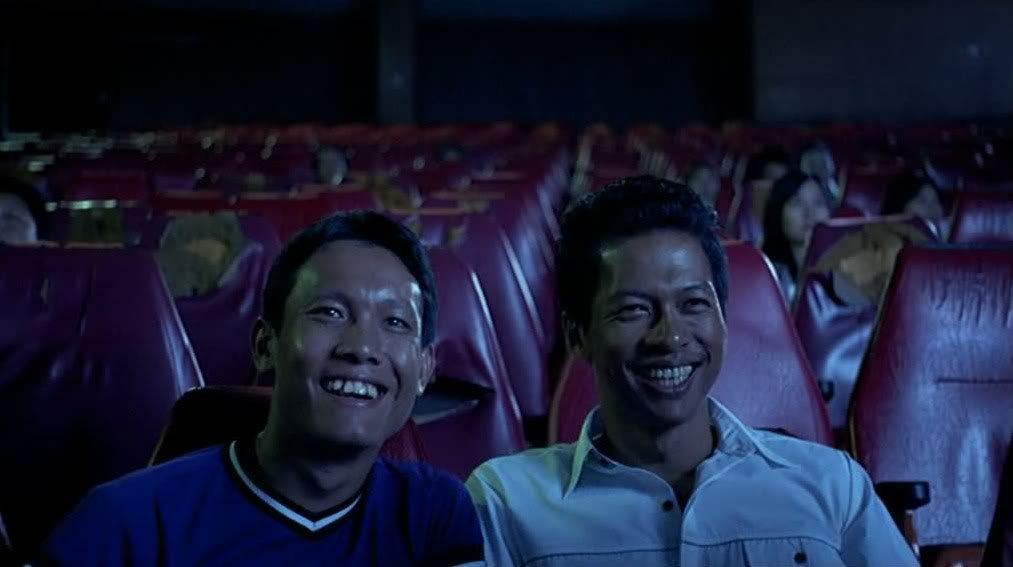
The first half of the film concerns the slow, hesitant progress of a burgeoning affection between these two men who initially don't know one another very well at all. There is great tenderness and warmth in Weerasethakul's depiction of this relationship, which exists on a hazy borderline between masculine friendship and romantic courtship. In one scene, Keng politely, formally asks Tong if he can lay his head across the other man's lap, and Tong replies "no" before, with a sheepish grin, adding that he really means "no problem." Keng tells Tong then that he'd like to serenade him, that he'd like to play the guitar for him like the romantic heroes of movies, which suggests that the two men are casting themselves in a grand screen romance. In other scenes, they goof around and play like brothers or playful best friends, their physical contact ambiguous, half romantic and half aggressive. When they go to see a movie together, Keng caresses the other man's knee and starts working his hand up the inside of his thigh, but Tong turns it into a game by crossing his other leg over Keng's hand, crushing it between his legs, and they struggle a bit with each other, smiling the whole time. There are indications that Keng is comfortable in his gay identity and probably has been for a long time: he encounters several other men who he seems to know, greeting them with nods and big smiles, and there are intimations of cruising in his bathroom encounter with one man. Tong, on the other hand, is bashful and seems inexperienced, and his awkward interactions with Keng reflect an uncertainty about what exactly is happening to them.

Weerasethakul simply observes the halting progress of this relationship, which culminates in a strangely erotic and mysterious scene in which the two men kiss and lick one another's hands, the most intimate contact they've had with one another, at which point Tong turns and walks away, disappearing into a dense, dark jungle, swallowed up by the black night around him. It feels like a moment of finality and rupture, and it is, for after this, Keng's motorcycle ride home transitions seamlessly into images of him back in the jungle with his army unit, looking at pictures of Tong. At this point, the film breaks apart and the second half of the film, titled "A Spirit's Path," is introduced with a second credit sequence, as well as the recitation of the legend of a shaman spirit who haunts a certain jungle area, playing tricks on the nearby villages. Keng, possibly in a new form as a different soldier, enters the jungle searching for this spirit, for the supernatural tiger that stalks the region, killing livestock and people.
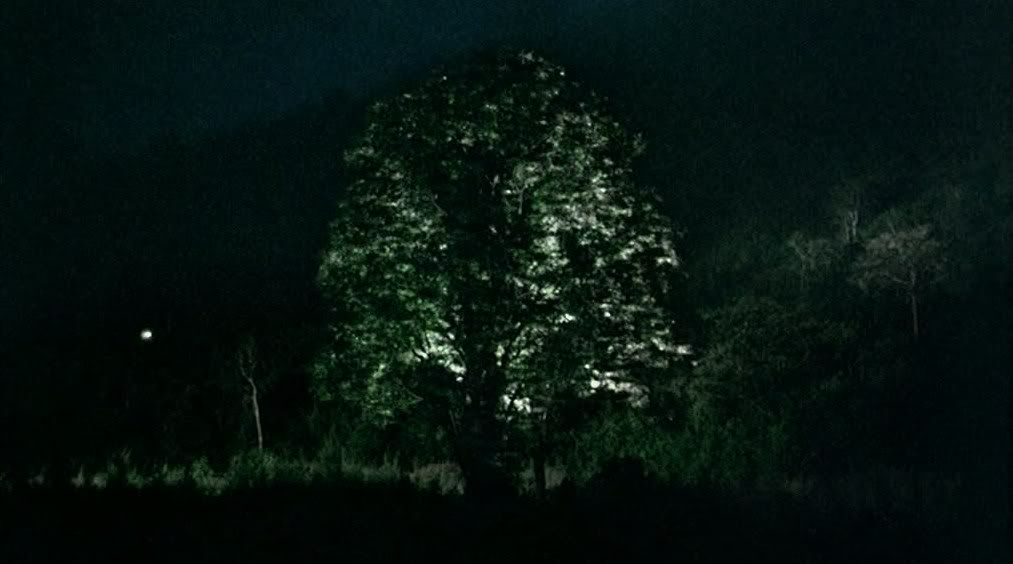
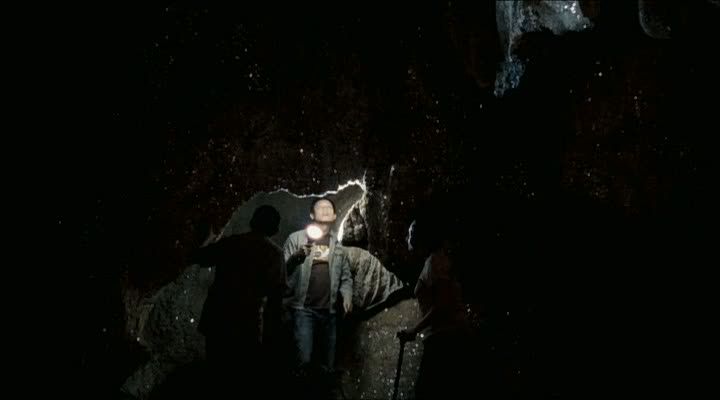
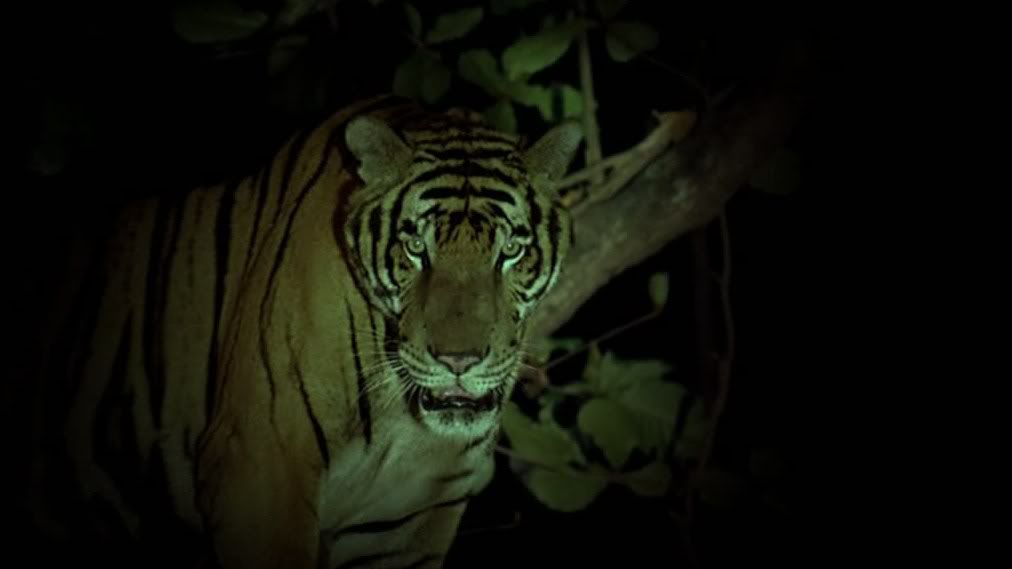
The second half of the film begins quietly, as the soldier wanders through the jungle, picking bugs off his skin, trying to keep warm in the night, listening to the mysterious rustling, crackling, chirping sounds of the jungle, which fill the soundtrack. But these prosaic, tranquil moments soon give way to an increasingly surreal and unsettling sequence of events, as the soldier fights with the shaman in his incarnation as a naked man, is warned of the dangers of the jungle by a monkey whose squealing language is mysteriously translated in subtitles, encounters the pale ghost of a dead cow, and comes face to face with a chirping firefly that might be a wandering soul, winding its way towards a tree lit up in the grainy night with thousands of similar pinprick lights. As the images and events become stranger and stranger, the soldier seems to be wandering through the dark jungle in a daze, lost in the shadows. The screen frequently goes black, or nearly black, and all sense of logic and stability is lost as the soldier stumbles towards his hysterical final confrontation with the tiger itself, a panting, hulking beast that fixes the soldier — and the camera — with an unforgettable, hungry stare, a stare that suggests that the tiger is sizing up the film's audience as prey.

The relationship between the film's two very different halves is unstated and elliptical, but the continuity in the actors, if not the characters, suggests that the second half of the film is a parable for the ferocity and danger of love, for the intensity of the connection that can bind two people together. The modern world, perhaps, is sometimes inappropriate to convey those intense emotions, the kind of emotions that defy words and explanations. In one scene in the film's first half, Tong and Keng visit a mall and Tong wanders up to a big advertisement for cell phones, adorned with the English words "connection" and "communication," but in fact the trip to the mall seems alienating and disconnecting, and Weerasethakul films Tong adrift in a sea of shirt racks and sale posters as though this was the jungle for him. In contrast, the scenes in the actual jungle convey a mysterious and otherworldly connection between the two men, or between the man and the tiger, who are drawn to one another and may kill one another or, in the suggestive words of the monkey, the man may be devoured by the tiger and enter its world. That's passion, violent and potent, infused with ancient myths and inexplicable occurrences.

The past and the modernized present coexist in Weerasethakul's cinema, blending into one another in interesting ways. Fables and legends linger on, as in the mention of an old uncle who could remember his past lives — an idea that was obviously percolating for Weerasethakul long before he made his most recent feature, Uncle Boonmee Who Can Recall His Past Lives, in which that conceit, tossed off in a few lines of dialogue here, is expanded upon. Shortly after this exchange, an older woman recounts a Buddhist parable about a monk who gave a pair of poor farmers a magical gift of gold and silver, which the men promptly lost through their greed for more — and the woman humorously, unexpectedly expands the parable through an anecdote about a similar situation on the Thai version of the TV game show Who Wants To Be a Millionaire. Fables, myths and legends remain relevant and alive in Weerasethakul's films, sometimes overshadowed by the bombast and chaos of modern life but never extinguished altogether. Such stories still resonate in the present, mysterious and beautiful and sometimes frightening.

Uncle Boonmee Who Can Recall His Past Lives


Apichatpong Weerasethakul's latest feature, Uncle Boonmee Who Can Recall His Past Lives, is a ghost story told with the calm and patience of a prosaic tale of country living. The film concerns the final days of the titular protagonist, Boonmee (Thanapat Saisaymar), an old farmer suffering from a kidney disease. He's visited by his sister-in-law Jen (Jenjira Pongpas) and her son Tong (Sakda Kaewbuadee), and in his last days Boonmee's remote farm is haunted by ghosts of his own past, as well as visions of alternate lives both past and future. The film moves at the tranquil, languid pace of lazy afternoons with nothing to do, and this quiet grace allows the frequently outrageous and bizarre elements of the story to blend seamlessly into reality, to appear as natural as the background hum of insects or the gentle murmur of the wind.

The film is certainly awash in surreal elements, presented with that deadpan nonchalance that characterizes much of Weerasethakul's work. Boonmee is visited by both his dead wife, Jen's sister Huay (Natthakarn Aphaiwong), and their son Boongsong (Jeerasak Kulhong), the latter of whom reappears as an apeman, having long ago wandered off into the jungle to commune with the mysterious "monkey ghosts" that inhabit the dense forests surrounding Boonmee's home. Huay appears without fanfare, simply fading into existence in an empty seat while the family is eating dinner. At first she's a kind of cinematic ghost within the frame, a hovering reflection where there is no mirror, a faint photographic afterimage layered within the film stock. But as she fades in, she becomes tactile and physical, as real-looking as the non-ghost people sitting around her, and the scene loses its subtle air of unreality to become simply a prosaic family dinner again, a group of people sitting around talking and reminiscing. It's a subtle point: within the cinema, everyone is a ghost, an image, and no figure is any more "real" than any other. Weerasethakul allows the film's ghosts to be as physical, as concrete, as the living people, just as he allows past, present and future to coexist without separation.


The same slow adjustment to strangeness occurs with Boonsong arrives. The "monkey ghosts," from a distance, are haunting and creepy figures, pure black shadows with glowing red eyes set into their faces. Weerasethakul periodically inserts a shot of these creatures in the jungle, these inscrutable figures with piercing eyes, eerie ghosts or demons who never reveal more of themselves than this shadowy outline. Boonsong appears the same way, walking up the stairs towards the family, his red eyes the only visible sign of him, the rest of his body blending so totally into the darkness that the twin red orbs appear to be floating in midair, disconnected from any concrete figure. Once he steps into the light, however, his creepiness is diffused, and he's revealed as simply a man in somewhat ungainly ape makeup. As he talks with his father, describing the circumstances of his long-ago disappearance, it is both poignant and silly and strangely ordinary: the emotions of the reunion, a son revisiting his father after many years of absence, cut through the goofiness of the ape outfit.

Weerasethakul has a wry sense of humor in moments like this. The first thing Jen says, upon realizing who the apeman is, is to ask, "why did you grow your hair out?" It's a singularly strange and funny thing to say to a guy who's somehow been transformed into a talking gorilla, and it reflects just how accepted the surreal and the supernatural are in this film. Later in the dinner, when Boonmee's worker Jaai (Samud Kugasang) arrives, he looks in wonderment at the monkey and the dead woman sitting at the table, but then he breathlessly murmurs, "I feel like the strange one here." In Weerasethakul's casual presentation of the supernatural and the mythical, it's prosaic reality that begins to feel strange. And after all, Jaai is the only outsider here, the only one who's not a member of the family. His distinction from the family is ultimately more important than the separation between the dead and the living, or between the human and the once-human.


Jaai is also an outsider as a Laotian immigrant, possibly an illegal who'd entered the country without authorization. The film is set in a border region between Thailand and Laos, and towards the beginning of the film Boonmee and Jen talk about illegal immigrants. Jen evinces prejudice against the Laotian workers, saying that they're "smelly" and that they sometimes rob and kill their employers. It's the same kind of dynamic that seems to develop anywhere that poor foreign laborers enter a more affluent neighboring region for work: they're needed for the work they do, but also mistrusted and feared, thought of as inferior and filthy, looked down upon by those who rely upon them. Politics drift gently through Weerasethakul's film, never quite becoming the focus but lightly tugging at the corners of consciousness. This examination of the nature of illegal immigration is later expanded when Jen has a conversation with Jaai, in which he reveals that he is soon leaving, heading back home to marry a girl who he'd been courting from afar. He's maintained his connection to his native country, and he knows that even if Boonmee is okay to him — though it's implied that the workers aren't paid especially well — that this isn't really his home.

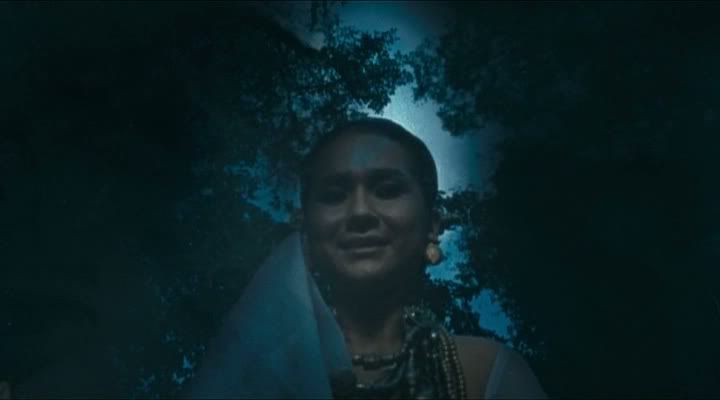
Jaai's lower-class position is subtly mirrored in the later interpolation of the story of a princess and her servant. This dreamlike sequence feels like a folk tale or myth subtly grafted into the film, perhaps as a visualization of one of Boonmee's past lives. The servant and the princess fall in love, and Weerasethakul gracefully captures the forbidden tenderness between them in a scene where a group of servants bear the princess' carriage through the jungle on their shoulders. The princess, encased in gossamer layers of gauzy fabric, the lower half of her face hidden beneath a veil, reaches out of her carriage to touch the hair and bicep of the closest servant, who turns to her and folds her hand into his own free hand as he continues to haul her on his shoulder. This simple moment of physical contact, stolen secretly, feels as powerful as a kiss or an embrace. Later, the aging princess doesn't believe that the servant wants her anymore now that her youthful beauty has faded, and she sends him away by the side of a small lake where she sees her younger self reflected in the water. Then, in another of Weerasethakul's bizarre touches, she's confronted by a talking catfish who praises her beauty and eventually flaps between her legs as she wades into the water, the fish bringing her to orgasm as she drifts towards a waterfall.

This whole sequence has the feel of an erotic folk tale, unreal and ghostly. The princess and her servant are both caked in blue paint that makes them glow eerily in the moonlight. Weerasethakul, as is his habit, never explicitly connects this tale to the rest of the film, but its implications are obvious. If it's a past life of Boonmee, we're meant to wonder what part he plays in this drama: is he the princess or the servant? Or even the catfish, since the film's opening scene seems to imply that one of his past lives was as a cow escaping from its owners and wandering off into the jungle. The themes of aging and loss reverberate throughout the film, as Boonmee thinks back on his life, regretting what he's lost and what he's done, lamenting his illness and weakness as compared to his youthful vibrancy. The princess, looking into the lake, sees herself as a younger woman and wishes she still looked like that — but then she pushes her lover away, accusing him of fantasizing about her younger self. She speaks of the woman in the reflection as though she was another person altogether, as though she wasn't simply an earlier image of herself, frozen in time at a particular moment. It's as though she's disconnected from the past, disassociated from her own memories. Maybe that's why photographs, mementos of the past, are so important, why at Boonmee's familial reunion with his wife and son, he pulls out photo albums to look at with them, poring over these images of particular moments of time from the past. When we look at photos, we remember ourselves in earlier times as though catching glimpses of someone else's story, some younger person we only vaguely remember being. It's as though our "past lives" are just earlier moments, earlier ages, from the same long life.


There is a political component to memory here, as well. One of Boonmee's regrets is his time spent as a soldier, violently suppressing communists for the government. He says that he believes his illness is the payback of karma for all the men he's killed. Jen shrugs off such concerns, saying that he was only serving his nation, but she does seem proud of her father, who had apparently resisted the violence to some extent. He'd been sent into the woods to hunt people, she says, but instead he hunted animals, communing with nature and avoiding the horrors of killing. The film is subtly haunted by this violent, military past, a mostly unspoken past of bloodshed and repression.

Towards the end of the film, Boonmee describes a dream or a future vision, his words accompanied by strange still images of soldiers capturing and leashing the monkey ghosts, and citizens apparently rioting angrily, throwing rocks. (At the soldiers or the apes?) Boonmee's vision describes an authoritarian future in which the past can be erased by the government, in which those who maintain a connection to the past are hunted and captured, then made to disappear. It's an obvious metaphor for the governmental whitewashing of various tragedies and atrocities: whole cultures and groups, like the Laotians, like the monkey ghosts who may represent primitive ethnicities or cultures, can be made to disappear by the inevitable onslaught of progress and modernity. That's why the film is set in a tranquil, largely untouched rural area, surrounded by dense jungles, a last bastion of connections to the past, to rural living and agrarianism. In the film's final scenes, the characters return to the city and are surrounded on every side by signs of modernity: television sets and air conditioning, rock music karaoke, neon lights that brighten not only urban restaurants but sacred temples. Weerasethakul cleverly shoots a funeral scene from three angles: first head-on, looking at the mourners, then from behind them, looking at the altar with its banners and candles, and then, jarringly, in a wide shot from the side, revealing the previously unseen gaudy tower of neon lights that fills up the side of the temple, next to the rows of mourners. This shot disrupts the somber, spiritual tone of the funeral, introducing the disjunctions of modernity, in which the cheap and the superficial rest side by side with the serious.


Weerasethakul further examines the changes of modernization in the scenes of Tong as a monk towards the end of the film. Tong seems too restless for the monk's life, too in love with modern conveniences and appliances. But such things are infiltrating the supposed calm of the monastery as well: he describes how many of the monks have stereos and computers to send e-mails, and wishes that he had such things, too. He seems thoroughly disconnected from a life of spirituality and stoicism, and one wonders what ever made him think to be a monk. It feels like Weerasethakul's subtle lament for a culture that has perhaps lost touch with such otherworldly, mystical things. The film is partly about the increasing emphasis on the worldly and the material, and in this context Weerasethakul's emphasis on reincarnation, ghosts, rural legends and romantic folk tales is a radical assertion of the resistance of these traditions against encroaching modernity.

Uncle Boonmee Who Can Recall His Past Lives is the culmination of Weerasethakul's "Primitive" project, which also included a pair of short films dealing with similar themes of memory, nostalgia, history and loss in this particular border region of Thailand. As the capping work of this project, this feature is one of Weerasethakul's richest films, weaving together the political, the spiritual, the fantastic and the deeply personal into a mysterious, moving, often funny account of facing mortality and confronting the sometimes uncomfortable truths of history. As such, the film looks both forward into the future and back into the past, and finds death in both directions, but even so it is not a bleak or dark work. It is instead warm and beautiful, evocative and sensual, flowing with the rhythms of daily life even as it examines the extraordinary and the shocking in both the real, violent history of the world and in the magical realms of myth, art and fantasy.

Phantoms of Nabua/A Letter to Uncle Boonmee


Apichatpong Weerasethakul is a great sensualist, a director who revels in the sensory and emotional qualities of a particular moment in time and the setting in which it takes place. His feature films are collections of these moments, strung together in such a way as to create a cumulative effect, a slow building-up of emotion and visual beauty. Phantoms of Nabua is a ten-minute short film that documents one such moment, and it's typically evocative and breathtaking. It is divided, roughly, into three segments, with little clear separation between them; rather, they flow into one another, each new section introducing a new wrinkle into the film's treatment of light and darkness. In the film's opening minutes, a village is struck by lightning multiple times, the white-hot strikes looking like fireworks being set off; it's ambiguous whether the streaks of white light are descending from above or spiking up out of the ground. It's frighteningly beautiful, the bright white lines illuminating the dark night, the strikes chaining together and sending out feelers to join with other streaks of lightning. On the soundtrack, the pops and electric sizzles of the lightning even sound like fireworks, making this a natural spectacle, a natural light show.

In the second section of the film, these opening images are projected onto a screen set up in the middle of a field where children are playing soccer at night with a flaming ball. The composition is complex, creating this layering where the images of the children playing are being pasted over the images of lightning. The shadowy silhouettes of the players are set off against the flickering light of the screen, the lightning flashes going off behind them, illuminating their bodies, projecting halos around the players. And the flaming ball rolls back and forth across the field, soaring through the air like a comet with a tail of fire flickering behind it, making whooshing noises with each graceful arc across the darkness.

The interplay of light and dark is gorgeous, as Weerashethakul frequently returns to dark emptiness before reigniting the night with the fireball's glow. He edits the scene into alternating stretches of light and darkness, juxtaposing a near-featureless dark area against a sudden burst of light as the fireball comes flying across the frame. On the soundtrack, the children's laughter and chatter is omnipresent, bringing energy and vibrancy to the isolation of the night. There's this glowing hive of activity and life at the center of the dark void, this small area of red glow, illuminated by the fireball and the sporadic flashes of the lightning on the cinema screen.

In the final segment of the film, the screen catches fire and is burned away, and slowly the game comes to a halt, all the children gathering around to watch the screen burn away, the flashing light of the projector showing through from the other side, the flames eventually shredding the screen until only its bare frame remains, like an empty goal. The metaphor is obvious but layered: the light is both destructive and redemptive, a source of creativity, a document of reality and a potentially abrasive, damaging force. The light both illuminates and eliminates. In the film's final minutes, Weerasethakul cuts in closer to the light of the projector, watching it head-on as, without a screen to project onto, the projector's flashes become abstract, disconnected from reality, occasionally producing wisps of imagery on the smoke wafting in front of the lens. It's darkly beautiful, this image of cinema removed from the tangible world of images: it is cinema projecting into the void, with any hope of communication or understanding removed, a lonely signal going out into the dark night.


There is a searching, hesitant quality to Apichatpong Weerasethakul's A Letter to Uncle Boonmee. It is a film in search of a subject, in search of itself. In the opening minutes, a voiceover repeats the titular epistle twice. The note is from Weerasethakul's own perspective, talking about a relative and the film he wants to make about this man, his Uncle Boonmee, who has apparently been reincarnated in various modern forms. It is a film very much about nostalgia and history, about the past, about the search for links between modernity and the past; this is a near-constant theme in Weerasethakul's work. The voiceover recounts how Weerasethakul wants to make a film about his relative, and how he's been seeking out houses that look like his uncle's residence. Implicit here is the distance between fiction and reality, especially as mediated by the passage of time. As Weerasethakul's camera roves across the interiors of various rural homes, his voiceover laments how his script describes one kind of house, while in the real village of Nabua there are other kinds of houses, and his ancestor likely lived in still another kind.

In one shot after another, Weerasethakul's camera repeats the same stately movement, a graceful arced tracking shot from left to right, tracing various empty interiors, looking over the objects and mementos that may be signs of someone's present life or artifacts of the past. There are photos and documents on the walls, and beautiful views of the jungle out the windows. There are also soldiers, digging in the yard, the rhythmic thunk of their hoes a repetitive and insistent beat on the soundtrack, later joined by the whirring buzz of a fan as one soldier lies on the wooden floor of a house, staring off into space. The voiceover describes how, in the past, there was some kind of military incident here, soldiers who chased away the town's residents as part of some long-ago war.

There's a profound ambiguity in the way the film creates a relationship between the images and the narration: are the soldiers depicted here meant to be the soldiers who forced the townspeople out of their homes in the past, or are they present-day soldiers whose appearance here only evokes the past? Another possibility exists as well, implicit in the metafictional framing device of the narrated letter; the soldiers are actors in the film Weerasethakul is making, since A Letter to Uncle Boonmee is explicitly a preparatory document for his latest feature, Uncle Boonmee Who Can Recall His Past Lives. In much the same way as Jean-Luc Godard would, in the early 80s, prepare video essays that contained the seeds of the feature films to follow, this short seems like an essay abstract for the forthcoming feature, suggesting themes and images that, one suspects, will be further developed in the longer work.


None of which suggests that A Letter to Uncle Boonmee is incomplete in itself, of course. It is, like Weerasethakul's features, elliptical and suggestive more than it is definitive, but that's the essential nature of his cinema, which seldom narrows its scope to a single meaning or a single narrative. His cinema is open-ended in all the best ways. Here, the slippage between past and present, between fictional artifice and the reality of the film-making process — Weerasethakul even mentions in the narration that he got British funding to make the film, bringing external economic realities into the picture, another gesture that seems to have been derived from Godard — resonates in interesting ways with the themes of memory and nostalgia. The pictures of ancestors, the rural homes that could represent any time in the last few decades or more, the soldiers who look much like soldiers do in any era. Everything here adds up to a powerful sense of timelessness. Time is suspended by Weerasethakul's weightless camera as it drifts through these mostly empty scenes, ruminating on absence — the absence of the past in relation to the present, the absence of Nabua's villagers, forced away from their homes, the absence of the titular uncle, long dead and sought in resurrected form in other people the filmmaker might meet.

Contributing to this sense of timelessness is the sumptuousness of the images. Weerasethakul's imagery encourages deep contemplation, encourages patience and quiet. As his camera drifts along, there is no rush, no urgency or narrative momentum, only the languid examination of wooden floors and walls, faded and aged photographs, the lush greenery seen outside, the pink haze of a mosquito net erected around a bed, the smoke billowing out of a furnace of some kind. Towards the end of the film, Weerasethakul's camera peers up at the tree branches swaying in the breeze, and above them the clouds drifting lazily by through a pale blue sky, shot from the perspective of someone lying on the ground. As this gaze drifts along, a cloud of insects hovers just below the tree canopy, buzzing in swarms, this shifting mass of dust motes dancing black against the blue of the sky. In this eerily quiet place, Weerasethakul summons the ghosts of history and ancestral memory to drift, silently and invisibly, through the splendor of the present.

[Note: Both of these films are available to watch online, Phantoms of Nabua for free and A Letter to Uncle Boonmee for just $1.]

The Host


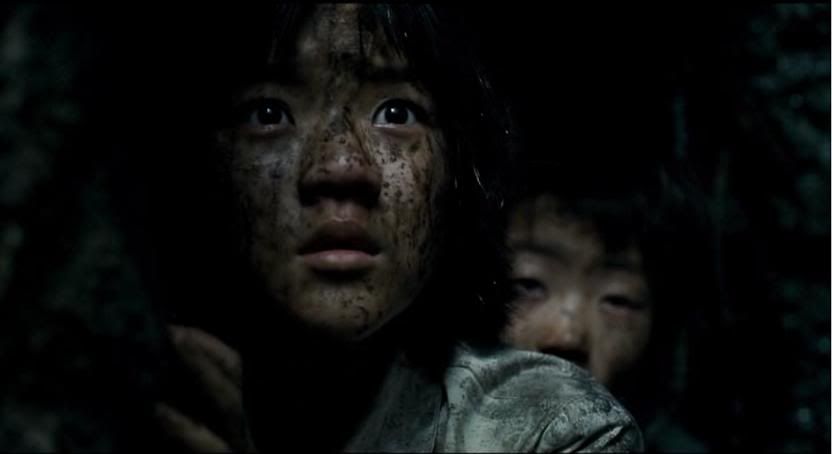
Joon-ho Bong's The Host is a delirious modern monster movie, a throwback to the classic era of the sci-fi monster: all those nakedly metaphorical beasts formed from radiation or other side effects of man's scientific progress. And much like the classic Japanese monster movies, this Korean film is aimed squarely at the fear and anger caused by a foreign target: the United States. The film opens with an awkwardly acted scene in English, in which an American researcher instructs his Korean assistant to pour a shelf of chemical bottles down the drain, despite the assistant's protestations that this will cause harm to the Han River. Cut to a few years later, and something odd is definitely going on in the river as a result. Bong's unveiling of the monster — a mutated, somewhat lame sea creature with numerous vestigial limbs and a massive, terrifying maw — is the film's best sequence, a frantic action set piece that's both absurd and terrifying.

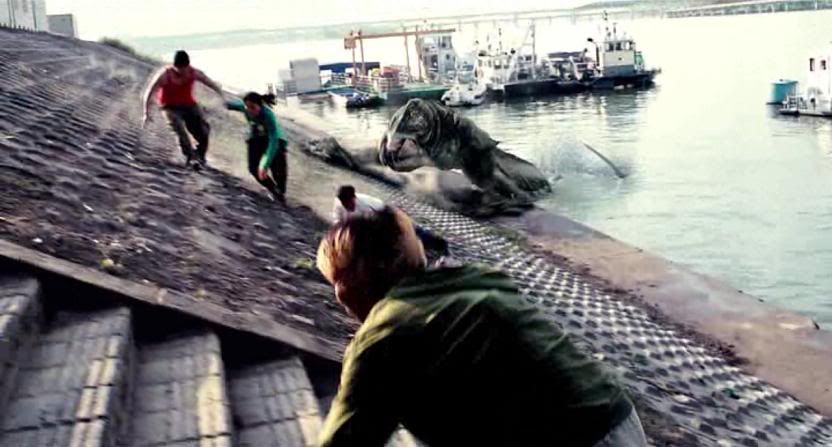
The monster appears abruptly, but before it does, it's just an ordinary day at a riverside park where Hie-bong (Hie-bong Byeon) runs a snack stand with his lazy, distracted son Gang-du (Kang-ho Song). Bong takes his time setting up the family dynamic here, because it's this family that's going to be at the center of the film once the monster does appear. Hie-bong has two children in addition to Gang-du: his educated but unemployed son Nam-il (Hae-il Park) and his athlete daughter Nam-joo (Du-na Bae), a professional archer who's just shy of being the best. When the monster shows up, Hie-bong, Gang-du, and Gang-du's daughter Hyun-seo (Ah-sung Ko) are watching Nam-joo lose a tournament on TV. Bong's presentation of the monster, interrupting this low-key domestic drama with its touches of comedy, is disarmingly offhand. The creature is an obvious CGI construction, with no attempt made to make it fit in naturally as an organic component of this otherwise realistic world: it stands out as something totally different, all glossy, slippery surfaces and distracting artificiality. As it rampages through the crowds gathered on the riverside, gobbling up some of the crowd and tossing others into the water with a flick of its tail, it is frightening and hilarious in nearly equal measures, this oddball CGI monster stalking across the riverbank as people scream and run. The artificiality of it all just makes it all the more disconcerting, especially since Bong approaches it with a goofy sense of humor, relishing the way limbs hang out of the monster's mouth after it eats up a victim, or the way the creature stumbles and somersaults down an embankment, moving awkwardly on its deformed limbs.

The human actors are, in their own way, equally stylized and artificial. They approach their parts with a broad comedic, satirical sensibility, purposefully over-emoting at every opportunity. A demonstration of grief, following the monster's assault, is a particularly good example, balanced as it is between devastating sadness and ludicrous exaggeration. The family rolls around on the floor, screaming and wrestling with one another, tearing at each other in grief and rage, and Bong switches to an overhead shot that shows them stretched out there on the ground, overcome by their feelings, expressing their loss in this embarrassingly naked way. Later, Bong's moments of political commentary are just as unfettered and raw; the film is a pretty clever, if not particularly subtle, jab at American dominance of international affairs, and the media's complicity in this dominance. Here, the Americans created the monster through their blatant lack of concern for the environment (especially the environments of the other countries they visit for cheap labor), then they invent the scare that the monster is causing a deadly disease, and then they insert themselves into the affair by offering a radical "solution" in the form of something called "Agent Yellow," a likely dangerous and carcinogenic chemical that they plan to unleash in Korea to kill the monster.


The film's guiding political concept is the idea that American foreign policy is exploitative and misguided, that the Americans oafishly cause problems and then make things even worse in trying to solve them. In this case, the terror over the supposed disease — which seems to have been made up through a combination of incompetence and a desire to cover up mistakes — creates an artificial panic that then allows the Americans to come in with a typically over-the-top, violent solution. Moreover, the Americans are deaf to concerns from other countries. In one of the film's most satirically biting scenes, Gang-du is confronted by an American doctor who takes Gang-du's insistence that his daughter is alive somewhere, imprisoned by the monster, as evidence of dementia, a sign that the disease (which he's starting to believe is fake, anyway) has taken over his brain. Gang-du cries out, in anguish, that they never listen to him, that they keep interrupting him and not letting him speak: "my words are words, too," he cries. It might as well be the filmmaker speaking, on behalf of all foreign peoples whose interests and concerns are trampled over by an intrusive, profit-motivated, military-industrial America.

Although this makes The Host sound like an unsubtle political screed, there's much more to the film than that, and the politics are approached with the same spirit of exaggeration and stylization as everything else in the film. Bong mashes together various tones and ideas with abandon, never settling into any one mode for long. The film's broad physical comedy, political satire, horror and action thus rub uncomfortably against one another, creating interesting frictions as multiple modes can coexist even within a single scene. It's all leading towards an action-packed climax in which this family, so divided and unhappy with each other, finally comes together, each of them adding their specific skills and qualities to the final confrontation with the monster. It gets to the heart of the film's implicit message: rely on family and community, ignoring the distractions and manipulations of politics. In the final scene, they turn off the TV, shutting down the American politicians using buzz words and euphemisms to absolve themselves of responsibility, and focus on enjoying the simple pleasures of family instead. It's a hard road to get to this point, though, through a lot of blood and gore.

It's a wild ride for the audience, too, thrown through the paces by Bong's free-wheeling sensibility of genre mash-ups. There are stunning action sequences, silly comedic bits with lots of slapstick falls and awkward chase scenes, moments of quiet family drama during the uncharacteristic pauses in the action, and of course the horror of the monster, who shows up every once in a while as though to remind the viewer what kind of movie this is at heart, no matter how many diversions into socio-political satire or absurdist comedy it takes along the way. The monster's most horrifying moment comes late in the film, when it suddenly stops simply slurping up victims and then spitting them out more or less intact in its sewer hideout. Instead, it vomits up a torrent of skulls and bones, the remains of its most recent victims, a seemingly never-ending stream of bodies denuded of all signs of flesh. It's all the more bracing and terrifying because Bong had avoided making the monster too bloodthirsty in the earlier stretches of the film.

In fact, there's something graceful about the monster, something even kind of poignant. It often swings through the girders beneath the bridge where it hides, doing gymnastic flips and swinging by its tail, gracefully leaping from one beam to the next. In one scene, its tail appears before it does, lazily turning in spiral patterns, strangely beautiful and hypnotic until the ungainly monster, all vicious-looking teeth and claws, comes careening out of the darkness. Even the monster's ultimate end is somewhat sad, as the creatures twists about in agony, wracked with pain, letting out a haunting cry as it turns on its back. This moment represents the ultimate victory of the family over its terror, but it's at the expense of this poor creature, deformed and mutated by circumstances beyond its control, transformed from an ordinary innocent sea creature into this monstrosity. Bong allows this ambiguity, this discomfiting affection for the monster, to linger throughout the final moments, preventing the obligatory defeat of the creature from being as entirely triumphant as one would expect.

Blissfully Yours


For his second feature, Blissfully Yours, Apichatpong Weerasethakul crafted a delicate, impressionistic depiction of a lazy summer afternoon shared between Min (Min Oo), a Burmese who has illegally crossed the border into Thailand looking for work, his girlfriend Roong (Kanokporn Tongaram), and Orn (Jenjira Jansuda), an older woman who Roong has hired to help Min. The film is decompressed to an extreme degree: virtually nothing actually happens in its two hour duration, as routine tasks and long moments of stasis are captured and mined for their emotional and sensual nuances. In the lengthy opening scene, which starts the film without any credits or lead-in, Roong and Orn have taken Min to a doctor to treat his skin condition, and they simply argue in a low-key way with the doctor about what's wrong with him and what he needs. Min stays silent; much later, it will become apparent that Min is pretending to be mute so he won't reveal his foreign dialect, while Orn is trying to trick the doctor into giving Min the health certificate he needs to find work. But Weerashethakul doesn't dwell on any of this. He simply allows the conversation to play out, as puzzling and elliptical as it is, capturing the absurd way in which Orn and Roong are forced to keep talking in circles, confronted by the doctor's obstinate refusal to do anything outside of regulations.

It is a frustrating, mysterious scene, but also a strangely funny one; Weerashethakul has a streak of dark but playful humor that often shows up in moments like this. Here, it becomes apparent when the conversation with the doctor goes on for several minutes as though it's about a new condition, and then when the doctor asks how long this has been going on, they answer that he's had it since he was a child. It's the kind of absurd reversal of expectations that Weerashethakul subtly integrates into his otherwise hyper-realistic, observational aesthetic. Even better is the brief few moments when the director lingers to watch the doctor's next patient, a hard-of-hearing old man who's grumpily bickering with his daughter. Upset over his broken hearing aid, he advises the doctor that if she should have children, she should have a son because "boys are much better with electronics than girls."

In this way, Blissfully Yours simply drifts along, from moment to moment and place to place, patiently watching these people's daily routines. In one scene, Orn mixes together chopped-up fruits with a table full of creams and skin lotions, creating her own concoction, halfway between a fruit salad and a skin treatment. Weerashethakul loves to watch procedures like this, just as later his camera admires the careful, methodical way in which Roong prepares a snack for Min, wrapping up a piece of meat with a cluster of rice grains, then tearing off a piece of bread to engulf it all, and dipping the small bunched ball into the juices from some fruit. She repeats the procedure twice, making one for Min and then one for herself, and Weerashethakul captures the hypnotic quality of her careful motions as she assembles these snacks. She does it, perhaps, with the same mechanical care with which she paints Disney figurines at the factory where she works, where she's so overworked that, as Min laments in voiceover, her hands are sore after a particularly hard day. The film's extreme patience becomes especially clear when, nearly 45 minutes into the film, the credits suddenly appear as Min and Roong are driving towards a picnic in a remote woodsy area. It's as though Weerashethakul is saying, now the movie is starting, everything that came before was simply a long prelude, an introduction, presenting the necessary context for what's to come.


Indeed, the earlier scenes have a groundedness, a quotidian quality, that wafts away once the characters leave behind the city for their rural getaway. The early scenes establish that these characters are trying to escape, that they're bored, fenced in by routine. One of Min's periodic voiceovers even explicitly calls their picnic in the woods an "escape," and at this point Weerashethakul's sensuality, his pictorial sensibility, takes over. As the young couple winds through the woods together, the branches brush up against their skin and the sun sporadically breaks through the dense foliage above to flare white-hot in their eyes. They finally arrive at a beautiful rock cliff above a lush, deep green valley, and they picnic there, picking berries together in the woods, kissing, sleeping in the sun, eating, fending off the alarmingly large ants that scramble across their blanket. The ants are harbingers of the ruin to come, tangible suggestions that this afternoon is ephemeral, that whatever happiness they might find here is fragile and easily upturned, but initially they're just a nuisance to be laughed off.

These scenes are all about the play of light dappled on bare skin, the casual sensuality, and sexuality, of the characters as they drift together and apart over the course of the afternoon, sometimes joined in intimacy and at other times separated by silence and disconnection. Weerashethakul intercuts the scenes between the two young lovers with scenes of Orn and her husband, engaged in a similar indulgent afternoon in the woods not far from the younger couple. Weerashethakul is all about suggesting emotional and thematic depths without directly confronting them. Through subtle gestures, the sex scene between Orn and her husband becomes, without a word being spoken, about her desire to have a child and his reluctance to go along with her. The way she watches as he takes off his condom and throws it away after sex, the way she caresses her own belly as she lies next to him: these simple gestures say everything about these characters, their urges and needs. Later, Orn joins up with Roong and Min, following a strange and elliptical series of events in which her husband runs off, chasing a motorcycle thief, possibly to die or merely to confront some more mundane fate, but either way disappearing from the film without ceremony. Afterward, Orn wanders through the forest, donning an antiseptic mask she finds on the forest floor. Even in such a direct and seemingly realistic film, Weerashethakul displays a weird kind of beneath-the-surface surrealism in small, unexplained details like this. These seeming non-sequiturs simply add to the film's richness, its texture, its ineffable sense of mystery.

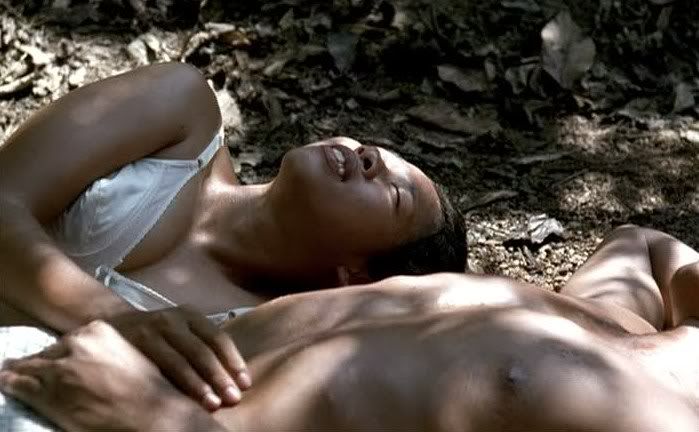
This mystery is intact, certainly, throughout the final stretches, in which hardly a word is spoken. Roong and Min lie down next to a river together, and nearby Orn lies down by herself in her underwear, her full middle-aged body looking Rubenesque, straining against the constrictions of her garments. Roong, in contrast, is childlike and skinny, and the older woman gently mocks her for it, even as Roong playfully pinches the older woman's large butt. Weerashethakul pulls back for a long shot, showing the couple and the woman lying on opposite sides of the frame, implicitly establishing a comparison between generations, between maturity and youth. In fact, though, both women seem equally troubled, linked by their concern for the helpless, drifting Roong, who they together are helping to shepherd through life as though he was a child. In the final minutes of the film, Weerashethakul maintains a steady gaze on Roong's face as she lies next to Min, lost in thought, absentmindedly stroking his penis. Then he cuts away for a couplet of moody sunset landscape shots, before returning to find Roong turning slightly towards the camera, an unreadable expression on her face for the few frames before the cut to black.

It is a fittingly mysterious ending, and that's even before the strange textual coda that scrolls across the screen a few seconds later, describing Min going to Bangkok for a job, Roong getting another boyfriend and selling noodles, while "like before, Orn continues to work as an extra in Thai movies." It's a suggestion, perhaps, that life goes on in its own strange and often disappointing way, that afternoons like this, extended moments of contemplation and sensuality, are fleeting and momentary, and also tinged with sadness. Implicit even in joy is the inevitability of decay, of loss, of death, like the ants who skitter gleefully across the food during the final scenes, ruining everything, devouring whatever they find.

Syndromes and a Century


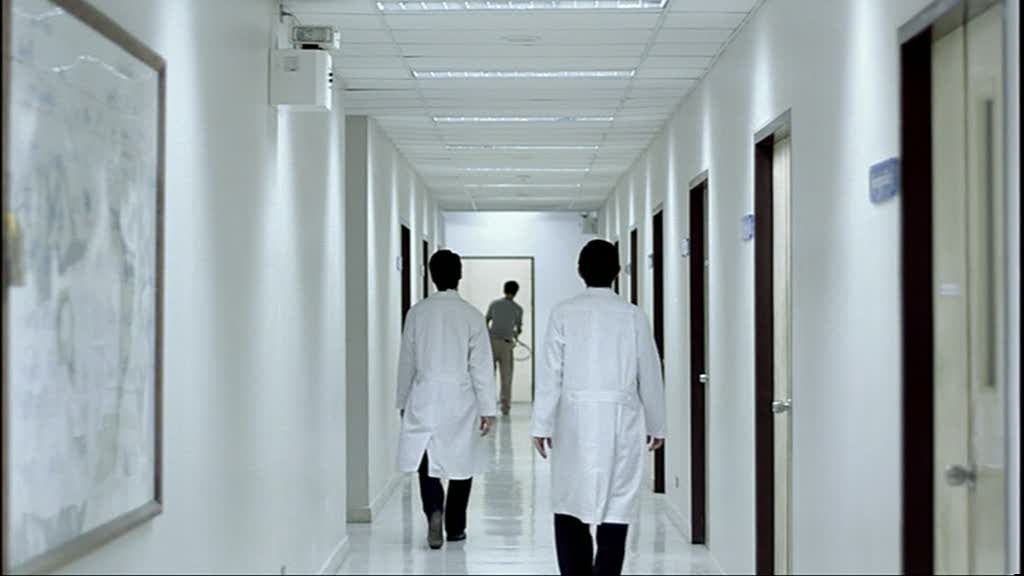
Apichatpong Weerasethakul's Syndromes and a Century is a remarkable, mysterious work, a film that's constantly slipping away from the viewer. It's a warm, disarmingly playful mood piece, as ephemeral and sensual as wisps of smoke swirling around the black hole of a vent: a strangely eerie image that Weerasethakul spends several long moments lingering over towards the film's slippery, abstract denouement. But it takes a digressive, wayward journey to get to that sinister image of deep blackness swallowing up white fog. The film opens straightforwardly enough, in a hospital office where Dr. Toey (Nantarat Sawaddikul) is interviewing a new doctor, Nohng (Jaruchai Iamaram), who's come to the hospital from a stint in the army. She asks him a number of questions, some of them conventional and some of them more abstract and conceptual; their conversation seems to be a mix of an employment interview, a psychological evaluation and a whimsical series of non-sequiturs. Throughout most of the interview, Weerasethakul keeps the camera trained in a long, static shot on Nohng's face as he reacts with varying degrees of curiosity and puzzlement to these strange questions. At the end of the interview, a hospital orderly comes to fetch Nohng and Toey, and as the doctors walk outside, the camera pans away from them towards an open, grassy field, which Weerasethakul frames in a static shot as the opening credits roll and the doctors' conversation continues offscreen. This scene introduces a subtle disjunction between audio and video as the doctors move away from this field, going about their rounds, without the audio fading away or cutting off. It is as though Weerasethakul is subverting the narrative stability of the opening scenes, suggesting that something more is going on beneath the surface, that all is not as it seems — he drops a further clue as, towards the end of this offscreen conversation, the doctors stutter to a surreal, confused halt in what seems to be a metafictional acknowledgment that these are actors playing doctors.

This opening, so destabilizing, by turns weirdly humorous and haunting, establishes the dominant mode of Weerasethakul's film, in which he's constantly toying with narrative cohesion only to pull back into moody diversions and puzzling interjections. Even so, there is a hint of a story running through the first half of the film. Toey is pursued by an admirer, who had been waiting for her throughout the opening sequence and who haunts her during her rounds, watching her from a distance and confessing his love to her. Nohng, meanwhile, adjusts to his new life in the hospital, and a dentist, Ple (Arkanae Cherkam) grows fascinated with a young monk named Sakda (Sakda Kaewbuadee). These disconnected stories and hints of stories weave through the film, at least until the halfway point introduces an even more disorienting disjunction: the opening scenes play out a second time, with slightly altered lines and situations, in a new context, an ultramodern hospital with clean, bright white corridors and antiseptic working conditions. If the first half centers roughly around Toey, the second half concerns itself more with Nohng, but otherwise the relationship between the two halves of the film is ambiguous. Perhaps one is the not-so-distant past (references to Star Wars possibly date it to the 80s) and one the not-so-distant future, or else they are both the present, representing the gaps in technology that coexist within modernity, or else they are alternate perspectives on the same set of characters, living the same stories over and over again with only minor tweaks.


There is a wonderful sense of ambiguity running through this film, as Weerasethakul simply strings together an elliptical series of events, anecdotes and moments, never drawing any firm lines connecting them to one another. It's a series of stories and non-stories, of moments both profound and prosaic: a monk playing the guitar, doctors drinking booze from a bottle hidden within a prosthetic leg, a solar eclipse, a picnic in the country, two lovers kissing by a window and, in the enigmatic finale, a large crowd exercising to the beat of an exuberant pop tune. It all fits together without quite forming a cohesive whole. The film is full of loose ends and lingering mysteries, characters who drift into the film for a few scenes only to disappear again.

An old monk (Sin Kaewpakpin) appears twice, once in the first half and once in the second, and each time tells a story about being haunted by dreams of chickens and falling out of bed as a result. But the subtle differences in the man's mood as he tells this story dictate the thematic throughline of his character (or characters): the first time he tells the story he is genuinely convinced that chickens are haunting him as a result of childhood cruelty towards the birds, and that they wanted revenge, while the second time he laughs the incident off as merely a dream. Linking these two perspectives is the chasm between superstition and rationality, between genuine belief in the supernatural and the mere recounting of it as folklore and legend. Is this, then, the true difference between past and present, between the country hospital depicted in the first half and the ultramodern facility in the second half, which seems to have been built atop the dilapidated earlier building?

It's unclear, but this conflict between tradition and modernity weaves through the film in sometimes surprising ways. In one scene, Ple is performing a dental exam on Sakda, and the two begin talking. The young monk confesses that he doesn't really want to be a monk but feels trapped in it, drawn to it by forces he doesn't understand. He'd really wanted to be a radio DJ or a comic book store owner, he says, and he loves "modern music," while the dentist is a bit of a pop singer himself in his off-hours. He begins singing for the monk, prompting the patient to ask if this is an exam or a concert. Who knows, and who cares? It's probably both, just as Weerasethakul's film vacillates between memory, abstract tone poem and narrative drama.


Later, banners billow in sinuous sine wave patterns in the wind above a stage as a Ple and his guitarist perform before a carnival audience. It's a wonderful moment, bathed in cool nighttime colors, subdued neon hues wafting through the night, as the song, an aching love ballad, drifts above the twang of the guitar. After the concert, Ple meets up with Sakda and gives him his newest CD, telling him, "Normally I only sing about teeth and gums, but this album is all love songs." It's like the set-up for an obscure joke: what does the dentist/pop singer say to the monk? And the punchline is as sublime as it is unexpected. One pictures it as a New Yorker-style gag cartoon, the monk and the dentist standing together by a balcony in a garden, the night alive with insect chirps all around them, and this deadpan caption set off against the poetry of the scene. The humor in this film is rich and often startling, burbling up from out of the framework of conversations that seem serious and poignant one moment, absurdly hilarious the next — Sakda and Ple transition from speaking about reincarnation and Ple's dead brother to this deadpan punchline. Even better, the line casts new light on the song Ple had been singing earlier, which is indeed a love ballad but which contained a line that seems puzzling and weird at first — a tribute to a girl's shining white teeth — but that makes sense once one realizes that the lyricist is a dentist, who can't help but return to his favored material even in the context of a love song.

The unlikely friendship between the dentist and the monk provides one possibility for the thematic implications of the film's halved structure. While the pair form a connection during a dental exam in the first half of the film, when this scene plays out again in the second half, it's in an antiseptic, blindingly white operating room, surrounded by rows of identical cubicals, with a nurse assisting the doctor. Patient and doctor don't talk here, except in laconic phrases about the mechanics of the exam itself. The gap between these two scenes suggests that the advances of modernity are fostering disconnection and increasing the distance between people, making it more difficult to form the kinds of human bridges that might allow a doctor and his patient to bond over pop music. Even so, Weerasethakul isn't making some simplistic point about the alienating effects of technology; this is simply one thread, and it is counterbalanced by the scenes in the second half between Nohng and a young patient he takes an interest in and tries to connect with.


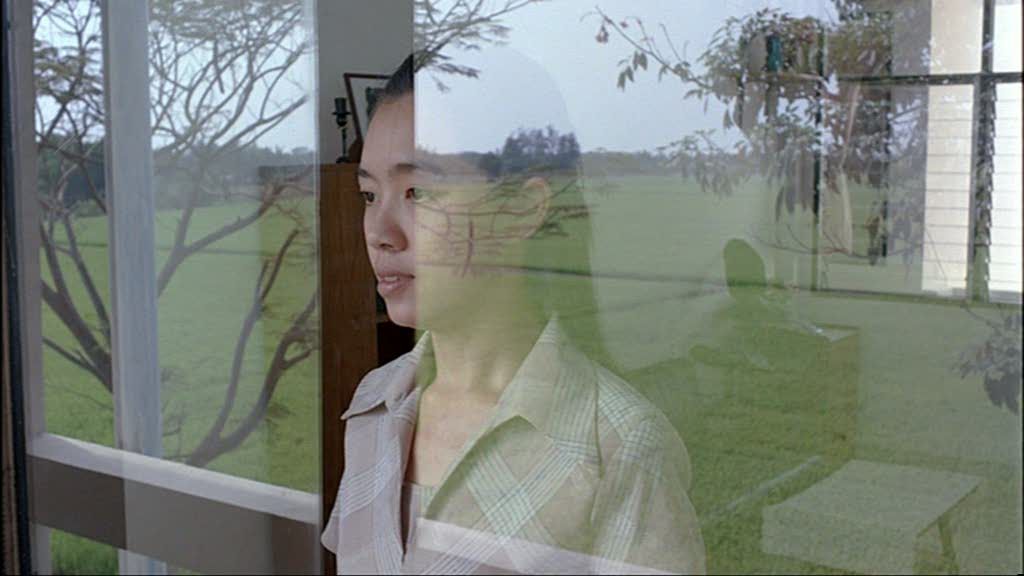
Of course, the most potent form of connection shown in the film is the lure of sexuality, which remains a barely articulated undercurrent until a late scene between Nohng and his girlfriend, where they stand by a window and kiss, then talk about him relocating with her, then kiss some more. The scene ends with Nohng laughing with embarrassment as he adjusts his erection in his pants, a moment of frank sexuality that startlingly brings sex to the forefront, if only for a second. Such pleasures are fleeting — the couple's situation is obviously precarious and they seem on the verge of a breakup — but no less real. This is indicative of Weerasethakul's method in general: he allows themes and moments to emerge organically, presented for their own sake rather than as components in a tightly knit narrative framework.

At one point, when Toey is pursued by her admirer, she distracts him from his anguished declarations of love by telling a lengthy story about an orchid grower (Sophon Pukanok) she meets in a market, and her subsequent unarticulated desire for this other man. This anecdote rambles along without resolution; it begins as a story she's telling to a new suitor, but then it drifts off into its own place, expanding into a sensual depiction of an afternoon spent at the farmer's country home. This story is interrupted once by the intrusion of the present-day scene, but after that it ceases to be a flashback and takes on a reality of its own, as though it is not a memory but something happening to Toey in real-time. Weerasethakul never resolves either the story of the orchid-grower or the story of the other admirer; the flashback cuts off after the farmer obliquely tries to tell Toey that he loves her.

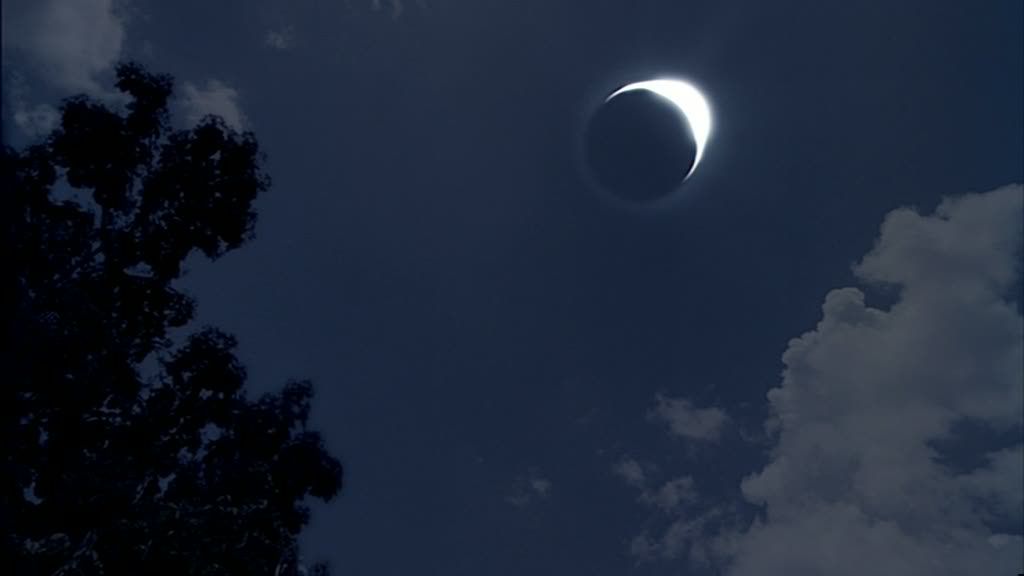
This meandering approach to storytelling serves Weerasethakul well. Syndromes and a Century is a rich, lively film, packed with moments of sensuality, grace and beauty. When the spirit moves him, Weerasethakul will pause to observe a solar eclipse, or the pale blue of the sky as seen through a web of tree branches, or a dragonfly briefly alighting on the rippling surface of a pond, a magical moment caught almost accidentally within the camera's view and stitched into the film for its inherent beauty and mystery rather than for any import it might have for the characters or stories Weerasethakul is elliptically telling. This openness inflects every frame of this film, which is very much alive with possibility; the narrative itself seems to be constantly branching off, suggesting the potential to follow multiple paths, to see the same scenes from multiple perspectives. It's a film, also, about the possibilities of human connection, about feeling empathy for others, about wanting to heal pains both physical and emotional. It is, above all, a beautiful and moving film, a nearly overwhelming cinematic experience that is dense with ideas and with suggestive imagery.

Tokyo!


Tokyo! is a multi-director anthology in which three directors — Frenchmen Michel Gondry and Leos Carax and Korean Bong Joon-ho — present three individual short films, linked only by their shared setting and their different approaches to odd, surrealistic storytelling. Gondry's film is first, a quietly moving short called Interior Design, based on the great short story "Cecil and Jordan in New York" by comic artist Gabrielle Bell, who co-wrote the film with Gondry. The film is about Hiroko (Ayako Fujitani) and her filmmaker boyfriend Akira (Ryo Kase), who go to Tokyo in order to screen Akira's low-budget film and to make a start for themselves in the city. When they first arrive, they move in with Hiroko's friend Akemi (Ayumi Ito), staying in her cramped apartment while trying to find a place for themselves as well. Things are difficult, however, since only Akira is able to get a part-time job, their car is ticketed and finally impounded, and every apartment they look at is tiny and miserable. Hiroko is increasingly aimless in the city, wandering around, growing frustrated, sensing Akira's growing distance from her (and attraction to her friend Akemi instead) and sensing also Akemi's aggravation that the couple has been taking advantage of her hospitality for so long.

At this point, Hiroko undergoes a startling change, turning into a plain wooden chair. She initially runs through the streets in a panic as her legs become thin wooden sticks, but she soon becomes used to her situation, accepting and even enjoying it. She's taken home by a young musician, and stays a chair at night when he's home, while transforming back into a girl during the day so she can do what she wants, puttering around his apartment. Gondry treats the offhand surrealism of the story with much the same attitude as Bell's original comic, in which the heroine's transformation into a chair is accomplished in three panels, accompanied by the casual narration, "and so I changed myself into a chair." Other than transplanting the characters from Brooklyn to Tokyo, Gondry expands upon the original story while keeping to its basic thrust. The actual initial moment of transformation is more dramatic here, with some stunning special effects to show Hiroko's gradual process of becoming a chair.

More importantly, however, Gondry fills in the subtexts of the original story, which is about loneliness and the feeling of being ignored. Hiroko feels like she is "just the girlfriend" to Akira, who isn't exactly a successful filmmaker but still gets more attention as an "artist," while Hiroko feels left out, useless, without purpose in her life. Her transformation is thus an attempt to become valuable, to become something with a concrete use. She becomes a chair, strictly utilitarian, essential and important and yet also ordinary. It's a bittersweet, clever little film, quiet in its emotions and subtle in the way it allows its metaphors to play out. The relationship between Akira and Hiroko is portrayed well by the two young actors, who laugh and joke with one another; their relationship seems to be built on in-jokes and goofing around. They're young and not yet taking life seriously. They turn everything into a game, even serious problems like checking their finances to see how they can afford an apartment. And they're ill-prepared to really talk to one another, particularly Akira, who's too tied up in his goofy art films to really pay much attention to his girlfriend.

Hiroko's transformation is thus an escape, from a life of being ignored, and also from a life of encroaching responsibilities. She has a childlike sense of play — she sits around cutting pictures out of magazines and making collages or awkward origami — and she doesn't want to lose her little "hobbies," which for her define what she wants from the world. She doesn't want to have "ambition," as Akira keeps urging her. She just wants someone to think she's useful; she wants to feel like she has a place in the world. By the end of the film, she does. This is a wonderful, affecting film, one that does justice to one of cartoonist Bell's best stories.


The second film in this anthology is Leos Carax's incredibly strange Merde. This short opens with the titular character (Denis Lavant), emerging from a manhole cover, filthy and wild-looking in a green suit, with frizzy hair, a milky white eye, and a red beard curving off to one side like a scythe's blade. He has been dubbed "the creature from the sewers," and like a true movie monster he terrorizes the city's inhabitants, initially in bizarre, amusing ways like grabbing their cigarettes, licking them, or stealing and eating flowers and cash. But Merde's reign of terror soon becomes much darker when he emerges from the sewers with a cache of grenades he discovered beneath the streets, and begins throwing them frantically around in the streets, killing and maiming dozens of people and destroying cars and property all around him. Merde is then captured and placed on trial, defended by a visiting French lawyer, Voland (Jean-François Balmer), who is his mirror image, with a milky white eye and curved red beard, and one of the only people in the world who actually speaks Merde's guttural, gibberish language.

This film is unsettling and ambiguous, making intentional references to Japanese monster movies and their relationship to Japan's history as the only nation to be hit with a nuclear bomb, as well as exploring obvious parallels to the modern American-led "war on terror." At one point, a news broadcast asserts that Merde had once been spotted at an Al-Qaeda training camp. At his trial, the audience is filled with people with burn marks on their faces, or their heads swathed in bandages, looking like Hiroshima survivors. The film is a dense collage of references and possible meanings, incorporating stereotypical Japanese images as conceived by a Westerner, like the people at the trial who wear surgical masks or the Japanese schoolgirl who drops her coat, revealing a skimpy outfit underneath, when Merde attacks her. These images are like fever-dreams of Japan, conceived in the West through the prism of the little Japanese culture — monster movies, anime and manga, J-pop — that's popularly visible outside of Japan.

This is fitting, because one of the film's primary themes is the disconnection that comes with multiple languages and multiple cultures. Throughout the second half of the short, the entirety of the dialogue is heard three times, once in Japanese, once in French, and once in the nonsense language spoken only by Merde and Voland. This constant translation and repetition is required for everyone to understand everyone else, and the process becomes even more complex when subtitles are incorporated for audiences who speak neither French nor Japanese. The film is at least partly about the difficulty of understanding others, of grasping the thought processes behind people who seem grotesque, threatening and unusual. Is Merde insane? Is he a "racist," as one Japanese lawyer calls him? Is he a misanthrope? Is he ugly, or is he, as he says his "gorgeous" mother called him, "a pretty little boy?" Carax leaves everything ambiguous and tonally confused, constantly vacillating between outlandish horror and offbeat dark humor. This is especially apparent in the bizarre ending, in which an intertitle, superimposed over an image of a five-dollar bill with Abraham Lincoln disfigured to resemble Merde, promises further adventures of Merde in New York: "Merde in USA," a deadpan riff on Godard's Made In USA. Carax's weird, open-ended short never settles its multiple allegorical meanings and ideas, but it's an interesting, unforgettable film nevertheless.


The final short here is the most traditional and straightforward, as well as the one short that engages in a serious way with the nature of Japanese culture. Whereas the first two shorts, both by Westerners, could probably have been set anywhere and made just as much sense, Korean filmmaker Bong Joon-ho's Shaking Tokyo is more explicitly a film about Tokyo and Japan as a whole. It's the story of a "hikikomori," a Japanese word for a recluse who lives off his parents and never leaves his house, keeping his garbage carefully organized in stacks, spending his time reading and doing nothing. The unnamed central character, played by Teruyuki Kagawa, has not left his apartment in eleven years. Every year he receives a wad of money from his father, and otherwise his only contact with the outside world is his limited interaction with the delivery people who bring food and other things to his home. He never looks anyone in the eyes, simply handing over money and getting a pizza or a package in exchange.

This changes when he happens to make eye contact with a pizza delivery girl (Yû Aoi) who comes to his apartment. While steadfastly looking down, handing over his money as he takes the pizza, he catches sight of her garter belt and the thin strip of bare leg below her skirt, and it startles him into looking up at her face. At this moment, as though this man's isolation was unable to withstand such bracing contact with another person, Tokyo suffers an earthquake that shakes some of the man's possessions out of their perfect arrangements, and causes the girl to collapse on the floor in his foyer. The film's first magical realist touch is the man's discovery that the collapsed girl, who can't be woken, has dotted her body with tattoos of various buttons, indicating moods and conditions: sadness, hysteria, fear. Intrigued, he discovers a button on her exposed thigh, the spot that had so distracted him from his usually resolute avoidance of eye contact, that is marked "coma." He presses the button and the girl promptly wakes up.

This event changes the man, who soon learns that the girl, after meeting him and seeing his compulsively neat apartment, his splendid isolation, has decided to become a hikikomori as well. He thus decides to break his eleven-year isolation and venture out amongst the people of Tokyo. Instead, he finds a surreally abandoned city, its streets empty, its people staying inside — only a smiley-faced robot, delivering pizza, is visible on the streets. The man sees a woman standing behind a frosted glass door and tries to speak with her, but she simply fades back into the darkness, her ghostly form dissolving behind the glass as she steps backward. The film is a low-key examination of the isolation and disconnection of people living in a big, impersonal city like Tokyo. It's a haunting vision of a city full of people who all decide, spontaneously and all at once, to withdraw from other people, to remain in their own self-contained spaces, to avoid the crowds and the sunlight and the noise of Tokyo when it's full of people. The man's journey through this deserted metropolis becomes an attempt to find some connection, some link with another person, a reason to leave the house.

This final film isn't as adventurous or unusual as the first two, and its ending threatens to be excessively cute and hokey, but it's still an interesting short, worthwhile for the way its clever touches of imagination blend with its deadpan chronicle of everyday routine. As a whole, Tokyo! is a great collection. Its three shorts have little to do with one another, and they don't exactly fit together into a comprehensive statement of any kind, least of all about the title city — but then, why should they? Taken individually, each of these shorts is intriguing and entertaining in equal measures, and that's more than enough.