Showing posts with label Yasujiro Ozu. Show all posts

Passing Fancy


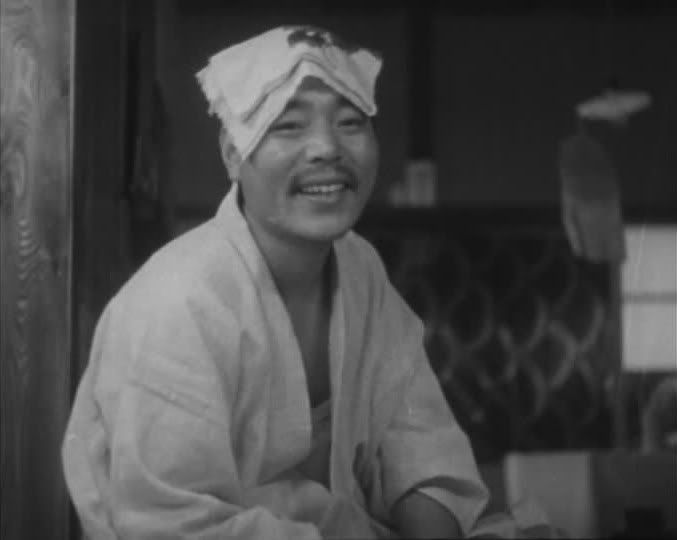
Passing Fancy is an early silent comedy by Yasujiro Ozu. Although many of Ozu's silent films are quite different from his later works, in Passing Fancy Ozu's mature style already seems to be almost fully developed. The film is a charming family comedy about the single dad Kihachi (Takeshi Sakamoto), his son Tomio (Tomio Aoki), and his friend Jiro (Den Obinata), and the tension that enters their simple lives when they meet the homeless and unemployed young woman Harue (Nobuko Fushimi). The middle-aged Kihachi immediately likes the much younger woman, helping her get a job and a place to stay at a neighborhood restaurant while courting her in his goofy but charming way. Harue, though, thinks of Kihachi as an uncle and prefers the younger Jiro, who makes sure to keep her at arm's length, though one suspects that despite his insistence that he doesn't like her, he's only pushing her away out of loyalty to his good friend.

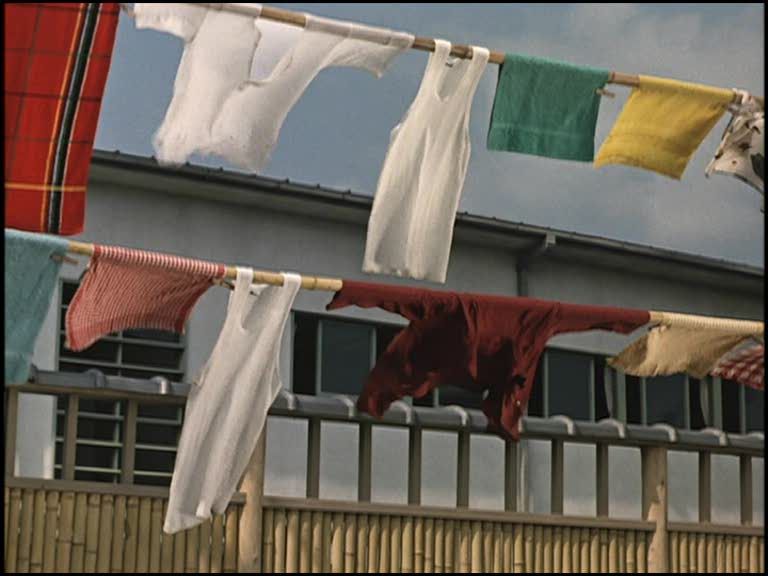
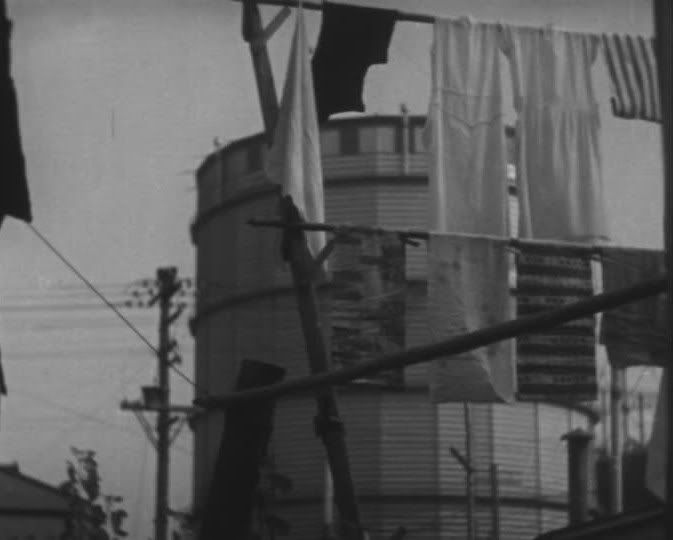
The film is mostly shot from Ozu's familiar low vantage point, his aesthetic already well-established by this time. In his films with children, the low camera placement seems to take on an additional purpose, as the low-to-the-ground framings are perfectly suited to a child's proportions — Tomio fits comfortably within the frame no matter how low the camera is placed — while the adults seem to tower outside the frame, their legs entering the frame before the rest of their body begins to appear in view. The compositions of the film are as meticulous and deliberate as later Ozu, with a constant awareness of how objects and people are arranged within the static frames; there is no camera movement, an aesthetic choice that would be totally codified in Ozu's late color films. As in his later work, striking use is made of bottles and other household objects positioned to counterbalance the actors within the frame; often the actors are placed into the background with some domestic object highlighted in the foreground. Ozu also periodically inserts static shots of the surrounding buildings and water towers to establish the setting, early examples of the "pillow shots" that would become such a powerful aesthetic devise in the director's postwar oeuvre.

Though there are elements of drama and melancholy in Passing Fancy, the film is largely a comedy, not so much in terms of broad slapstick as in its gentle but pervasive comic tone. Even at the height of the film's downtrodden section, when Tomio falls ill and Kihachi worries that the boy might die, Ozu breaks the tragic mood with a comic series of intertitles when Tomio's teacher asks Kihachi how the kid got sick, causing Kihachi to respond that "he ate fifty sen worth of sweets all at once," then enumerating all of the different flavors of candy the boy had eaten. Obviously, the illness isn't meant to be taken entirely seriously, but Kihachi's worries are heartrending anyway. Similarly, there's a strain of comedy running through the film centering on economic concerns in Depression era Japan, a concept introduced in the most humorous possible way in the film's opening scenes. At a theatrical performance, several men in the audience see a coin purse sitting on the ground and discretely peek inside, realizing that it's empty and then discarding it, only to have another man pick it up in the hopes of finding something inside. Ozu milks this gag for its gestural comedy, and also for its suggestion of poverty so extreme and common that none of these men think twice about trying to scrounge for money anywhere they might find a few coins. The physical comedy is then extended with a sequence where several men get up and dance around as though they have bugs crawling around in their clothes, another sign of the squalor of this neighborhood.

That economic hardship defines the film in many ways. Kihachi is embarrassed by his lack of financial security, by his inability to give his child everything he'd like to, and his desire for more leads him to extravagantly give the boy a coin, which Tomio then uses to gorge on candy since he's not used to having any money at all. More seriously, Kihachi proves incapable of paying the doctor who cares for his son, and scraping together the money for the medical bills proves to be an exceedingly difficult task. It quite literally takes the efforts of nearly everyone he knows to pay the doctor, with his community of friends and neighbors coming together to help him and his son.

Ozu often seems constrained by the stylistic conventions of the silent cinema; Japan was slow to switch to sound, and though Ozu often gets by here through gestural acting within the frame, this is a rather dialogue-heavy film with a lot of information and emotion conveyed through the text. In the scene where Harue and Jiro argue over her lack of romantic feelings for Kihachi, Ozu unleashes an uncharacteristic barrage of dialogue intertitles, alternating between static, repetitive images of Harue and Jiro, with more or less the same closeup of each repeated over and over again in between titles. It's one of the moments when the limitations of silent style for Ozu become obvious, as his visual sensibility must be subsumed to the necessity of staging a lengthy and emotionally complex conversation entirely in text.

Such glitches aside, Passing Fancy is a warm and gently funny work. The film's story is minimal, which allows Ozu to develop his characters and to use his slow, observational visual sensibility to create a portrait of an era and a neighborhood. The rich sense of community, the half-comic depiction of economic woes, the emotional nuance of the characters as they make the best of their limited circumstances, it all adds up to a lovely film that's very much attuned to the social milieu in which it is set.
The Conversations #21: An Autumn Afternoon


Jason Bellamy and I have a busy month lined up for our Conversations series, and following quickly on the heels of our concert film discussion, we've posted our second piece this month, a consideration of Yasujiro Ozu's final film, An Autumn Afternoon. We talk about this film from many different angles — aesthetics, acting, themes, humor — and relate it to Ozu's career as a whole. As usual, our conversation also touches on meta topics, like the very big question of the possible gap between what a shot is intended to represent and what could be read into it. It's a lively discussion with a lot of back-and-forth debate. As usual, we invite our readers to join the conversation in the comments, so follow the link below to the House Next Door and check it out.

Also, keep an eye out later this month for our discussion of the films of Darren Aronofsky, a career overview that will be followed by a piece about his new film Black Swan.

Continue reading at The House Next Door

I Was Born, But...


I Was Born, But... is an utterly charming, hilarious silent comedy of childhood by Yasujiro Ozu, displaying the lighter, more playful side of his sensibility. The film concerns itself almost exclusively with the child's point of view, focusing on the perspective of young brothers Keiji (Tomio Aoki) and Ryoichi (Hideo Sugawara). The boys have just moved to a new town with their father (Tatsuo Saito) and mother (Mitsuko Yoshikawa), since their father has moved to the suburbs so as to be closer to his boss. The film's genius is the way Ozu keeps unceremoniously cutting away from the film's adult dramas — the father's desire to advance at work and make a good impression on his boss — to follow the kids instead. It's like there are two entirely separate worlds coexisting here. When the father goes to visit his boss on the weekend early in the film, Ozu watches just long enough to establish that he's doing a little sucking up, looking obviously subservient with his stained jacket and nervous mannerisms, and then the camera chases off after the boss' son Taro (Seiichi Kato) as he runs away with some friends to go bully the new boys.

These scenes have an exuberance and energy that's nearly irresistible, as Ozu traces the way that small dramas can be of big consequence in a child's world. Keiji and Ryoichi must adjust to their new home, to new challenges from a bully and the gang he leads. They are dogged, too, by their father's insistence that they do well in school, even though they don't even want to go because of the bullies there. When asked if they like school, the boys immediately respond, "we like the walk there and the walk home, but in between is no fun." There's a real sharp wit in this film, a sense of pitch-perfect comic timing that's as present in the physical comedy as it is in the sporadic dialogue provided by the titles. When the bullies confront the two boys, it's staged like a dance, with each side stepping forward a little bit at a time, hesitantly posturing for one another, the leader gliding forward and the others behind him nervously inching up to support him or at least to see what's going on.

Ozu has great fun with all these scenes, enjoying the kids' mugging and goofing around, the way they make faces and stand on one foot, try to find sparrows' eggs because they think it'll make them stronger, and play a funny game of raising the dead, gesturing to make a kid fall to the floor, then crossing themselves and holding their hands out to bring him back to "life." There are plenty of wonderful comic set pieces and characters, like the beer delivery boy (Shoichi Kofujita) who teases the boys by pretending he'll forge a good grade on their faked homework assignment, then drawing a backwards character instead. Later, the boys convince the delivery boy to help them beat up the bully who's bothering them, because they tip him off when their mother wants to buy beer. Helping him get a sale earns the boys his temporary loyalty, but it's not enough to get him to also take on Taro: as he explains, Taro's family buys much more than Keiji and Ryoichi's family. This is a first indication, though the boys don't understand it at the time, of the concept of social status and hierarchies.

Their understanding of hierarchies is limited to the idea of who can beat up whom, of who's bigger and stronger, who's tougher. They don't get that the adult world has different priorities, that money and class dictate the separations and relationships between people once they grow up past childhood. Once the boys dispense with the bully, they take over leadership of the gang, including Taro, who becomes their friend and lackey. To them, they're equals at least, so it's puzzling to get some hints that things might be different for their parents. This conflict comes to the fore in the film's final third: after spending an hour dealing with light slapstick and goofy little set pieces involving the kids, Ozu unexpectedly introduces a note of pathos and drama when the boys see some amateur movies of their father acting like a fool at work, making funny faces and trying to amuse his boss. They had worshiped and respected their father, believing him to be an important man, defending him in the usual kids' arguments about whose father is the best. When they see these movies, they suddenly see him in a totally different light, as a clown, as someone who has to be obsequious with Taro's father, constantly bowing to him. And when their father tries to explain that he is only an employee, that Taro's father is above him in rank, the boys are only even more devastated, understanding in a flash that the world does not work the way they thought it did, that their father was not the "great man" they'd thought he was.


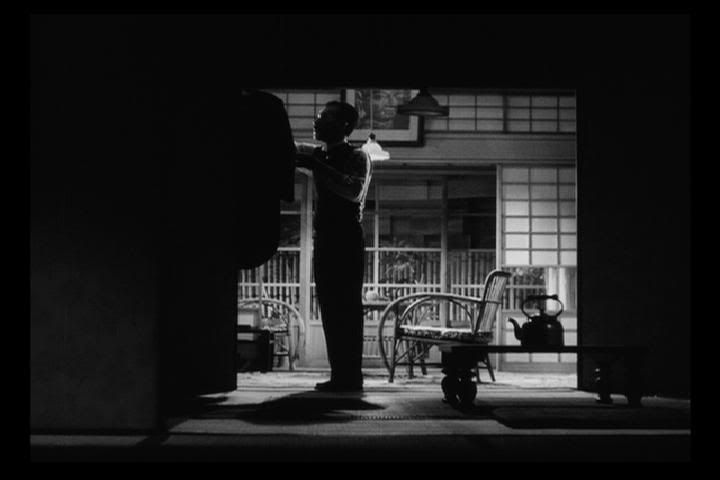
The film's final act is moving and nuanced in its treatment of this theme, replacing the humor of the earlier scenes with an honest, direct look at class and honor. The father sighs that coping with the limits of status, with settling for being just a lowly employee, is "a problem kids these days will face all their lives," suggesting that he sees a future, sadly enough, where his own sons will grow up to be just like him, cogs in the machine rather than truly important men. He watches them sleep, with tears drying beneath their eyes, and urges them to strive to be better, not to settle for a working man's life and status the way he had. It's deeply affecting, to see this man struggling with his emotions as he realizes how badly his sons' confidence in him has been shaken. He briefly sinks into despair, grabbing a bottle of liquor and threatening to drown his sorrow in it. Ozu captures this low point quite effectively, framing the image with the father leaning against the doorway in the right side of the frame, the liquor bottle in his hand hanging down into the foreground, as his wife sits in the center of the frame in the background. It's a wonderful image of resignation and sadness. It is also the payoff to Ozu's decision to stage the film so completely from the kids' perspective prior to this: this sudden shift to the father, to his long-subdued frustration and mild shame at his limited position in life, is striking in its emotional impact.

There are hints of this sympathy to the father's perspective earlier in the film, too. Ozu's editing frequently suggests the continuity between father and sons even before the theme comes up explicitly in the film's denouement, by drawing parallels between the generations through juxtapositions of images. At one point, the camera pans (a camera move much more frequent in silent Ozu than it would be later in his career) across a row of office workers hunched over their desks, writing. Ozu then cuts to a cluster of students at their desks, learning calligraphy while a teacher admonishes them for goofing around or staring off into space, and finally the camera pans across an open field where the two kids cutting school are sprawled out, also writing as they lie in the grass. In all three shots, the camera move is the same, even as subtle shifts in the angle calls attention to the cutting, preventing a smooth transition from one shot to the next. It is purposefully disjunctive and jarring, suggesting both that the generations are linked by similar behaviors and situations, and yet that there is some necessary break, some trauma, that leads from childhood to adulthood. That break, perhaps, is the children's later realization of their father's place in the social strata.

Ozu chronicles the changing relationship between father and sons throughout the film by returning several times to a particular primal scene, the father and the two boys leaving the house together in the mornings, walking together as far as a train crossing before splitting up, the boys going off to school and the father to work. When this scene recurs at the end of the film, after the boys have started to come to terms with their father's place in the world, it mirrors the earlier ones, in which the boys had unquestioned respect for their father. But there's a new emotional undercurrent here, a hint of hesitancy that's cleared up when the boys give their father permission to go greet his boss, confirming that they now understand and have once again gained respect for him, albeit a new, more realistic respect, one founded on simple love rather than a mistaken belief in the father as an idealized "great man." It is a poignant and warm ending to a wonderful film in which Ozu affectionately, sensitively explores the nature of familial bonds and the role of honor in a new world where social class is calcifying into a rigid hierarchy.

Tokyo Chorus


Tokyo Chorus is an early pre-war silent film from Yasujiro Ozu, whose silent work generally reveals quite a different director from the later static, patient sensibility of his mature oeuvre. Of course, there is still a continuity in terms of themes and subjects connecting these earlier silents to the sound films. Tokyo Chorus is, like almost all of Ozu's films, concerned with domesticity and family relationships, and with the changes wrought on the family by outside pressures and developments. In Ozu's post-war films, these pressures take the form of encroaching Westernization, of the old traditional ways transitioning into a new modern sensibility. Obviously, there are some slightly different concerns at the core of this pre-war film, made in 1931 with the Great Depression affecting Japan as much as any other country — as one character jokes early on, "Hoover's policies haven't helped us yet," a wry punchline made even more bitterly ironic by the retrospective knowledge that Hoover's policies didn't help anyone very much.

The film centers on one family struggling to make ends meet during this difficult economic time. Shinji (Tokihiko Okada) is introduced as a rebellious, goofy schoolboy, but a few years later he has a family: a wife (Emiko Yagumo), a son (Hideo Sugawara), a daughter (Hideko Takamine) and a baby. Ozu introduces Shinji in a lengthy and near-slapstick sequence as a stern school teacher (Tatsuo Saito) tries to maintain control over a rowdy line of students (though, admittedly, the fact that all these schoolboys look like grown men initially makes it hard for an outsider to figure out the context of this scene). Ozu pans across the line of students, his camera moving across a diagonal composition that is repeated several times throughout the film. Such motion would later become rare and uncharacteristic in Ozu's post-war work, but here his aesthetic is not pinned down to the static, low-height observation that would come to be his most salient visual characteristic. Instead, Ozu's camera tracks along with the characters as they walk, or passes along rows of people lining a street.

During the opening scene, Shinji and the other students goof around and play, as the instructor makes disapproving notes in a little book, calling them out to examine their outfits and their posture. Shinji gets in trouble for not having a shirt on under his jacket, and is left sitting alone, picking at something (bugs? stray threads?) on his pants as the rest of the students are led away. This introduction establishes the film's broad sense of humor, telegraphed through the loping gait of the students as they act surly towards the teacher, or the instructor's head-bobbing bounce as he surveys them. From this opening, Ozu cuts away to a few years later, when Shinji is working at an insurance company. It is not stated directly, but the gap is meant to represent the onset of maturity, the rowdy schoolboy gaining responsibility as he settles into life with a family and a respectable office job.


This stability is disrupted when Shinji loses his job after defending an older employee who he felt had been unfairly fired: his earlier insouciance towards authority manifesting itself again in an act of benevolent defiance. The scene is nearly played for comedy — Shinji and his boss get into a slowly escalating shoving match by tapping each other on the shoulder with fans — but there's no mistake that the consequences of this lost job are truly dire for a man with a wife and three children in the middle of a terrible depression, with no jobs available. The central theme of the film is this man's struggle to maintain his family's honor and his own self-respect when faced with the loss of his profession and, with it, his claim to respectability. Honor is central to the film, especially as expressed in the way that Shinji's wife looks at him; Ozu captures the impact of a look, the humiliation of seeing her husband in a menial job that is beneath his station, a job he only got because of a chance encounter with his sympathetic former teacher.

What's interesting, though, is that Ozu ultimately critiques, in his own indirect way, the concepts of honor expressed here. Shinji's wife at first resists her husband "stooping" to a job carrying banners to advertise his former teacher's new restaurant; when she sees him doing this, she is humiliated. In fact, it's a rare moment when Ozu reinforces her feelings with an intertitle that outright says she's humiliated; Ozu generally uses such titles sparingly, preferring to capture such emotional nuances in the actors' performances, using the editing to emphasize certain glances and expressions. This, apparently, was a beat that Ozu felt the need to hammer home more forcefully, however, hitting his audience over the head rather than risk anyone missing the wife's sense of disgrace. She tells Shinji that he should remain proud and not do anything so obviously beneath his status. But Shinji resists, insisting that he is doing the right thing, that all a man in his situation can do is take whatever opportunities come to him. His wife soon gives way as well, agreeing to help him in his new job and supporting him until, at the end, his former teacher comes through with an offer of a better job in education. The lesson seems to be that abstract concepts like honor and pride are not nearly as important as putting food on the table for one's family, just as keeping up appearances must be secondary to providing the necessities of life for one's loved ones.

Tokyo Chorus is a fine film if not a particularly distinguished one. It reveals Ozu's nascent sensibility in its earliest state, as he deals with his usual themes — family dramas, the conflict between traditional values and changing conditions, the rhythms of domestic life — in a less formally rigorous way than he would in later years. The film is unfailingly direct and straightforward in its approach, telling a simple story simply. It is thus not quite a peak Ozu film, but perhaps an important work in his development, a step towards the greater depth and aesthetic richness of his later films. It is, regardless, an affecting film, particularly in two scenes between Shinji and his teacher. In the first, when the teacher offers Shinji a job, the latter offers some token resistance based on honor, saying that if the teacher merely feels pity for him, then he can't accept, but that if it's a gesture of friendship instead, he can. Shinji is essentially constructing a way for him to take the job and still feel like he's not sacrificing his honor; Ozu captures the desperate yearning on Shinji's face as he fears that perhaps his teacher will withdraw the offer, and the knowing nod from the teacher as he accepts this face-saving gesture. Later, in the final scene, Shinji's former classmates have gathered together for a reunion, and are singing a song together. Shinji and the teacher both join in, but as Ozu cuts between closeups of the two of them, isolating them within the crowd, their faces are troubled briefly by sadness and introspection before they regain their composure and join the celebration. Even in a relatively straightforward and conventional film like this, Ozu asserts his mastery with shots like these, shots where complicated emotions arise from his probing of the faces of his actors, and the juxtapositions between uplift and loss that flow through this film.

The End of Summer


The End of Summer was Yasujiro Ozu's penultimate film, and it's thus perhaps fitting that the film's subject, at least in part, is the end of life: the English title refers not only to seasonal changes but to pivotal moments in life, particularly its cessation. (The Japanese title, literally translated as Autumn for the Kohayagawa Family, conveys the same sense of some doors closing while others open anew.) The elderly Kohayagawa (Ganjiro Nakamura) has had a full, busy life, and now that he's near its end, he wants only to squeeze out the last few drops of pleasure from his existence, and to leave this world believing that his family is going to be taken care of after he's gone. He doesn't dwell on death or show any overt signs of preoccupation with what happens after he's gone, but it nevertheless clearly motivates him. In particular, he wants to know that his daughters — young, unmarried Noriko (Yôko Tsukasa) and widowed Akiko (Setsuko Hara) — are settled and married. His eldest daughter, Fumiko (Michiyo Aratama) is already married, to Hisao (Keiju Kobayashi), and for them Kohayagawa wants to know that his perpetually struggling business, which he's more or less passed on to Hisao, is well-maintained. Still, although Kohayagawa is in some ways getting his affairs in order and tying up loose ends, he's hardly given up on life, and he retains the sense of pleasure he feels in the company of Sasaki Tsune (Chieko Naniwa), who he'd had an affair with many years before and with whom he'd rekindled this affection in his dotage. He is an example of one end of the see-saw dichotomy that runs through so much of Ozu's work: the tension between personal happiness and the stability of the family or the larger community. It is the tension between the individual and the group, here realized as Kohayagawa's balance between doing what he wants and doing what his family, who are embarrassed of his philandering and his carefree lifestyle, would prefer.

This is a recurring topic in Ozu's films, many of which involve the kinds of marriage dramas that Noriko and Akiko face, in which the women must choose between the option that will make them happiest, and the option that will make their families happiest and most stable. Noriko and Akiko are both being set up with men who bemuse and entertain them but who they certainly don't love. Noriko, in fact, is in love with another man, a man who she worked with but who moved away before they could truly express their feelings for one another. Akiko, for her part, would prefer to remain a widow, raising her child by herself, rather than get married again. But both women nevertheless are seriously considering these arranged marriages for the sake of their family. The film's drama, quiet and understated as it is, revolves around the sisters' crucial choice between their individual happiness and their reluctance to disappoint or inconvenience their family. It's a plot Ozu returned to again and again, as he probed the changing dynamics of Japanese culture post-World War II, the infusion of Western influences, and the friction between old ways of doing things and new understandings of the possibilities open to individuals outside of traditional group structures.

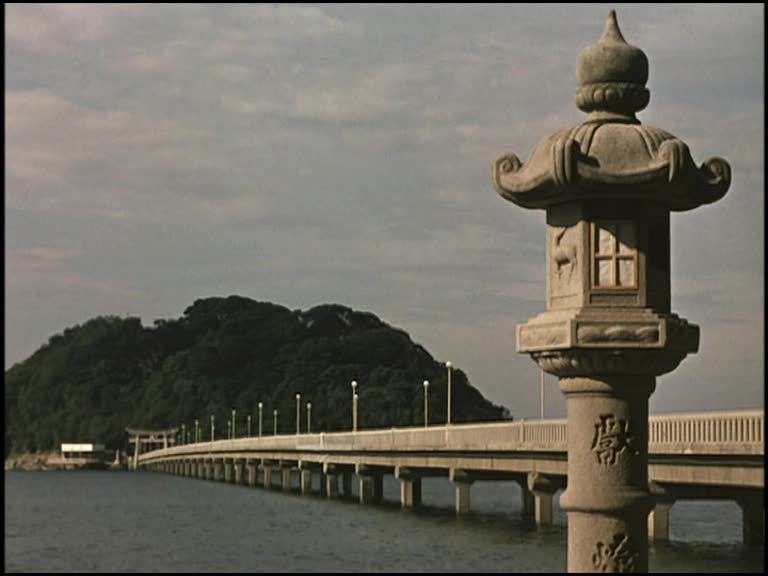
Ozu's gentle aesthetic — static shots from a fixed, low perspective, arranged in patient rhythms — is perfectly suited to such introspective stories. He intersperses his inter-generational narrative, as usual, with unpopulated interludes, shots of these domestic settings denuded of their inhabitants. These interludes are lyrical poems, often three-line poems in which each "line" is an individual shot. These triplets serve multiple purposes for Ozu: they are dividers between dramatic, narrative, dialogue scenes; they establish a sense of place; they influence the film's rhythm and pacing; they enhance the impression that Ozu is a sublime documenter of everyday life in all its minutest details. But most importantly, these images are simply sensual and sensory, almost abstract in their oblique relationships to the narrative scenes.


Sometimes the syntax of these "poems" is clear enough: start with a medium shot of an empty room, then cut to a closeup of a pale blue lantern, a detail from the wider shot. That's a standard enough gesture. More unpredictable is Ozu's penchant for offering unusual angles on the same scene. The three shots shown above are a typical example of one of Ozu's poetic sequences: three views of wooden baskets lined up along a wall, but the relationship between the three shots is ambiguous and formal rather than straightforward. The first two shots rhyme against one another with opposing angles and slightly altered distance, together forming an uneven upside-down "V" shape, while the third shot unexpectedly pulls back down an adjacent alleyway. This shot sequence is mysterious and purely formal, a diversion from Ozu's documentation of his ordinary characters to examine the rich details and prosaic beauty of their surroundings. This particular tendency in Ozu is perhaps his most characteristically Japanese touch, derived from a rich tradition of such visual poetry, like Hokusai's famous "views" of Mount Fuji, each one drawn from a different angle and infused with different hues.

The film's opening sequence provides a stunning example of how Ozu's patient cutting from one static shot to another can subtly lead into the buried drama of his stories, as well as creating an overpowering mood through the rhythmic editing. The first two shots show the city of Osaka at night, its blinking neon lights and tall, dark skyscrapers instantly announcing the modernity of the setting. Ozu then cuts to a shot in the interior of a bar, looking from his typical low angle down a row of bar stools at the blinking neon sign out the window and the bar patrons sitting at the counter. The next shot is a two-shot of a man sitting at the bar with one of the hostesses, and then Ozu cuts to single shots of each of them in turn. It's a simple rhythm, but in just six shots Ozu has moved fluidly from the broadest possible context to the most intimate, from images of an entire city to closeups of individuals. His deliberate aesthetic creates a cumulative effect, with each shot adding to the mood established by the earlier shots; the intrusion of Setsuko Hara, as the traditional woman Akiko, into this modern world is especially startling, with her traditional garb clashing against the bright, stylish dresses and American-style makeup favored by most of the younger girls in this place.

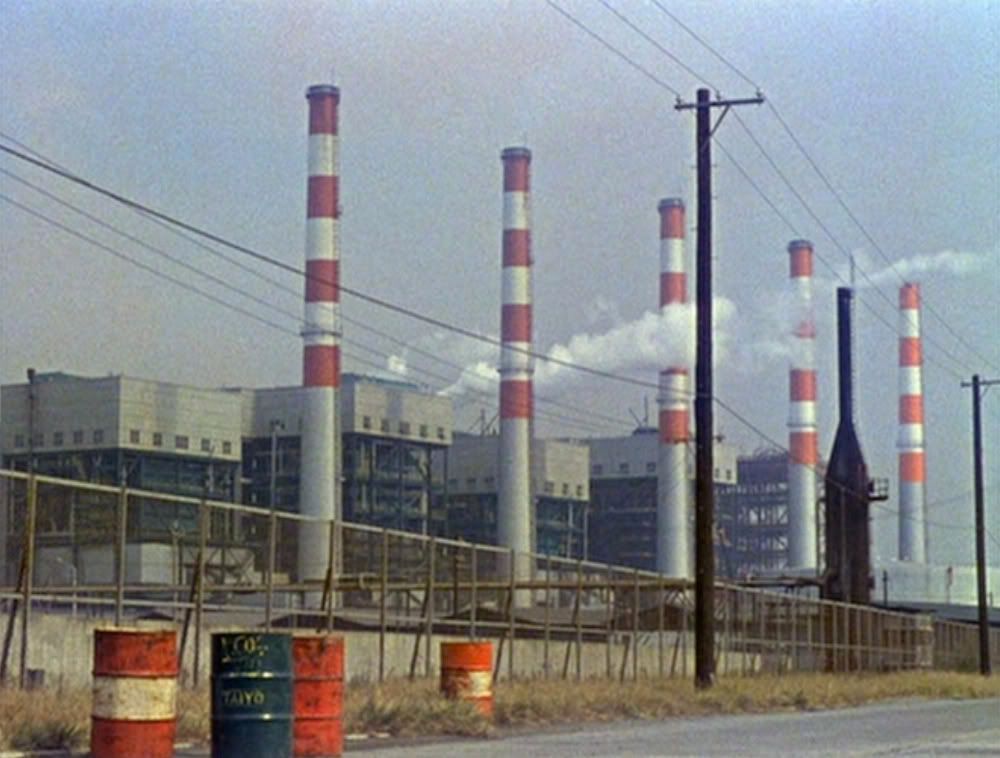
All of this slow accumulation is leading towards a moving, complex denouement, in which Akiko and Noriko make their respective decisions as the older generation cedes its reign to the younger ones. The film's entire final act is comprised of Ozu's epic depiction of a funeral, a lengthy and emotionally intense sequence spread out across multiple different locations. His editing rhythms take on a sublime purposefulness at this point. A pair of peasants by a river are surrounded by crows, a harbinger of death, and they look up at the tall chimney of the nearby crematorium, which will emit clouds of smoke at the climax of the funeral. The peasants exchange pat clichés about the "cycle of life" and death as the passing of the torch from one generation to the next, but Ozu makes these values apparent more poignantly in his visuals, and in the more indirect conversation between Akiko and Noriko. The two sisters watch the smokestack from a nearby hillside, discussing their respective decisions and the importance of being happy in life. Meanwhile, the remainder of the family gathers in a restaurant for the funeral lunch, and though they chatter on about life and death, sometimes cheerful and sometimes distraught, the moment when they first see the crematorium's smoke is entirely silent, shot from behind, with one woman slowly rising to watch and the others solemnly following, until everyone is arranged at the window in a tight group, watching the last fragile wisps of a life being blown away by the wind. The film ends with another of Ozu's poetic interludes, on the subject of death this time: crows under a pier, crows on a sand bank, crows hopping from one grave marker to the next, cawing, their black feathery forms seeming like negative space against the pale blue of sky and water or the lush greens of the foliage.


What's especially unexpected about The End of Summer, given its big themes and serious subjects, is how light it is in its approach. Ozu's comedy is often broader and airier than one would expect from an artist of his general delicacy and deliberateness. In one scene, Akiko's would-be new husband pulls out a cigarette lighter that unleashes a massive flame, so that the act of lighting a cigarette is like sticking one's face into the path of a flamethrower; it's a gag of visual incongruity on par with Quentin Tarantino's recent pipe gag in Inglourious Basterds (and that's probably one of the few times you'll see anyone link Tarantino and Ozu in any way). More importantly, Ganjiro Nakamura in particular delivers a wonderfully comic performance as the family's spry, cheerful patriarch. When he walks through the streets, fanning himself to shield against the oppressive heat, there's a faint bounce in his step, a peculiar waddle that Ozu synchronizes with the jaunty soundtrack. There's great comic charm in Kohayagawa's attempts to elude his family so he can visit his mistress. At one point, while playing hide-and-seek with his grandson, he pretends to be looking for the boy but is actually stealthily dressing and preparing to go out. Sasaki, his mistress, provides some wry humor as well, particularly in her relationship with her daughter Yuriko (Reiko Dan), who she claims is Kohayagawa's daughter even though the girl's parentage is by no means certain. These two women are matter-of-fact gold-diggers, getting the most they can out of their relationships with men, but Ozu doesn't judge them harshly: they simply do what they have to in order to get by, to survive and experience some measure of happiness in their lives. Like Kohayagawa himself, they take life as it comes and enjoy it as much as possible. Despite Ozu's sympathies for older ways of doing things, for the bonds of tradition and duty and responsibility, it's apparent that he appreciates this more lackadaisical approach to life as well.

The End of Summer is a beautiful, graceful film, a resonant work that frankly addresses mortality and the shifting cultural status quo. It is a profoundly unhurried film, and yet there is an economy of gesture and movement in Ozu's aesthetic that makes the film seem very condensed. Each movement has a purpose: there are several shots in which two people sit into a crouching position together, their movements perfectly synchronized, as though they are both attuned to the world's invisible rhythm. This rhythm, so subtle and yet so powerful, is the rhythm of Ozu's films: slow, graceful, perhaps slightly melancholic, but also at times joyful and even exuberant, quietly exulting in the possibilities of the future or even just the sunny warmth of one of the final summer days before autumn.

Films I Love #12: Equinox Flower (Yasujiro Ozu, 1958)


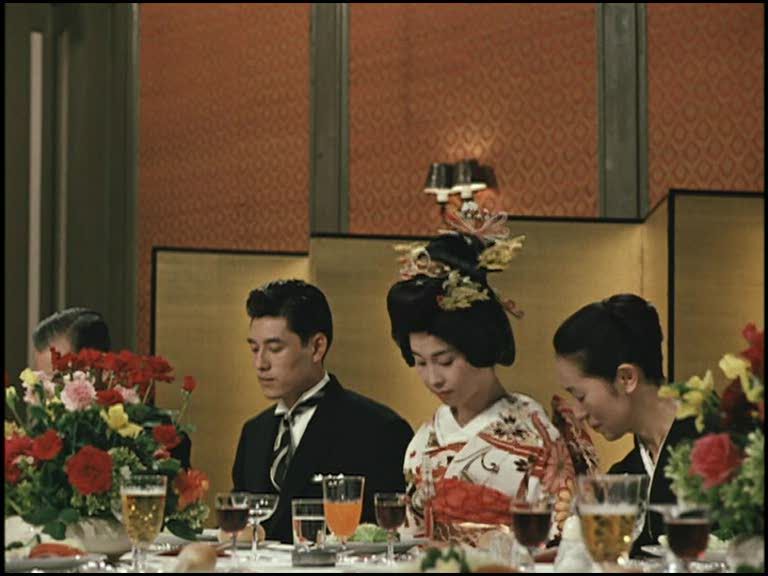
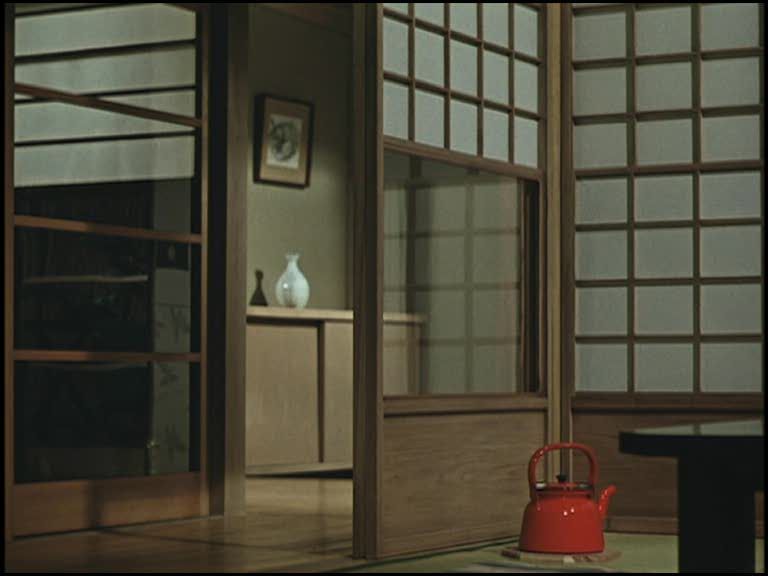
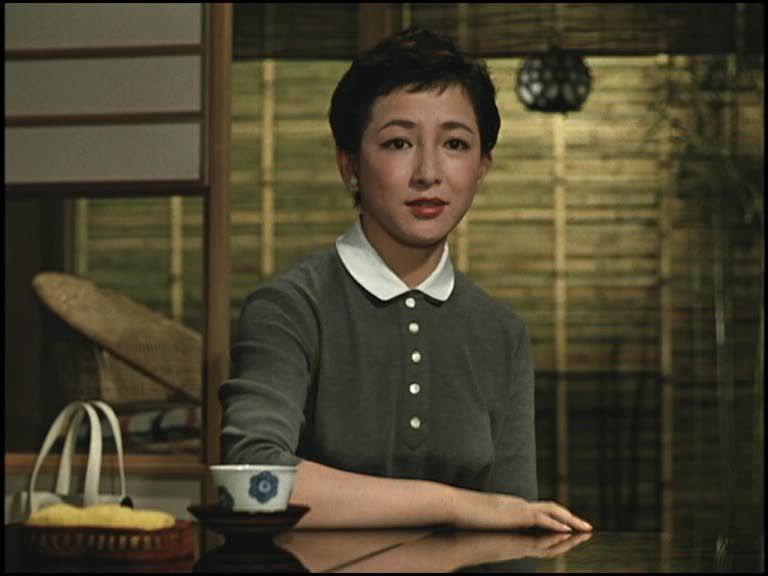
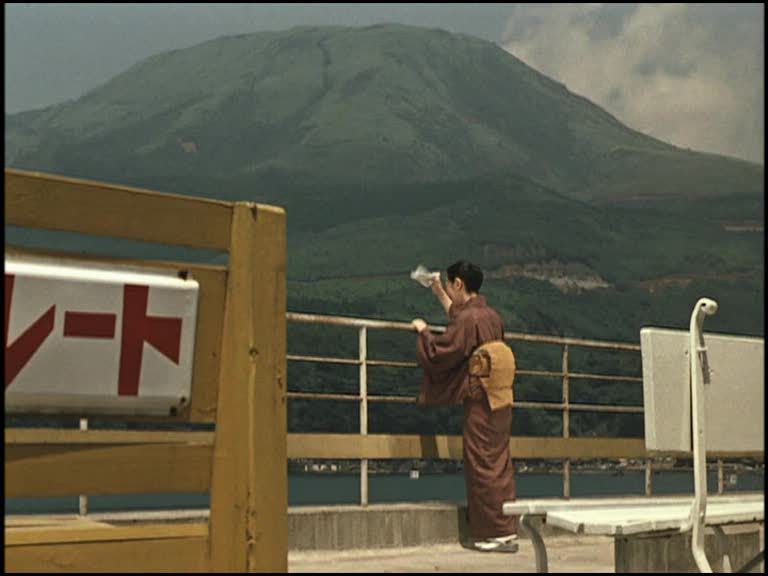
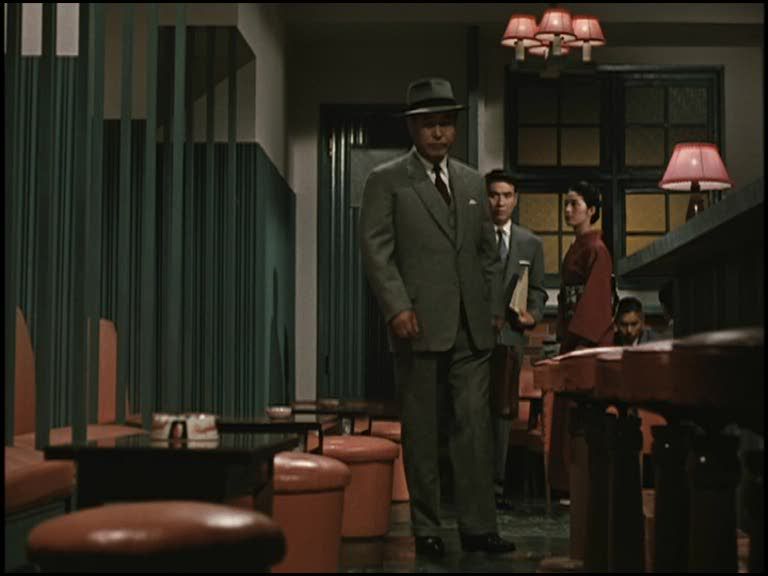
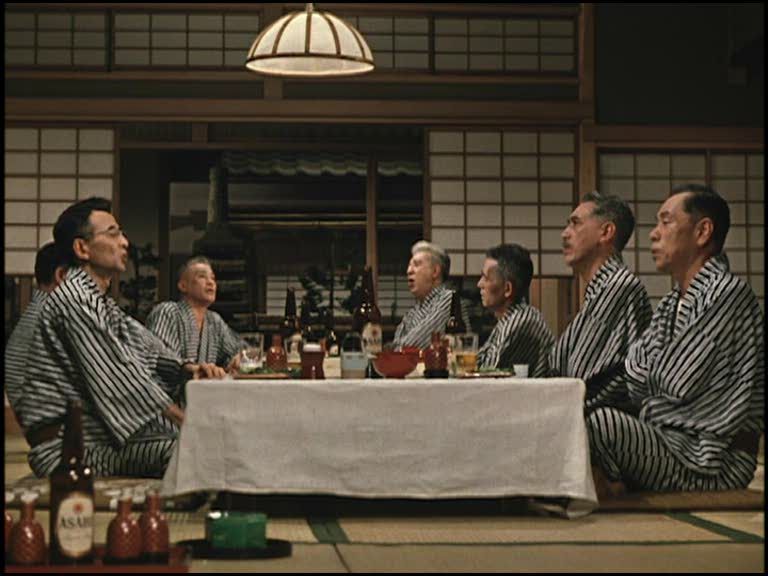
The sound films of Yasujiro Ozu are almost all cut from the same cloth, sharing similar plotlines, characters, and aesthetics, making it difficult to single out one film as his finest work. Nevertheless, Equinox Flower is my personal favorite mainly because in this film, Ozu achieves perhaps the most delicate balance between the many elements of his work: the understated rhythms of daily life, the subtle dramas percolating beneath seemingly placid surfaces, the formal grace of his simple aesthetic, and the deadpan humor and wit, so often overlooked, with which he gently skewers his characters. The story is a familiar one, a variation on Ozu's perennial concerns of marriage, familial bonds, aging, friendships, and the difficulty of expressing emotions in a largely repressed society. In this version of the typical Ozu tale, Wataru Hirayama (Shin Saburi) is upset by his daughter Setsuko's (Ineko Arima) desire to marry a man he does not approve of. Wataru represents a hypocritical fusion of traditional and modern Japanese values, giving out open-minded and sensitive advice to friends, and yet when it comes to his own daughter's happiness he is angered by his lack of control over her life. He wishes her to marry a man he picks for her rather than marrying the man she loves and chooses for herself. The story may be simple, but Ozu's compositions, mostly static shots from his signature low angle, are immaculate and perfectly conceived. Each image in an Ozu film has weight and formality, and his colors are richly textured, pitting eye-popping reds against a background palette composed mostly of lush green hues. Ozu's films are arch-formalist masterpieces in which mundane human dramas are deliberately parceled out, bit by bit, within a rigidly conceived framework.

10/11: Late Spring


Yasujiro Ozu is a director whose appeal is utterly inexplicable, and yet almost impossible to resist. Whenever I watch one of his quiet, deceptively simple films, I am inevitably mesmerized by the peerless rhythm of his images, the graceful composition of his low-angle, usually static shots, the subtle characterizations and rich emotional subtexts he draws from his talented casts. Late Spring is one of his loveliest, calmest, and most gently affecting works, a meditative examination of familial love and the societal pressures that can damage it. The film's plot is minimal in the extreme, allowing Ozu greater freedom to explore his characters' well-hidden emotions and milieu. The aging widower Somiya (Ozu regular Chishu Ryu) somewhat reluctantly begins planning to marry off his only daughter, Noriko (the dazzling Setsuko Hara, also a regular actor for Ozu), who has taken care of him since his wife died and with whom he has a deep bond. Somiya clearly does not want to part with his daughter, and Noriko is openly antagonistic to the prospect of marriage. Both father and daughter seem content with their lives, largely solitary except for each other and a few friends, and neither really wants the change that Noriko's marriage would bring to their lives and relationship.

Nevertheless, the societal mandate for marriage is strong, and Somiya finally gives in to the pressuring of his sister to find Noriko a potential husband, though Noriko herself resists for much longer. Despite the melodramatic potential of this situation, Ozu keeps the tensions subdued, expressed only in the form of strained glances, forced smiles, and awkward, faltering conversations. All of this is filmed from Ozu's usual low camera position, an intimate set-up which gives him a unique perspective on his characters and their lives. This choice of camera position is often linked to the tatami mats which traditionally served as seats in Japanese homes, and that's probably at least part of its meaning. At the most superficial level, the low camera position does seem exceptionally well-suited to filming seated figures. But there's certainly more to it than that. This camera set-up has the unique quality of being simultaneously intimate, in that it is close to the characters and embedded in their surroundings, and distancing, in that the characters, seen from slightly below rather than head-on, are kept somewhat at arm's length. This is in keeping with Ozu's dispassionate storytelling, which draws us close to his characters but doesn't ever reveal quite what they are thinking or feeling.

We see quite a bit of Noriko throughout this film, in intimate conversations, but her motivations and thoughts remain largely a mystery. We're unsure, for instance, of her true feelings regarding her father's aide, Hattori. Does she love him and regret that he's taken? Does she want only friendship? Is she indifferent? In many respects, with her gentle smile and charming manner, Noriko remains opaque. Her feelings on love and sexuality, though presumably crucial to any discussion of marriage, are never articulated or even addressed. Her relationship with her father is more clear-cut, and bound up with genuine love, devotion, and seemingly a happiness in knowing that she is needed. This is a powerful bond, and whenever father and daughter are on screen together, the pair radiates contentment and familial love.

It's hard to find an Ozu film that is anything short of great, but Late Spring is especially stunning in its effect, certainly among my top few Ozu favorites, and also one of his finest technical achievements, at least before his conversion to color added a whole new set of paints to his palette. The stately, measured pace of the editing is always the most salient stylistic feature for me in Ozu's work, and that seems especially the case here. In the opening few minutes, Ozu cuts between long shots down a hallway, showing women gathering for a supper together, and disconnected shots of exteriors — a pagoda-like building, a grass-covered hill. His editing establishes both a sense of place, and a subtle mood of undefined longing and sadness. The mood in these near-silent opening scenes is enhanced by the quiet murmur of the soundtrack, which mingles Hollywood-style themes with the barest hints of Japanese melodies. This music, almost unbearably sad and affecting, is the film's only melodramatic touch, and its emotional nakedness plays nicely against the comparative restraint of the characters. Ozu's careful editing also comes into play during many of the face-to-face conversations, in which he often employs a rapid series of 180-degree cuts, showing whoever is speaking in turn. This technique is one of the few times in Ozu's work (at least the later films; I haven't seen any silents) when he uses something like a subjective camera, since the effect puts the audience in the place of the listener in the conversation. When contrasted against the generally disengaged camera placement in other scenes, this close-up montage can have a particularly dramatic effect, as it does in the scene when Noriko reminisces about the past with an old classmate.

One of Ozu's finest works, Late Spring is a masterpiece of complex emotions hidden just below the surface. Its power lies in its ultimate ambiguity, the mingling of loss, despair, and hopefulness that wafts through the film and finally comes to a head in its final few scenes. No other director could extract so much depth from such quiet, minimal, uneventful material. Ozu was a true master of his craft, and every film I watch by him fills me with sheer joy.