Showing posts with label musicals. Show all posts

The Red Shoes


The Red Shoes is Michael Powell and Emeric Pressburger's film about a ballet company and its new star, Victoria Page (Moira Shearer), who is torn between her love of dancing and her love of the composer Julian Craster (Marius Goring). Victoria has always dreamed of being a great dancer, and with the famous ballet director Boris Lermontov (Anton Walbrook), she gets her chance, catching the notoriously picky Lermontov's attention and increasingly becoming the company's star performer. At the same time, Lermontov has hired the aspiring young composer Julian, and he too becomes a star within the company, composing original new music that impresses everyone who hears it. The only catch is that Lermontov has an obsession with dancers committing their entire lives to their art — he is furious when his previous star announces that she's getting married — and since it's inevitable that Victoria and Julian will eventually fall in love, their success seems very tenuous.

The film is about the ballet, of course, but more than that it's about the untenable position of women in a world that forces them to choose between ordinary domestic pleasures — love, marriage, family — and the ability to express themselves creatively or professionally. By the end of the film, Victoria is positioned between two men, Lermontov and Julian, neither of whom will allow her to build a balanced, happy life for herself. Both men demand that she choose one or the other. The final confrontation is structured like the showdown of a love triangle, the two men verbally dueling over the woman they both want, even though Lermontov has no sexual or romantic desire for Victoria; he wants only for her to dedicate herself entirely to dancing. In between them, Victoria can only cry, being asked to choose when it's obvious that she both loves Julian and loves dancing, and wouldn't want to give up either. (Though why she'd ever want Julian, who's made up like a wispy 30s Hollywood leading man and who's as much of an arrogant, unyielding jerk as Lermontov, is a question the film can never quite answer.) The film is positively progressive in its examination of Victoria's dilemma, even if it's only in tragic terms, with no way out for her, no solution to resolve these tensions tearing her apart.

But that's the nature of this film. It's an overwrought melodrama and it knows it — it revels in it, in fact. The performances, with the exception of Shearer's supple, subtle turn as Victoria, are uniformly over-the-top, both onstage and off. At one point, the choreographer Ljubov (Léonide Massine) dances around Lermontov while arguing with him, as though dancing a part in a ballet; a spotlight even follows Ljubov around as though he were still rehearsing. This scene, with its light comic undertones, suggests that these people live the ballet, that onstage and off they're prone to dramatics and overstatement, to grand gestures that could be seen way up in the last rows of the theater. They're always projecting, and so their histrionics work within the context of their characters. This is especially true of Lermontov, who despite his backstage role always seems to be acting, to be projecting the image of the demanding, tyrannical director that he believes he should inhabit. Walbrook's performance is such great fun because of this artificiality, this note of hysterical overacting that infuses everything Lermontov does. After he finally convinces Victoria to return to dancing towards the end of the film, when she leaves the room he shakes his arms around, clasping at the air, grandly declaring his excitement at his victory to the empty room.


Powell and Pressburger match the story's melodramatics with lush, patently artificial imagery that enhances the film's underlying themes: as is so often the case in their cinema, the film seems to take place in a surreal dreamworld of painted backdrops and lavish sets that stand in for such glamorous locales as Monte Carlo. Onstage and offstage are united in artificiality, suggesting that for these artists, under Lermontov's guidance, life and art are unified, with the latter overshadowing the former. Nowhere is this more apparent than during the sublime 15-minute sequence in which Victoria performs the ballet The Red Shoes for the first time. It is one of the finest sequences in the cinema, a beautiful and remarkably playful melding of the cinema and the theater, and an ode, not to the power of ballet but to the power of Powell and Pressburger's own chosen art.

Once the performance starts, Powell and Pressburger deliberately and playfully erase the boundaries and limitations of the theatrical stage, leaping into the realm of the cinema. When Victoria's character in the ballet sees the red shoes in a shop window, she imagines that she sees herself dancing in the window, turning pirouettes. It is an idea that's all but impossible to convey purely through dancing, on a stage: it is internal, a moment of imagination that can only be conveyed cinematically. So Powell and Pressburger superimpose an image of Victoria dancing in the window, as she stands outside, looking in and imagining this scene. Although the moment ostensibly occurs during a real theatrical performance of the ballet, before an audience, Powell and Pressburger instead stage the sequence with a cinematic sensibility that could never be translated to the stage in this way. When Victoria first dons the red shoes, she does so by leaping forward into them, and in a closeup on her feet, the shoes change, in an instant between frames, from her plain white ones to the bold red ones. It is, again, a moment that purposefully shatters the illusion of a ballet taking place on a stage — in a theatrical performance, the dancer would have to go backstage and change her shoes at this point, but Powell and Pressburger elide the costume change through the magic of editing.

Again and again, the filmmakers are calling attention to the differences between the cinema and live theater, using every cinematic trick at their disposal to transform this ballet into a fluid, magical sequence. Victoria turns and leaps across the stage — and the wooden boards of the floor keep reminding one that this is a stage — and dances in long straight lines that would be impossible to maintain on a real stage without dancing into the backstage area. Indeed, at one point, after a lengthy sequence in which Victoria dances through a succession of narrow corridors and between buildings, Powell and Pressburger cut back to a long shot of the entire stage, which reveals Victoria emerging from the rear of the stage, where she would have just been dancing for a long time completely unseen by a theater audience. Only the camera is able to follow her back there, its graceful tracking following the fluid lines of her movement. The subsequent sequence of Victoria being taken away by the power of the red shoes relies heavily on superimposition to lend a ghostly, translucent quality to the dancer as she hops and twirls through eerie nighttime vistas and, finally, enters a free fall that's familiar from cinematic dream sequences but would, again, break the constraints of reality on a real stage. Still later, she dances with a wisp of paper that transforms briefly into a man, her own costume changing between shots, before the man again fades away into a newspaper blowing in the breeze.

Towards the end of the performance, Powell and Pressburger finally insert a high shot looking out towards the audience beyond the row of lights at the front of the stage, the first time since the very beginning of the performance that the presence of the audience or the stage borders are revealed. But at this moment the audience is replaced by a superimposition of a churning sea, and the sound of the waves blends subtly with the sound of applause, suggesting that Victoria is seeing everything through her character and the story of the ballet, seeing everything around her transformed and made real through the magic of creative expression. It is a stirring, thrilling sequence, and one feels both Victoria's joy in the dance, and the joy of the filmmakers in shaping and directing her dance. That joy, both in front of the camera and behind it, is the joy of creativity and art, and even when this film is at its most tragic and heartrending, that joy is the feeling that comes through most strongly.
Haut bas fragile


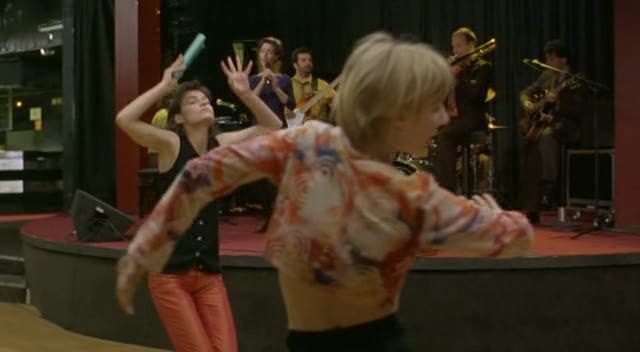
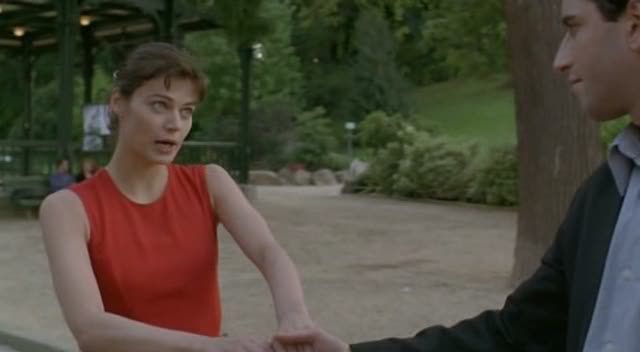
The films of Jacques Rivette often revolve around mysteries and secrets, around conspiracies and secret societies, the past hovering with foreboding over the present, his characters involved in labyrinthine plots that lead to places beyond understanding. Haut bas fragile is no exception, centered as it is on three young women whose lives are seemingly haunted by the past, by the secrets that linger all around them. Louise (Marianne Denicourt) has just awoken from a 5-year coma, and is determined to start a new life while pushing aside everything (boyfriend, family) that occupied her before her prolonged and involuntary absence from the world. Ida (Laurence Côte) was adopted as a child and is obsessed with finding out the identities of her biological parents, hoping that this knowledge will tell her something about her own identity. And Ninon (Nathalie Richard) is fleeing a life of violence that's shown in the opening scenes of the film, when a jealous ex stabs a man who she's dancing with at a club. These women, whose paths cross in ways both major and incidental over the course of the film, are all struggling to determine the courses of their own lives against the inertia of the past, simultaneously seeking the truth about the past and trying to break free of its influence.

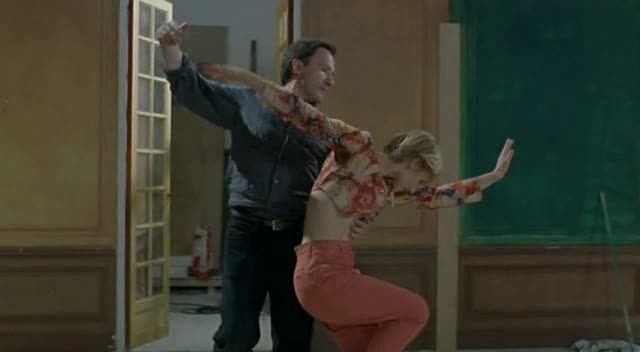
This is a common theme in the cinema of Rivette, this concern for the past, a theme that echoes through works like Secret Défense and The History of Marie and Julien, both films where history is a trap, a pattern that dooms the protagonists to cycles of repetition. In Haut bas fragile, however, this trap is continually sidestepped and defused, most notably through music and dance. The film is a musical — or at least, it increasingly becomes one, as the scenes of muscial interruption and performance become more and more frequent over the course of the narrative, transforming what had at times threatened to become a portentous drama into a playful subversion of this drama. Whenever the characters fight or argue, as they often do, their movements become formalized and graceful, striking poses in the midst of the fight, extending their limbs and becoming cat-like in their motion, until the music suddenly erupts and the argument has become a dance, often a dance of flirtation and seduction. It's through the dance, through music and movement, that the characters in the film fall in love and forge friendships, dancing around each other even as Rivette's camera, a playful third partner in these dances, dances around the actors.

This is a charming, exciting film, one in which Rivette lightly prods at some of his typical concerns. He introduces, as he often does, a secret society of sorts, a club that meets in an underground lair to play a sinister game of cards, presided over by the suave and mysterious Alfredo (Wilfred Benaïche). The game is a game of life and death, where one card dictates the killer and another card decides the victim in a real-life game of stalking and murder, a game that recalls Robert Altman's bizarre sci-fi film Quintet. But when Louise — who has infiltrated this mysterious circle through the help of the ubiquitous Roland (André Marcon) — draws the card of the killer, the game turns out to be a farce, a ruse designed to help her overcome her vertigo. The conspiracy dissipates like so much smoke, whereas in so many of Rivette's other films, the conspiracy — and the doubt over whether it exists or not — dominates the action and becomes an obsession for the protagonists. Louise's affliction is probably no coincidence, either, given Rivette's admiration for Hitchcock: whereas Scotty in Vertigo must undergo repeated traumas and psychological torture because of his vertigo, Louise overcomes hers in a few moments through a game. It's a conscious subversion of the thriller's psychosexual dimensions. Again and again, the playfulness of dancing and loving and verbal sparring — like the rhymes of Louise and Ninon's song as they celebrate their newly forming friendship — frees the characters from the constraints of generic drama.


Rather than becoming trapped in cycles of distrust and betrayal, these characters open up new possibilities through the seductiveness and goofiness of dance. The result is a series of happy reversals that send the film careening wildly away from the tragic course that it occasionally seems to be on. Ninon's thievery has short-term bad consequences for one ancillary character, but when she reappears later in the film, she's in a better situation than ever, happier than ever. It's as though Rivette is suggesting that tragedy need not be a permanent condition, and that the story of a life is exactly what we make of it. Thus, though much of the film's narrative is built around a sheaf of papers that provide incriminating evidence about Louise's father, these ultimately turn out to be something of a red herring. The papers threaten to shatter Louise's relationship with her earnest young suitor Lucien (Bruno Todeschini), but instead she doesn't allow the papers' revelations to disturb her; they're part of the past, part of a history that she's moving away from. The real purpose of the papers, in the end, is to provide an excuse for Ninon and Louise to meet, to go off in secret momentarily, and then to emerge, dancing and playful, Ninon twirling around her friend as Louise sways to the music and strikes silly poses as though caught in the flash of a camera. And Rivette's camera, for its part, spins slowly around the women as well, adding its own spiraling inertia to their graceful dance.

This film is a typically slippery and ambiguous delight from Rivette, a mystery whose solution lies, not in the revelation of secrets, but their submersion within an alternate narrative of love, flirtation, and affectionate friendship. It is, as with so many of Rivette's films, a celebration of femininity, where the attempts of the men to control and protect the women, to dictate the direction of the story, prove utterly inconsequential. Ninon and Louise, bonding over a shared distrust of Roland — whose intersections with all three women drive much of the narrative — joke about cooking and eating him, a reversal of the traditional conception of predator and prey. Roland and Lucien attempt to follow, to stalk, to track down these women, but in the process the women turn the tables, rejecting the conspiracies and lies of the men in favor of openness and seduction and the vitality of the dance. These are the positive, exuberant forces at the center of Haut bas fragile, which is packed with Rivette's sly wit and playfully experimental spirit.

The Company


The Company is a weird project for Robert Altman to undertake: a ballet drama conceived entirely by actress Neve Campbell as a showcase for her own interest and background in dance. Campbell wrote the script with screenwriter Barbara Turner, and brought the film to Altman, who initially resisted but finally agreed to direct. It is an obvious vanity project, a film designed to showcase Campbell's involvement with dance; she'd been trained in ballet and revisited her training to prepare for this role. But instead of feeling like an indulgence, the film is moving and beautiful in capturing Campbell's obvious love for this milieu, and Altman's sympathetic, nuanced treatment fully supports the joy and beauty these dancers find in their work. This is a lovely tribute to the ballet, capturing the grandiose aesthetics and elaborate designs of these performances, which Altman filmed in full to gather the material for the film's dance sequences.

And make no mistake: this film exists almost entirely for the sake of its dance sequences. It's tempting to deem the film, which follows a ballet company through a single season, one of Altman's typical sprawling multi-character studies, capturing bits and pieces of various stories and characters backstage between dances. In fact, the film's narrative is Altmanesque only in superficial ways, in that it has many characters and that it doesn't have a real central narrative. Whereas Altman's Nashville and Short Cuts decentralized the narrative in order to follow many characters, observing fragments of their stories and developing them through vignettes rather than a plot with a real forward momentum, The Company all but eliminates plot and drama. Campbell's heroine Ry is the closest the film gets to a central character, but she doesn't really have much of a story: she wants to move up to a more prominent role in the company, she falls in love with a new guy after her dancer boyfriend cheats on her, and, well, that's about it. There are other miniature dramas here and there, too, some money worries, injuries, other little suggestions of the characters' pasts or concerns. Mostly, though, the plot is frictionless, designed not to distract too much from the dance performances; there's no drama, no character development, no real story at all. It's such a common criticism — and misunderstanding — of Altman's films that they have no plot, no narrative structure, so it's illuminating to see the difference here, to see what an Altman film without a true narrative would really be like.

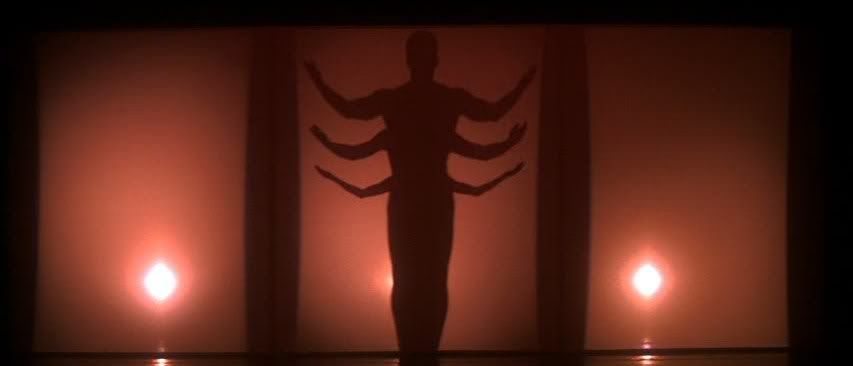
It's in that sense that the film feels most like a vanity project: Ry is a character without real problems, and she meets and falls in love with a hunky sous chef named Josh (James Franco), and that's her story. It's pretty fluffy stuff, but Altman infuses this milieu with heft and substance through his serious, respectful treatment of this world and these performances. The dances, of course, are stunning, and Altman makes good use of the garish light and color in the design of the sets, costumes and choreography here. Many of the dances are opportunities for Altman's camera to roam through the complex patterns of colors and geometry that these dancers form with their bodies: the rigid computer circuit patterns formed with colored ribbons in the opening number, the riot of color and rapid movement in the animal-suited dancers of the finale, the three dancers evoking a multi-armed Hindu god by projecting their merged shadows onto a red screen.


A few dance sequences in particular are tours de force that really showcase Altman's intuitive feel for the grace and aesthetics of these dances. Ry's first moment in the spotlight is a dance at an outdoor venue where, just as she takes the stage for her pas de deux with a male dancer, a thunderstorm begins to threaten, with ominous rumbles of thunder and a harsh wind blowing debris and the first drops of rain through the air. The atmosphere is tense and hushed as Ry and her partner enact a sexy, sensual dance of seduction, the flashes of lightning occasionally lighting up their faces, the wind flowing over them, as the crowd mumbles and shifts nervously, a few umbrellas going up in the audience. It's so tense because one suspects that mainstay of backstage movies, the career-halting injury, could be waiting in the wings — and there are a few of those, scattered here and there in the film, reminders of the lineage from which this movie descends. But in this case, the thunderstorm simply enhances the mood of the dance, making it dangerous and haunting in ways it wouldn't have been otherwise.

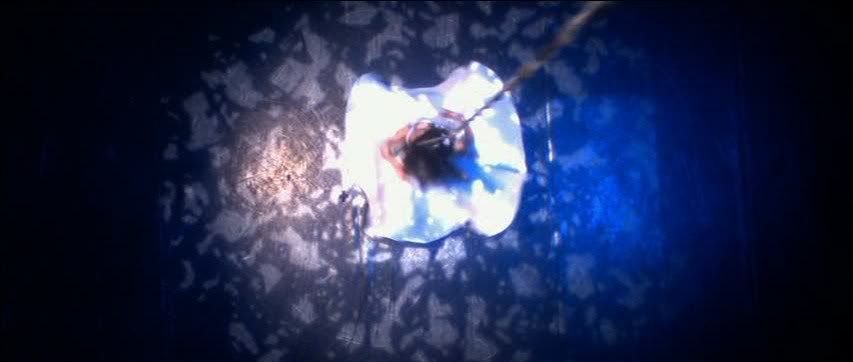
Altman also seems to enjoy offering up a tribute to David Lynch, of all people, by including one dance sequence scored to "The World Spins," one of the songs Lynch and his composer Angelo Badalamenti wrote for avant-pop singer Julee Cruise. This sequence is appropriately ethereal, matching Cruise's lilting voice and the ambient melodicism of the music with cool blue hues and a ghostly dance enacted entirely on a low trapeze swing. Altman abstracts the dancer's movements by switching to an overhead shot in which the dancer's body is simply one element in a complex design of blue lights arranged on the floor. At other points, he films her blurry reflection in the glossy surface of the stage, or films her feet as she swings slowly back and forth, her outstretched toes just above the stage, swaying up and out of the frame, leaving behind a moment of black nothingness before her feet reappear as she swings back. It's poetic and mysterious, a perfect nod to Lynch.

Elsewhere, Altman enlivens the basic plotlessness of the non-dance sequences with some flashes of humor and vitality, particularly in the character of the company's domineering artistic director Alberto Antonelli (Malcolm McDowell). Antonelli gets some of the best non-dance scenes in the film, delivering a speech to an Italian-American society in which, rather than being grateful for the award he just received, he castigates his own Italian family for mocking his dance ambitions when he was a kid. Implicit in his words is a warning to be more tolerant, especially since in another scene he laments all the great choreographers and dancers who have been lost to AIDs; it's implied that he's gay, and that this is very much a gay milieu. Probably Antonelli's funniest moment is an argument with a dancer who's protesting the ridiculous conception of a particular sequence for two male dancers. "This baby is a metaphor," Antonelli insists, spouting some elaborate patter about "giving birth to the world." The dancer isn't buying it: "he's a man, how's he gonna give birth?" It's hilarious, and one wishes there were more of this, more of the humor and messiness that so often exists around the fringes of an Altman film. Too much of this film is so tidy, so minimal. There are suggestions of characterization here and there — an older woman who wishes she could still dance, an aging member of the company fighting against getting pushed out herself, a young man with an aggressive manager — but none of it ever really amounts to anything.

Still, even if The Company isn't prime Altman, it's a well-made and frequently moving film in which the abstract emotional catharsis of the dance is placed at the center of the film, rather than all the backstage romances and troubles, which seem incidental in comparison. It's a film that takes joy in movement, both in the rehearsals, where a movement's development is traced and coached along, and in the polished shows themselves. This fascination with movement even extends outside of the dancing milieu, in shots like Ry getting out of the bath behind a screen, her silhouetted body later echoed by the multi-armed shadow of the male dancers, or Josh's legs waving in the air as he puts his pants on, or the elegance of the way he chops up peppers and tomatoes to make an omelet, or the crisp, mathematical motions of Ry as she shoots pool. These scenes suggest that beautiful human motion is everywhere, in everyday life and work as well as on a stage: chopping up peppers or shooting pool can be as beautiful as a pirouette. Even bowling can be beautiful: at one point Altman cleverly cuts from Ry and the other dancers practicing a move to a bowling lane where a dancer repeats virtually the same arm motion as she releases the ball, doing a twirl afterward. These small moments, rather than the prosaic, formulaic narrative beats, are the ones where Altman's presence is really felt.

A Song Is Born


Howard Hawks amassed such a consistent, and consistently fascinating, oeuvre by always making, with very few exceptions, only the films he really wanted to make. In an era when directors had very little power or prestige in Hollywood, Hawks was notable for working largely independently, outside of the usual studio system; he moved from studio to studio, breaking contracts and going elsewhere when he couldn't get his way. Hawks thus earned a reputation as a director who seldom bowed to the pressure of producers, who always stuck to his own vision. One of the few exceptions to this independence was A Song Is Born, which Hawks made at the insistence of Samuel Goldwyn, who got Hawks to say yes to the project by, quite simply, offering him an exorbitant amount of money. The resulting film feels like the work of a man who's just earning a paycheck, too. It's not so much a remake of Hawks' Ball of Fire as it is a shameless pilfering of the earlier film, barely bothering to alter the example set by its predecessor; the film basically counts on fresh audiences who hadn't seen Ball of Fire. Hawks of course was famous for such pilfering and recycling. If a bit worked in one film, he wasn't afraid to translate it into a new context, and late in his career he kept remaking the basic scenario of Rio Bravo, riffing on its relationships and structure in interesting ways. This is nothing like that: A Song Is Born simply repeats, by rote, the best lines and moments from the earlier film, barely bothering to offer anything new. It's stale, and dull, and comes off as the one thing Hawks otherwise never made: a formulaic flop.

The basic set-up is taken right from Ball of Fire. Seven professors, six old bachelors and a younger man named Hobart Frisbee (Danny Kaye), are researching an ambitious musical encyclopedia that would chronicle the entire history of music, with accompanying recordings of various musical forms. In the earlier film the professors needed to learn about slang, but in any event the film's plot is triggered by Frisbee's realization that he's out of touch, that he needs to go out into the world and get refreshed on current events in his field, folk music. In other words, he needs to learn about jazz. The film's enduring appeal — indeed, virtually its only appeal — comes from the inclusion of musical appearances by some of the great jazz musicians of the era, including Louis Armstrong, Tommy Dorsey, Mel Powell, Lionel Hampton and many more. At its best, the film is merely an excuse to throw all these musicians together into massive jam sessions. It's fun stuff, and Hawks thankfully put his foot down by refusing to segregate the black and the white jazz musicians, one of the few stands he took on a picture he otherwise didn't seem to care about at all.

The jam sessions and the scenes at jazz nightclubs thus incorporate both white and black musicians, refusing to ghettoize the black players or maintain a racist separation. The notoriously conservative Hawks was at least enlightened enough to recognize that such attitudes would have been as out of place in the free-wheeling jazz milieu as they were in the lily-white Song of the Thin Man, which was shot the year before and similarly tried to chronicle the jazz scene, but with no black musicians at all. Hawks' film is thus notable for acknowledging the music's black roots — one number explicitly chronicles the nascent origins of jazz in slave spirituals — and the importance and talent of black musicians. The whole crew reportedly wasted a lot of time simply jamming and listening, both on camera and off, but not much of this no doubt lively atmosphere really makes it into the film. A lot of the music is infectious and enjoyable, but there's not enough of it to distract from the rote dullness surrounding it.


Part of the problem is Danny Kaye, who Hawks was saddled with since the film was conceived by Goldwyn mainly as a vehicle for the MGM comedic star. There's also the problem of Virginia Mayo, taking on the Barbara Stanwyck role from the earlier film, as singer and gangster's moll Honey Swanson. Mayo doesn't have Stanwyck's side-of-the-mouth toughness, or her edgy sex appeal, just as Kaye doesn't have the earnest goofiness that Gary Cooper brought to the role of the stiff professor in Ball of Fire. Instead, Kaye's Frisbee just seems stiff and boring, which is fitting for a stuffy, starched professor but doesn't leave much wiggle room for his eventual realization that he loves Honey and wants to be looser and freer. Hawks can't coax the comedic performance he got out of Cooper from Kaye, nor can he get Mayo to give Honey quite the edge she requires. Mayo's actually fine here, radiating a cheery girl next door quality, and she infuses the best patter from Ball of Fire — like her veiled naughty allusions when trying to convince Frisbee to let her stay overnight — with just enough zing to get them across. But she lacks the slight dangerous quality, the realistic vibe of a been-there-done-that kind of gal, that Stanwyck naturally brought to the role. If there wasn't that precedent to compare her against, Mayo would probably seem perfectly okay.

So in one sense, the only real problem with A Song Is Born is coming second. If it weren't for the familiarity of it all — and a majority of the film is outright stolen, line for line and sometimes shot for shot, from the earlier film — A Song Is Born might be a slight but enjoyable musical comedy. Unfortunately, as it is it's impossible to avoid the comparison, and A Song Is Born can't help but seem especially wispy in relation to its source. There's just no imagination here, none of the playfulness that Hawks so often brought to his best works. Kaye is allowed to simply be a dreary killjoy, rather than being lovably shy and naïve. And unlike in Ball of Fire, Hawks never manages to do much with the gangster subplot that takes over the film for its finale, as the gangster Tony Crow (Steve Cochran) arrives to claim Honey as his girl. The whole thing just seems rote, so much so that Hawks even skips over the great gag where Frisbee, confronted with fighting Crow, quickly teaches himself boxing from a book before pummeling the thug. Hawks skips the joke and just has Frisbee pounce on the gangster and beat him up.

That's the film's dominant aesthetic: cutting corners, recycling earlier bits but without the edge, without the humor, without the unpredictable chemistry of fine actors bouncing off one another. The basic elements are all there, the framework of the fine film that Hawks had, in fact, already made just seven years earlier. This time around, the framework is all there is; it's never filled in with any of the warmth and excitement that would've been needed to make this one of Hawks' more creditable attempts at a remake, like the way in which El Dorado riffs on the central conceit of Rio Bravo. Instead, Hawks took his money and turned out a generic film that's only enlivened by its sporadic bursts of music and its status as a Hollywood record of the era's jazz scene.

Perceval le Gallois


Eric Rohmer's Perceval le Gallois must surely be a shock to those familiar with the French New Wave auteur's chatty, philosophical modern films. This deeply strange, idiosyncratic film is adapted from an unfinished 12th Century adventure poem by Chrétien de Troyes. The film follows the adventures of a Welsh youth named Perceval (Fabrice Luchini), who had been raised in isolation and ignorance by his mother following the deaths of his father and two brothers, all of them knights. His mother, wishing to keep her youngest and sole living son safe, ensured that he would never hear any stories of knighthood, knowing that if he ever heard of these adventures he would leave her. Sure enough, when Perceval one day encounters a procession of knights in the forest near his home, he is enchanted by their armor and weapons, amazed by their beauty, and he immediately sets out to become a knight himself. The story is standard, an Arthurian romance in which Perceval encounters various challenges, must right wrongs and woo damsels and fight duels, while learning about the world and the codes of chivalry and honor. He progresses from a callow, ignorant youth into a man of the world, mature and self-possessed, seeking to understand things and to correct his path when he does wrong.

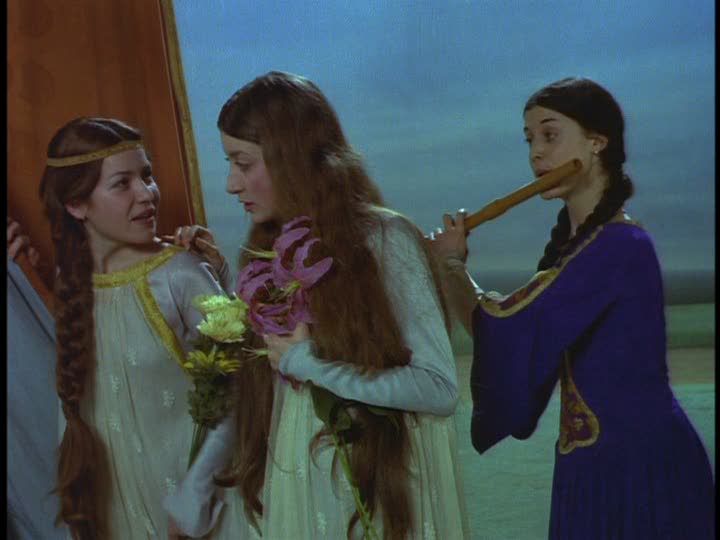
What makes the film so unsettling, however, is Rohmer's odd, heavily stylized treatment of Perceval's narrative. The film is set in a theatrical, patently artificial world, with no attempt at naturalism or realism. Perceval wanders on horseback across a cramped stage where the backdrop is a painted wash of muted blues to represent the sky. The trees in the forest are abstract sculptures, and the sets are wooden and tiny: entire castles and towns, coated in gold paper, are dwarfed by the horses. In order to convey the impression of riding for long distances, Perceval most often guides his mount in circles around the stage, and each time he comes across a new castle, it is obviously the same awkwardly built little construction with different banners hanging from the walls. The mise en scène deliberately undermines the narrative at every turn, creating a strangely magical artificial world in which the poetry of the narration takes on an otherworldly quality.

This narration too is unusual, mingling stylized poetic speech with gorgeous singing, set off against medieval orchestrations for flute and stringed instruments, along with occasional cymbal crashes and bird calls for sound effects. The film is populated with a roaming band of singers and instrumentalists — among them Solange Boulanger, Catherine Schroeder, Francisco Orozco, and flutist Deborah Nathan, and many others — who play various roles depending on the setting, justifying their presence at the fringes of the narrative. Their presence, and the film's metafictional structure, is more reminiscent of the contemporaneous films of Jacques Rivette than of Rohmer's other work. The characters often speak in the third person, prefacing their dialogue with "he said" or "she said." At other times, they sing stage directions and descriptions of action before speaking their lines. This frequent stylized disruption of the narrative gives the film a haunting, dreamlike quality. Rohmer's approach to this material privileges its medieval origins and its mythic grandeur, and yet he doesn't try to realistically recreate the time in which it is set. Instead, his film gives the impression of antiquity while always maintaining a modernist perspective on the past, a slyly ironic sensibility that stands aloof from Perceval's story, observing from the distance of several centuries.


This is most readily apparent in the film's absurd little improvisational touches, like the way Perceval, riding nobly off into a painted sunset, is forced to duck to get under an overhanging tree, or the way, during one of his many fights, he has to quickly adjust his crooked helmet to push its central cross-beam back into place. There's something endearingly rough and loose about this film, in the way its narrative skips around from place to place without regard for continuity, eliding long stretches of time and important details. The narration sometimes comically comments on what it's leaving out, particularly when the original text leaves out a description of a feast Perceval enjoyed one night: Rohmer shows the table being set up, but then his camera pans away to a servant, who says that he will not describe what was eaten, since the tale says only that they ate well. The fights too are incompletely described, and the sung narration wittily apologizes for this fact with a rhetorical question: "They fought at length/ I could describe each blow/ but is it worth your time and mine?"

Obviously, this is far from a conventional Arthurian romance, since Rohmer makes no attempt to smooth out the bumps in the original poetry's incomplete narrative. Late in the film, the story shifts, without explanation, to an account of the adventures of Sir Gauvain (André Dussollier) as he tries to clear his name of a false accusation. If Perceval's story is about a selfish, arrogant youth maturing and learning about life, Gauvain's tale is of an already-mature and good-hearted man retaining his good nature even when everything seems to conspire against him. The narrative leaves Perceval behind without fanfare and follows Gauvain until it reaches what seems to be a climax: he's trapped in a city whose inhabitants mistakenly believe he killed their king, and he's facing an angry mob intent on getting revenge. Here, Rohmer abruptly cuts away, in the middle of a clearly unfinished scene, and returns for a short time to Perceval, before again detouring into a stylized, theatrical staging of the death of Christ.

Rohmer's strategy of discontinuity here is almost academically faithful to the original text, which was left unfinished upon Chrétien's death, and later added to by other poets. Both central stories, of Gauvain and Perceval, are left incomplete, cut off at pivotal moments, with Gauvain facing a horde of angry peasants and the prospect of either clearing his name or losing his life, and Perceval facing a moment of possible spiritual redemption. Neither knight gets to complete his arc, neither gets to fulfill his destiny by playing out the remainder of his undoubtedly heroic story. This abrupt ending leaves Perceval in an especially perilous place as a hero. He is a decidedly ambiguous character, in many ways rather foolish and brutish. His youthful inexperience and lack of knowledge about the world sometimes causes him to behave awfully, as when, early on in the film, he misunderstands his mother's advice about the proper way to treat maidens, and forces himself upon a young woman (Clémentine Amouroux), kissing her and stealing her ring.


Throughout the film, scene by scene, he begins to learn more about the ways of the world and the proper behaviors for a "worthy man." A nobleman (Raoul Billerey) teaches him about the virtue of silence, the finer points of combat, and also about mercy and compassion for a knight who loses in battle. The nobleman's lovely niece, Blanchefleur (Arielle Dombasle), teaches Perceval about love, about how to defend a woman and also how to romance her, how to love her. A supernatural experience in a vanishing castle teaches him that sometimes, what's good advice in one situation might not serve him well in another — taking his mentor's advice too literally, he errs by staying silent when he should have spoken. These incidents each advance Perceval's maturation, and yet the film cuts off at a point when he has just realized how badly he has neglected his spirituality, and also how badly he has treated his loving, grieving mother, who died when he abandoned her. The film leaves Perceval forever stuck at a moment of indecision and penitence, trapped between youthful ignorance and full adulthood.

This story of arrested maturation is off-kilter and often goofy, shot through with low-key humor, particularly in the giggling asides of the singing servants who comment on the main action. There's also a raw poetry to Rohmer's idiosyncratic approach, a strange beauty in his flat, stylized imagery. In one of the film's most arresting and unusual sequences, Perceval is riding through a stark white, snow-covered plain, framed in his red armor against a gray sky, through which flies a flock of animated birds. Rohmer cuts briefly to an animated closeup of one of these birds, wounded and bleeding into the snow. The marks it leaves behind, three bright red spots on the white ground, remind Perceval of his beloved Blanchefleur, and the abstract bloodspots fade into an image of her face, one spot the bloody smear of her lips, the others the color on her rouged cheeks. It's a haunting silent interlude, a reverie of love and longing, and the sudden intrusion of traditional animation into the film's theatrical world is another of Rohmer's disjunctive techniques. What's striking about the film in moments like this is how emotionally affecting it can be despite its arm's length distance from its material, its artificial sets and textual fidelity. Rohmer has created a romantic fantasy of startling clarity and ethereal beauty.

Gentlemen Prefer Blondes


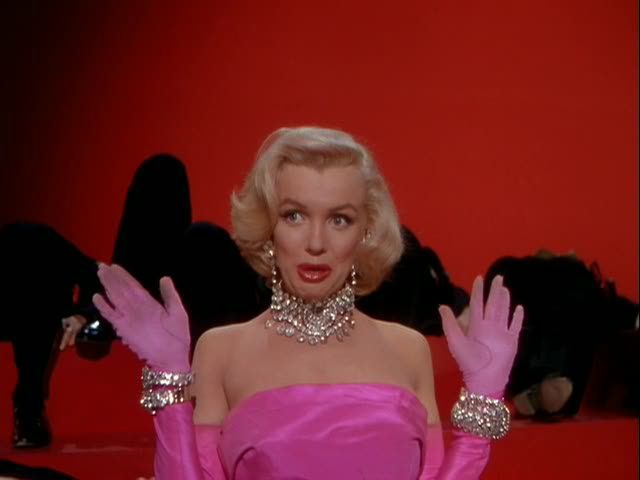
Today, Gentlemen Prefer Blondes is most fondly remembered for a single musical number which is pretty much the iconic Marilyn Monroe scene: her vampy, bubbly performance of "Diamonds Are a Girl's Best Friend." It's one of Monroe's most memorable scenes, as she coos and dances while delivering the lyrics that would come to personify, if not her true self, then at least the most true representation of her public persona. She's a cheerful, unabashed gold-digger here, surrounded by men who adore and lust after her, rejecting all their declarations of love as fickle, fleeting, and more often than not two-faced. It's easy to mock or dismiss Monroe's showgirl Lorelei Lee, who admits with a smile on her face that she's in love with money and wouldn't dream of marrying a man who wasn't rich. But underneath her brash forthrightness, barely concealed, are her fears, especially the fear of getting old, of losing her charms and her ability to make men fall in love. The "Diamonds" number, as upbeat as it is, is actually about a woman's insecurity in a world where she is judged for her physical beauty while a man is judged by his monetary success: Lorelei realizes that while women's assets are momentary at best, money and power doesn't dissipate with age. She believes that wealth is the only security against a woman's sad fate, of being cast aside for younger and prettier girls down the road. "Don't you know that a man being rich is like a girl being pretty?" she murmurs, so charmingly that it's hard to argue the point. "You wouldn't marry a girl just because she's pretty, but my goodness, doesn't it help?"

Sure, and it also helps when she's clever and self-aware and delightfully fun, all adjectives that apply perfectly to Monroe, perhaps more here than anywhere else. What comes through in this film is a sly, winking quality in Monroe's performance, a sense that she knows very well — as her character knows — the effect she can have on men, and that she's perfectly willing to conform, at least outwardly, to stereotypes if it'll get her what she wants. This seems to apply at least as well to the real Marilyn as it does to the bubbly, bouncy blonde Lorelei, and one suspects there's some truth to the rumor that Monroe herself suggested Lorelei's coy admission that "I can be smart when it's important, but most men don't like it." If a film as light and airy as this one can be said to have a theme, it's that women, living in a world with rules set by men, must erect elaborate facades over their true selves in order to exist comfortably.

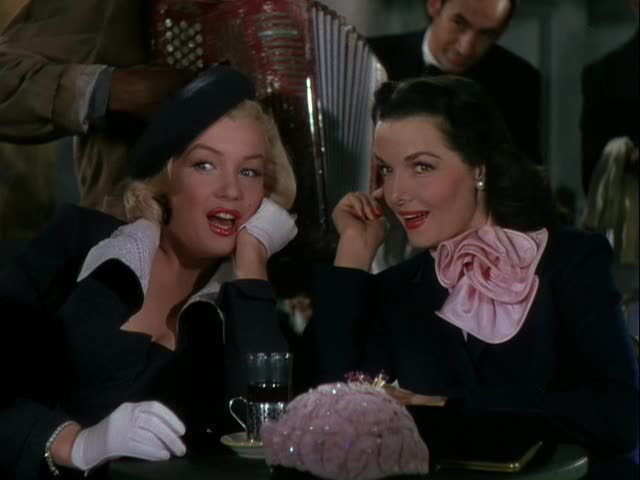
Lorelei's best friend Dorothy (Jane Russell) doesn't see things the same way though, and where Lorelei loves only diamonds, Dorothy loves the company of men and the fun to be had on long nights with plenty of drinks and dancing. This duo of bombshells are opposites in almost every way — blonde and brunette, giggly and serious-minded, a whispery-soft murmur and a brassy tough-gal voice, a wide smile and a side-of-the-mouth smirk — but their friendship is nevertheless rock-solid. Russell and Monroe play off of each other beautifully, and it's a delight to watch them together, whether they're singing and dancing or trading fast-paced patter. They trade roles admirably in the comic scenes, taking turns playing the straight woman for one another. Sometimes Monroe's wide-eyed silliness sets up Russell for her deadpan one-liners, while at other times Russell simply stands back and lets her friend fire away.


With two such dazzling actresses at center stage, the plot doesn't have to do much besides stay out of their way, and for the most part it does. Lorelei's pending engagement to the goofy but sincere young millionaire Gus Esmond (Tommy Noonan) is threatened by Esmond's father (Taylor Holmes), who disapproves of his son marrying a showgirl. As a result, Lorelei and Dorothy head off to Europe together on a cruise, while Esmond's father hires the private detective Malone (Elliott Reid) to spy on Lorelei and gather incriminating evidence against her to halt the impending marriage. There's not a guy here who belongs in the same frame with these two, much less who can match wits with them as equals, and if the film has one weakness it's the necessity of believing that the tough Dorothy, who'd fit right in as a noir femme fatale, could fall for a wet blanket like Malone. Still, all these narrative detours are mainly an excuse to get Lorelei into hilariously improbable but incriminating circumstances, like the moment where an over-eager big-game hunter (Charles Coburn) demonstrates to Lorelei how a python kills a goat by strangulation. How would that be incriminating, you ask? "Well," Lorelei explains, "he was the python... and I was the goat!"

If the plot is largely decorative, so too are the many musical numbers, which are primarily designed as showcases for the girls and their ample charms. The "Diamonds" performance is undeniably director Howard Hawks' best musical piece, a gaudy delight of costume design and choreography: Monroe in a pink strapless dress that seems to be just barely clinging to her bosom, twirling and singing amidst crowds of valentine-toting tuxedo-ed men and ballerinas with black gauze masks drawn across their faces, all of it against a cartoony red backdrop that sets off the deep blacks of the tuxes. The opening number, "Two Little Girls From Little Rock," is similarly opulent, setting the girls' bright red dresses off against a similarly bold blue curtain. The film's palette favors primary colors, including the ever-present bright red of the girls' lips, while the wardrobes mostly cycles through a series of radiant green, blue, and red hues. As a result, even the less showy musical pieces, like "When Love Goes Wrong" and "Bye, Bye, Baby," have an impromptu charm that's hard to resist: they seem like pick-up songs casually performed with whatever passersby happen to be around, gathering performers from among the bystanders for a bit of song and dance.

Above all, this is a fun and light-hearted film, driven by the comedic performances from both stars. Howard Hawks seems to have ceded the film to Monroe and Russell, and there's very little sign of the auteur's signature concerns or style, except perhaps in the staging of the musical numbers, which seem at times like crowd scenes with an infectious sense of rhythm. The film as a whole has this same underlying rhythm, a propulsive beat that drives the songs and the comedic bits alike. It's the pulse, perhaps, of the men who come into contact with Monroe and Russell: hearts pounding like mad, dizzy smiles plastered across their faces.

A Prairie Home Companion


One cannot help but think of Robert Altman's final film, A Prairie Home Companion, as not only a loving tribute to the famed live country-western radio show which gave the film its name, but as a parting valedictory for Altman himself, who surely directed the film with the knowledge that it'd likely be his last. The specter of death lingers over the entire film, both figuratively (with Tommy Lee Jones as a corporate "axeman" sent to close down the show after one last performance) and literally, in the form of Virginia Madsen's angel in a white trenchcoat, a noirish avatar of death who Altman credits as the "Dangerous Woman" even though she's given an actual name in the film. The film is sanguine in the face of death, accepting it with casual good humor as a necessity of life. It's no accident that the film's bringer of death is repeatedly referred to as radiant and beautiful, fitting adjectives for Madsen, who glides around the set with a halo of bright gold hair curled tightly around her face, the stage lights reflecting off her pure white coat. She is a sensitive, empathic messenger of death, gently bringing the end even as she nurses her own obvious nostalgia for living.

The final performance of a radio show may not be a literal death, but it is an ending nonetheless, and Altman treats this event with the momentousness and the bittersweet dignity it deserves. The script was written by Garrison Keillor, the real-life host of A Prairie Home Companion, who fictionalizes and mythologizes his own show (which is still running in reality), and plays himself as well. This script is perfectly tailored to Altman's approach, weaving subtly from backstage conversations among the show's performers and crew, to on-stage musical performances. The entirety of the film takes place in a single night, the show's last night on the air and on stage, and it encompasses a broad range of country performances, most of them performed by Altman's cast along with a handful of regulars from the original radio show. Much of the film's dramatic material centers around the family of Yolanda Johnson (Meryl Streep), her sister Rhonda (Lily Tomlin), and Yolanda's daughter Lola (Lindsay Lohan). The two sisters are the last stalwarts left in a family musical group that once also included two other sisters. Both Streep and Tomlin give remarkable performances, conveying the combination of happiness, resignation, and bitterness that they each hold for their eventful but only marginally successful lives. This is most obvious in the body language of the two sisters whenever they're on stage together, as Yolanda likes to delve into her family's rich history by regaling the audience with stories before each song, while Rhonda fidgets uncomfortably from side to side, unable to meet the audience's gaze; she looks like she's impatient for the song to start. It's in wonderful little touches like this that Altman encourages his actors to bring out their characters' many facets.

The dramatic material itself is slight and elliptical, mostly limited to a handful of brief conversations in which the history of this family is broadly outlined: a childhood of poverty followed by a musical career starting at a very young age, Yolanda's chance encounter with a young man who got her started on the path to radio and also became her husband. Later, hints of a brief romance with Keillor at some point, and many amusing anecdotes along the way. These stories come out in slow drips, and Altman frequently cuts away from these conversations to check out what's happening on stage at the same time, so that there remain gaps in the chronology. It's enough to suggest a long and complex history for these characters, who then draw on this deep well in their musical performances. Indeed, the film's greatest strength is the way that character is expressed through musical performance, a throwback to Altman's other great country musical, Nashville. Streep and Tomlin's sisterly affection, romantic regrets, and melancholy over the show's closing all come out in their songs, which are heartfelt and potent; they're not just singing, but acting as well. Similarly, the aging singer Chuck Akers (L.Q. Jones) delivers an achingly beautiful final song for his last appearance on the show, his voice cracking with emotion as he reaches the end of the number before he breaks out into a smile. It's a wonderful moment, an old man bowing out while still expressing himself with every last ounce of his vitality: it must have been an especially poignant and personal scene for Altman to film.


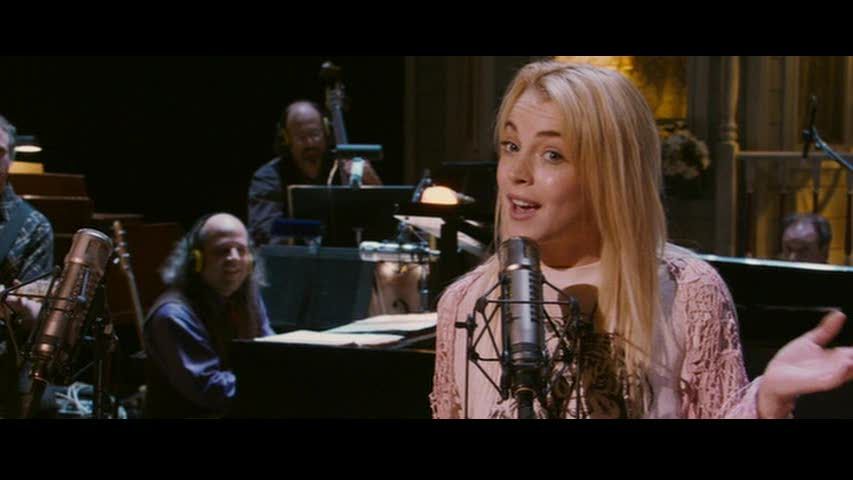
But the film's surprising showstopper is a late-in-the-game performance from Lohan, as Yolanda's shy, bookworm-ish, suicide-obsessed daughter. She is called upon to do a song towards the end of the show when it transpires that there is some extra time, and with no preparation she is thrust on stage, singing an old outlaw ballad to which she barely knows the words. This is an astonishing performance from a young actress all too often written off as insignificant, who performs here entirely while singing, her expressive face communicating the conflicting emotions of her excitement, nervousness, and the pleasure she feels in performing. As she gets to the third verse and forgets the words, she pauses only a beat before beginning to improvise with a smile on her face, stitching together bits of her morbid poetry and the folksy song she heard her mother and aunt singing earlier in the dressing room. Altman shows the entire performance from beginning to end, and it's great fun to watch this shy young girl growing gradually more and more confident, by the end belting out the lyrics, cocking her head and swaying her body. She starts the song insecure and withdrawn, looking uncertainly over towards her mother between verses, but by the end she is totally into it, closing her eyes and throwing her head back as she winds down towards the end. Lohan mostly stays in the background throughout the rest of the film, awkwardly chatting with Keillor and other cast members in a few scenes, setting up her character for this final moment of glory when she comes out of her shell.

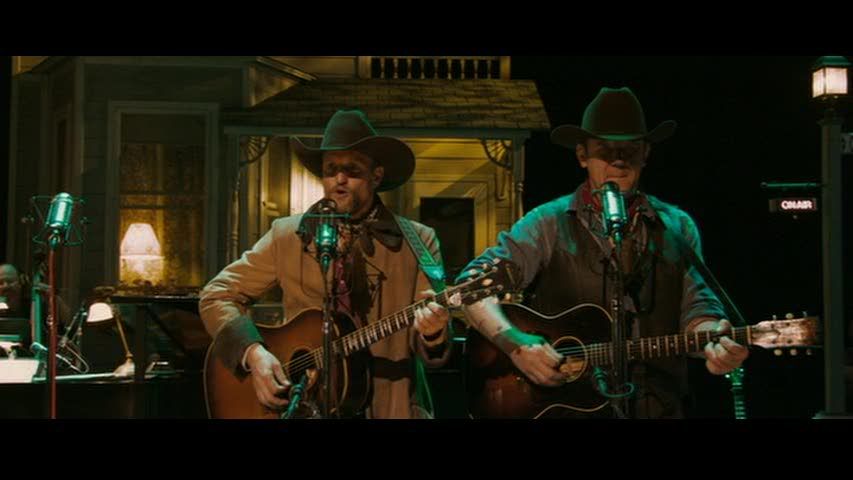
The film also boasts a pair of great, bawdy performances from Woody Harrelson and John C. Reilly as the cowboy singers Dusty and Lefty, whose song "Bad Jokes" is basically a loose foundation for the two guys to riff on mildly dirty puns and stories. It's pretty funny, especially to see the delight these two roughnecks get from delivering this old-timey smut, and the indignation of the stage manager (Tim Russell) when sound effects man Tom Keith begins providing an improvised accompaniment to the cowboys' raunchy stories. Harrelson also provides one of the great off-stage moments, singing an outtake he doubtless judged too risque for the broadcast version: "I used to work in Chicago. I did but I don't anymore./ A lady walked in with some porcelain skin and I asked her what she came in for./ Liquor, she said, and lick her I did, and now I don't work there anymore."

Even the show's security man, former private shamus Guy Noir (Kevin Kline), gets his moment in the musical spotlight. Guy, adapted from a character Keillor often uses in sketches on the real-life Prairie Home Companion, speaks entirely in self-consciously hard-boiled patter and narrates the film like Bogey playing Marlowe, naturally becoming infatuated with Madsen's angelic femme fatale. He gets the film's melancholy finale before the credits' raucous group reunion, a solo song at the piano that bids farewell to the country-western show as the set is disassembled behind him. It's an appropriate touch; he is a character out of his time, an icon living past his era, just as Prairie Home Companion is a throwback to an earlier, folksier era. This is a moving, rambling, and musically joyous film, a perfect send-off for a director who was always looking for ways to capture the pleasures and contradictions of life in his cinema.

Animal Crackers


Animal Crackers was the second film starring the Marx Brothers, an adaptation of their popular Broadway musical of the same name, and it's a sporadically entertaining comedy with only flashes of the inspired genius the group was capable of at their peak. The film is burdened with too much extraneous material: sappy musical numbers, a leaden romantic subplot, and long stretches of gag-free dead time. The brothers are at their best when they're able to interact with one another, playing off of the unique comedic personae that they'd each crafted, and the possibilities opened up by different on-screen combinations. Pairing Groucho's leering patter with Chico's faux-Italian accent and penchant for puns yields a plenitude of particularly pungent wordplay, while Harpo's mimed perversity and coat-full of props plays especially well off the easily exasperated Chico.

The film's best scenes come when this trio pairs off for extended gags. There's a delightful sequence where Chico and Harpo try to steal a painting, and Chico's simple request for a flash (as in flashlight) prompts Harpo into producing a dazzling array of items: a fish, a flask, and most ingeniously an oversized hand of cards ("a flush," of course). In another scene, Groucho and Chico begin by discussing the stolen painting and somehow wind up talking about building a house next door, the conversation proceeding through the typically torturous maze of Groucho's clever wordplay. Groucho is at his best when he can play off one of his brothers, particularly Chico. When he's performing with a straight man — as he does here in scenes with Margaret Dumont and Louis Sorin — he has to propel the dialogue alone, and though he still gets off some great one-liners ("I shot an elephant in my pajamas. How he got in my pajamas, I don't know"), the rhythms of the conversation aren't as fast and comfortable as they are with Chico. Dumont and Sorin, when acting opposite Groucho, mostly just mug broadly and roll their eyes a lot, smiling condescendingly at the jokes to indicate their stuffiness. Sorin in particular seems lost when he has to spar with Groucho, simply gesturing a lot with his hands, shrugging and looking around in confusion. It's not nearly as satisfying as the rapid-fire interplay the brothers have with each other.

Even Zeppo, as always playing the straight man to his three outrageous partners, provides a better foil for his brothers, and a scene where he takes dictation from Groucho is hilarious and perfectly timed. This scene demonstrates, more than any other, exactly what's lacking when Groucho faces off against a more straight-laced actor. Zeppo doesn't have many overtly funny lines here, but he sets up Groucho with precision and an acute sense of comic timing, feeding his brother the prompts he needs to keep the scene flowing. As funny as the verbal dexterity of Groucho and Chico can be when set against someone who doesn't know how to handle it, their humor really only crystallizes when they're interacting. They know each other's rhythms and styles perfectly, and they know exactly how to integrate their personalities with one another in interesting and often hilarious ways.


Unfortunately, the film's funniest scenes are diluted by the frequent diversions into musical interludes or unfunny bits with side characters. The minimal plot is really just an excuse for gags, but why then is there so much time wasted on developing bit characters who don't figure into the humor at all? The story centers on a party being thrown by the glamorous Mrs. Rittenhouse (Dumont), at which she and her suitor Roscoe Chandler (Sorin) will honor the African explorer Captain Spaulding (Groucho) by unveiling a rare and expensive painting. Of course, the painting gets stolen, and in fact it gets stolen several times, replaced with a series of fakes, which in turn are stolen themselves. This provides a fine opportunity for some madcap farce, but the film stalls whenever it detours too long into subplots involving the romance of Mrs. Rittenhouse's daughter (Lillian Roth) and her dull boyfriend (Hal Thompson), or a pair of society ladies who wish to embarrass the party's hostess. This stuff is dull and pointless, a distraction from the inspired lunacy of the Marx quartet, who barely interact with any of these characters.

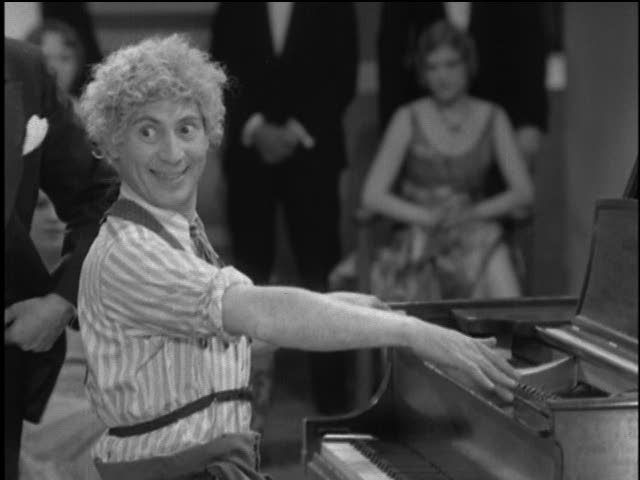
Most of the musical numbers are equally flat, though there's a lot to like about the scene where Chico and Harpo take turns at a piano. Chico mostly plays it straight, but invests all his humor into his hands, playfully running them across the keyboard, his finger pointing at the key he's about to touch as though scolding it or shooting it, his thumb pulling an imaginary trigger as he hits the note. A later scene where Harpo plays a harp isn't quite as amusing, mainly providing an excuse for the silent brother to display his musical virtuosity instead of his humorous antics. As self-indulgences go, it's not bad. The less said about the straight-up musical numbers, though, the better. They're chanted by the cast with so little feeling that everyone looks like they're on the verge of falling asleep.

The film also has little to offer as cinema, since the adaptation makes no attempt to truly transfer the material from stage to screen. The direction, by Victor Heerman, is routine at best and inept at worst, and there are frequent jarring transitions, even in the middle of scenes, where multiple takes are shoved together without any regard for matching the position or poses of the actors in the frame. This isn't a graceful or well-made film by any means, and the fact that at its best moments it can still reach such heights of entertainment is a testament solely to the peculiar, irrepressible charm of the Marx Brothers.

Wild Man Blues


Barbara Kopple's Wild Man Blues, a documentary of Woody Allen's 1996 European tour with his New Orleans-style jazz band, confirms what everyone has long suspected, that Woody Allen the man is pretty much the same person that audiences have come to know from the characters he plays in films. He's neurotic, compulsively nervous about everything from boat rides to his own health, and he's very funny, in the casual, natural way that his conversational style tends to hone in on jokes at every opportunity. Woody's idol Groucho Marx was famous for always being in character, on camera and off, and it seems as though Woody has achieved a similar fluidity between his public and private personae. Kopple's cameras follow Allen rigorously throughout his whirlwind tour, capturing him on-stage with his band and off-stage in a variety of settings, from the required meetings with foreign dignitaries to signing autographs for fans to lounging around in hotel rooms with his sister Letty Aronson and his then-girlfriend, soon-to-be wife Soon-Yi Previn. Kopple catches many an unguarded moment, including some wonderfully intimate time spent with Woody and Soon-Yi, but what's remarkable is that the film hardly reveals anything new or particularly surprising about the director — instead, it often feels like watching a Woody Allen movie.

What is revealing in the film, though, is the attention given to Allen's music, which is often given short shrift in discussions of his work, but which he apparently considers a very important part of his creative life. Allen took up the clarinet as a very young man, moved by his longtime love of jazz, and he has been performing in jazz bands for longer than he has been making movies — he first started sitting in with some New York groups early on in his stand-up career in the 60s. Seeing Woody on-stage in this context is a new and seldom explored dimension to the performer. His love of jazz — and specifically this outmoded, rarely played form of New Orleans jazz — fits comfortably with his general nostalgic outlook, his affection for old artforms, for places with a sense of cultural history, for earlier eras. Kopple captures his performances with fluid, expressive camerawork, going for intuitive framings and reframings, the camera restlessly roaming over the faces of the players. The music is vibrant and fun, and the best parts of the film are its concert segments.

Unfortunately, Kopple doesn't focus as much as one would expect on the music itself, which is somewhat disappointing. Throughout the film, Woody laments that many people only go to these concerts for his celebrity status, not for the music, and Kopple's documentary occasionally seems to fall into the same trap. She's very interested in the reception Woody gets abroad as compared to in the US, and in his relationship with Soon-Yi, but to some extent the concerts themselves get short shrift. There are only two long, uninterrupted excerpts from the performances, one at around the halfway point of the film and the other towards the end, from the group's final concert of the jaunt, in London. Many of the other performances are chopped into very small segments, or worse yet interrupted by unnecessary voiceovers from Woody or his band leader and banjoist, Eddy Davis. It's rare that Kopple provides an opportunity to watch a performance develop over time, to get a sense for the structure of a whole song or the interplay within the band, or the ways in which their sets develop from night to night. Considering Woody's obvious desire for people to take his music seriously, it's unfortunate that the documentary itself mostly treats the music as filler, chopped up and played in short excerpts that serve as dividers between the material from backstage and during off-hours. It's not really a document of a working band and their music so much as it is a profile of a famous figure who just so happens to be touring in a band at the moment.


That said, the two occasions when Kopple does choose to focus on the music at greater length are very enlightening indeed. The excerpt from the band's final London concert provides a great opportunity to watch the improvisation within the band, the way the three horn players — Woody, trombonist Dan Barrett, and trumpeter Simon Wettenhall — pass off solos to one another in turn, a perfect example of the sensitivity to jazz structures and development over time that is missing from the rest of the film. Even better is the earlier long concert segment, in which Kopple excerpts a lengthy part of a performance starting with Woody's clarinet solo and running straight to the end of the song. Woody's solo is somewhat unusual, marked by very breathy, wheezy playing that mostly just sends air circulating through the instrument in quick, choppy breaths, only sporadically generating any actual notes. The music seems to emerge, tentatively, from the constant bed of static generated by the soloist's breathing. This tender, mournful solo, sometimes lapsing towards the threshold of inaudibility, surprisingly elicits laughter from the audience, who seem to think that Woody's kidding around, that his failure to produce clear melodic notes is a joke. They're seemingly unaware that his playing is intentional, and derived from a long lineage of similar techniques running through jazz history, and especially common in free jazz and post-jazz experimental musics. It's a telling moment, indicative of a gulf between the audience and the musicians. Woody knows full well that most in the audience are not there because of a genuine love or understanding of jazz, but because he's a famous director and media figure.

One only wishes that Kopple, having obviously grasped the importance of this moment by singling it out and dwelling on it, would have followed up on it, delving further into Woody's feelings about his music. She lets Woody talk about his music but seldom goes further into it with him. Some of the only direct, interview-style questioning in the film occurs towards the end, and it concerns Woody's relationship with Soon-Yi and the scandal that followed. Kopple also fails to really visualize some of Woody's most interesting observations about his music, like his repeated discussions of the balance he tries to strike between throwing out one "crowd-pleaser" after another and playing some more difficult, esoteric material. One would guess that Woody's breathy solo falls into the latter category, while most of the rest of the music in the film is relentlessly upbeat, danceable, and fun; certainly crowd-pleasing. But the film never develops any sense of how the band balances these two tendencies in concert, or how they structure their sets in general. There is some discussion of changing sets between nights, and Woody's conscious attempts to make some nights more challenging than others, but Kopple's presentation of the music in mostly sound-bite fragments doesn't provide any sense of how this actually works, or what the difference might be between one night and another. There's a disconnect between Woody's serious, intellectual consideration of his own music and the essentially fluffy presentation of that music in the documentary. The music segments are always enjoyable, not to mention beautifully and inventively shot, but there remains a sense of missed opportunities every time Woody makes an analytical statement about the music that is not followed up in the concert extracts.


Though this failure to really explore the band's music in depth is unfortunate, Kopple's attention to Woody's behind the scenes life does yield some interesting results. One of the most welcome of these is the most uncensored, unfettered view possible of the relationship between Woody and his young love, who at one point he playfully introduces as "the notorious Soon-Yi Previn." It is impossible to walk away from this film with anything other than a positive view of this relationship, which seems genuinely loving, affectionate, and comfortable. The couple, captured in quietly intimate moments by Kopple's unobtrusive camera, completely dispel the taint of perversion and iniquity generated by the rumor-hungry press who hyped up Woody's love for his then-girlfriend Mia Farrow's adopted daughter into a scandal of mammoth proportions. Kopple patiently accumulates a portrait of the couple through a wealth of details: Woody's casual compliments, Soon-Yi's gently scolding tone, the affectionate way she kisses his head when he's feeling sick or complaining about something or other, the way she squeezes his arm on a cozy gondola ride in Venice, their playful joking around with one another. Best of all is a great scene where Soon-Yi talks about Woody's films, admitting that she's never seen Annie Hall — which Woody says is the only one she should see — and that Manhattan is her favorite, while she says that she couldn't sit through Interiors. It's a warm, funny, unguarded moment, one of many in the film's backstage footage.

Wild Man Blues is not the in-depth examination of Woody Allen's under-documented music that it might have been, but it is nevertheless a certain delight for any of Woody's fans. For its joyous, lovingly filmed music, and its intimate documents of Woody's private time, the film is one of the best touchstones for those who wish to know what the famous director and actor is like when he's not making movies.

Everyone Says I Love You


Woody Allen's tribute to the American musical comedy, Everyone Says I Love You, is a ramshackle ode to a mostly lost artform, occasionally failing in various ways but more often succeeding by being as moving, funny, and charming as the films it seeks to emulate. Allen conceives of his plot as simply an excuse to assemble a large and star-studded ensemble cast, constituting the members of an upper-class extended family and their various love interests, both fleeting and enduring, and to stage a dazzling array of musical numbers. The stories (for there are several) all center around the family of Steffi (Goldie Hawn) and Bob (Alan Alda), two typical faux-intellectual Woody Manhattanites: he's a lawyer, she's an ultra-left do-gooder whose pet cause is prison reform ("they should be able to decorate their own cells"). Their daughter Skylar (Drew Barrymore) is getting married to her average joe boyfriend Holden (Edward Norton in an early role), but she still harbors secret fantasies of a "white knight" sweeping her off her feet. Meanwhile, Joe's two daughters from a previous marriage (Gaby Hoffman and a teenage Natalie Portman) have their own romantic foibles. Steffi's daughter DJ (Natasha Lyonne) — from an earlier marriage to Joe (Woody Allen) — narrates the film, providing wry commentary on her family while running through her own seemingly endless gamut of week-long affairs, with each one being the dreamiest, sexiest, cutest one yet.

The cast is big enough as it is, even before adding in all the rest of the maids, friends, momentary love interests, and extras, and the film would threaten to careen out of control if it weren't held together by DJ's flighty but no-nonsense narration, which allows the plot to skip haphazardly from one incident to the next, sometimes forgetting about characters and subplots for long stretches of time before belatedly doubling back to stitch up the loose ends. It's a charming conceit, and the distinctive, oft-underused Lyonne pulls it off well with her sarcastic lilt. The semi-random plot and large cast also provide Woody with all the excuse and opportunity he needs to stage one musical number after another. A few of these are flops, like a misconceived funeral home number where the singing, dancing ghosts are sabotaged by some of the lamest special effects ever committed to film. It's also unfortunate that Woody was unable to convince Drew Barrymore to sing in her own voice as the rest of the cast did. One of the most charming facets of the film is the spontaneous, free-wheeling quality of most of its musical numbers, the sense that these are real people simply bursting out into song for the hell of it. Few of the actors have actual good voices, but it hardly matters, since they're clearly just having fun and going with it. In the one scene where Barrymore's character gets a song, the distance and artificiality of the obvious overdubbing hurts the moment, all the more so since it's meant to be expressing introspective and heartfelt sentiments for the character.

For the most part, though, the musical numbers work beautifully, and some of them are downright stunning. Probably the best is an early scene, the first big musical set piece, at a Manhattan jewelry store where Holden is preparing to buy a ring for Skylar, when he begins singing Nina Simone's "My Baby Just Cares For Me." The scene progresses naturally for the first verse or so, with the store sales clerk nodding indulgently along with the lyrics, as though Holden were simply talking to him. At first, it seems that Woody has solved the age-old problem of the artificiality of musical conventions by simply ignoring it — but at this point the scene abruptly bursts apart into a fully choreographed and joyously vibrant musical pastiche. With a quick burst of motion, Holden leaps to his feet, his chair pulled away behind him as the salespeople in the store join him for a wonderfully executed song-and-dance number. The camera setups are simple, with Woody mostly taking a straight-ahead view on the dancers and simply letting them perform, reveling in the vibrant, shifting patterns they create in front of him.

It's a scene of pure fun and a heartfelt tribute to a cinematic form Woody clearly loves but hadn't had much opportunity to nod to in his previous films. Other scenes provide still more models for the kinds of musical numbers Woody can execute when the inspiration hits him. The opening number, with Holden singing his love to Skylar, begins with a slowly panning shot across a fountain, its jets of water periodically blocking and revealing the view of the lovers behind it, as they laugh and embrace and walk together in pace with the camera's tracking. Then, as Holden continues to sing, Woody cuts away to a series of languid, unpopulated images of springtime New York beauty, all bright and warm with the colors of flowers and brilliant sunlight. It's a conception of a musical number in which images of the city stand in for choreography. Woody also has a lot of obvious fun with a number where a bunch of Parisian Groucho Marx imitators stage a French-language song-and-dance for a chorus of Marx brothers, who slouch and shrug their way through the steps with bushy eyebrows flailing. A tribute to one of Woody's favorite artists, the scene creates an admirable pastiche of the musical interludes from Duck Soup. Even better is the meditative, magical dance between Woody and Goldie Hawn towards the end of the film, in which she is lofted into the air with a floating grace and easy defiance of gravity. The casual way in which this magic happens, its inexplicable beauty and simplicity, makes this one of the enduring images from Woody's filmography — shot from a distance so as to emphasize the reality of this magic accomplished with no visual trickery, doubles, or cuts, only wires and the graceful moves of the two dancers.


Not everything in the film works quite so well or so effortlessly. Allen has often been criticized for failing to include a more ethnically diverse (and thus true) cross-section of New York in his films, which is understandable but beside the point most of the time. His films are unabashed fantasies, and are generally concerned with a pretty constricted social set. There's nothing intrinsically wrong with the choice to limit his stories to his characters' vision of the city they live in, which is of course a fairly whitewashed vision. Everyone Says I Love You makes some token gestures outside this blinkered worldview, but they're mostly unwelcome diversions. For one exception, I never though I'd hear rap music in a Woody Allen movie, but that moment — dropped casually and unexpectedly into the middle of a musical number — feels real and funny and works well in context. It's more discomfiting to see Woody wholeheartedly embracing the stereotype of the turbaned cab driver, or trotting out a bunch of little kids in ethnic outfits for a disastrous Halloween number that's basically Woody's version of the insipid Disney ride "It's a Small World After All." Woody's films always present fantasy versions of the cities they take place in, but moments like these cross the line from knowing fantasy to uncomfortable stereotypes.

Even so, the film is mostly an utter delight, a celebration and a chance for the director to stretch out in an unfamiliar style. The result is typical Woody in many ways, borrowing plot conceits from earlier films (the spying on a psychiatrist from Another Woman recast as a comedy device) and sporting many typical (and very funny) Woody one-liners like, "I haven't touched my treadmill in weeks — 572 weeks, that's 11 years." But the musical form furnishes this familiar material with a very different feel, lending the freshness of experimentation to what otherwise might've been a fairly standard film for Woody. The atmosphere of recycling especially weighs down his character Joe's romance with the improbably gorgeous Von (Julia Roberts), which seems primarily like one more excuse for Woody to pair himself with a beautiful leading lady who's way out of his league. Even the script seems to acknowledge the improbability of it all, stacking the deck in Woody's favor so that it seems inevitable that he'll land the girl. The whole thing is mostly played for a few (admittedly solid) gags, and then the whole affair just puffs away like a wisp. The film has a breeziness, aided by Lyonne's chatty narration, that occasionally does a disservice to deeper development but is otherwise the film's greatest asset. The breezy style is perfectly suited to the whirlwind romance that develops between Skylar and the crude ex-convict Charles Ferry (Tim Roth, in a hilarious bit part), who Skylar briefly believes might be her white knight. Certainly, he has a passion and spontaneity that is lacking from her fiancé Holden. When he tells her that he'd make love to her in every room of the house, on every rug and tabletop, she breathlessly deadpans, "we also have some lovely early American chandeliers." This episode is one of the film's funniest self-contained stories, a momentary diversion for some laughs (and Tim Roth's side-of-the-mouth attempt at a thug love ballad) before the film moves on.

The film is packed with such moments, and nearly everyone in the cast gets a chance to shine, even if only for the space of a few lines of song or a one-liner. One of the best gags comes late in the film, revolving around a character who is otherwise barely present in the story, Steffi and Bob's son Scott (Lukas Haas), whose inexplicable streak of conservatism in this liberal family is explained away as the result of an undiagnosed medical condition. Everyone Says I Love You is a charming, farcical ode to love, music, and the cities Woody adores — besides New York, there are loving mini-tours of Paris and Venice that foreshadow Allen's recent fascination with filming abroad. The exuberant, fluffy result is one of Allen's lightest, airiest, silliest, and most fun concoctions.

The Girl Can't Help It


Considering its inauspicious origins, The Girl Can't Help It has absolutely no right to be as good or as wildly entertaining as it is. It's a blatant exploitation film on at least two fronts, an attempt to cash in on two separate but equally popular phenomena of the mid-1950s: the teen rock n' roll craze, and Marilyn Monroe. The latter is incarnated here by Jayne Mansfield, starring in her first film and outrageously made up as one of the best Marilyn impersonators of all time. She's got down the platinum blonde coifs, the wiggly walk, the breathy murmur of the voice, and even the deliriously silly repertoire of squeaks, giggles, and cries that so characterized Marilyn's ditsy public persona. And as if Mansfield's boffo impression wasn't enough, the film makes every effort to ape Billy Wilder's successful Monroe vehicle The Seven Year Itch, released the year before, bringing over Marilyn's costar Tom Ewell in a similar role as the ordinary schlub bowled over by the otherworldly beauty. Even Mansfield's apartment in the film, with its garishly decorated central staircase, seems inspired by the decor and layout of Ewell's apartment from Itch, where his character was casually seduced by Monroe.

In the hands of almost any other Hollywood director of the time, this situation would add up to little more than a quickie cash-grab, a plain-faced rip-off that attempted to create a new star from the exact same mold as the era's most famous star of all. With this plainly unoriginal material, director Frank Tashlin managed to create a film that not only completely outdid its obvious inspiration — even the best moments of The Seven Year Itch seem flaccid and snail-paced in contrast to this colorful, vibrant extravaganza — but which stands up on its own as a marvel of design, pacing, and visual comedy. Much has been made of Tashlin's pedigree in cartoons, pumping out animation for Warner Brothers' Looney Tunes line for years before making the transition into comedic screenwriting and directing. Indeed, a great deal of Tashlin's sense of humor and eye for visual absurdity is intimately connected to his cartoon work. This should be apparent right from the film's opening, in which Tom Ewell breaks the fourth wall by introducing himself as the actor who will be playing the agent Tom Miller in the upcoming movie. Ewell starts his introduction in a tiny gray square, growing annoyed as he realizes that the film really should be in Cinemascope color: he pushes out the sides of the screen to their correct ratio, then looks angrily upwards offscreen and makes pointed remarks until the color belatedly kicks in. This kind of metafictional goofing around was a common convention of the Looney Tunes cartoons, which often referred implicitly or explicitly to the offscreen animator, with characters looking upward in this way to get the attention of the artists — a device most famously used in Chuck Jones' Duck Amuck a few years earlier. Even the background of this opening, with its abstract landscape and musical instruments floating in space, is a nod to the surrealist imagery of the Warner Brothers cartoons.

More broadly, Tashlin gets a lot of ground out of taking a very cartoonish approach to the film's humor. He gets most of his mileage out of Mansfield early on, making every kind of gag he can think of about her gaga appearance and the effect she has on men, as though he's in a rush to get this obligatory sexual material out of the way so he can move on. So in pretty short order, Tashlin has Mansfield causing a delivery man's hands to melt through a giant block of ice, an old pervert's glasses to crack, and a milkman's bottle to bubble over with, um, white foamy milk (Freudians, ho!). Even more hilarious is a montage of nightclub scenes in which Ewell, as a luckless agent who's been hired to turn Mansfield into a star by her gangster boyfriend (Edmond O'Brien), brings the girl around to club after club to attract attention. Mansfield, of course, never fails to get attention, and her hip-swaying sashay does all the work, bopping and jiving around the room even for as simple a thing as walking to the ladies' room. Dolled up in a form-fitting red dress that's straight out of Tex Avery's Red Hot Riding Hood, Mansfield's curves barely even look human; her body is as hilariously distorted as a Looney Tunes dame. And Tashlin plays up the wolfish reactions of the men around her. When one nightclub owner catches sight of her, it looks like his eyes are about to pop out of his head and steam pour from his ears, so wild is his expression.

This unhinged, cartoony expressionism extends throughout the film, and especially to O'Brien's character. Ewell is a grade-A ham too, and Tashlin uses him well by playing up both his most slack-jawed, anxious moments and his plodding everyman stoicism, but O'Brien is the film's only personality who can compete with Mansfield herself. He's like a sinister variation on Porky Pig, idiotic but perfectly capable of casual brutality. When he's leading Ewell on a tour of his Long Island mansion, pointing out the places where his gangland friends met their ends, he's absolutely hilarious, and he's even funnier singing his maudlin jailhouse rock tunes, which take the idea of "rock" a bit too seriously, dealing as they do with chopping at rockpiles. He's even privileged with the film's very last moment, a prototypical Porky closing when he steps through the enclosing frame of the final shot, walking forward through the black, now-empty space to directly address the audience, entreating them to listen to him sing. It's a very self-serving version of "t-t-t-that's all folks!"

If Tashlin quickly dispenses with the bulk of the film's sexual sight gags featuring Mansfield, getting them out of the way in the first half hour, he never quite grows tired of the film's other central conceit, which was its attempt to jump on the rock n' roll bandwagon that was then viewed primarily as a teenage fad. Though this idea was every bit as much of a cash-grab as Mansfield's creation of a would-be Marilyn II, the rock n' roll is incorporated organically into the film, with original rock artists doing live performances in rehearsal studios and nightclubs. The film boasts quite an impressive roster, too, with A-list acts like Fats Domino, Little Richard, Gene Vincent, and the Platters bolstered by lesser-known but then-popular artists like the Treniers, the awkward Elvis rip-off Eddie Cochran (who's held up as an example of how you don't need talent to be popular — ouch!), Eddie Fontaine, and many others. Many of these artists give stunning performances of their hits, and the film remains, among other things, a time capsule for mid-50s rock at its best. Little Richard and the now-forgotten Treniers in particular are positively electric, generating enough heat and energy with their raucous songs to drive the entire film. This music, by itself, is reason enough to watch the film, but it also helps that the director doesn't simply allow the songs to exist as documentary snippets separate from the film as a whole, but incorporates them fully into the milieu, creating a carefully drawn sense of time and place.

Though the film's producers doubtless viewed rock as a passing craze, Tashlin seems to have much more respect for the artists involved. He really gets this stuff, and he enhances the natural power of these performances by not only allowing them to run almost interrupted for their entire lengths, but by filming them dynamically and with visual panache. A soulful performance by the jazz singer Abbey Lincoln becomes an exercise in visual abstraction and color fields for Tashlin, as the curvaceous singer poses in a bright red dress, her hourglass shape forming a red cutout against the deep blue of the plush curtains behind her. When the number ends, Tashlin pans slowly downward, onto the black and reflective stage, where Lincoln's red shape is transformed into an abstracted series of circles, like the early stages of a cartoonist's character design, the body broken down into geometric figures and color areas. Elsewhere, he intercuts an idiosyncratic Fats Domino performance with periodic shots of the dancing feet of the teenage crowd, the bare feet and swishing dresses of the girls creating a riot of movement and bright color. This echoes the opening credits, which take place over a wild jitterbugging party that seems to have provided the visual inspiration for the opening sequence of David Lynch's Mulholland Drive. And why not, since Tashlin has crafted perhaps the definitive cinematic representation of 50s rock culture. This carefully honed aesthetic and attention to color carries over into each of the performance numbers, which are perfectly designed, with seemingly endless attention lavished on the musicians' outfits and the brightly colored sets they're placed in. Even without Mansfield, the film would be a delightful tribute to 50s rock at its best, and Tashlin's lovingly staged musical numbers capture the era's energy and vitality like no other film.

The Girl Can't Help It is a rare treat that is so much more than the sum of its parts, even if on paper its parts might seem to clash quite a bit. It's a gangster movie parody, a thrilling musical celebration, a sexual farce, a love story. It doesn't all always work, and there are a handful of slack moments and missteps here and there — like a maudlin fantasy guest-starring Julie London, singing a song of heartbreak to Ewell from his memory — but for the most part this is a crackling comedy with some equally potent music at its core.