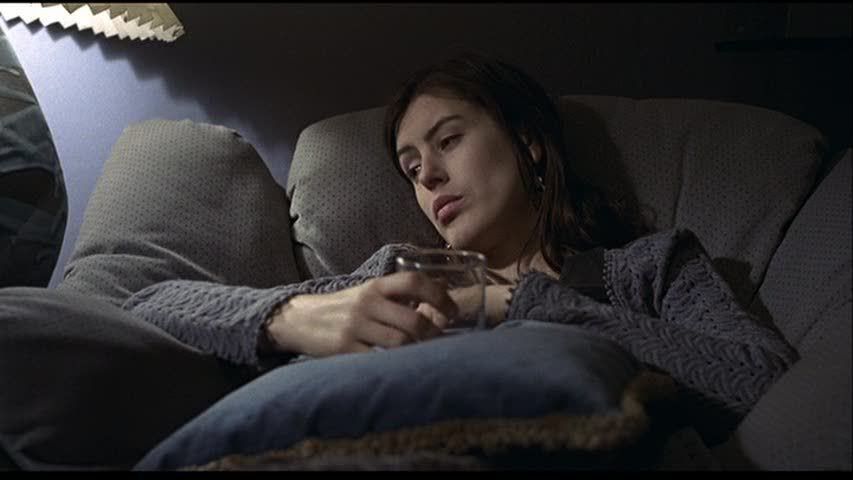
Showing posts with label Mike Leigh. Show all posts

Who's Who


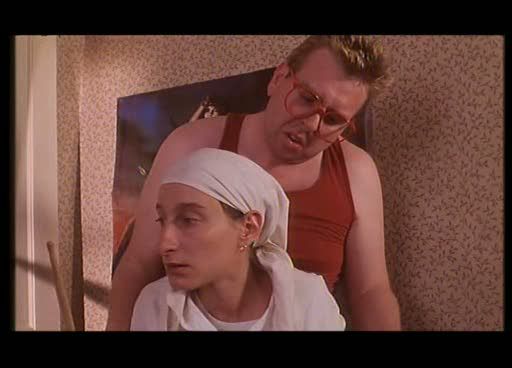
Who's Who is one of six TV films that director Mike Leigh made for the BBC television series Play For Today. It's an acerbic, biting class comedy, nastily funny in its portrayal of the class divisions between employees of different social levels at a stock firm. Leigh satirically observes the profound disconnect between the low-level workers in their middle-class lives and the upper echelons with their full social calendars. Alan (Richard Kane) is one of the lower workers, but he's obsessed with the British royal family and the upper classes. He writes letters to anyone he can think of — the royals, various celebrities, politicians, even famous doctors if they're connected to the peerage — asking for autographs and inscribed photographs, and he files the results in a cabinet where he stores these treasured artifacts. He's infected with a profound class envy, worshiping those with an upper class name or even the slightest whiff of class status. It's his way, perhaps, of coping with what seems to be otherwise a very unsatisfying life, with his staid office job and his dowdy wife April (Joolia Cappleman) who's obsessed with her copious cats. While he sits at work listening to the upper-class managers talking about their busy weekends, their dates and dinner parties, his idea of an important engagement is a TV program he wants to watch, so it's no wonder that he idolizes the upper class and gathers any scraps he can get from that arena of privilege and fame, as though his drawer full of autographed pictures could convey some of that classy aura to him by proximity. He even keeps, in a place of privilege, pinned on his wall, the letters of rejection from the highest members of the royal family: it's obvious that he's deeply impressed by the implication, in these letters from secretaries and royal functionaries, that to sign a letter for a "fan" would lower the queen or the duke or whoever. Even his rejection by the upper class is a reason to celebrate them, to venerate them even more.

Mostly, though, Alan sees those above him in a very rosy light. Speaking about one of his superiors at work, he tells his wife, "he's a very charming man, once asked me the way to the office toilet." In fact, in an earlier scene, the man obviously couldn't wait to get away from Alan, answering his nosy questions with strained politeness and then hurrying away as soon as possible, which doesn't stop Alan from presenting the whole incident to his wife as though he'd had a lovely chat with the man while walking to the train station together. Leigh clearly sees Alan as a hopelessly pathetic character, ridiculous for his aspirations, for his desire for any least contact with those above him socially. He's laughable because he ascribes some kind of sacred importance to the idea of class, buying into the heavily stratified British society with its sharp divisions between different levels.

One of the film's most painfully funny scenes is the lengthy sequence where a society woman visits Alan and April's house to buy a kitten from April. While the woman is there, a photographer named Desmond Shakespeare (Sam Kelly) is also bustling around, setting up his lights and camera equipment for a photo shoot of the cats. In the midst of this chaos, Alan sees the opportunity to present himself as a man of culture, and he hurriedly puts on a dressing gown and fancy accoutrements, then tries to engage the woman in polite conversation even as the photographer keeps scrambling around them, setting up, and April keeps telling the potential buyer about problems with litter boxes, diet, spaying and defecation, despite the obvious fact that the woman couldn't care less, that she knows that she is certainly never going to personally deal with the animal, that it will be her servants who do all that work. The woman nods and laughs with badly feigned politeness at Alan's conversation, and when she leaves he pronounces her "charming," his favored word for the representatives of the upper class, even though in fact she'd been far from charming, even though she'd actually been looking at the house, and Alan, and everything around her as though she was disgusted, and winced whenever she was offered a drink. The whole scene is absurd and funny in its dark, embarrassing way. When Alan asks the photographer, "by the way, you do know there was a famous writer called Shakespeare?" it's just another sign of Alan's desperation for any hint of contact with something beyond his pitiful life, his pitiful desires. The photographer simply deadpans, "yes, I've heard of him," and then later, when he's leaving, is stunned and exasperated by Alan's request for an autograph, disgusted, much as the society woman herself had been, by this particularly blatant and ridiculous starfucker.

To juxtapose Alan's social ambitions with the lives of those he wishes he could be, Leigh intercuts Alan's story with scenes from a dinner party held by the socially connected Nigel (Simon Chandler) and Giles (Adam Norton). The pair invite Anthony (Graham Seed), a boss at the company where Giles and Alan both work, along with two girls, Samantha (Catherine Hall) and Caroline (Felicity Dean). The dinner party provides another study in social divisions, as even within the upper class circles that these people all travel in, there are obvious hierarchies: Nigel, Giles' roommate, is more like a servant than a friend, preparing dinner for everyone and generally getting treated with polite distance. The conversation at the dinner table is shallow and pointless: these people have nothing to say except where they've been on vacation, what other socially connected people they've seen or not seen, whether they like to hunt or ride horses or ski. They talk about who they know, who they've met, where they've been — in that, they're not so different from Alan, who's similarly obsessed with namedropping.

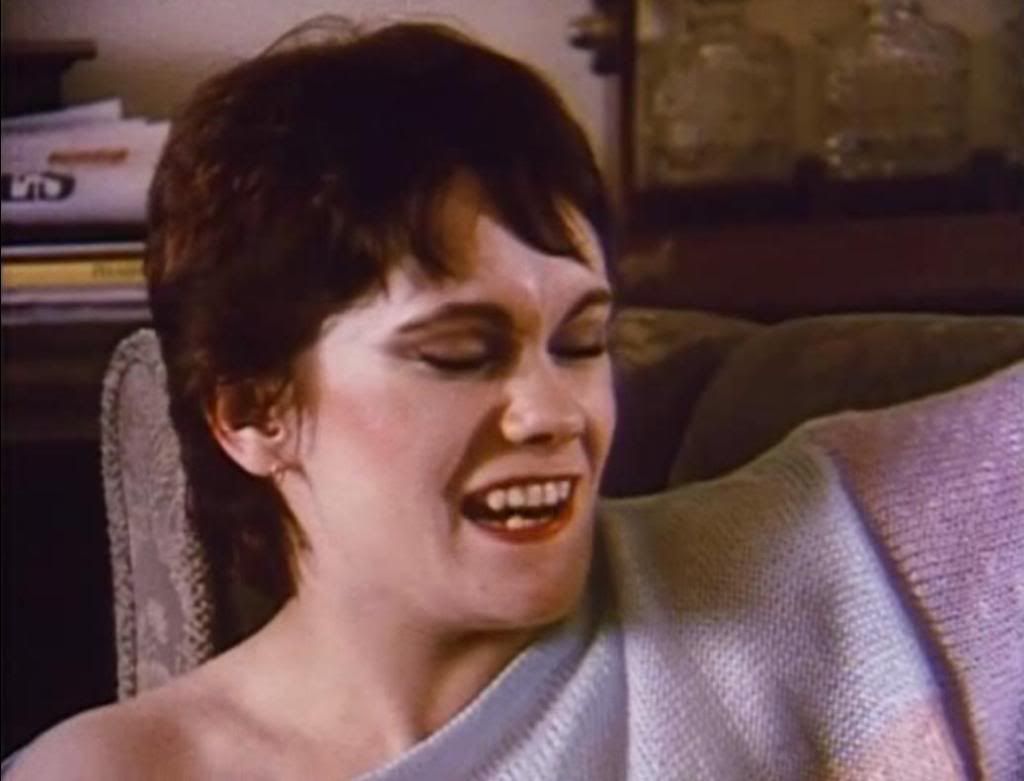
The only point at which the conversation actually touches on something real is when these upper class snobs discuss punk. Samantha, it seems, is a punk sympathizer, at least in her shallow way: she's adopted some of the dress of the punk style, and she giggles at the provocations of the movement. She likes to shock, and in her circles probably the best way to shock is to make some gestures towards a populist movement of noisy provocateurs. She wears a jacket with a few buttons pinned to it, and when she walks in Nigel asks her, "what is it, punk? Where are the safety pins?" Everyone laughs: these people, only a few years into punk's peak period, have already grown accustomed to the movement enough to see it as just another fashion trend, a costume to be appropriated, tossed on lightly. It doesn't seem to be much more than that to Samantha. She likes that it offends people, that it shocks; it fits with her giggly, sexually suggestive persona, her garish makeup and leering smile. It never occurs to her, or to any of the other partygoers, that there might be a class component to it, that the anger and provocation of the punks were in part responses to the very class inequities chronicled in this film. The others only see it as "offensive," parroting Anthony's word for it, none of them seeming to have any clue what punk even is.

Leigh's eye for this milieu is acute as ever. He's always been a potent observer of class, of how people live their lives. His aesthetic here is unobtrusive, alternating between slightly aloof, distanced observation — as in a sequence where Leigh's camera sits at a quiet distance, watching the absurdity of these upper class buffoons trying to iron out the proper seating for a dinner party — and abrupt, in-your-face closeups like the one that pushes uncomfortably up against the shrill, desperate face of April as she tries to impress her potential buyer. This is a darkly funny film about the ugly and pathetic facts of life within a restrictive class system that cleaves people from one another, sectioning them off behind "codes" like the one that Anthony says governs his behavior. If this is control, if this is order, one thinks, then the chaos and anarchy of punk that Anthony so fears starts to look more and more attractive.

Happy-Go-Lucky


Mike Leigh's Happy-Go-Lucky is built around a peculiar and extraordinary character, the 30-year-old school teacher Poppy (Sally Hawkins), a woman who is forcefully, unbelievably enthused about life and, seemingly, everything in it. In the opening minutes of the film, she encounters a reticent book store clerk who responds to her peppy greetings with glowering silence and confusion, as though he doesn't understand why this woman is wandering through his store, asking him questions and smiling and laughing for no apparent reason. But this is just how Poppy lives her life, with an attitude of openness and cheerfulness that can seem, to the people she encounters and at times to the film's audience, like absurd naiveté or even lunacy. Poppy is a person of boundless optimism and good will, and her final question to the store clerk provides a subtle glimpse of her worldview. She asks the man if he's having a bad day, and this finally shakes him out of his stony silence, at least long enough to answer with a simple "no." The unspoken question, then, is why he seemed so rude, so closed off, so unwilling to interact. When Poppy encounters this kind of attitude, she assumes that something must be wrong, because she doesn't realize that for a lot of people — even most people — the default setting for getting through the day is not boundless cheer but resignation or, at best, neutrality. Most people are not like Poppy, greeting every day with laughter no matter what happens. When she leaves the store, she realizes that her bike has been stolen, and even that she responds to with bemused laughter rather than anger; she's a little sad only that she didn't have a chance to say goodbye.

As a character, Poppy perhaps strains credibility — and in certain scenes shatters it altogether — but that's part of the point. She's almost artificially, supernaturally happy, very unlike the poor, downtrodden, miserable characters who often populate Leigh's films about the British working class. Poppy presents an alternative to that misery, an alternative to the attitude of constant complaining, an alternative to the attitude that the world is out to get us and that the best thing to do is snarl back. When Poppy encounters the small adversities of everyday life, she muddles through as best she can and tries to make it as enjoyable as she can. At one point, she injures her back while trampolining, and winces her way to the chiropractor, although she also exclaims that her back pains make her laugh — which is not surprising, since everything makes her laugh. While she sees the doctor, her friend Zoe (Alexis Zegerman) waits outside, trying to chat up another back pain sufferer, and Leigh not too subtly points out how outrageous Poppy's attitude is. While the man in the waiting room cringes and glowers at everyone around him, and Zoe points out that back pain affects everything, including one's attitude, Poppy is giggling and smiling through her pain, joking with the doctor. Back pain doesn't alter her attitude, and neither does almost anything else. Leigh stages the scene in a strikingly intimate, even sensual way, with Poppy stretched out on the examining table in a pink bra and bright orange panties beneath black net stockings. As the big hands of the doctor probe her body, Leigh almost makes the examination seem sexual, flirtatious, but really Poppy is just doing what she always does, which is to remain open to other people and to her own pleasure even when things aren't going so great.

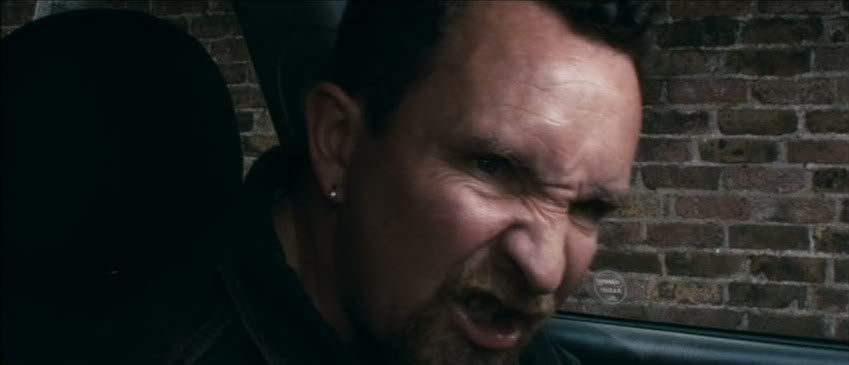
This attitude encounters its greatest challenge in the form of Scott (Eddie Marsan), Poppy's driving instructor. Scott is an obvious bundle of (barely) repressed rage and disdain for other people. He is a Christian of a particular type — he says that Satanists and the Pope amount to the same thing — and also a conspiracy theorist and a racist. The openness of Poppy and Zoe to the black chiropractor — who they find attractive and kind — is contrasted against Scott's instinctual reaction to lock the car doors when two young black men go innocently riding by on bicycles. Scott is nasty and perpetually angry, always complaining about his driving students, about the inconsideration of other drivers, and especially about Poppy's cheerful attitude. Leigh relies a lot on closeups throughout this film, probing closeups that establish an at times uncomfortable intimacy with his characters' exaggerated emotions and the way those emotions are scrawled across their faces. There could not be more distance between the ready smile and bright eyes of Poppy and the constricted, taut face of Scott, who's always snarling and spitting from between clenched teeth, his face threatening to turn red with anger, his eyes scrunched up into angry slits. The two actors are each exaggerating, each projecting their feelings in the broadest possible ways, and Leigh purposefully sets these two caricatures against one another, letting the sparks fly simply by placing them in the same car together.


Of course, it's wildly entertaining and exciting, but the surprising thing is that it winds up being more than that, more than just an over-the-top acting exercise in which two broad types clash. Because even though Poppy and Scott are each extreme incarnations of opposite personality types, there's something poignant about this meeting of the avatar of good cheer and the personification of Christian repression and rage. The tension between the two explodes during the final act, when Scott unleashes, in a torrent of startling hostility, exactly how he feels about Poppy and exactly how he sees her. It's a vision of Poppy strikingly different both from how Poppy sees herself and how the audience has likely seen her up until that point. And Poppy looks at him with a dawning sadness on her face, an expression of true despair as she realizes how badly he has misunderstood her and her intentions, how different his whole way of looking at the world is from hers. It's such a bracing moment because it gets to the heart of the film's study of Poppy, who remains so outwardly happy through everything that one is forced to wonder if it's an act, if she's really happy or if she's nursing a deeper loneliness or depression beneath the surface.

That would be the conventional understanding of such boundless cheerfulness. The usual idea is that anyone who responds to everything with a laugh or a joke is adopting a defensive posture against the world, but that refreshingly doesn't seem to be the case with Poppy. She is thirty years old and has no boyfriend for most of the film, and several times her friends delicately probe how she feels about this situation, asking if she's lonely or if she wants a baby or if she's unhappy with her life, but Poppy shrugs off such concerns. She's OK with her life, with her friends, with her job, and she doesn't feel the need to dwell on the things she doesn't have. People keep telling her to be a grown-up, but Poppy certainly has a more mature attitude than Scott, who tells her to grow up but is implicitly compared by Leigh to a schoolyard bully in Poppy's class, a troubled boy taking out his anger on his classmates. And just as Poppy tries to draw out that boy, to get to the root of his troubles, she tries to do the same thing with Scott, though his grievances have had longer to fester, his angry worldview has had time to solidify, and his troubled childhood has lasted well into his outward adulthood.

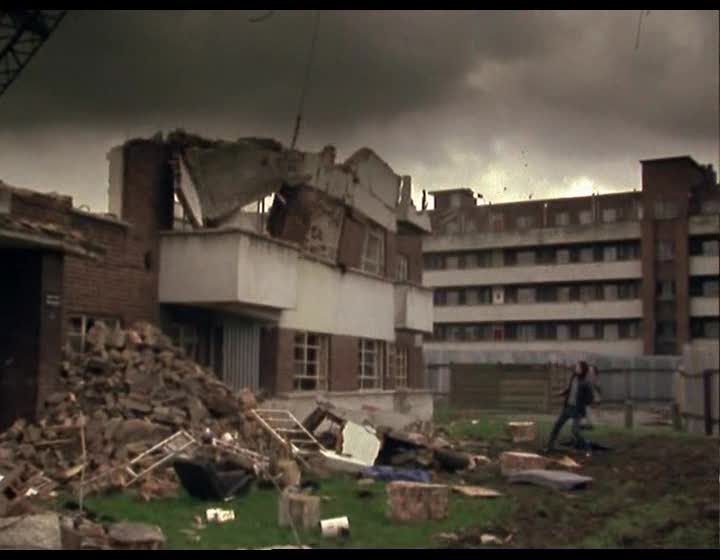
What's interesting about Happy-Go-Lucky is that, although Leigh obviously admires his heroine's pluck and joy, there are certainly times where Poppy must become aggravating even to a sympathetic audience. Her openness to everything leads her, at one point, to wander into an abandoned construction site late one night, following the crazed ranting of a bum. This is surely the scene where Leigh goes too far in portraying Poppy as a kind of holy fool, as she interacts with this obviously mentally damaged man with the same innocence and good cheer she displays with everyone else. The scene has a sense of danger running throughout it, an uncertainty about whether this man is dangerous, whether he's going to assault Poppy. Poppy isn't oblivious to the danger — she's not that stupid — but she traipses on anyway, trying to do... well, what? She offers the man some change, which he refuses, and she asks if he's cold, though she wouldn't have any obvious remedy for that if he had said yes, but mostly she just seems to be trying to connect, to talk to him, to see what he wants or needs.

At moments like this, though, Poppy seems less cheery and optimistic than suicidal, or at least willfully blithe with risk, naivé about the dangers of the world. The scene seem like a fantasy diversion from reality. In other scenes, one even sympathizes with Scott as Poppy, unable to keep a straight face for more than a minute, makes light of the dangers of driving and turns her lessons into jokes. It's hard not to agree with the otherwise unsympathetic Scott that driving is a responsibility to be taken seriously or else people will get hurt. Leigh intends for us to just keep laughing along with Poppy, to see her perpetual teasing of Scott and her casualness with driving as a joke, but in some ways he sets this up so that he can pull the rug out from under us with Scott's final enraged speech to Poppy. Because although Scott ultimately reveals himself as even more pathetic and distasteful than he'd first appeared, Leigh doesn't flinch away from the fact that Poppy's carefree, always-happy attitude led her to this place. And Poppy, of course, has reason to be happy: she has good friends, a job she loves, in the end she even finds a boyfriend. The worst thing that happens to her in the film is Scott telling her off. One wonders if her attitude could survive a change of context, or how she would cope with real tragedy, if she could cope at all. The film's final image of Poppy and Zoe rowing together on a lake — Poppy and Zoe go boating? — is a peaceful and cheerful one, but lingering questions remain, like whether Zoe hides a twinge of resentment now that her friend has a man and she doesn't, and whether Poppy would even realize such things. She's happy, but is she aware? And does it matter?

Life Is Sweet


In a working class British neighborhood, a family struggles to survive and cling to their modest dreams despite the seemingly meager pleasures and opportunities available to them. They trudge through daily routines, fight and bicker relentlessly with one another, and make obviously ill-fated attempts at moving beyond their ruts. Any other director, titling this film Life Is Sweet, would be doing so as an ironic gesture, a self-aware commentary on the misery and abjection of these characters. For Mike Leigh, however, this title is obviously anything but ironic, and its resonances within the film are much more complex than a simple reversal of the film's bleak reality. Leigh's vision of life is often described as miserable or negative, which is not entirely incorrect, but is only an incomplete description at best. It's undeniable that he shows characters with problems and limitations not often seen in the cinema. His characters are stuck in dead-end jobs, they're crude and drunk and probably not particularly intelligent. Leigh doesn't sugar-coat things. He's presenting a vision of unvarnished reality, of the kinds of routine troubles that affect ordinary people: not enough money, bratty and ungrateful kids, business ventures that never go anywhere, a seemingly endless line of home improvement chores that there's never enough time or money to complete. These are true working class characters with working class problems, the kind of people who seldom appear on cinema screens. Leigh, and pretty much Leigh alone, is interested in telling stories about these people, and doing so without resorting to either glossy dramatization or "social problem" moralizing. Leigh's films are not political commentaries, at least not in the usual sense: he's not diagnosing an "issue" that needs to be addressed. He's just telling stories.

The story he has to tell here concerns the family of Andy (Jim Broadbent) and Wendy (Alison Steadman). He's an industrial chef working at a factory, while she works at a children's clothing store. They have twin daughters, Natalie (Claire Skinner) and Nicola (Jane Horrocks), who couldn't be more different. Natalie's a smart, together girl, a bit of a tomboy, working as a plumber and saving her money for a trip to America — her parents are perhaps a little concerned about her boyish mannerisms but they're proud of her ambition and essential goodness. Ah, and then there's Nicola. Nicola is an inspired creation, a mesmerizing trainwreck of a girl as conveyed through Horrocks' twitchy, snarling, utterly fearless performance. She's a bulimic, obsessed with her weight, a walking, scarecrow-like bundle of neuroses with a fuck-you attitude. Beneath her mop of brittle-straw hair and her enormous eyeglasses, her blue eyes are shifty and angry, and her mouth is perpetually twisted into one of a seemingly pre-programmed set of snarls and scowls and grimaces. She looks disgusted by the world, and by herself, horrified by everything she sees. She professes to a profound hatred of men, declaring herself a "feminist" without even really understanding what it means, and yet at the same time she seems drawn to men, a would-be Lolita whose twitching fingers betray her excitement when even the most unpromising male specimen walks in the door. She has a lover (David Thewlis in a pre-Naked trial run for his role as Johnny) who comes by during the day to smear her body in chocolate and have sex with her, though she inevitably throws him out in contempt immediately afterward, sickened by what they just did together.

Nicola is a fascinating character, a complicated mess of contradictions whose every line is brilliant — and often brilliantly comic, too, although it's undeniably a dark and somewhat uncomfortable strain of humor. She works best in the many closeups Leigh gives her, closeups of a probing and intimate quality that capture every nuance of her frustration and rage and blistering emotional onslaughts. Leigh is famous for the care and attention he gives to his actors, developing their characters with them over the course of lengthy rehearsals before a frame of film is even shot. This process shows through in the depth and complexity of these characters. Each character is lived-in, perfectly conceived.

One hesitates to call it realism, since these performances often shade into the realm of cartoonish exaggeration, but it's maybe a kind of realism, since, even if the individual characters are outlandish, they fit together as a family. They feel right together. Steadman's loony, chirping housewife is a good fit for Broadbent's slightly goofy middle-aged working man, who gets excited like a kid at the prospect of opening his own lunch wagon and going out on his own at last. Wendy and Andy fight, and one can often see the traces of bitterness passing beneath their banter — the angst about their puffy middle-aged bodies and "love handles," the struggle of living in a lousy apartment that continually needs work — but there's also tenderness between them. Leigh films an extended scene of them lying in bed, cuddling, Andy playfully goosing his wife beneath the covers as they worry together about their kids and talk about their plans for the future. It's a sweet scene, a gentle, loving moment that puts their relationship in context.


This is perhaps the point of the film's title. For this family, life is sweet not because of material circumstances (certainly not!) but because they still have hopes, they still have ambitions, they have affection and respect for one another. Only Nicola seems to have no hopes, no positive feelings whatsoever. Only Nicola, seeing how little they have and how little real chance there is of getting any more, has given up, retreating into herself behind a door marked "private." She poses at politics, but as her mom points out late in the film, she never actually does anything about it. In a display of open-mindedness, Wendy tells her that if she's actually "political," to go join a socialist group or something, to go protest something. Actually, Nicola isn't political, she's just a snotty punk, and her sneering attitude is a disguise, a mask for her emptiness and confusion. Leigh allows her to develop naturally towards the moment when the mask falls away, when the traces of the little girl within begin to show through.

But what's interesting is that Nicola's opening up, her moment of vulnerability, is treated not as a breakdown but as a breakthrough. The film's structure is built on a familiar model, the escalating series of events that culminate to break up the family's routine, seemingly leading towards a tragic denouement. This trope is well-worn, the kind of film where in the final act everything starts to go wrong for the characters, their routine shattered and their lives upended — think of P.T. Anderson's Magnolia and the countless films it drew the template from. In the final act of Leigh's film, Andy falls at work and breaks his ankle, Wendy is sexually assaulted by a drunken family friend (Timothy Spall), and Nicola's boyfriend breaks up with her before her mother begins berating her. And yet there's no tragedy. The moment the audience is expecting, the moment when it all comes crashing down in tears and misery, never comes. Andy, though in obvious pain and frustrated by the setback, treats his injury with shamefaced humor, hanging the spoon that tripped him on the wall in a "place of honor." Wendy shrugs off their friend's attempted rape and the loss of her waitressing job, vowing to focus on her family. And Nicola's rough day seems to be a promising first step towards an uneasy rapprochement with the world and, most importantly, with her family.

The film's final shot is an image of the two sisters sitting on the back porch together, talking honestly about their problems, with Natalie promising to help her sister. It's not a feel-good ending, exactly, but it suggests hope, it suggests that things are not quite so bad as they sometimes appear, that this family will continue to muddle through and find moments of happiness here and there. This is what Leigh is after, this kind of honesty that doesn't descend to maudlin melodramatics or tear-jerking manipulation. He's honest about the ugliness and deprivations of this family's life, the con schemes and decrepit home and drunkenness and squabbles, but he's also honest about the good things. The film is full of humor, and yet Leigh isn't laughing at these characters; he's finding humor and pleasure in their lives because that's what they do. Even the misanthrope Nicola provides a kind of humor for her family, who almost enjoy her nihilistic pronouncements in a certain perverse way. Ultimately, the point is that attitude matters far more than concrete circumstances. Leigh's characters could easily give in to squalor and abjection, could easily say "fuck off" as Nicola does, but they don't. Instead, they struggle on, make do, live for their hopes and for each other, for the rare but nonetheless cherished moments when they can say, with genuine contentment, that life is sweet.

Films I Love #8: Naked (Mike Leigh, 1993)


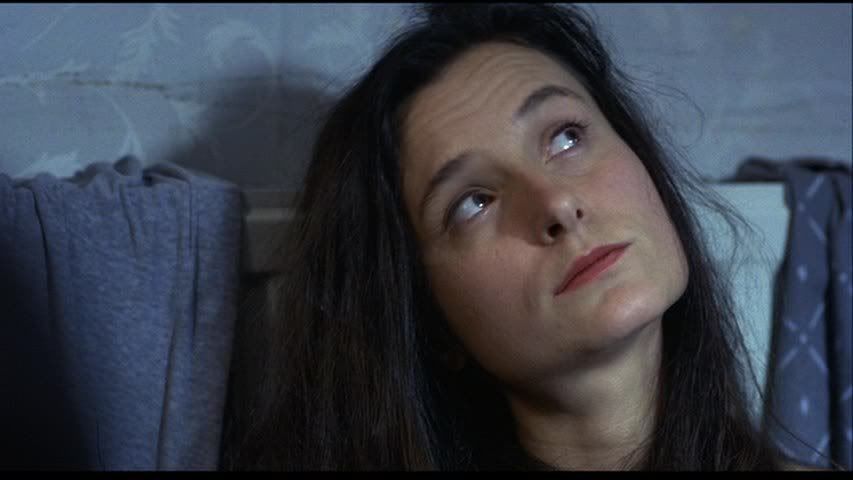
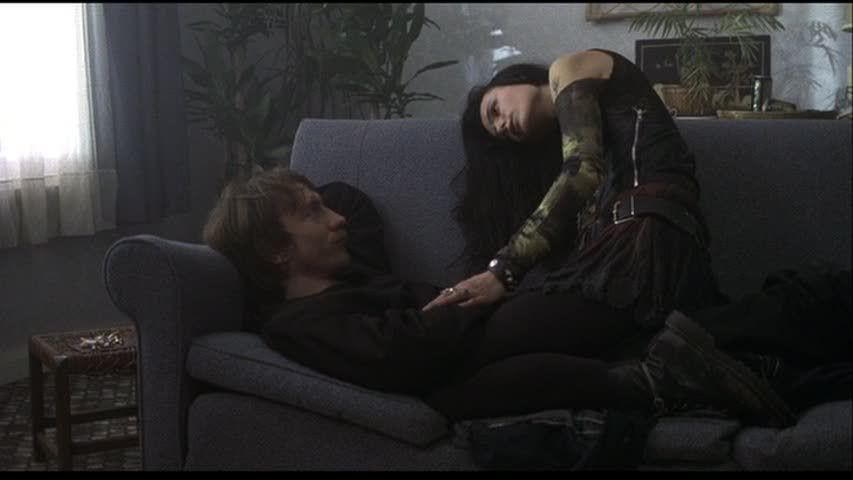
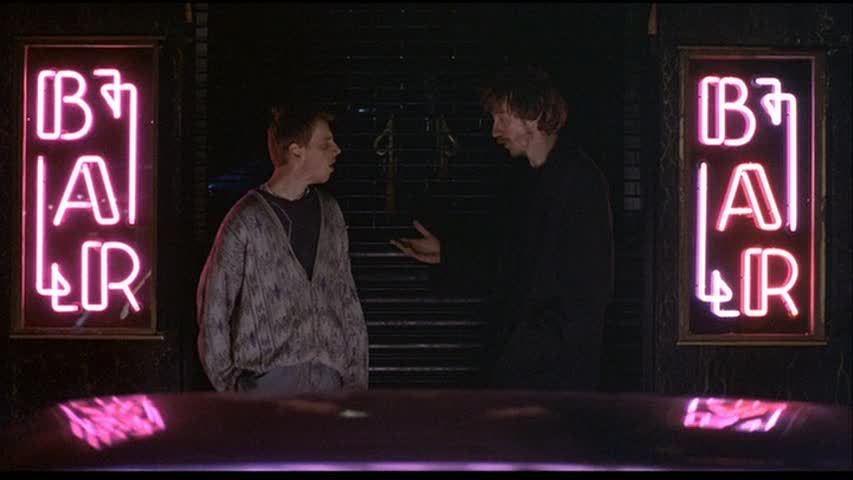
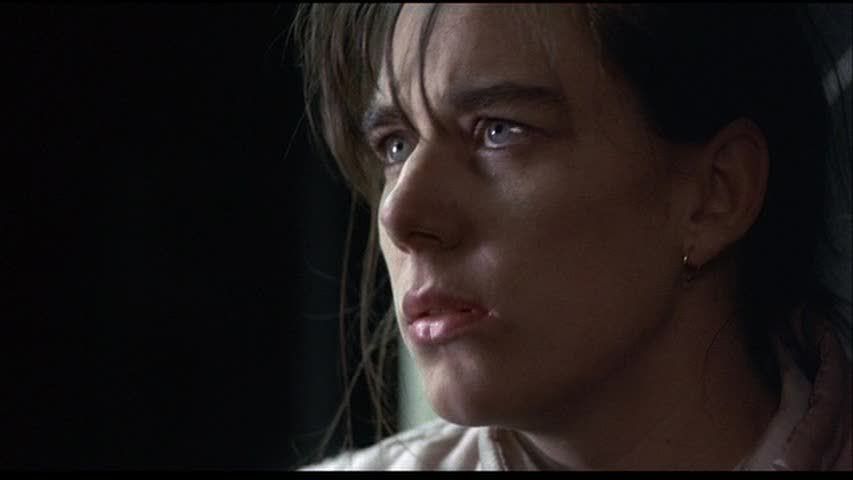
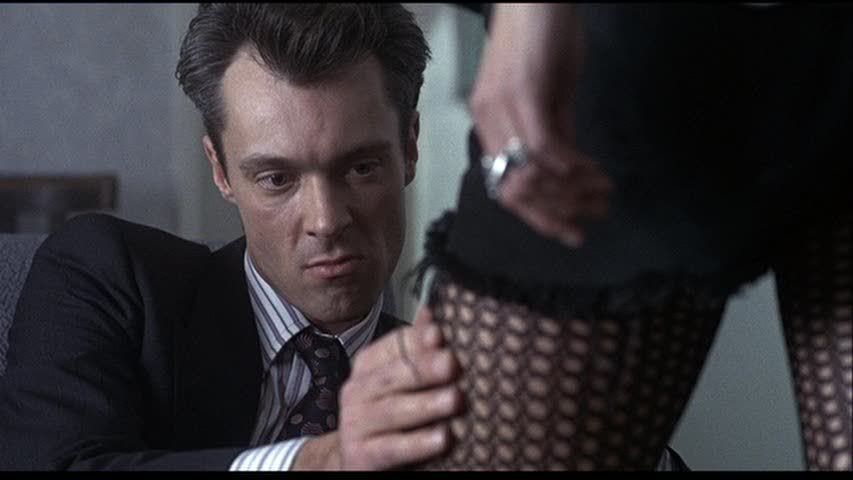
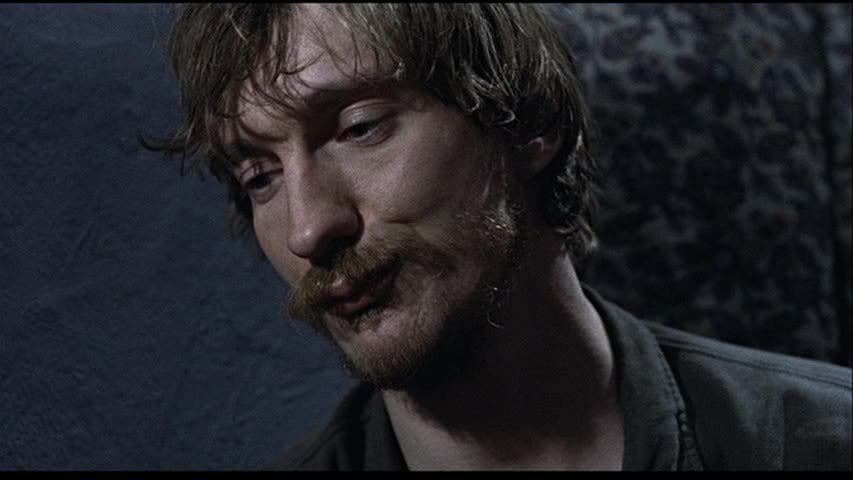
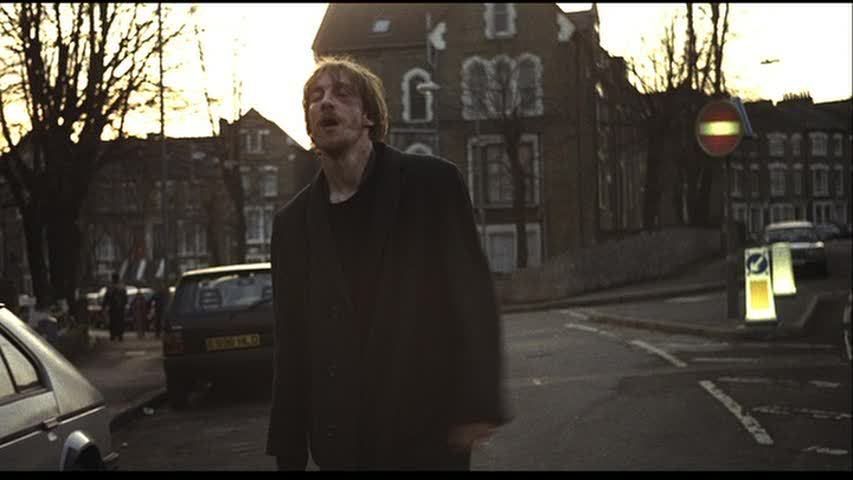
Johnny (David Thewlis), the homeless, wandering central character in Mike Leigh's Naked, issues a profound challenge to audience identification right from his first appearance on screen: in the opening minutes of the film, he violently rapes a girl against an alley wall, fleeing afterward through shadowy streets until he stumbles upon an unattended car he can steal. He is, to say the least, not an especially likable protagonist, but Leigh nevertheless trains his camera on him, sticking with him and the other downtrodden characters he encounters on his rambling adventures. Johnny doesn't necessarily get any more likable, but he does become more sympathetic, more complex, even in some strange ways taking on the voice of the film's moral compass. In an urban wasteland that offers few opportunities — and none that the restless, angry Johnny would want to consider — Johnny's half-crazed rants about political exploitation, homelessness, and the fulfillment of apocalyptic biblical prophesies in the form of the bar code begin to sound, if not reasonable, then at least understandable, a natural extension of this landscape. The film is anchored by Thewlis' fearless performance, investing tremendous energy into the unhinged Johnny, drawing out both his undirected universal anger and his surprising (if often short-lived) moments of warmth and tenderness towards his fellow down-and-outs. Leigh's camera lingers on Thewlis and the other actors for revealing close-ups that capture this expressive troupe of born character actors (Karin Cartlidge, Lesley Sharp) at their most unveiled and even transcendent. The film's probing, mordantly funny social critique of working class London is by turns sharp — a wonderful sequence with a bored night watchman (Peter Wight) who refuses to believe that he has no future — and utterly brutal, a hammer to the head — the creepy, sexually sadistic landlord (Greg Cruttwell) whose profound sense of smug upper-class privilege makes him a much more dangerous evil than Johnny's more diffuse outbursts of misdirected violence.

Meantime


[This post is a contribution to the Politics & Movies Blog-a-thon, running from November 4-9 at The Cooler.]

Mike Leigh's Meantime is a brutish, nasty movie about brutish, nasty people, a thoroughly unpleasant cinema of abjection that burrows deep into the unpleasant, aimless lives of its protagonists like a maggot digging its way into rotted flesh. The film centers on a family who live an entirely government-supported existence: terminally unemployed, accepting the dole week after week, living in squalor, doing nothing all day but watch TV and wander the streets as hooligans. They get drunk when they have the money, and otherwise they simply cause whatever trouble they can or find something, anything, to pass the seemingly endless bland hours that face them. For father Frank (Jeff Robert), this existence is the proof of his incompetence and failure, an entire lifetime spent to get him to this dismal place. To make matters worse, his two sons promise to be only a continuation of his own failure: Mark (Phil Daniels) is a snide, nasty thug, an aging juvenile delinquent who doesn't seem to be outgrowing this phase, while Colin (Tim Roth) is "slow," with no hope of finding his way off this miserable path. Leigh documents, with unflinching honesty, the drudgery and ugliness of this life. The film expresses with its every image the hopelessness and worthlessness that these people feel, discarded and left to rot, with no hope of finding any work, the dole keeping them alive at just barely the level of subsistence.

The film opens in a very different milieu, however, as Frank and his wife Mavis (Pam Ferris), together with the boys, go to visit Mavis' sister Barbara (Marion Bailey) and her husband John (Alfred Molina). John and Barbara are more successful, living in a nice suburban house and dreaming of redecorating in various ways. The scene seethes with barely contained hostility, as Frank and Mavis can't hide their contempt and jealousy, while Barbara scurries around making sure that the good china isn't used. Mavis tries to serve the tea for her sister, and is told nastily that she's using the wrong tray — probably because she doesn't have the luxury of being so picky about how she serves her food at home. Leigh handles the scene with a claustrophobic intensity that carries over to the rest of the film. Close-ups are frequent, highlighting the twisted leers and shifty eyes of the protagonists as they trade barbed quips. All these characters seem to be constantly trying to hurt each other, testing out new lines designed to cut deeper and deeper, to draw blood, to pass their own pain onto others. Leigh emphasizes the tight spaces in which these people live, even in the supposedly luxurious suburban home. The camera rarely pulls out for long shots except for a few exteriors, mostly switching between extreme close-ups and cramped medium shots filled with multiple colliding bodies. In one scene, tension builds up over the use of the family's one bathroom, and Leigh simply peers down the hallway with a static shot as the family members pace outside the bathroom door like vultures, waiting to pounce whenever the door is opened.


Mundane incidents like this drive the film, all of it captured with Leigh's direct, confrontational style. The film is every bit as grim as his later masterpiece Naked, with a similar streak of pitch-black humor, but it doesn't have quite the same fatalist poetry. For the most part, Meantime is more grounded, less prone to apocalyptic rants and grandiose philosophical pronouncements. The result is that the film is not as artful as its later counterpart, and purposefully so. If Naked is a fully realized artistic statement on poverty, homelessness, and depression, then Meantime is the unmediated reality behind the art, its semi-documentary ugliness spewed up onto the screen like the aftermath of a particularly nasty bender. The film pauses to visit with other denizens of this rundown community of apartment blocs, including in one harrowing scene a confrontation between the oafish skinhead Coxy (Gary Oldman) and the shy, mumbling Hayley (Tilly Vosburgh). For the most part, though, it keeps its focus on the nuclear family at its core, and especially on Colin. Roth gives a phenomenal performance as this quiet, withdrawn young man who barely realizes what's going on around him. Colin is only slightly less cognizant than the other people in the film, only a few steps further along the path of generalized abjection and ignorance that surrounds him on all sides.

This is all, to say the least, a bit much to take, and only Leigh's morbid humor and insistently probing camerawork keep the film from being suicidally depressing. There is only one scene, towards the middle of the film, where any of these people show the least sign of self-awareness or intelligence, the least shred of dignity or beauty. It is a surprising scene, even a shocking one, because it represents a sudden awakening, one that would fit nicely with the philosophical dialogues of Naked but which seems out of place in these squalid surroundings. The unlikely source of these musings is a manager (Peter Wight) at the family's apartment building, coming to investigate their complaints about shoddy windows. When he comes in, Barbara happens to be visiting, and a mysterious chemistry seems to develop between this man and the visitor, and the two of them begin chatting, increasingly ignoring everyone else in the room as though they weren't even there. His poetic language inevitably recalls David Thewlis' Johnny in Naked, as the manager talks about the artificiality of the concept of money and the necessity of establishing more meaningful relationships between people than the mercenary bonds of economics. He seems almost desperate to find a connection, to get his audience to have a conversation with him, to tell him about something deeper than household repairs. Only Barbara engages him, though, and despite the obvious attraction between them she seems befuddled by his line of thought, feebly defending the idea of money and the necessity of "fiscal policy," a concept she learned in college but obviously knows little about beyond its name. Still, this brief interlude is practically magical in the context of a film where nobody speaks to anyone else about anything of importance. An actual conversation about actual issues becomes an earth-shattering event, one that the family venerates with a respectful and awed silence.

This is a fleeting moment, but one whose impact lingers throughout the remainder of the film, an unspoken subtext underpinning everything these characters do. This bleak, unforgiving movie is in many ways a trial run for the even greater Naked, another film about people with no prospects, no future, and no hope of redemption. Leigh is undoubtedly a downer, and his films engage with political and social realities only to the extent of documenting the ways things are and why: he sees no way out for these people and thus offers no solutions. This unwavering commitment to actuality, to giving center-stage to the forgotten and ignored, is Leigh's greatest strength. These are people who, in mainstream cinema as in life, have no voice and no representation, and Leigh's humanist attention to these downtrodden sectors of society is the only attention they're likely to get.