Showing posts with label Werner Herzog. Show all posts

Plastic Bag


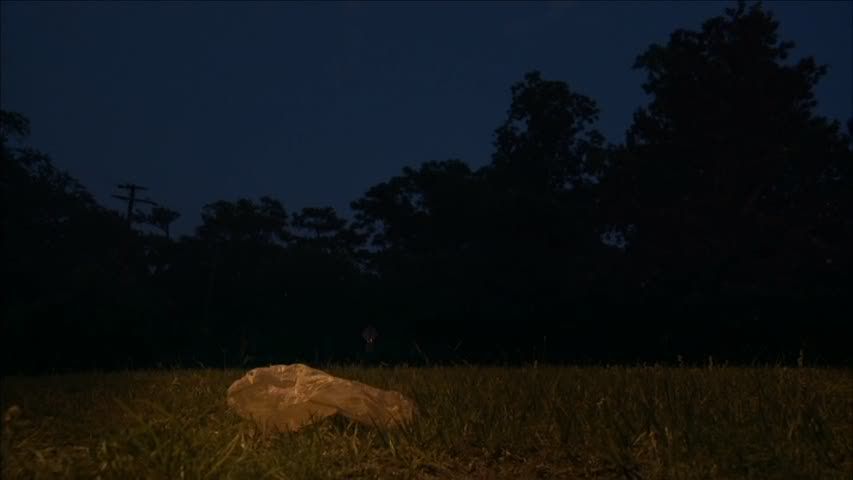
Ramin Bahrani's Plastic Bag is a deceptively simple short film that achieves an emotionally cathartic and poetically beautiful effect through a story that might, on its surface, seem like little more than a gimmick. The film charts the "life" of a plastic bag from its "first breath" — being born in a supermarket when it's pulled from its rack to be filled with groceries — to its long exile from the woman it comes to think of as its maker. The film's narration, relayed by the distinctive, unmistakable voice of Werner Herzog, concerns this bag's journey through the world, a journey that is at first tangible and physical, a quest to be reunited with this woman, but eventually becomes metaphysical and philosophical, a journey to discover the purpose of this life, the purpose of the world through which the bag drifts, carried along by wind and currents. Over the course of this journey, the bag's progress through the world becomes an obvious allegory for life itself: not knowing its intended purpose, not understanding its true place in the world, the bag tries to find happiness and struggles to divine its purpose in a world where it seems so inconsequential. The bag is happiest when it feels useful, when it knows that it is needed. The woman uses the bag for her lunch, to hold her tennis balls, to hold ice to soothe her injured ankle, and the bag is content, not really understanding anything but happy to know that it fulfills some purpose.


But when it's discarded, used a final time to clean up a dog turd and then thrown out to be taken to a trash heap, the bag loses that happiness. Its subsequent progress mirrors the casting-about of humans in a world that we, too, can't fully understand, a world whose purpose we only pretend to know. The bag drives itself onward at first in search of its former owner, its "creator," but eventually finds a new religion in the search for "the vortex," an ocean whirlpool where bags and other detritus are twirled happily around by the currents. The bag finds fleeting moments of joy, in a midair dance with a bright red bag, beautifully filmed by Bahrani, and later in the sensation of being carried along in the circular currents of the water. But in the final moments of the film, the bag wonders why these moments of happiness are so brief, why it has been unable to find others who had a use for it the way its first owner did, why it still hasn't figured out the workings of the world in which it floats. As a metaphor for the human experience of the world, it is heartbreaking and strangely affecting, especially as delivered by Herzog's blunt, fatalistic cadences.

Herzog is in many ways a perfect choice to deliver the film's narration, since his bleak worldview is such a natural fit for the bag's pointless and aimless journey. The bag fundamentally misunderstands its true place in this world, believing itself to be more important than it is, and this idea is implicitly applied to humans as well: we give ourselves central roles in the dramas of the universe, but in all likelihood we're as irrelevant to the real cosmic stories as this bag is to its "creator" and the rest of the world. But what's striking about this film is the streak of perverse hope and beauty that Bahrani finds in this seemingly dispiriting perspective. The bag, set adrift in a world whose scope dwarfs it, revels in the beauty all around it, and Bahrani's camera does as well: even as Herzog's voiceover insists that enjoying a beautiful sunset is not enough, the images belie this dismal philosophy, finding beauty and satisfaction everywhere within the world. The bag drifts through a world that seems destroyed and empty, dominated by ruined and abandoned houses, by seemingly closed factories and office buildings, by landfills and waters polluted with trash. But even in the midst of devastation and environmental catastrophe, there is beauty, both the pure beauty of nature — the white-hot glow of the sun, the verdant greens of meadows and trees — and the manufactured beauty of man's constructions, which are beautiful almost in spite of themselves as seen through Bahrani's lens.


Plastic Bag is quite a powerful and thought-provoking film, even if on its surface it occasionally seems as simple as an expansion of American Beauty's famous video tape of a drifting bag. That's an obvious but shallow comparison, in the end. The floating bag in American Beauty was about aesthetics, about finding the beauty even in prosaic man-made objects, in trash. Plastic Bag is about ideas — it finds beauty less in things than in the idea that life is aimless and pointless and ultimately incomprehensible, and that it can nevertheless be joyous, and fulfilling, and poignant. It's about accepting the insignificance of a single life and at the same time exalting that life's beauty and resilience in the face of an indifferent, alienating universe whose purpose we can only guess at lamely. It's a film whose unassuming greatness lies in its discovery of profound ideas in the most unlikely of places.

Cave of Forgotten Dreams


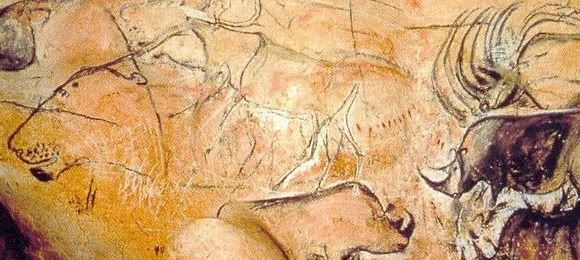
Werner Herzog's latest documentary, Cave of Forgotten Dreams, is about the Chauvet Caves, the site in France where the earliest examples of human painting have been discovered. It's a 3D film, of all things, Herzog's first experiment with that technology, and it's going to be screening at the beginning of November as part of the DOC NYC festival. I've reviewed the film for the House Next Door, so follow the link below for my thoughts about Herzog's approach to this material, the way he uses 3D for good and ill, and the characteristically Herzogian themes that he brings to the documentary.

Continue reading at the House Next Door

My Son, My Son, What Have Ye Done


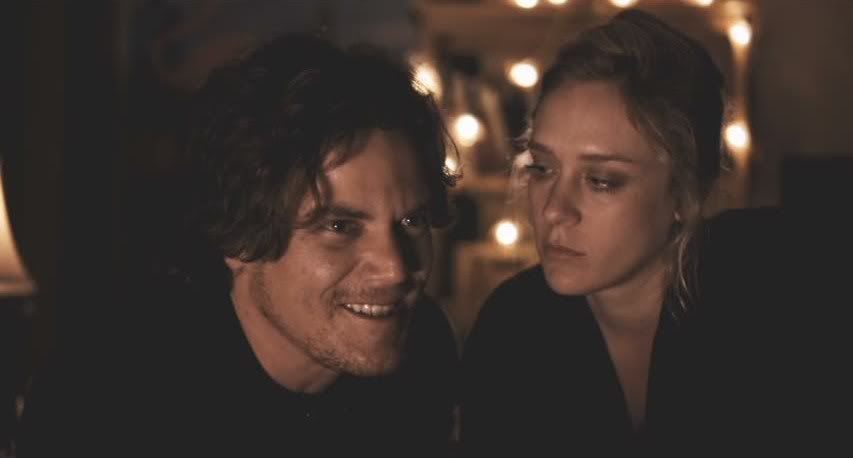
After nearly two decades in which Werner Herzog made very few fiction features, My Son, My Son, What Have Ye Done was one of two fictional films he released in 2009, along with his hallucinatory re-envisioning of Abel Ferrara's Bad Lieutenant. Like that film, My Son finds Herzog dabbling in genre, approaching the basic situations of the police thriller (a taut hostage standoff) and the horror film (a psychotic murderer unraveling before his family's eyes) and filtering them through his own off-kilter sensibility. The result is a film unlike any other in Herzog's career, a deeply strange and unsettling picture that reflects the madness of killer Brad McCullum (Michael Shannon) in the film's fragmentary structure and poetic evocation of disturbed mental states. This project was in gestation since the mid-90s, when Herzog seized on the real-life story of an insane man who'd killed his own mother, and this long-dormant script finally went into production following interest from David Lynch, who produced the film. Although Lynch was not a creative contributor to the project, something of his sensibility seems to have seeped into Herzog's system anyway, manifesting itself in an inclination towards surreal diversions and oddball, inexplicable interludes. But the film's central theme, that of a man succumbing to madness, is one that is dear to both Herzog and Lynch.

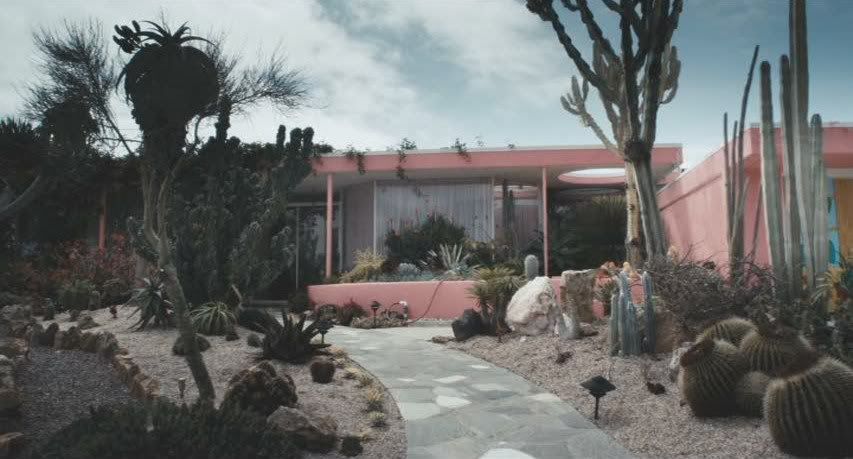
Brad is a vulnerable and somewhat damaged man to begin with, still living with his strange and sensitive mother (regular Lynch character actress Grace Zabriskie) while trying to maintain an increasingly strained relationship with his fiancée Ingrid (Chloë Sevigny). The film opens with Brad's ultimate deed of madness already done: he's killed his mother with a sword, then returned to his own home, where he holds off the police by claiming to have two hostages. The police show up, led by Detectives Havenhurst (Willem Dafoe) and Vargas (Michael Peña), but Herzog subverts the tension of the police hostage standoff by introducing an element of stasis and stagnation to the situation. Nothing seems to be happening: the detectives question Ingrid and Brad's friend, the theater director Lee (Udo Kier), probing into Brad's past through flashbacks, while nothing at all happens in the present. There is frequently a sense that Herzog is filming static tableaux, the cops not moving, standing behind their cars, pointing their guns unwaveringly at the blank façade of Brad's house. Several times, he inserts tracking shots that look up at the silent house from a low angle, capturing the absurdity of its pink-painted surfaces, the cacti planted on its dry lawn, the stillness of it all. At another point, Vargas glides through the frozen, posing cops, handing out water bottles, and he seems to be walking from one mannequin to the next. It's all so artificial, this stillness and stasis, this sense that everything is slowing down.


This inclination towards stasis and lack of motion reflects the obsessions of Brad himself, who is trying to find a frozen moment, what he calls a pivot point for the universe. While walking in the park with Ingrid, the people behind them seem to move in slow motion, jogging in place and throwing a frisbee that glides languidly through the air. Brad wants to find a "tunnel of time," and believes that he has discovered it when he walks down an up escalator, matching his pace to the speed of the escalator's ascent so that he remains frozen in space, walking but never moving, staring directly ahead into a tunnel formed by the futuristic architecture of the building, with Herzog's camera hovering behind his shoulder, staring with him into this void. Other tableaux cannot help but emphasize the aestheticized weirdness of this film, calling attention to Herzog's own hand.

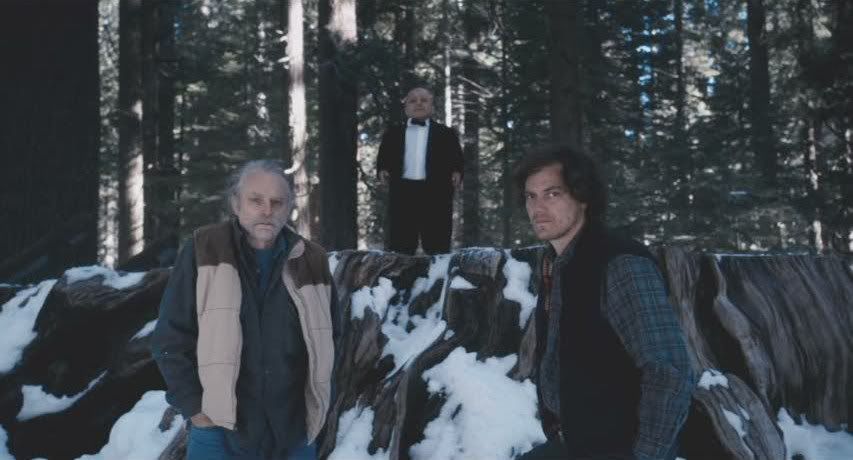
The character of Brad's xenophobic, homophobic Uncle Ted (Herzog favorite Brad Dourif) is a perfect example. Ted tells Brad a story about wanting to film a midget riding the world's smallest horse, being chased by the world's smallest rooster around the world's biggest tree. He shows Brad photos of the tiny horse, while in the background a midget in a tuxedo wanders around; the three figures finally pause to stare at the camera for an unsettlingly long moment, completely shattering the sense of a forward-moving or linear narrative. The scene Ted describes, in fact, is one that Herzog had wanted to include in an earlier film, but had been unable to capture. He puts this story, one he's told many times over the years, into the mouth of this nasty character as a non-sequitur, an expression of weirdness for its own sake, a reminder of the man behind the camera, guiding all this insanity.


In fact, though My Son is ostensibly a story about going mad, it actually seems to be a story about a madness that never ends, that has always existed. Shannon's performance is not the performance of an ordinary man who loses his mind. He's depicting a guy who's somewhat off to begin with, living with a weird mother whose grief over the long-ago death of her husband continues to cast a shadow across her own life and the life of her son. Zabriskie's performance as Brad's mother relies on her ability to project creepy and mysterious emotions in every twitch of her expressive face, every slight quiver of her eyebrows, every nuance of her strained smiles. She is a possessive, hovering woman, as seen in flashbacks where she intrudes again and again on Brad and Ingrid in the privacy of his room, or where she buys Brad a piano and a drum kit, convinced for some reason that he wants these musical presents that he never plays. Under her disconcerting influence, Brad is weird to begin with, even before a trip to Peru where his friends all die while canoeing down a dangerous river. In that respect, Shannon's performance recalls the criticisms of Jack Nicholson's performance in The Shining, that the acting is so quirky and weird throughout that there's no convincing sense of a normal guy going mad. But that's missing the point, because here, as in The Shining, the madness is there all along: there's no going crazy, there's only crazy, or more accurately there's only life, which is crazy.

Indeed, Herzog is, as usual, filming a world that is inescapably, intrinsically mad. Thus the detours to Peru suggest that only Brad, out of all his friends, is attuned to the danger and ugliness of this beautiful place. Only he respects the wildness of nature, as expressed in a forceful speech where he rejects his friends' attempts to tame the exotic and the spiritual: he mocks their belief in herbal extracts and native rituals put on for the entertainment of tourists. This is a theme that obviously resonates with Herzog, whose films, some of them filmed along this same stretch of Peruvian river, are often all about the confrontations between man and terrifying nature. And it's fitting that only the man who's damaged and strange can understand just how weird nature is, can appreciate the odd beauty of the ostrich, a vicious bird despite its goofy appearance. And it's fitting too, in this film obsessed with birds, that Brad's "hostages" turn out to be his pet flamingos, to whom he gives Irish last names to match his own.


Obviously, there's more than a little dark humor in Herzog's apocalyptic vision, as he juxtaposes the grim fatalism of Greek tragedy with the flashy decor of the California suburbs. Brad, in killing his mother, is enacting a part he's played on stage, in a staging of Aeschylus's Eumenides, the story of Orestes killing his mother as vengeance for her murder of his father. The flashbacks to the rehearsals for this play mostly show Brad standing silently in the midst of the chorus as they weave around him, chanting lines that seem like prophecies given his later matricidal act. The director Lee recalls how good Brad was, but simultaneously talks about how he was constantly disrupting rehearsals, how things went great as long as Brad had no lines; more dark and subtle humor, delivered with understated wit by Kier. Even the relationship between Brad and Ingrid is darkly comical, mainly because one wonders why this woman would tolerate such creepiness for so long. There's a real disconnect in scene after scene where Brad or his mother does something outrageously creepy and unsettling, while Ingrid looks on with, at most, a bemused and resigned expression, suggesting that she's not quite right as well, that she fits too neatly into this twisted domestic drama. In a pointedly Freudian touch, Ingrid plays Brad's mother in Eumenides and, during her death scenes, he tells her to twitch her feet so he "can see his mother dancing to heaven," an echo of Nicholas Cage's insane cop in Herzog's Bad Lieutenant, hallucinating the break-dancing souls of dead mobsters.

In all these small touches — by turns disturbing, hilarious, ludicrous, and any combination of other extremes — Herzog continually tweaks and bends the basic situation of the hostage thriller. The genre skeleton of the film becomes like a tree trunk, off of which all sorts of bizarre branches wind off in unpredictable directions, tangling up with one another in the process. Herzog sometimes seems to be indulging all these oddball flourishes and non-sequitur interludes for no more reason than because he can. The film often seems weird simply for weirdness' sake, breaking the fourth wall to have the actors stare into the camera, or subtly nodding to producer Lynch in a scene where Brad encounters a piano that keeps playing when its player stands up and walks away, a probable ode to the infamous "Club Silencio" sequence of Mulholland Dr. The soundtrack, a mix of Ernst Reijseger's droning cello score with snippets of blues and Spanish folk music, similarly mashes together tones and styles, with Reijseger's horror soundtrack hum jarring against the intrusions of jaunty ethnic music. But even if the film often seems like a haphazard collage of weird moments and unsettling, unresolved plot threads, My Son, My Son, What Have Ye Done is never less than compelling, slowly worming its peculiar way into the viewer's mind, like a form of visual madness, a portrait of an unpredictable and loopy world where the usual rules don't apply.

Films I Love #49: Aguirre, The Wrath of God (Werner Herzog, 1972)


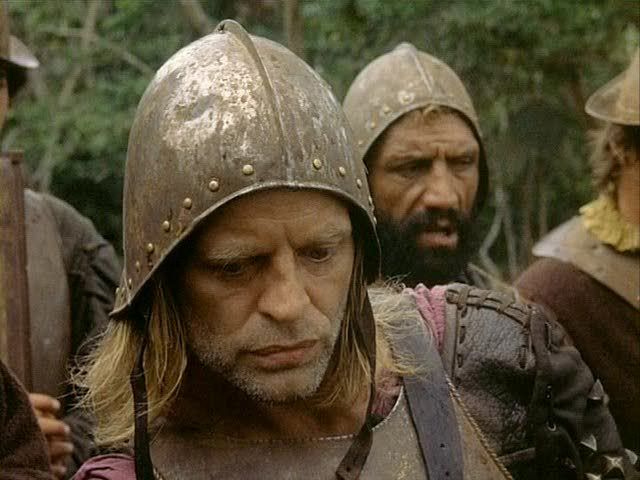
Werner Herzog's view of nature as essentially hostile and frightening is expressed most eloquently in Aguirre, The Wrath of God, a poetic, dream-like film about the attempts of a group of Spanish conquistadors to find El Dorado, the fabled South American city of gold. The gold is just a myth, of course, and Herzog underlines the folly of these explorers by opening his film with a series of title cards that describe how the Indians of the region invented the legend to fool the greedy, gold-obsessed Spanish. The self-proclaimed leader of this expedition is the conquistador Aguirre (Klaus Kinski), at least after he kills off and suppresses any potential opposition. As the group ventures further and further into the heart of the rain forest, losing men to disease, internal squabbling and brutal attacks from local Indians, Aguirre loses control, focusing with monomaniacal intensity on his impossible goal of wealth and conquest. Aguirre is the archetypal Herzog hero, possessed by mad ambitions, crazed in his determination to conquer any obstacles in his path, even if nature itself seems to be conspiring against him.

This is one of the finest performances of Kinski's career, perhaps because there is so much of the conquistador in the actor to begin with. He channels the intensity of the role through his wide blue eyes, and his rants have a quiet purposefulness that does little to disguise this man's increasingly unhinged mind. Herzog always knew how to get the best out of the wild Kinski, giving him parts where his wide-eyed stare and unstable personality would infuse the character with depths that probably no other actor could bring to bear on these roles. But despite Aguirre's disintegrating sanity, the film is mostly quiet and evenly paced, with a poetic sensibility in its long shots of the river or the eerily silent jungle surrounding it. Herzog has always viewed nature with a combination of abhorrence and distanced respect, and his images here are frequently gorgeous and haunting, admiring the killer beauty of nature as it swallows up these men.

The Bad Lieutenant — Port of Call: New Orleans


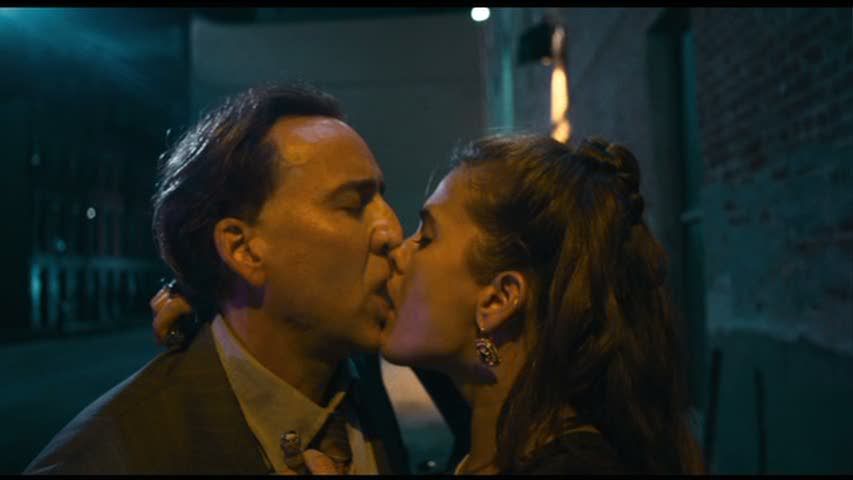
It's been literally decades since Werner Herzog has made a truly satisfying fictional film. It seems obvious that, since at least the late 1980s, the director's interest has increasingly turned towards documentary and pseudo-documentary, while his fiction features have become less and less frequent, and more and more uneven. The Bad Lieutenant — Port of Call: New Orleans is, then, an unexpected revitalization of Herzog's instincts for fiction, a non-remake of the sex-drugs-and-violence-packed 1992 Abel Ferrara film Bad Lieutenant. Herzog's supposed remake, made with absolutely no knowledge of Ferrara's original and with only the most tenuous of connections — there's a lieutenant! and he's bad! — takes the basic premise of a corrupt cop and spins it out into a ludicrous (a)morality tale about the delicate balance between good and evil that exists within this addled New Orleans cop. Terence McDonagh (Nicolas Cage) is dirty in nearly every way. He's a drug addict who steals and snorts prodigious amounts of drugs, balancing heroin and coke and prescription painkillers. He sleeps with (and provides drugs to) the prostitute Frankie (Eva Mendes) and intimidates and rips off her clients whenever he encounters them. He stalks drunken and drugged-up kids coming out of clubs, holding them up for their stashes. He's an outrageous and lunatic figure, representing a wackier and goofier variation on Harvey Keitel's drugged-up psychopath in Ferrara's original film.

Herzog's first ingenious move was casting Nicolas Cage in this part and fully exploiting the actor's tendency towards over-the-top melodramatics. Cage's performance is something truly strange and unique, the work of an actor pouring all of his seemingly worst qualities into a character and really making him come alive. McDonagh's collapse, his moral degradation, is eloquently conveyed in every aspect of Cage's performance, from his permanent crooked slouch (evidence of the on-the-job injury that set him off on his painkiller addiction) to his twitchy mannerisms to the tortured cadences of his speech, shifting from drawled mumbling to coked-up hyperactivity with a moment's notice. For such a bizarre, purposefully overblown performance, Cage never forsakes the subtleties that suggest his character as fully as the more obvious gestures do. It'd be tempting to call this a "bad" performance, and it often seems like one in its superficial aspects. But Cage's oddball speech rhythms and over-emphasized facial tics only contribute to the unease generated by the character of McDonagh, by his unpredictable vacillations between hero cop, drug dropout and borderline psycho. It is, in its weird way, a disarmingly subtle performance.

Of course, the obvious gestures get most of the attention here, and with good reason. The film rolls out one nutty premise after another, right from the opening in which — after a few moody, blood-red-lit shots of a snake winding through a flooded jail cell — McDonagh and his partner Stevie (Val Kilmer) take bets about how long it will take for the rising water to drown a trapped prisoner. This comes only a few minutes after an onscreen title announces that the film takes place in the aftermath of Hurricane Katrina; the cops' irreverent attitude towards their responsibilities thus suggests a satirical perspective on the response of various US institutions and authorities to this tragedy. Of course, such social consciousness is not common in Herzog, and the remainder of the film addresses such issues only obliquely, in the form of the not-so-subtle markers of race and class that are constantly defining and limiting these characters. The incident that triggers the plot is the murder of a family of Senegalese immigrants, apparently a drug crime, and one of the film's looniest contrivances — and that's really saying something — is the fact that the police immediately make this crime a high priority. Herzog underlines the absurdity of it all, announcing the film's undeniable status as fantasy: the police captain tells his men that this crime will be their big concern and that any amount of overtime is justified, as if the police always dedicate such attention to the murders of black illegal immigrants who were tangentially involved in the drug trade.

Race is continually an unsettling presence in this film, particularly in a scene where McDonagh is confronted by a relative of the murdered family, who delivers a completely unfettered expression of grief that's nearly embarrassing in its nakedness and uncontrolled despair. Her performance is as unhinged as Cage's, and the meeting between them is a vortex for all of the film's ungainly and often ugly emotions: a black woman's grief and a white cop's frazzled guilt and half-functioning desire to do good. The caricaturing of this women makes the scene especially uncomfortable, but at the same time her pain and anger are palpable; like many things in this film, it's a potent combination of the awkwardly stylized and the startlingly real.


More often, McDonagh's negative impulses win out, in one nutty scene after another. High on drugs on a stakeout, he hallucinates a pair of blues-crooning iguanas, who Herzog films from a skewed perspective with their gaping lizard jaws pressed up to the lens. The emphasis on cold reptilian blankness, as a parallel to McDonagh's white-hot messiness, is repeated in the scene when McDonagh tries to bully a favor out of a hard-nosed traffic cop; the scene takes place at an accident site where a car has hit an alligator and flipped over, and at the end of the scene Herzog pans away to the roadside where a second alligator is roaming along the grass. Later, McDonagh sees a dead mobster's "soul" breakdancing, dressed like the dead man but younger, with a spiky mohawk. It'd be an empty surrealist moment if not for its context, if the criminal hadn't just moments earlier delivered a bitter speech about how he was growing old and had sacrificed the dubious thieves' morality that had once been a point of honor for him. In this context, the mobster's soul dancing after his death becomes disarmingly poignant, one last burst from the youthful, hopeful spirit that still obviously lingered somewhere within this hateful, greedy, violent man. It's a sign, perhaps, of what's to come for McDonagh himself, who maintains hints of decency within his overall corruption.

Herzog's woozy, off-kilter cinematography is a perfect complement to McDonagh's increasing descent into lunacy and corruption. The camera occasionally takes on McDonagh's subjective perspective explicitly — as when it captures his iguana hallucinations — but more often it's maintaining a delicate balance between cool mediating distance and uncomfortable intimacy. When McDonagh accosts a pair of teens coming out of a club, Herzog opts for the latter, pushing into an unsettlingly sexualized closeup as the young girl, grasping instantly that McDonagh's up to no good, adopts a confrontational, seductive manner, finally blowing crack smoke directly into his mouth while kissing him. It's yet another example of how hyper-stylized everything is here, how heightened the film's reality is; every situation McDonagh encounters is blown up to epic proportions by the intensity of the filmmaking and the over-the-top performances. Even the casting conspires to make this a skewed Herzogian vision of New Orleans. McDonagh's bookie (Brad Dourif) and the property room clerk (Michael Shannon) who steals evidence for him are both played by favorite Herzogian actors, actors very well-suited to the bombast and allegorical heft of this story.

The resulting film is a delirious, oddball journey unlike anything else — which would be par for the course for Herzog except that it's also surprisingly unlike any other Herzog film as well. McDonagh has hints of the driven Herzogian lunatic/hero in his personality, but in other ways this feels very distinct from the typical Herzog film. Still, the director's personality infuses the film in more subtle ways, particularly in the ironic ending: in a very rapid series of scenes, everything is resolved for McDonagh in the most unrealistic ways, as sheer luck steers the disintegrating cop away from what had seemed to be a collision course with utter disaster. It would seem to be the opposite of Herzog's nihilism and pessimism, an ode to traditional values — marriage, family, sobriety, honor — as holding back the void. However, the extreme unreality of this denouement undermines the seeming optimism and good cheer: it becomes a parody of a happy ending, barely containing the dark energy at the story's core. Herzog reinforces this impression by looping back to a virtual repeat of an earlier scene of depravity, revealing that even in his moment of triumph and seeming redemption, McDonagh is unable to truly reform. The film ends on a darker note that's more in keeping with Herzog's skeptical view of the universe, with a metaphysical final shot that positions McDonagh in relation to the primitive depths of the ocean. For Herzog, man is only one more violent, instinct-driven animal, and in that respect at least the wild, uncontrollable McDonagh winds up being very like a Herzogian hero after all.

The Conversations #5: Werner Herzog


My latest conversation with Jason Bellamy is now live at The House Next Door. As usual, we range far and wide, and at great length, this time debating the oeuvre of Werner Herzog. We focus on an eclectic selection of both his fiction features and documentaries, as well as discussing the general arc of his career thus far and the development of his aesthetics and themes in his 40+ years as a filmmaker.

We hope that this conversation will generate some lively discussion, so click below to read the full piece and then add your own thoughts.

Continue reading at The House Next Door

Invincible


When Werner Herzog made Invincible in 2001, he had not made a fiction feature in a full decade, since 1991's Scream of Stone; the director once best known for his features starring Klaus Kinski had, while making little distinction between fiction and documentary, increasingly dedicated himself wholly to the latter. As Herzog's return to the form of the fiction feature, Invincible is certainly a strange and awkward movie, a would-be epic in which nothing much actually happens even with a bloated running time of over two hours. It's a curiously inert and stilted film, with a rather graceless script, written by Herzog himself but without many traces of the grand, eccentric poetry that Herzog, a gifted writer, so often inscribes into his best work. Or maybe it's just that his lines, delivered by a cast consisting mostly of inept non-actors, are smothered by the hesitancy of the performers. In any event, this was an inauspicious return to the feature for a director whose work has remained powerful and relevant into his late career, even as his interest in and talent for the fiction feature seem to have abandoned him.

Nevertheless, the film's central character, Zishe Breitbart (real-life bodybuilder Jouko Ahola), is an archetypal Herzogian protagonist. He is a strongman, a powerful young man who is discovered as a blacksmith in a small, tight-knit Jewish town in Poland, where he lives with his family. He is enticed to leave this life behind and move to Berlin, where he gets a job as a stage performer at the occult theater of Erik Jan Hanussen (Tim Roth), performing feats of strength before appreciative audiences. The story is based on a real strongman, but Herzog has shifted the timeline so that Zishe is in Berlin as the Nazis are just gathering power: the streets and theaters are filled with men in Nazi uniforms and armbands, heckling Jews and expectantly awaiting Hitler's rise to power. Hanussen is another historical character, a hypnotist and clairvoyant who was closely associated with the leaders of the Nazi party in the years preceding Hitler's election. He is a fascinating figure, a Jew who posed as a Dutch aristocrat and entertained the Nazi elites, and the film's most compelling segments are the ones dealing with this strange and slightly sinister man. Roth plays him with a quiet intensity, nearly whispering much of the time, his voice rising and falling in a hypnotic wave-like cadence.

The rest of the cast are, unlike Roth, mostly amateur actors, and unfortunately it shows. Ahola's earnest awkwardness is sometimes appropriate to Zishe's character, his small-town shyness and unfamiliarity with the big city, but at other times it's all too apparent that the professional bodybuilder (who was declared "World's Strongest Man" in 1997 and 1999) is just stiff and uncomfortable on screen. The same is true of Anna Gourari, who plays the pianist at Hanussen's occult theater. Her scenes with Zishe are especially painful and labored, and it's hard to believe that Herzog, who once guided brilliant and precisely controlled performances from the notoriously difficult Klaus Kinski, was happy with these scenes. There's a strange indifference to many of the dialogue scenes, an odd clipped quality, and the pacing seems subtly off. Scenes end abruptly without reaching any obvious point or climax. This contributes to the weird stretching of time here: the elliptical editing gives the impression that quite a long time is passing by, but when Zishe returns to his family at the end it becomes apparent that he hasn't actually been gone very long.


Because of the inconsistent quality of the performances, some of the film's best scenes are the actual performances at Hanussen's club. Hanussen's demonstrations of his supposed hypnotic powers are staged as long closeups on the mystical guru's face as he speaks softly to his subjects, lulling them into a trance, Roth staring intently into the camera as though he was hypnotizing the audience as well (as Herzog once toyed with doing as an introduction to Heart of Glass). Herzog seems to love the vaudeville aspect of Hanussen's stage shows, and he indulges in some elaborately choreographed Busby Berkeley fantasias in which costumed showgirls dance themselves into complex patterns on the stage.

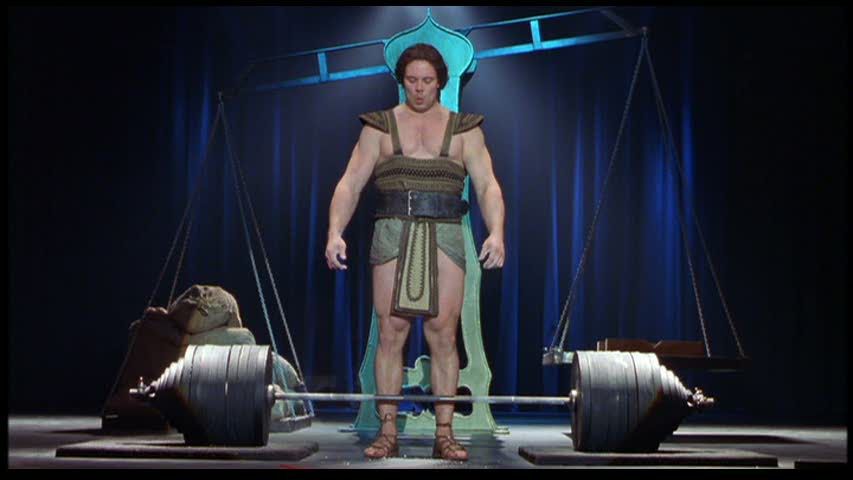
Zishe's own stage show is fascinating as an examination of issues of Jewish and Aryan ethnic identities and the developing tensions within Germany during the immediate pre-Nazi era. Hanussen, who hides his own Jewish heritage behind virulent pro-Nazi rhetoric, has Zishe appear in a blonde wig and ridiculous Viking armor as the Aryan hero Siegried. As he performs his feats of strength, he is applauded by the uniformed Nazis in the crowd, who embrace him as one of their own, cheering him as though his actions reflect well on the entire Aryan race. The irony is obvious, and Zishe soon enough reveals the truth, which outrages his former supporters but makes him a hero to the Jewish people. These tensions are interesting and potentially explosive, but Herzog never does enough with them, never pushes things far enough. The normally apolitical Herzog isn't really interested in doing a direct historical drama about the rise of Nazism in his home country, but nor does he find enough depth in the character studies of Zishe or Hanussen (the latter, one suspects, would have been a far more interesting protagonist for a film like this). The resulting film is uneven and rather aimless, with some of its best ideas and moments buried by the meandering plot and leaden acting.

The Flying Doctors of East Africa/Handicapped Future


Werner Herzog's "documentaries" are generally known as strange, hybrid affairs, often incorporating nearly as much fictional material as his proper fiction features — thus, the common conceit of surrounding the word "documentary" with quotes when it's applied to this idiosyncratic filmmaker. But early in his career, Herzog made a pair of proper documentaries for German TV, films that set themselves apart from his other work in their polemical and educational purpose. Herzog himself viewed them not as artistic films but as more practical pieces of work, films made to fulfill a specific societal purpose. They are anomalies in his career, though neither is without interest or utterly devoid of typically Herzogian moments. The Flying Doctors of East Africa, made in 1969, is a report on the conditions of medical treatment in the African nations of Kenya, Tanzania and Uganda. Herzog was in Africa working more or less simultaneously on this film, Fata Morgana and Even Dwarves Started Small, interweaving the production of this practical feature with his more personal work. The film has an obvious documentary purpose, to raise awareness about poor living conditions in Africa, and to chronicle some of the hard work being done by a multinational force of doctors and nurses to treat and educate these people living in unimaginable poverty.

There are thus several harrowing sequences depicting the rough, makeshift surgeries these doctors must perform, dealing with inadequate supplies, haphazard sterilization (during one surgeon, a priest stands nearby with a can of bug spray to chase away insects as they congregate by the operating table) and the ignorance of the locals to good hygiene or the use of medicine. Herzog documents all of this with a steady, unflinching eye, and as a report on the conditions of people living in Africa it is undoubtedly effective. It publicized the doctors' mission and probably helped to mobilize some support for what they were doing as well. This was the film's primary goal, and Herzog sticks to it with a single-minded simplicity that would rarely be seen in his personal work.

That said, he can't seem to resist finding ancillary points of interest within this material, and despite the uncharacteristically straightforward message and the generic British narrator who translates the English version of the film, the images here are unmistakably Herzog's. His interviews in particular are framed and staged in much the same way as the notoriously eccentric interviews dotting the second half of Fata Morgana. He shoots people from dead on, with a curiously abstracted distance that sets them off against their backgrounds and gives a faintly surreal edge to even the most prosaic scenes. It's hard to describe what exactly is so unsettling about these Herzogian interviews; the interview subjects are invariably stiff and awkward, alternately staring into the camera or uncomfortably and pointedly looking off to the side. When an Irish nurse speaks about the way that the natives ignore advice and interrupt treatment, Herzog frames her from a considerable distance, so that her white form is stretched across the frame from top to bottom. She speaks haltingly in English, as though it wasn't her first language, or as though she were reading from cue cards — which in Herzog's later, more stylized documentaries, wouldn't be out of the question.

The director also finds time to stumble across some particularly Herzogian non-sequiturs, and he includes several as interludes between the more serious segments. At one point, the voiceover describes how the local hyenas like to chew the tires on the doctors' airplanes, and have developed a taste for a particular Firestone type: "what makes this particular brand so tasty has not yet been discovered," the narrator deadpans, leaving a long pause for a rimshot while Herzog's camera lingers beneath an airplane's nose. There's also the weird shot of five missionary priests shuffling back and forth in formation along a dirt path, rearranging themselves as though obeying the arcane instructions of someone just offscreen. But Herzog never explains the shot, letting it just sit there in all its strangeness while the voiceover mundanely describes the priests' function in Africa. Moments like this suggest that even in a seemingly prosaic film like this, Herzog's active visual imagination and instinct for the unusual enlivens the film's straightforward reportage.


This is not so much the case, however, with Handicapped Future, a film that Herzog made two years later in order to raise awareness of the treatment of handicapped people in Germany at the time. This is surely the most polemical film that the avowedly apolitical Herzog ever made. It is utterly stripped-down in form, in order to communicate its message more directly. This message is a simple one, too: the treatment of the handicapped in 1970s Germany is utterly dire, and needs to be drastically altered if the children depicted in this film are ever going to have a happy, productive future. In interviews with children who are afflicted by various forms of disability — shortened or missing limbs, paralyzation, deformed bodies — and their parents, Herzog probes at the prejudice and societal ignorance these people encounter every day. With no real attempt to integrate children with disabilities into society, they are often shuffled off to institutions where they are cared for but not given any real opportunity to become independent, to do things for themselves, to become true members of society. Herzog finds many people who care for and help these children, genuinely good people trying to do their best, but he also finds a larger societal climate that is ignorant of the whole problem.

The film contrasts this situation against the treatment of people with disabilities in America at the same time. In order to do this, Herzog traveled to California to spend time with Dr. Adolf Ratzka, who had been afflicted with polio as a child and was as a result unable to walk and forced to spend his nights in an apparatus to help him breathe. Nevertheless, he is almost entirely independent thanks to an electronic wheelchair, a specially customized car with all the controls triggered by hand, and architectural surroundings much more friendly to the handicapped than those in Germany. Ratzka, who had moved to California from Munich, explicitly makes the comparison, describing how much easier it is to get around in his new home, where there are wheelchair ramps and elevators everywhere, and far fewer obstacles to his progress.

Herzog presents all of this with a flat, observational tone, with only sporadic overt commentary. The images of disabled children struggling to learn how to walk and balance themselves are heartbreaking, and it's obvious that Herzog intends them to be. It's hardly a true Herzog film, but it's a masterful piece of propaganda, and it reportedly did its job at the time. When the film was aired on German television, it apparently became a crucial factor in mobilizing activism and change within the systems designed to treat and care for the disabled in Germany. It presented not only an alternate way of doing things, but an alternate way of even thinking about such issues.

Where the Green Ants Dream


Werner Herzog's Where the Green Ants Dream is an oddity even in the filmography of a director who has more or less made nothing but oddities of various kinds. It's an elliptical, mystically infused tale of a confrontation between a tribe of Australian aborigines and a mining company that wants to drill and blast on land that the aborigines consider sacred. It is, they tell the mining company's representatives, the place "where the green ants dream," and if this place is disturbed and the ants are no longer able to dream, it will be a disaster for the entire world. Needless to say, the company is not overly concerned, and immediately begins trying to figure out how to go ahead with their mining anyway, and how to get the aborigines out of the way with the least fuss. They try bribes, but when these are rejected they drag the tribe into court, where there's little doubt how the establishment will decide, with the Commonwealth of Australia itself lining up on the side of the mining company.

It is, of course, equally obvious where Herzog's sympathies lie. His depiction of the aborigines sometimes draws on the "magical negro" cliché, but he does seem to see these people as genuinely spiritual and good and noble. There is little condescension in his vision of aboriginal life: Herzog, with his complex relationship to the natural world and his fascination for man's confrontations with wildness, has great respect for these people, who seem to understand things in a deeper, more spiritual way. It's the whites in the film who are lost, struggling to understand, their minds a confused jumble. The mining company's head geologist at this location, Lance Hackett (Bruce Spence), gets the brunt of Herzog's satirical wit. Hackett is plagued by metaphysical doubts and torturous theoretical thinking. He ties his mind into knots trying to grasp the nature of an ever-expanding universe, trying to come to terms with Earth's place in the vastness of space. The aborigines cut through these kind of knots with the simplicity and finality of Alexander severing the Gordian Knot: they say that the whites ask too many questions, that they don't understand things on an intuitive level. This is why the aboriginal leaders Miliritbi (Wandjuk Marika) and Dayipu (Roy Marika) seem so calm, so tranquil, why they don't expend their energy in long, rambling discourses. When they speak, they are direct and to the point, in their minimal and heavily accented English, describing their ideas in the simplest possible terms. Hackett, meanwhile, struggles to communicate to them the necessity of the mining company's operations, finds himself unable to describe the procedures of drilling, and thinks he's being deep when he stumbles across Philosophy 101-level conundrums like "maybe everything we're seeing is an illusion."

Herzog thus depicts the confrontation between the aborigines and the whites in purely symbolic terms, as a conflict between ancient spirituality and modern commerce and civilization. The languid, hallucinatory rhythms of his images consistently reflect the former. The film opens with grainy, ragged images of a tornado forming above a desert, its black funnel rotating with the slow grace of a spinning ballerina, drawing up dust and dirt into its orbit. It's a scary, beautiful image, one that recurs towards the end of the film, its purpose utterly mysterious. Throughout the film, Herzog returns to images of mystery and strange beauty, like the sight of a green plane descending into the hazy desert, reminiscent of the similar heat-hazed images that opened his desert hallucination Fata Morgana. In one of the film's more bizarre subplots, this plane takes on a strange symbolic resonance for the aborigines, tied into a legend that's recounted to Hackett by a slightly crazed and very Herzogian etymologist who has stationed himself at a location where the Earth's magnetic field is supposedly at its most warped. This man tells Hackett about the life cycle of the green ants, sexless creatures whose mating ritual involves a massive swarm flying over the mountains, where only two individuals within the entire swarm acquire sexual characteristics and mate. The plane becomes a mechanized giant green ant, flying towards the mountains to ensure its species' continuation.


All of this is, to say the least, highly dubious as mythology or biology. Herzog reportedly invented the legend of the green ants rather than deriving it from any genuine aboriginal customs. In this respect, the film is not actually about aboriginal culture, but about Herzog's own vision of their culture, a vision informed by his own preoccupations and concerns, his ideas about nature and spirituality and progress. This gives the film a kind of schizoid looniness, with typically Herzogian characters drifting in and out of the narrative. There's an exaggeratedly racist mining company foreman (Ray Barrett) who wants to bulldoze the aborigines out of the way. A black former air force pilot (Gary Williams) is mostly drunk all the time — reflecting the miserable conditions in which these people live within their designated reservations — but still harbors dreams of getting a plane up in the air again. In an almost entirely unconnected subplot, an old woman (Colleen Clifford) wants the mining company to help her find her missing dog, who may have wandered into the caves opened up by the drilling and explosions. She sets up watch at the mouth of one of these caves with an umbrella shielding her from the sun and a wad of black, feces-textured dog food congealing in a dish beside her. She mirrors the attentive watch of the aborigines, driven by her own personal quest just as they are by their spirituality.

In a way, this is what Herzog is really getting at here. He's always been fascinated by people who possess mysterious inner motors, driving them towards obscure destinations that no one else can even see or imagine. He finds — or creates — in these aborigines a similar inner drive, a deep and ancient spiritual understanding of the world that sets them apart entirely from modern culture, even when they don the accoutrements of society. Thus, they make even familiar modern technology and comforts seem strange and alien, turning a beeping digital watch into a puzzle to be deciphered. They look uncomfortable but dignified in the modern suits they wear to court during their final confrontation with the mining company: they are clearly out of place in this context but maintain their dignity despite the unfamiliar surroundings. They are stubbornly resisting modernity, and Herzog of course respects this, respects people who are out of sync with their time and place, people who retain their essential distance from Western civilization.

Herzog's respect for these characters is refreshing, even though they always remain characters rather than genuine representatives of aboriginal culture. Herzog isn't that interested in documenting their actual culture — though he would venture into the genre of ethnographic documentaries later in the 80s and during the early 90s — but in documenting the kinds of clashes and misunderstandings that result from these encounters between Western modernity and people who represent earlier ways of living and thinking. One of the film's most poignant moments is the appearance of an aboriginal man who is described as a "mute," not because he actually can't speak, but because he is the last representative of his tribe, the last person on Earth to speak a dead language, unable to make himself understood to anyone. He nevertheless gets his moment in court from Herzog, standing up in a suit and addressing the court in a language no one else can speak, and which no one else will ever speak again after he is gone. This kind of complete separation from the modern world, a disjunction so profound that no one can bridge the gap, is what fascinates Herzog here. It is this kind of person to whom Herzog is so poetically paying tribute.

Scream of Stone


Scream of Stone is a weird, uncharacteristic feature from Werner Herzog, a minor footnote in the director's long and prolific career. The story is perfect for Herzog, a tale of two competing mountain climbers adapted from an idea given to Herzog by real-life climber Reinhold Messner. Messner was himself the unforgettable subject of Herzog's 1985 documentary The Dark Glow of the Mountains, a chronicle of Messner's attempts to scale two 8000+ meter peaks in succession (he'd already climbed all 14 of the world's tallest mountains once). Messner's story is about a world-famous climber who has achieved the same feat: the driven mountaineer Roccia (Vittorio Mezzogiorno), a Messnerian daredevil who, having scaled all of the tallest mountains the world has to offer, now seeks an even greater challenge. That challenge is the mountain Cerro Torre: not as tall as the other peaks Roccia has conquered, but much harder due to its sheer, nearly vertical face, which has never been scaled by any climber. Roccia himself has failed twice in his ascent and is preparing for a third climb when he rashly challenges the much younger climber Martin (Stefan Glowacz) to climb the mountain with him.

Martin is a very different type of climber from Roccia. Atheletic and acrobatic, he climbs mostly indoors, on treacherously difficult artificial rock faces assembled especially for various TV competitions. He seems to defy gravity in his climbs, contorting his body into impossible positions while dangling upside down and thrusting his body from one perilous handhold to another, sometimes literally hauling himself upwards merely by the strength of a single finger. He does it as a sport, and is the best in the world at it, but Roccia looks down on him, believing that his televised exploits, on carefully controlled indoor obstacle courses, are nothing compared to the real thing on a real mountain. It's not difficult — especially since Roccia is so obviously based on Messner himself — to extrapolate that this is Messner's own opinion. It's also, one suspects, Herzog's, which perhaps makes his cameo appearance at the beginning of the film, as a demanding television producer, a sly joke at his own expense. But it's certain that one of the film's throughlines is the lamentation of the closing possibilities for true adventurism in an increasingly mapped out and insulated modern world.

Roccia and Martin's first attempt to scale the mountain is disastrous, though not necessarily unsuccessful. After numerous delays for bad weather, Martin, sick of waiting, decides to climb the mountain himself, along with one Roccia's friends, while Roccia himself is off in a nearby town buying supplies. Upon his return, he finds that Martin has returned from the mountain, claiming that they had reached the top, but on the way down the other climber was lost in an avalanche. With no way to prove or deny Martin's story, a frustrated and disillusioned Roccia retreats from the world, while Martin becomes a media celebrity under the guidance of the journalist Ivan (Donald Sutherland) — Martin even steals away Roccia's girl, Katherina (Mathilda May).


What Herzog's aiming for here is a rather bitter satire of televised spectacle, which turns Martin's feat into a media circus. And when some rival climbers publicly decry Martin and declare their skepticism about his story, he vows to climb the peak again, this time with a huge television accompaniment to document his ascent. His first climb, with no photographic proof, is rendered void: if it's not on TV, it's as though it didn't even happen, though Martin himself is haunted by recurring visions of the climb. There's a certain undercurrent of sadness throughout this film, the sense that what Herzog's concerned with here is not mountain-climbing, not even Messner, but the death of his own favored kind of filmmaking. Herzog had made a career of filming in extreme and dangerous locales, places truly off the map, where he ventured without the benefit of safety nets or huge crews. His productions — especially the films he made with actor Klaus Kinski — often teetered on the brink of disaster, terrifying whatever money men might've been foolhardy enough to invest. That he'd always managed to emerge from these fraught shoots with a raw and compelling finished film was as much a product of luck as it was of his own ingenuity and vision.

By this point in his career, however, the moment where Herzog could make those kinds of films was likely past. The film industry in general has been moving towards taking fewer risks, not more, and one wonders what modern film investors and producers would think if offered a project like Herzog's quixotic Fitzcarraldo. Actually, one doesn't wonder, because this film provides the answer in the form of the modern film producer (Al Waxman) whose complete disinterest in his subject — once he's out in the cold for a few days he thinks of doing a water-skiing movie instead — is matched only by his craven interest in maximum profits and maximum spectacle. Martin's second climb up Cerro Torre becomes a lunatic three-ring circus, as helicopters circle the mountain with cameras trained on the rock face, while other crews attempt to climb part of the way with Martin, shifting his ascent into slow motion as he's forced to keep pace with the camera equipment. He's no longer climbing, not really; he's posing for pictures. Perhaps this is what Herzog felt like at the time, hemmed in by producers and a film industry in which he was increasingly being pushed even further to the margins than ever before. It's obvious that he's sympathetic to Roccia's dismay at Martin's media deal: the glare of the TV cameras turns an intense, private drama into a lurid public spectacle.

It's interesting to see Herzog working out his frustrations on screen, mourning the days when he could head off into the Amazonian rain forests with a small crew and a camera and simply live there until the film was done. But at the same time, one can ironically see the evidence of the new limitations on Herzog's art right there in this film, which simply lacks the spontaneity and intensity of his best work. Too much of the film is given over to turgid, indifferently filmed melodrama involving the Roccia/Martin/Katherina love triangle. May does a fine job with her thankless role, but she's not much more than eye candy, a pretty distraction from the fact that basically nothing is going on for long stretches of time in this movie. It doesn't help that neither Mezzogiorno nor Glowacz (the latter a professional rock climber rather than an actor) are very compelling leads, though Glowacz's stunts, obviously performed for real, are often stunning. The most typically Herzogian character exists only at the fringes, in the form of a half-mad, unnamed climber (Brad Dourif) who claims to have ascended Cerro Torre and left behind the fingers on his right hand. This fingerless climber, who says he made his journey as a tribute to the actress Mae West — for whom he built a makeshift shrine in the cave where he currently lives — wanders into the film at intervals to rant and remind us that, oh yeah, we're watching a Herzog film. The fact that it'd ever be possible to forget this if not for Dourif's presence, is a bad sign; there's no danger of ever forgetting who made such singular masterpieces as Aguirre, the Wrath of God or Stroszek.

Scream of Stone, on the other hand, seems torn by compromises, split awkwardly between a romantic drama and a Herzogian inquiry into extreme existential states. In its final ten minutes, during a bracing dual climb with Roccia and Martin racing one another to the top, the film at last settles into the latter mode for good, working its way towards a breathtaking final few moments, along with a clever little touch that resonates back through the rest of the film. It's an interesting but badly flawed film, an expression of frustration that is itself marked by the sources of that frustration.

Jag Mandir


Werner Herzog's documentaries are rarely just passive recordings of real events; Herzog engages directly with the material of the world, shaping and crafting "reality" into an expression of his own personality and obsessions. As a documentary filmmaker, he thoroughly acknowledges the amount of artifice involved in creating these supposed "documents" of something happening in the world. Herzog's oeuvre is often divided between his documentaries and his fiction films, but there are few directors for whom that distinction means so little — in almost all of his work, fiction and reality weave together in complicated ways. This is certainly true also of Jag Mandir, a documentary about a folk art festival arranged in a remote region of India, though this film finds Herzog in more of a straightforward, ethnographic mode than usual. The film is presented as a record of a festival arranged by the Austrian actor, singer and conceptual artist André Heller, at the behest of a Maharajah who wanted his young son to witness the glory of Indian artistry before such local traditions were erased in the face of "McDonaldization."

This is such a typically Herzogian concept that it's difficult to accept the film's premise at face value. Yes, one supposes that Heller really did put together this grand showcase of Indian folk arts, but some of the ideas behind the project seem imposed by the Europeans, Herzog and Heller, rather than originating with the Maharajah himself, who is silent throughout. Early on in the film, Herzog holds his camera on a long closeup of the Maharajah, followed by a shot of his young son, but the director never interviews either of them or allows their voices into the film. They are silent presences, their true intentions and ideas a mystery. The audience is forced to take Herzog's word for it about the project's origins and intent, and though this is par for the course for Herzog's slippery, obtuse documentaries, it's vaguely troubling that he never allows in any actual Indian voices in a film supposedly dedicated to chronicling Indian culture.

The film opens with a lengthy introduction by Heller, in which he describes the exhaustive process by which he gathered the best and most interesting artists and performers from all around India and brought them together for this show. His rhetoric is overblown, an exaggerated account of the wonders he found, many of which cannot appear in the film because there were over 20 hours of footage in total. Some of these seem intended to create a sense of mysticism and spirituality, like the anecdote about a magician who can make himself disappear — not seen in the film, of course, perhaps because he's already invisible. This intro, coupled with Herzog's own voiceover during the early segments of the film, positions the film as a view of these wonders through European eyes, an outsider's perspective on this Indian art and theater.


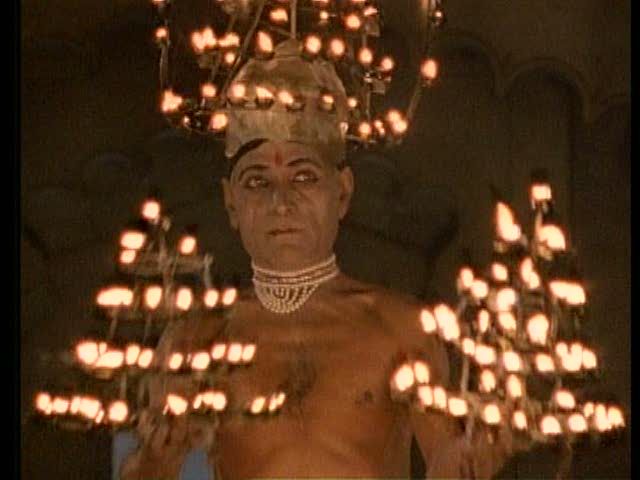
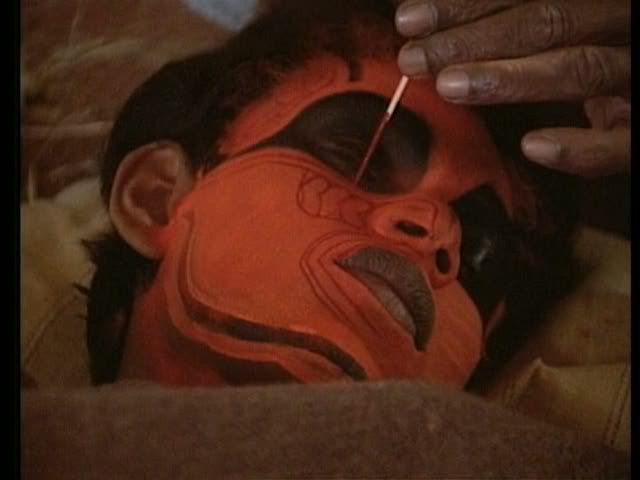
After these introductory maneuvers, the bulk of the film is dedicated to a simple document of the show itself. Herzog's voiceover goes silent after a while, as one group of performers after another takes the stage, dancing, playing music, juggling and displaying an array of marvelous costumes. The whole thing is pure spectacle: there is doubtless a deeper meaning, either religious or cultural, to these displays, but Herzog is interested only in the gaudy surface, the beauty of the choreography, the texture of the makeup and costumes. The music, rhythmic and complex, is non-stop, much of it created through the intersections of dance and instrumentation. In many of these complicated choreographed pieces, the dancers contribute to the music by clacking together sticks or swords or playing the bells and cymbals affixed to their bodies. The stylized movements of the dancers thus perform a dual function, simultaneously visual and musical.

Other performers appear in animal costumes, with dancing lions or monkeys swaying to the rhythms of the music. But the most impressive performance is probably the simplest, a traditional dance that Herzog excerpts at great length towards the end of the film: a mixed group of male and female dancers who continually rearrange themselves into delicately pulsating tableaux vivant, often only allowing the fluttering motion of their hands to disrupt the stasis of their arrangements. It is a hypnotic, beautiful slow motion dance, driven by stop/start rhythms and subtle choreography. This is an especially straightforward film for Herzog because it seemingly exists wholly to document moments like this, to display the grandeur and beauty of these rituals and traditions. Jag Mandir is an interesting chronicle of a cross-section of Indian cultural artifacts, a document of various modes of expression and art that may be going extinct or disappearing from the cultural landscape of their own country.

Encounters at the End of the World


Werner Herzog's Encounters at the End of the World is a conscious sequel of sorts to his previous film, The Wild Blue Yonder, utilizing the footage of composer and underwater photographer Henry Kaiser, whose images from Antarctica appear in both films. The film is also a very Herzogian nature documentary, an attempt to find in an unfamiliar natural landscape the themes and ideas that animate all of the filmmaker's best work: the hostility of nature to man, the fatalist heroism of exploration, the religious and apocalyptic overtones that Herzog can find in seemingly any subject. He explicitly contrasts his effort against fluffy feel-good nature documentaries like March of the Penguins: he does not want merely pretty or cute images, but images that reflect his own insights into the natural world, with its cruelty, harshness, and a beauty that is not comfortable but overpowering, awe-inspiring. Even when he does come across some of the little waddling, adorable birds, leave it to Herzog to locate, and focus in on, an "insane" penguin. Herzog questions a reclusive penguin researcher, a man who seems more comfortable with birds than people, about the incidence of homosexuality, unusual sexual behavior, and dementia among the species he observes. The researcher responds with laconic anecdotes about the penguin equivalent of prostitution, and explains that for these birds the only analog to insanity might be their occasional tendency to grow disoriented and go where they are not supposed to go. There is obvious poetry in this. For birds whose lives consist entirely of a narrow track between the ocean and the nesting grounds, the ultimate insanity is the individualist drive to set off in a different direction. Herzog finds one of these nonconformist birds and isolates him in a large expanse of white, vacillating between the two accepted destinations before finally setting off in a third direction, towards a distant mountain range and almost certain death. His quest is quixotic, comic, and doomed to fail, but it is also in its odd, waddling way a noble venture. He is the penguin version of the archetypal Herzog hero: the penguin Fitzcarraldo, the penguin Aguirre.

This suicidally heroic penguin is not the only Herzogian character who seems to have cropped up in real life down at the south pole. In fact, one of the film's primary themes is the way that this extreme place seems to attract extreme characters of all kinds, all of whom suggest different metaphors for why so many unusual, solitary people have gravitated to a single location. Over the course of the film, Herzog meets and conducts interviews with a staggering variety of people. There's the compulsive world traveler who endured military coups, malaria and rampaging elephants in a trip across Africa, and who now enacts, in Antarctica, bizarre performance art pieces where she stuffs herself into a suitcase. There's a plumber and builder who's proud of his multifaceted heritage and displays like a badge the unusual configuration of his fingers, which he has learned marks him as a descendant of the Aztec royal families. There's a worker who's introduced with the immortal tag, "philosopher, forklift driver." There's a physicist whose study of neutrinos has led him to a quasi-spiritualist view of the universe: these invisible particles, which are everywhere and can be measured in abstract ways but never apprehended, are like harbingers of "the spirit world" for him, which makes his work the process of quantifying God. His scientific instruments are decorated with ritual inscriptions and art, signifying this unexpected overlap between religion and science. Under Herzog's inquisitive gaze, Antarctica becomes a transitory colony populated exclusively with exactly the kinds of people who might be expected to populate a Herzog film. Antarctica is transformed in the same way as the Sahara Desert was in the hallucinatory Fata Morgana, a film that is subtly referenced with an early shot of a plane descending on McMurdo base in Antarctica.


In addition to profiling these odd and intriguing characters, Herzog brings to Antarctica the apocalyptic view of the natural world that has been woven through virtually his entire filmography. There is perhaps a streak of masochistic glee in this director, who has forged his career around visiting and documenting the harshest, most unwelcoming frontiers in the world, and who then, naturally enough, finds that they confirm his essential opinion of the world as a cruel, uncompromising place. Herzog is the ultimate documenter of natural selection at work, whether it is the fate of jungle explorers going beyond human boundaries (Aguirre: the Wrath of God), the level of superhuman achievement where athleticism becomes life-endangering (The Great Ecstasy of Woodcarver Steiner), or the borderline where admirable determination shades into maniacal obsession (Fitzcarraldo). He is fascinated by things humans are not meant to do, and places where humans are not supposed to go, much as the "insane" penguin is not supposed to head for the mountains.

He also sees in this harsh terrain the closest approximation to true religious experience that humans can reach on Earth, although he never traffics in any hackneyed "beauty of God's creation" nonsense. For Herzog, underwater shots beneath the Antarctic ice floes have the atmosphere of "cathedrals," with their hanging ice stalactites and bizarre, translucent inhabitants. He accompanies these images with stirring choral music, though the spirituality he imparts into these hidden landscapes is indivisible from the science that documents them. Herzog knows that it is possible to understand the foundations of life, to study one-celled organisms for their DNA structures, and to still possess a mystical, spiritual appreciation for the wonders of the world. Kaiser's images have a spectral, unbelievable quality, imbued with rich shades of light and color. Even when, on occasion, the images have a creepy horror movie vibe — a series of haunting shots of tentacled creatures that look like alien monsters, photographed in a small circle of light amidst the blackness — they are still beautiful and moving.


Ultimately, Herzog's union of religious and scientific experience results in an apocalyptic vision that holds a dim view of humanity's chances for survival. He points to the extinction of the dinosaurs and says, "we seem to be next." This is a continuing theme for Herzog, who has now made at least two films (Fata Morgana and Lessons of Darkness) in which a future alien species arrives on a decimated planet and attempts to understand the remains of its strange culture. He raises the question again here, wondering what these hypothetical aliens would think of Earth if they took Antarctica as an example of the planet's culture: they'd find little but a frozen sturgeon and a handful of fake flowers surrounded by a ring of popcorn, cheesy relics frozen beneath the ice.

At several points, Herzog's apocalyptic fervor even takes a detour into earnest environmentalism, although always through the voices of other characters rather than from Herzog's own narration. Several of his interviewees take the opportunity to speak about global warming, green living, and the importance of taking these issues seriously. They look into the camera, with grave sincerity, and impart stern warnings that the world is on the brink of devastation. It's uncertain whether Herzog shares their cause, mainly because he seems to think that nothing can be done, and that humanity is doomed no matter what. Herzog can hardly be called an environmentalist, and as usual he completely ignores the political implications of his film's subject. When he brushes up against these environmental issues — as when he speaks with an ice researcher who talks about humongous melting icebergs and the rising oceans that result — he seems more interested in capturing the man's enthusiastic love of ice than in the actual substance of what he's saying. Herzog is stringently apolitical, and almost always has been, even when dealing with subjects that seem to demand a political point of view. As a filmmaker, he is simply not interested. His concerns are broader, both more universal and more personal. Indeed, his agenda might be described as the union of the universal and the personal. The philosophizing forklift operator explains it in the perfect way. He gets the final words of the film, taking over as the Herzogian narrator with words that might as well be coming from the director himself: "through our eyes, the universe is perceiving itself, and through our ears the universe is listening to its cosmic harmonies, and we are the witness through which the universe becomes conscious of its glory."

11/25: Gesualdo: Death for Five Voices


If it wasn't clear before the end that Werner Herzog's documentary account of the 16th Century Italian composer Carlo Gesualdo was a bit off-kilter, the film's last line clinches it. The final sequence of the film is set at a pageant in Gesualdo's hometown, with actors embodying the Devil and a flying cherub being sent on pulleys across the golden sunset sky. Herzog's final image is of a local actor playing a horseman, answering a cell phone and telling his mother that he'll be home soon, since "the Gesualdo film is almost over." And then he stares straight into the camera, and sure enough the Gesualdo film ends. This self-conscious breaking of the fourth wall caps a film in which the lurid life of Gesualdo — filled with murder, sexual depravity, and masochism, and seemingly in little need of further ornamentation — is blended with Herzog's obviously staged and ridiculous modern-day interjections and some performances of Gesualdo's music by amateur choirs. Gesualdo: Death for Five Voices is a typically ludicrous Herzog production, stretching credibility to such a degree that I was surprised to find out, in research after the documentary, that a great deal of the film was actually true.

Of course, that comment may seem strange, but only to those not familiar with Herzog's documentary methods. One would normally expect a documentary to tell the truth, but Herzog has dedicated his filmmaking career to discovering the "ecstatic truths" hidden under the more prosaic truth of the straight facts. This search normally encompasses the outright lying of Bells From the Deep, with its totally invented tales of Russian spirituality, or the twisted truth of Lessons of Darkness, in which images from the aftermath of the first Iraq war are given a new sci-fi story through voiceover. In this film, though, Herzog's technique is reversed. He's basically telling the truth here, and his account of Gesualdo's violent life is mostly accurate, although occasionally based on hearsay and rumors. The trick is that everything about the documentary, from its patchwork construction to its obviously staged interludes to its emphasis on strange local characters, is calculated to make this true story seem ridiculous, impossible, even hilarious despite its baroque violence.

The bulk of the story surrounds Gesualdo's murder of his first wife, Donna Maria d'Avalos, and her aristocratic lover, and the public display of their naked bodies afterwards. Herzog is also fascinated by Gesualdo's inventive music, which was largely ignored at the time and for centuries after his lifetime, but turned out to have an extraordinary influence hundreds of years later in the avant-garde of the late 19th Century, and especially on the important composer Stravinsky. The combination of Gesualdo's sensational life and his widely misunderstood music forms a perfect subject for Herzog, concerned as always with figures who exist at the edges of society and history. His presentation of both Gesualdo's life story and his musical legacy is remarkably straightforward. The latter is largely told by two choir directors, who are also shown directing their groups in performances of the music throughout the film. Meanwhile, the story of Gesualdo's murders and peculiar lifestyle is related by various local residents in the area around Gesualdo's castle, obviously coached by Herzog with what they should say. This story is occasionally adorned with extraneous details, like the assertion that when Gesualdo murdered his infant baby (a story that is, itself, only a conjecture), he suspended the child from a balcony, surrounded it with choirs singing madrigals, and left it outside for three days until it died. Herzog apparently can't resist adding such Grand Guignol details at several points, although the similarly baroque anecdote that a passing monk raped Donna Maria's corpse after her murder was apparently not Herzog's invention, but a real legend surrounding the Gesualdo story. This interplay between truth and fiction weaves all through the film, with Herzog largely sticking close to, if not the facts of history, then at least the genuine conjectures and legends that have sprung up around Gesualdo's wild life.

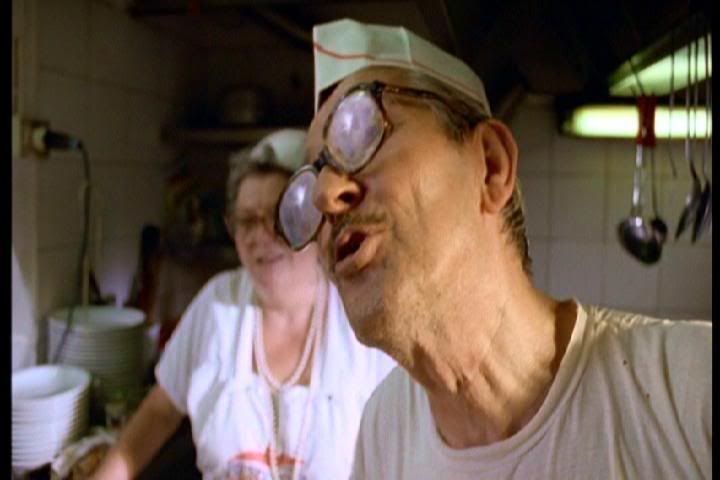
If the narrative line of the film is relatively clear and accurate, Herzog undermines this basic truthfulness with his insertions of blatantly invented, staged, and frequently humorous interludes between the more realistic documentary portions of the film. These digressions include a bagpipes player who enters Gesualdo's castle once a week, filling the space with his droning music in order to keep the castle's malevolent spirits at bay, and a hilarious scene with a cook who discusses the extravagance of Gesualdo's wedding menu while his wife keeps screaming about "the devil" in the background. There's also a local madwoman who believes she is the reincarnation of Donna Maria. Herzog stumbles across her singing operatically in a castle stairwell, and she leads the camera on a lengthy chase before finally telling her story and playing some of Gesualdo's music from a boombox she carries. Herzog's pursuit of the mad also leads him to a local asylum, where he films a totally unrelated sequence of a young retarded man riding a horse, before the asylum's director tells him about two men who both believe themselves to be Gesualdo, and the difficulties of keeping them apart from one another.

These increasingly unbelievable digressions, obviously invented by Herzog's fertile imagination, wind up casting doubt on everything in the film. The coexistence of Herzog's inventions with the actual facts of Gesualdo's life results in a weird dissonance between reality and fiction that is a hallmark of Herzog's "documentary" work. This inventiveness is the primary reason why Herzog's documentary oeuvre is such a treasure trove of masterpieces, perhaps even greater than his smaller corpus of narrative, fiction films. Death for Five Voices is a minor masterpiece in a career that has produced many such films, small documents of strange people and events, filtered through the lens of an equally strange imagination.