Showing posts with label Martin Scorsese. Show all posts

American Boy: A Profile of Steven Prince


In 1978, Martin Scorsese followed up Taxi Driver and New York, New York by making American Boy: A Profile of Steven Prince, a short documentary about a man who had appeared as an actor in small parts in both of Scorsese's previous fiction films. Prince had had an active life: he was a road manager for Neil Diamond for several years, and had been a heroin junkie as well, though by the time this film was made he was apparently clean. Years of hard living are written on his gaunt, drawn face. He's a distinctive character, with nearly skeletal features, brown and rotting teeth, bulging eyes, and a nervous, jittery manner. He is also an oddly compelling storyteller who recounts, in his cracked and agile voice, various alternately hilarious and harrowing stories about his family, his drug use, his experiences in his many odd jobs, and his encounters with crime and the law.

The film's style connects American Boy to Scorsese's other great documentary of the 70s, Italianamerican, his ode to his parents and the Italian immigrant communities they grew up in. The content and tone of the two films could not be more different, but in terms of style and approach there is considerable overlap. The two films demonstrate above all Scorsese's love of talk, his appreciation for people who can tell stories about their lives in ways that are both entertaining and enlightening. As in the earlier film, in American Boy Scorsese doesn't do anything flashy or distracting, he simply trains his camera on his subject in a casual, comfortable setting and lets Prince talk at length. Scorsese himself is often on camera, just hanging out in the corner of the frame, listening to Prince's stories with genuine interest. The film was shot in someone's living room, with friends gathered around as if for a party; people are frequently glimpsed drinking and laughing in the background. Obviously, this is the kind of context in which Prince is used to telling his stories: he comes off as someone who delights in telling shocking or funny stories to get a reaction out of people at parties. The film gives the impression that Scorsese and his friends have long been listening to Prince telling his stories, and finally decided that it would be a good idea to capture this unique personality on camera.

Prince's stories are often funny, though there's a real note of sadness that coasts along beneath the surface. He speaks about a friend who he didn't know was an alcoholic, and a party on the friend's boat where Prince filled a pitcher with vodka and served it to his friend as "water" in front of all the friend's family who were trying to keep him away from booze. The story climaxes with hilarity (the friend crashes the boat into a sandbar and tries shooting off flares to alert passing boats, but "it was the fourth of July; everybody applauded!") but at the same time there's no escaping the melancholy and self-destruction that drifts through so many of Prince's stories, about himself and those around him. Some of these tales are truly harrowing. He visits a drug den and is so oblivious that he actually sits on a dead man without realizing it, but what's really chilling is his casual attitude about it, even now, while retelling the story. It suggests a man who is very used to death and waste, as does his insistence even now that if he has to die, the best way to go is with a drug overdose. "You just get higher and higher and higher and higher and higher..."
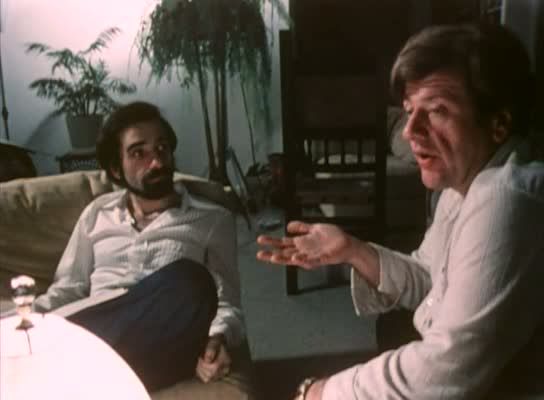

Though Scorsese tries to stay out of the way, for the most part, it's obvious just how much he's guiding the film's progress in subtle ways. Despite the film's off-the-cuff aesthetic, Scorsese doesn't make any attempt to disguise the more manipulative and artificial aspects of the film. In the film's opening minutes, as in Italianamerican, he leaves in his banter with the technicians and camera operators and on-camera subjects about when they're going to start filming, leading into the film proper with an acknowledgment that this is a film, that it's not as spontaneous as it seems. Prince himself arrives early on, apparently to the surprise of Scorsese's actor friend George Memmoli, who promptly gets into a prolonged wrestling match with Prince that raises questions about how much here is being scripted versus how much is pre-planned.

There are other touches of Scorsese the filmmaker here and there, like when he addresses the editor with a note to cut something out of the finished film — though of course it's ultimately left it. But the artifice becomes especially obvious in the film's final scene, when Prince discusses a phone call with his father that apparently moved him a great deal. There are suggestions throughout the film that Prince loves his family very much; in the early scenes of the film, he talks about them with real affection and nostalgia, remembering funny and vivid scenes from his childhood, appreciating the obvious strength of his parents in particular. Scorsese's decision to cut in happy home movies from Prince's boyhood is obvious as a way of reinforcing the contrast between the happy, innocent kid in those movies and the troubled addict he later became, but it's also a way of connecting the boy with the man in deeper ways. It's a humanistic gesture that rejects the too-easy judgmentalism of those who would likely condemn Prince for his drug use and his wild life. In the final scenes, Scorsese seems to be probing for some sign of the boy still residing behind the man's nervous laugh and wide eyes. He has Prince tell the phone call story three times on camera, coaching him about what to say and how to say it, reminding him of details he'd left out, trying to reach the real essence of what Prince feels about his father and his family. It's remarkable because while this approach lays out the fact that the filmmaking is manipulative and not naturalistic, each successive iteration of the story really does seem to tap a little deeper into the emotion of the story. It's as though, in retelling it, Prince is slowly letting his guard down, moving away from the persona he uses when trying to entertain people. He's clearly moved by his father's understanding and tacit forgiveness, and though he doesn't quite verbalize it the emotions show through anyway.

American Boy hints at just how much of Scorsese's thematic and character material he has always found in the real people he knows. Steven Prince is a perfect Scorsese character, a haunted man with a real self-destructive streak, a charming but troubled figure who's stumbled through violent episodes and darkly comic vignettes with a certain amount of casual disregard for the insanity of life.
Italianamerican


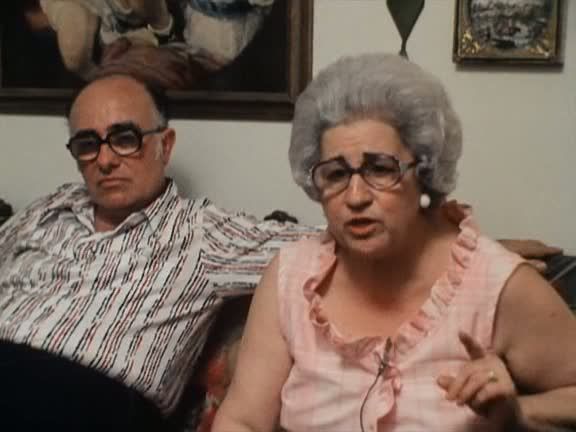
Martin Scorsese's Italianamerican is a charmingly off-the-cuff documentary that captures the director's parents, Catherine and Charles, talking about their lives and the lives of their own immigrant parents. The film is an utter delight from start to finish, full of the wit and vitality and obvious love of talk that these people bring to their unscripted conversations about the past and the lives of Italian immigrant communities in New York. Scorsese set the film in his parents' own home, where they're totally at ease, not tempering their effusive personalities a bit for the camera. There is no artifice here, no attempt to disguise the fact that a movie is being made. In the opening scenes, Scorsese shows himself walking around the living room, then stepping behind the camera to watch his parents hash out where they're going to sit on the couch (a running gag is built around Catherine's jokes about Charles not wanting to sit too close to her). Scorsese then tries to coach his mother into giving him an introduction about the tomato sauce recipe she's going to prepare on camera. Instead, she asks him again and again what he wants her to do, and then, in a very funny moment, tells him what he should say, unable to resist acting like a mother, giving filmmaking advice to her son the director. Scorsese finally nudges her into actually demonstrating the sauce recipe, and the camera follows her into the kitchen, where she jokes about the hard meatballs of some of her friends — "you throw them against the wall and it cracks" — and then laughs abashedly, saying she shouldn't be talking that way.

Scorsese leaves it all in, letting the seams show. Later on, as he and his parents converse around the dinner table, they eat pasta and drink wine as though it's just an ordinary meal, as though the camera just happens to be there. At one point, Scorsese's hand reaches into the frame from behind the camera with a fork to pick at a bowl of salad on the table while his parents talk. It's all so casual and offhanded, adding to the atmosphere of family closeness.

The setting is perfect, too, an obviously cramped but homey apartment that, it gradually emerges through Catherine and Charles' stories about their childhoods and their early years as a couple, is actually an upgrade for them. Catherine talks about living in an even smaller apartment — only three rooms — with her parents, nine siblings and, eventually, her aunt and uncle and their child. They made the most of the space, too. Catherine talks about how they even used to make wine in her family's apartment, keeping the barrels of fermenting grapes in one of the rooms where they slept. She looks around her as she talks about this, as though imagining how they managed to fit so many people and do so much in such a small space, and a sad, wondering smile crosses her lips. It's wonderful: there are so many shots and moments here where one can see Scorsese's parents mentally returning to previous eras, their eyes shining with the reminiscences, fondly smiling as they remember how their lives used to be.


Through their funny, charming stories, there emerges a portrait of the Italian-American experience in New York, and indeed the experience of all lower-class immigrants struggling to make lives for themselves in a new land. The cramped apartments, the large families, the kids working as soon as they're old enough rather than continuing in school, the wife supplementing her husband's income with sewing, the cooking, the sense of community: it's all told with such obvious love and tenderness and joy that the hardships and struggles don't seem nearly as important as the love of life and the hard-working values of these people.

Scorsese obviously knew what he was doing in choosing his own parents as his subjects. In front of the camera, they are surprisingly loose and open, bantering and bickering with one another, laughingly ribbing one another the way only a long-married and still close couple can do. They have a real way with words, an intuitive verbal skill that makes them an absolute delight to listen to. Their stories are, in some ways, about poverty and immigrant slums, but their tone suggests only happy memories, and above all an abiding respect for the values embodied by previous generations, values that they strive to carry on in their own lives. It's a vivid portrait of this lifestyle, achieved almost entirely through their evocative words; Scorsese occasionally cuts in archival family photos, but mostly the camera remains trained on Catherine and Charles. This is a verbal movie, a movie that celebrates the art of storyelling and the personalities of the people telling the stories. Catherine and Charles represent a particular way of life, and their way of talking, their relaxed, self-confident way of being, will be familiar to anyone who has ever had parents or grandparents from similar backgrounds. They embody traditional gender roles — at one point, Charles jokes that while everyone knows men are better cooks than women, cooking is simply not the man's job — but at the same time they have great respect for each other's hard work, and they spar and joke with one another as obvious equals. The way they take turns telling stories, filling in details, occasionally stubbornly disputing one another on facts, suggests their level of comfort and familiarity with one another.

Italianamerican is a remarkable documentary that emphasizes how vital and exciting a simple, well-made film can be just by placing compelling subjects in front of the camera and letting their stories slowly emerge. The disarming casualness of the film adds to its effect, keeping the Scorseses in their own home, interacting with their own son as their son rather than as the man behind the camera. The film's brilliance could only be produced by this intimacy and familiarity. It is a truly homemade film, and a film about homes, about families, about heritage and history.

Martin Scorsese's early shorts


What's a Nice Girl Like You Doing In a Place Like This? was Martin Scorsese's first short student film, and like most student films it's an indication of promise rather than a real statement in itself. The film takes a nothing premise — a writer named Harry (Zeph Michelis) becomes obsessed with a photo and finds himself unable to write any longer — and attempts to articulate the story in the most jazzed-up, stylistically vigorous way possible. The short proceeds at a rapid pace with Scorsese using successions of briskly edited still images, frequent cutaways, stop motion sequences and any other trick he can think of to illustrate Harry's rather simple story. The result doesn't amount to much more than a demonstration of Scorsese's love for the stuff of filmmaking, his fascination with editing especially. He manages to give the film a jerky, frenetic momentum that propels the film along through its innocuous, basic plot while Harry's voiceover cheerily announces each new plot development with manic intensity.

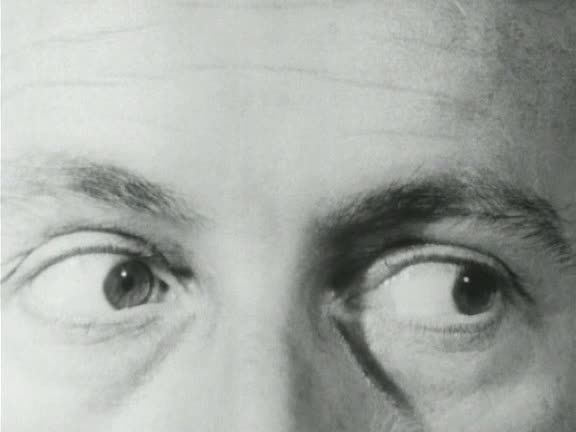
Probably the best sequence is one in which Harry watches TV late at night, surrounded by darkness, the glow from the television set casting just a small circle of pale flickering light around him. The sets are purposefully minimal, obviously, but at moments like this Scorsese makes the most of his low budget by turning austerity and simplicity into virtues. The dialogue on the soundtrack comes from King Kong, which Harry is watching on TV, and the conversation about the mysterious monster in the jungle sets the mood of dread as Harry's eyes slowly creep sideways to glance at the photo that so fascinates him. The film is much too jumpy and exuberant to be a horror movie, but Scorsese does indulge a few moments of horror movie paranoia like this, as well as in the handful of shots that focus on Harry's paranoid, widened eyes.

The short isn't exactly memorable or enjoyable beyond its relationship to Scorsese's later career, and as a comedy it's pretty unfunny, but it's an early example of Scorsese experimenting with form and using style to tell his stories.


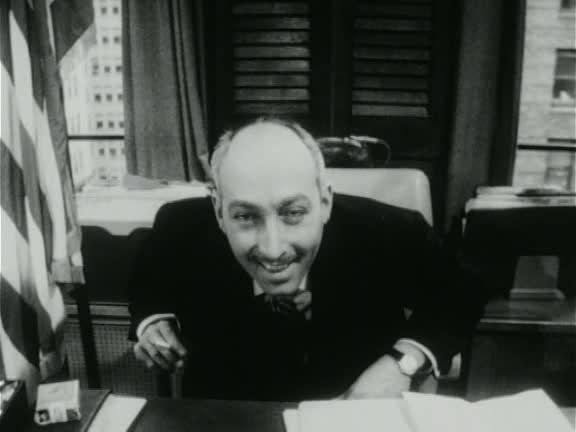
It's Not Just You, Murray! was the second of Martin Scorsese's student films, made when he was at New York University in 1964, and it's a charming, self-consciously witty gangster picture that shows the young filmmaker already developing an interest in the milieu and the kinds of characters that would drive some of his most famous later films. Unlike his previous short, it's also lightly enjoyable for its own sake, not just as evidence of a director developing his nascent craft. The film is a mockumentary about the gangster Murray (Ira Rubin), who got his start in the Prohibition era with his good friend Joe (San de Fazio). From Murray's point of view, Joe is his greatest friend, and the two of them have built a great life together, but Scorsese repeatedly undermines Murray's narration by showing Joe betraying his partner, running away and leaving him to the cops, seducing Joe's sexy wife (Andrea Martin). It's all played for broad, winking comedy, and the playfulness of the camerawork calls constant attention to the short's meta-aware status. In the opening shots, Murray leans forward, winks at the camera, and then guides the camera to look at his expensive clothes, gesturing to each item while naming its price, then impatiently urging the camera to return to his face.

Scorsese is obviously having fun here, and if the humor is often obvious (a shot of the Lincoln Memorial zooms in to reveal "made in Japan" carved in the stonework) there's real charm in the short's fast pace and loose, jittery sensibility. The running gag of Murray's Italian mother constantly serving him spaghetti initially seems tossed-off, but the film's biggest laugh turns out to be the scene where the mother visits Murray in prison and feeds him spaghetti through the grating, squeezing the fork through with some strands of pasta hanging off. In one lightly comic sequence, Murray's nervous, stuttering voiceover rattles off all the businesses in which he and Joe had an impact, making their work sound legitimate while the images show the gangster duo collecting bribes, calling in hits, selling guns to Arabs, and leaving corpses strewn behind their path.

That's Scorsese's primary technique here, developing a disjunction between the voiceover and the images that illustrate it. It's especially satisfying to witness the contrast between the smug, self-satisfied Murray, who loves to show off his wealth and success, and the actuality of his pathetic life: his wife is clearly cheating on him and his kids look like Joe, which he comically tries to shrug off towards the end of the film, trying to twist even that indignity into a positive. It all ends with a goofy low-budget reference to Fellini's 8 1/2, but even then the hapless Murray can't be the center of attention, as Joe steals the spotlight from him even here. It's Not Just You, Murray! displays only flashes of the mature Scorsese style, as one would expect from a student film, but it does demonstrate the young director's passion for his chosen medium, his love of style. That stylistic energy would be wed to darker and more substantial subjects in later years, but the humor and verve here unmistakably remain at the root of the director's work.


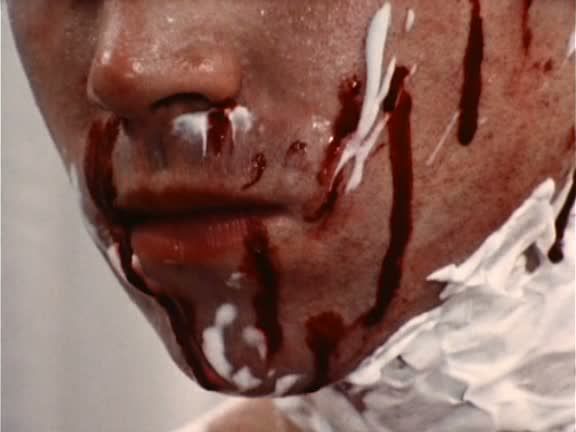
The Big Shave is both the simplest and most straightforward of Martin Scorsese's early student films, and the most fully realized. It is a simple but provocative idea realized in a raw, direct way, abandoning the playful formal pyrotechnics of his previous shorts for a powerful, primal statement of anger and anguish. The film opens with briskly edited closeups of various fixtures and details in a shining white, pristinely clean bathroom: glistening, polished metal faucets, clean white linoleum, a sink with a few clear droplets of water clustered around the drain. Everything is neat, in its place, seemingly untouched. A young man (Peter Bernuth) then enters the bathroom, takes off his shirt, lathers up his face with foam and begins shaving. This is all set to the upbeat music of Bunny Berigan's 1939 jazz tune "I Can't Get Started," which lends a quaint aura to the film to match its visually pure and unstained setting.

However, the film's mood is broken as the man continues shaving even after his stubble has been clipped away. Streaks of blood begin to appear in the white foam caked on his cheeks, and soon each stroke of the razor leaves a long trail of blood on his skin, dribbling over his lips and down his neck. The effect isn't especially convincing, but it's chilling anyway, especially when at the end of the film the man slowly and deliberately draws the razor across his neck, slitting his throat while, disconcertingly, retaining a vacant, slightly bored expression, staring down the camera even as thick blood pours out of his neck and onto his chest. The last shot is, in its way, even more unsettling: a shot of the sink, stained red, as the man's hand, shaking a little, gently places the bloodied razor back on the edge of the sink, before the whole image fades to the red of the ending titles.

Those final titles provide the obvious clue to the film's meaning, as Scorsese ends the laconic title card with the direct slogan "Viet '67." It's an almost Godardian gesture, especially in the use of all that bright red fake blood, and the film is a radical political protest, a statement of anger at all the violence and wasted lives of the war. The young man in the film is just about the right age for the draft, just about the right age to be a soldier, and Scorsese's film seems to suggest that what war means for young men like this is death, pure and simple. The methodical nature of the violence in the short is an analogue for the war machine that tears apart men like this with that same casual disregard for their lives and their bodies. It's a horrifying and nastily effective short, an early precursor of the bloody end of Taxi Driver, and a bracing but indirect political statement.

Films I Love #52: After Hours (Martin Scorsese, 1985)


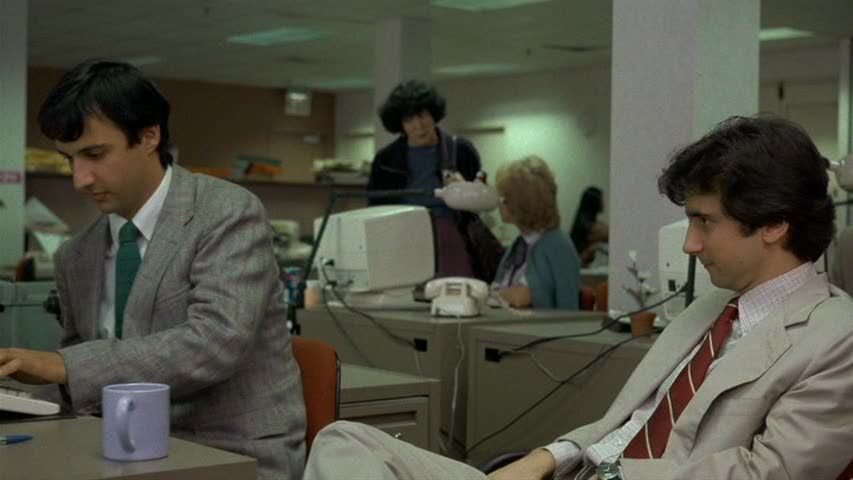
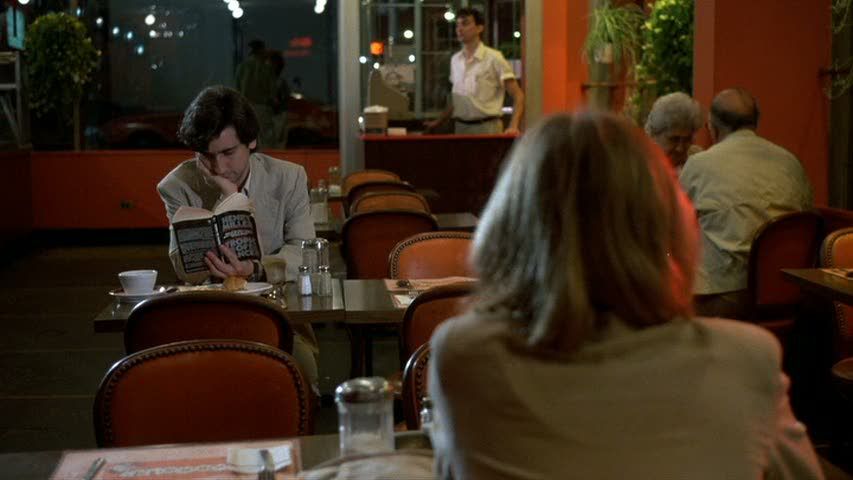
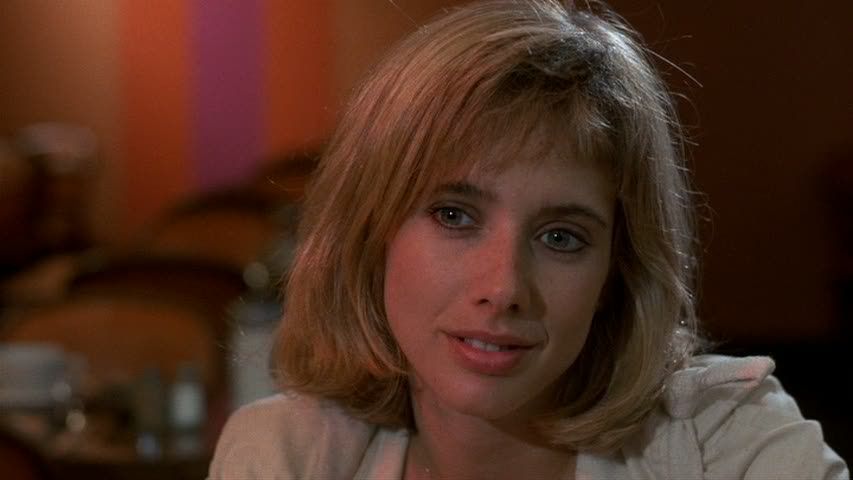
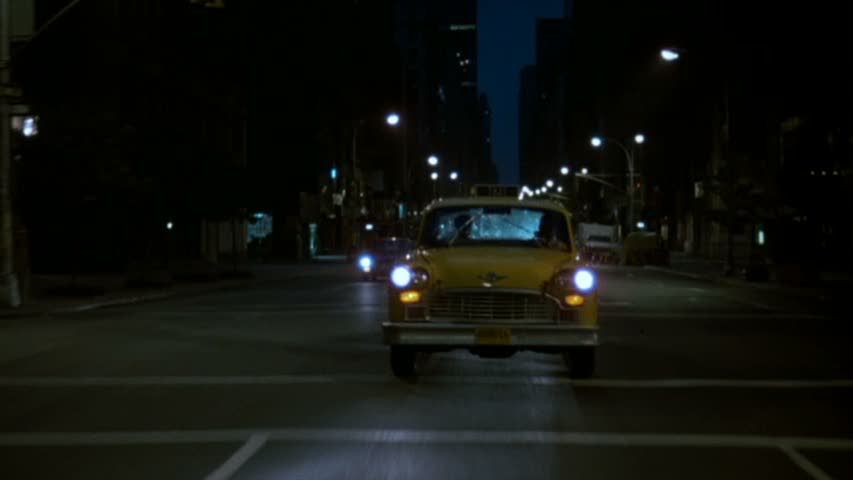
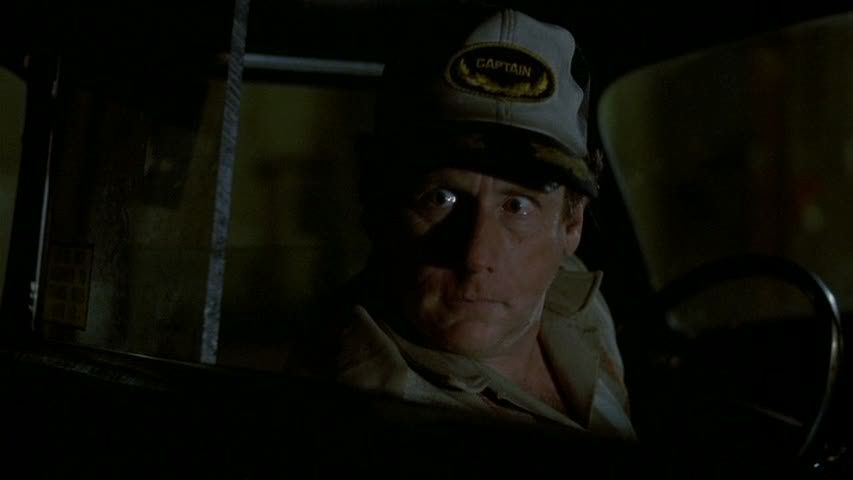
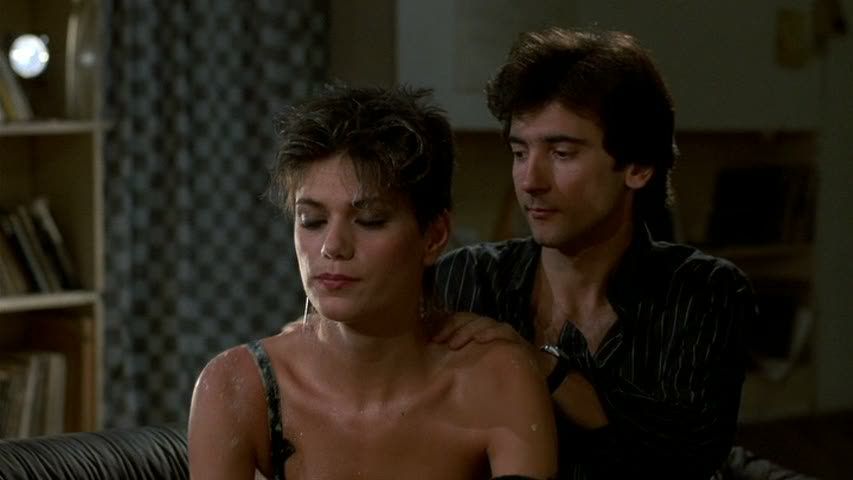
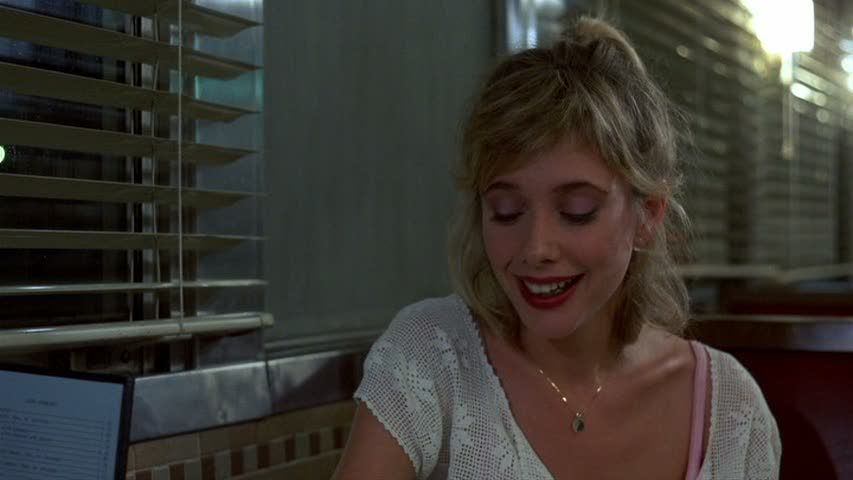
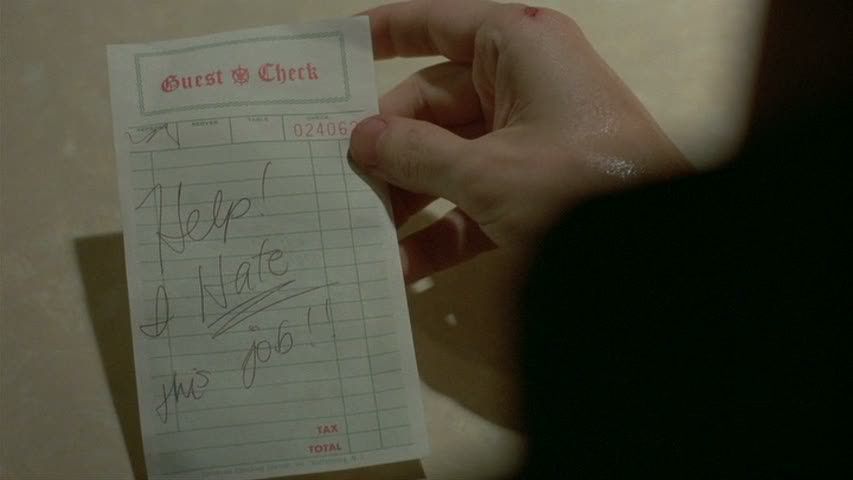
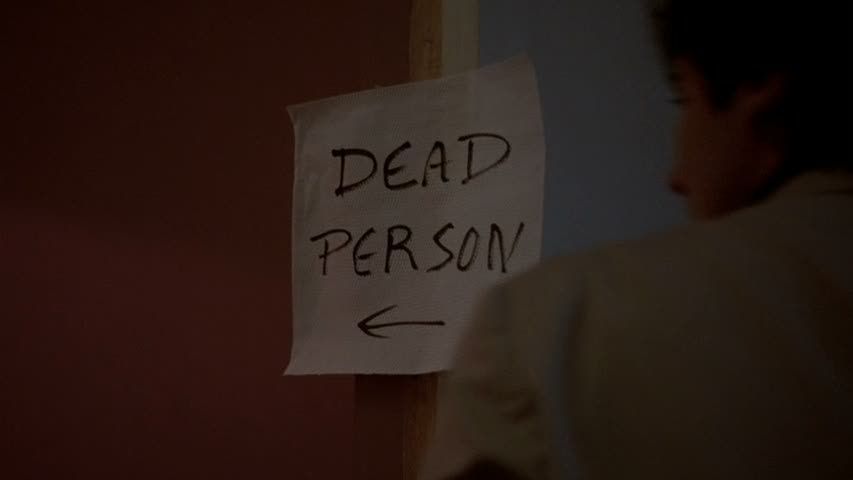
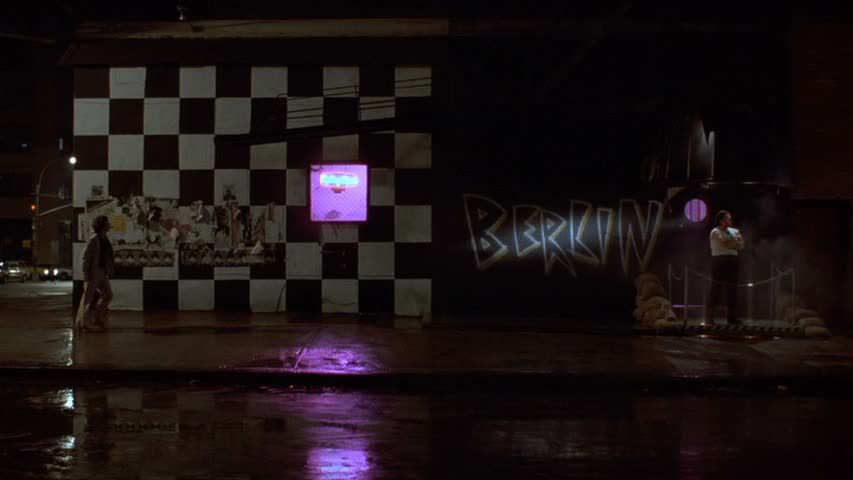
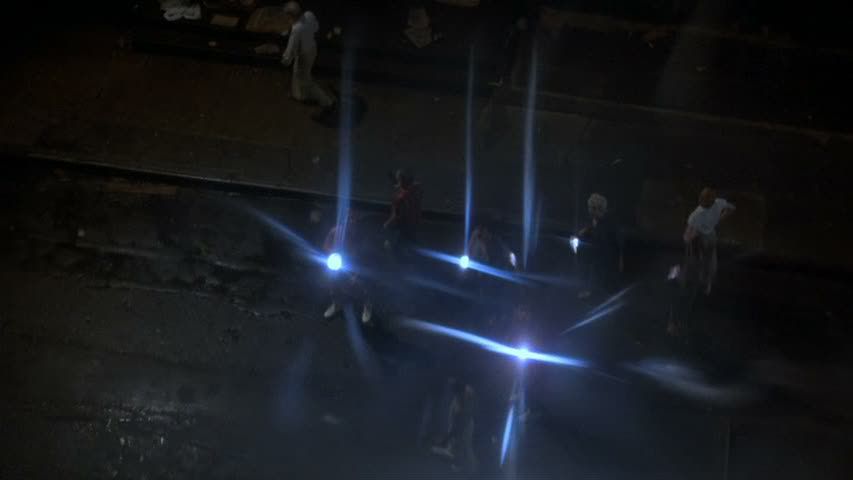
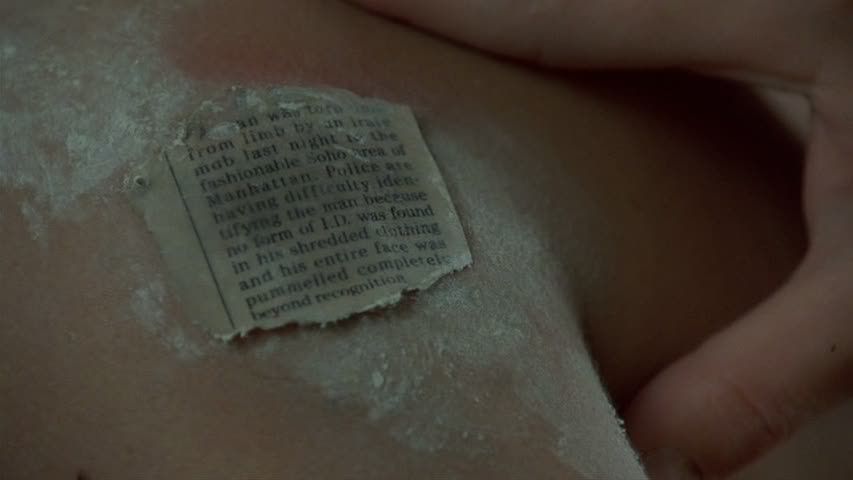
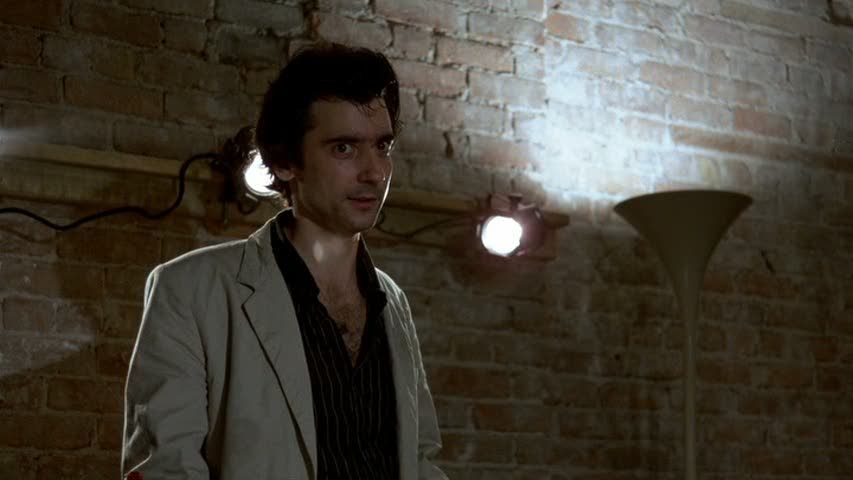
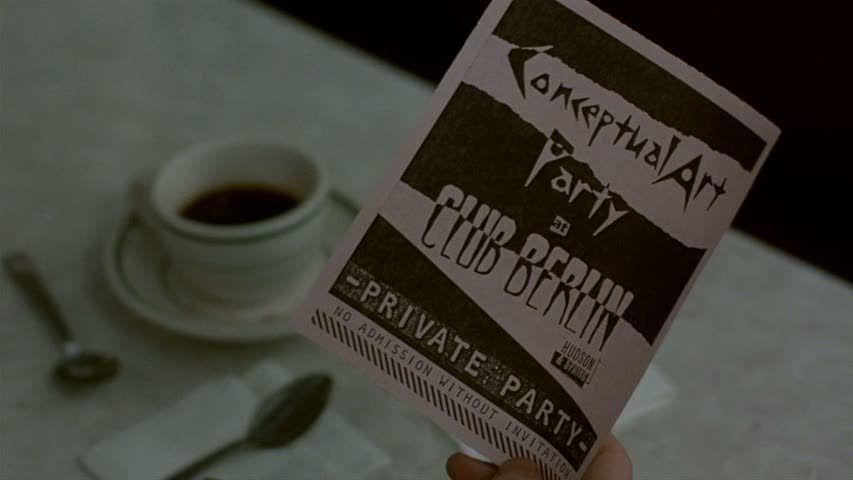
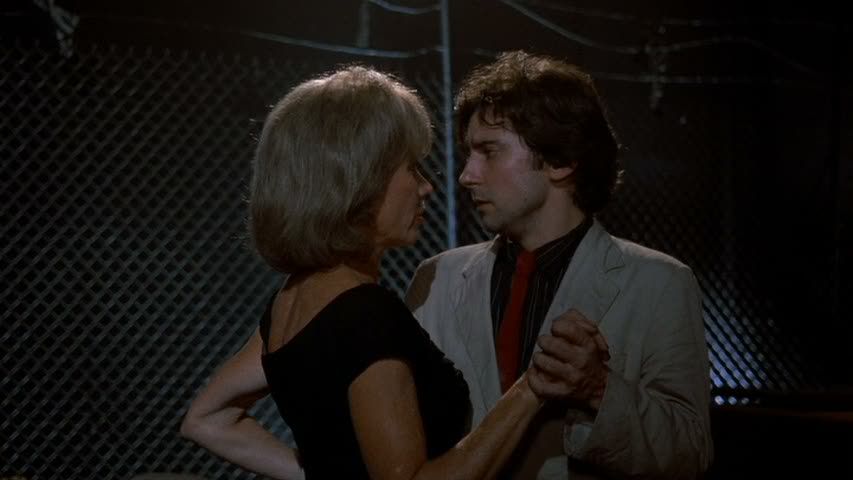
Martin Scorsese's After Hours is a wonderful and oft-overlooked film from the legendary director. In fact, it's every bit as much of a remarkable portrait of urban living as any of Scorsese's more famous New York stories. The film is a nightmare, the frenzied documentation of one night in the life of bored, prosaic office worker Paul Hackett (Griffin Dunne), who against his better judgment accepts the late-night invitation of Marcy (Rosanna Arquette), who he randomly meets at a diner. Paul's spur-of-the-moment but seemingly innocuous decision to go visit Marcy at her SoHo apartment, after midnight on the same night he first met her, turns out to be a down-the-rabbit-hole choice that sends Paul off on a wild and surreal journey of violence and sexual confusion. This is a dark, hysterical comedy of mishaps, misadventures and misidentifications, as Paul encounters one absurd situation after another. It's a kind of cautionary parable, as the staid, square Paul steps outside of the security of his comfort zone and finds himself utterly unprepared for the messiness and insanity of the world that exists outside his familiar circuit from office job to neat apartment.

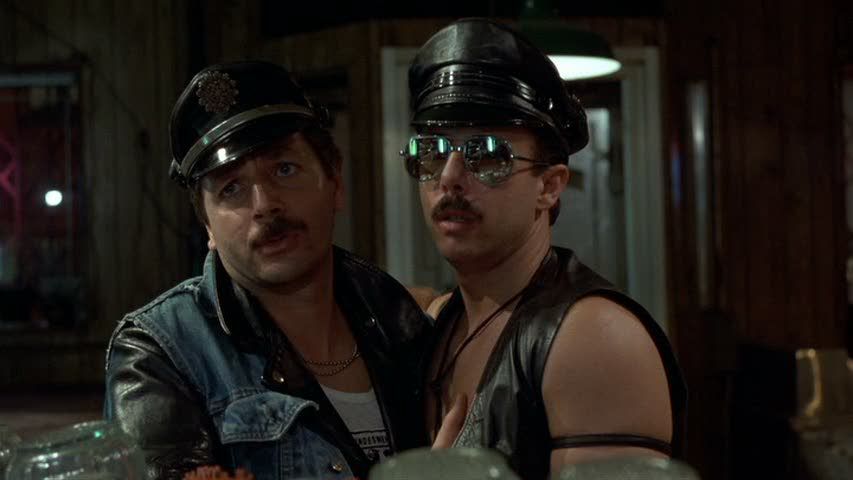
The result is a skewed vision of New York as a garish, jumbled, confusing maze, a place where chance meetings place Paul into close contact with all sorts of fascinating/frightening characters, from a clingy, desperate middle-aged waitress (Teri Garr) to the aggressive and provocative artist Kiki (Linda Fiorentino) to a gay guy who clearly thought he was picking Paul up, and finds out otherwise much to his disappointment, to Marcy herself, with all her unexpected hangups and eccentricities, to a pair of goofy crooks (Cheech Marin and Tommy Chong) who serve as the film's plot device delivery system. By turns poignant, harrowing and darkly hilarious, After Hours is one of Scorsese's masterpieces, a seemingly light film that in fact gives form to the fears and insecurities of those who would shut themselves off from life in order to avoid risk. In Paul's case, his skittishness turns out to be warranted, or perhaps — and this is quite likely — it's his very fears that, in a self-fulfilling prophecy, prompt the unsympathetic city to chew him up and spit him out, very much the worse for wear, the next morning, back at his job and his familiar life, back to a well-trod path from which he'll likely never deviate again.

The Conversations #16: Easter Double Feature


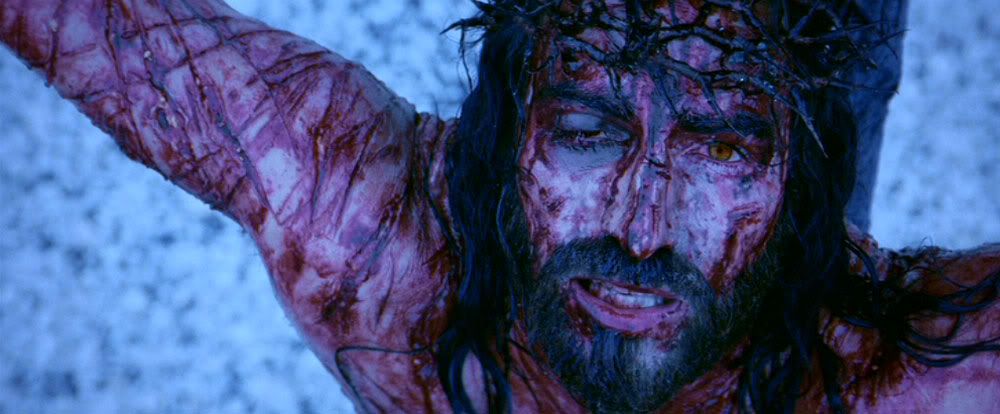
Jason Bellamy and I have now posted the latest installment of our ongoing Conversations series, in which we discuss various films and filmmakers in back-and-forth debates and discussions. Our latest conversation revolves around two very different films that, in fact, tell more or less the same story: Martin Scorsese's The Last Temptation of Christ and Mel Gibson's The Passion of the Christ. It's a special double feature of movies about Jesus' life and death, just in time for Easter weekend. In addition to discussing both movies individually and in comparison to one another, we talk about cinematic representations of Jesus, and various matters pertaining to religion and faith in general. It's a pretty wide-ranging discussion of a pair of controversial films, so we hope our readers will be inspired to join in with additional thoughts and/or disagreements. As always, we view our conversation as just the start, and hope others will continue the talk.

Continue reading at The House Next Door

Shutter Island


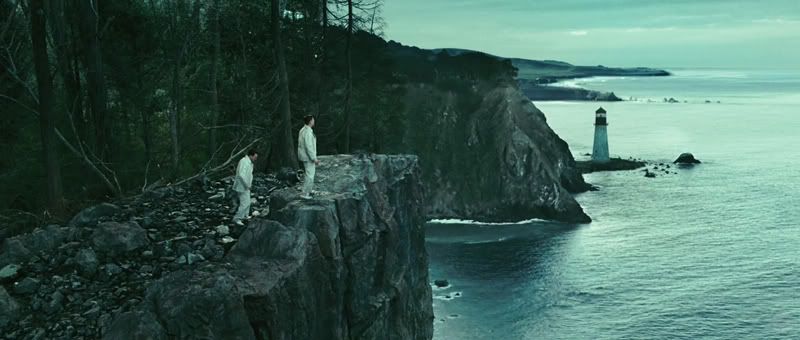
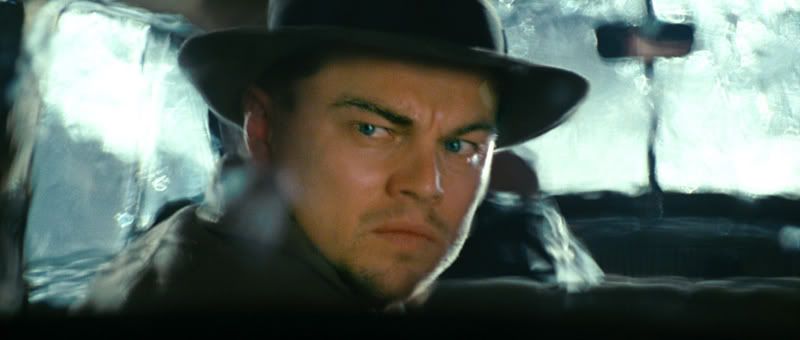
Martin Scorsese's latest film, Shutter Island, is a stylish, artfully made work that establishes a powerful atmosphere of dread and despair right from its opening minutes, as a ship emerges from a thick gray fog and U.S. Marshal Teddy Daniels (Leonardo DiCaprio) sweats and shakes while staring into the mirror. Together with his new partner Chuck (Mark Ruffalo), they're heading to the foreboding, forbidding Shutter Island, a combination prison and mental hospital designed to hold only the most violent and dangerous mentally ill patients. One of these patients has escaped, and Daniels' investigation of this mysterious place will be a challenge to his own sanity. Scorsese's film is an odd, unsettling, potent concoction, at least for most of its length, even if it's painfully obvious just where it's heading long before it ever gets there — and even if its inevitable final act is disappointing in its predictability.

There is a nicely suggestive idea contained in this final act, nonetheless — and if it's not obvious by now, it's impossible to talk about this film without talking about its ending — and Scorsese does manage to make this resolution heart-wrenching and affecting even as it's also trite and formulaic. There have been countless films that revolved around the kind of pat reversal that Scorsese (working from a source novel by Dennis Lehane) tries to pull off here: see, the marshal was really a patient all along, and the film's whole convoluted plot, with all its conspiracies and weird details, was an elaborate attempt by the hospital's staff to shock Teddy out of his delusions. Of course, this could only fail to be obvious to those who have never seen a movie like this before, to those unfamiliar with the generic conventions that control this kind of movie. The thing is, no matter how familiar this territory is, Scorsese makes it a thrilling ride to traverse it once again. Right from the very first scene, it's obvious that something's up: something seems subtly off about the initial interactions between Chuck and Teddy, and it's not just the way Scorsese's camera gently directs attention to mundane acts like the sharing of cigarettes. We feel that these small gestures, these details, will be important later; Scorsese's visual cues suggest a mystery that revolves around the very basic precepts of this situation. It's possible that some may even guess, already, where this is all heading; it occurred to me, at least.

It almost doesn't even matter, though, as Scorsese makes the film's introductory scenes so compelling that any explanation seems unnecessary. There's an air of unreality to these opening scenes that never quite goes away. The sky behind Teddy and Chuck is somehow too dramatic, too beautiful with its thick gray clouds and the roiling water. Few commentators have failed to note the influence of British filmmakers Powell and Pressburger on this film, but it goes beyond the post-World War II setting or the handful of dizzying overhead shots looking down a cliff, directly referencing Black Narcissus. The stylization, the studio-bound aesthetic of Powell and Pressburger's lurid fantasies, lingers over this film even though Scorsese's shooting on location. Shutter Island, as a place, is a fusion of movie archetypes, a perfect genre location, all dark corridors dripping with water, flickering lights everywhere, barbed wire, a decrepit old cemetery, a lighthouse strangely guarded at all hours, where terrible experiments are rumored to take place. This is a movie-movie, a movie that's constantly reminding one of other movies, that revels in its genre conventions and self-consciously keeps pointing them out. That's certainly apparent in Teddy's troubling visions of Andrew Laeddis (Elias Koteas), who he believes is a patient here. Laeddis was the man who Teddy blames for the fire that killed his wife Dolores (Michelle Williams), but Laeddis is such a sinister, over-the-top movie monster — with a scar across his face, a milky white eye and a melodramatic leer — that it's impossible to believe he's a real person. It's obvious from the start that he's a mental projection, a way for Teddy to avoid the real truth, whatever it is, about his wife and his past. Koteas plays this monstrous character with clear delight, relishing the melodramatics, playing him like Scorsese's Travis Bickle a few years older and even further gone, twitching and grinning with his deformed face.


This is the kind of pleasure Shutter Island offers, and it's not an incidental pleasure by any means. Scorsese fully adapts to the conventions of the horror genre here, offering up some rather startling jump scares, like the half-naked inmate who leaps out of a dark passageway to scream "tag, you're it" and then races back off into the darkness. The fun here isn't necessarily in the content but in the execution, the way Scorsese continually does exactly what one expects but puts his own idiosyncratic twist on it. The atmosphere of the island, almost constantly overcast, with stormy weather always looming overhead, is one of slowly creeping dread. Scorsese further enhances this mood by inserting Teddy's internality into the film, a mix of visions, dreams and memories: of his wife, of the woman he's supposed to be finding on the island (played at various times by Patricia Clarkson or Emily Mortimer), and especially of his past as one of the soldiers who first walked into Dachau at the close of World War II. The film is located at this particular historical moment, in 1954, with the nightmare of the Holocaust not so distant, and Scorsese does a good job of capturing the paranoia and the terror generated by this travesty: most particularly, the fear of science as a monstrous corrupter, responsible for both the hydrogen bomb and the devilish human experiments of Dachau and Auschwitz. This fear informs Teddy's own paranoia, his solid belief that terrible experiments are being performed on the patients on Shutter Island. His rantings, increasingly unhinged throughout the film, draw from the fear of Nazism's anti-human sensibility spreading domestically, and from the kind of distrust of human decency that things like the Milgram experiments tended to confirm.

Some of that aura of dread comes, too, from Scorsese's soundtrack selections. He's assembled a compelling, complex soundtrack in which the music, frequently grating and eerie, seems to emanate from the harsh terrain of the island itself. Challenging classical and modernist music by John Cage, Gustav Mahler, Morton Feldman, György Ligeti, Krzysztof Penderecki and John Adams is omnipresent here, solitary notes and clusters of notes hovering in the still, damp air, occasionally interrupted by the piercing screams of the inmates. Scorsese's use of sound here is as compelling, as sensitive, as his more familiar pop music soundtracks in Mean Streets or Goodfellas. The music is so dense, so intense in its effect, that the moments of silence, the moments where the music cuts away to reveal a profound and empty quiet, hit as though all the air had been suddenly sucked away, leaving behind this awful vacuum. The complexity and eerie beauty of this soundtrack is often matched by the quality of Scorsese's images, which have a kind of processed grandeur that one associates with the Technicolor era, another reason the Powell/Pressburger comparisons are so salient. At one point, flickering flames slash up across the screen like fragments of Brakhagian light and color, as though Scorsese were superimposing this kind of experimental light study atop his images, playing across the faces of the actors. Even Scorsese's judicious application of CGI is affecting, and eerie: a shot where Teddy embraces Dolores in a vision, only to have her turn to ash and burn away, is devastating. The ash, often raining down around Teddy in the nightmare visions that haunt him, represents both the fire that killed his wife, and the human ashes that often rained from the smokestacks of the death camps when the ovens were running.

As powerful as the film often is, its final act is clumsy and uneven, delivering exactly the expected payoff and relegating way too much time to the hospital psychiatrist Dr. Cawley (Ben Kingsley) laboriously explaining the whole thing. If the rest of the film is affecting and off-kilter, packed with compelling imagery, the finale switches gears for a succession of talking heads spelling out the entire plot. The film is a mood piece where the mood is abruptly disrupted in the last act. Nevertheless, even here Scorsese crafts some stunning sequences, particularly an absolutely horrifying flashback in which Teddy finally remembers, or understands, what actually happened to his wife. Still, there's an unavoidable aura of disappointment throughout the final scenes, a sense that Scorsese had abandoned the film's visual richness and imagination for a rote series of psychological explanations and diagrams, a nod to Psycho with Kingsley in the role as the psychologist profiler, diagramming and lecturing about the film's plot. If the rest of the film provides evidence of Scorsese's visual and emotional deftness, this ending perhaps suggests the limits of his imagination.