Showing posts with label Luis Bunuel. Show all posts

Image Gallery: Five Sensual Shots


Joel Bocko over at The Dancing Image has tagged me for a fun new meme: a themed image gallery assembled from cinematic screen captures. The idea originated with Stephen of Checking On My Sausages, who a while back put out a call for single images displaying the glory of cinema.

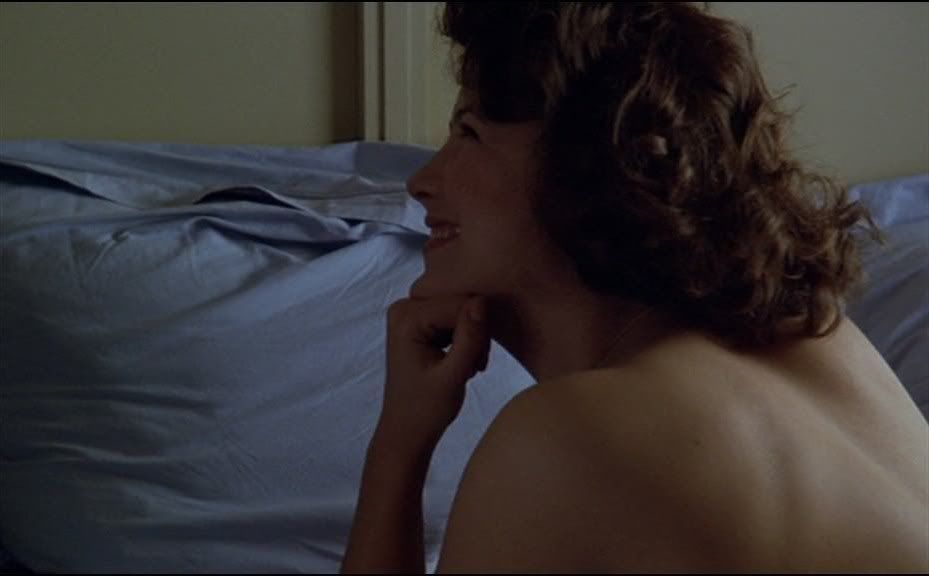
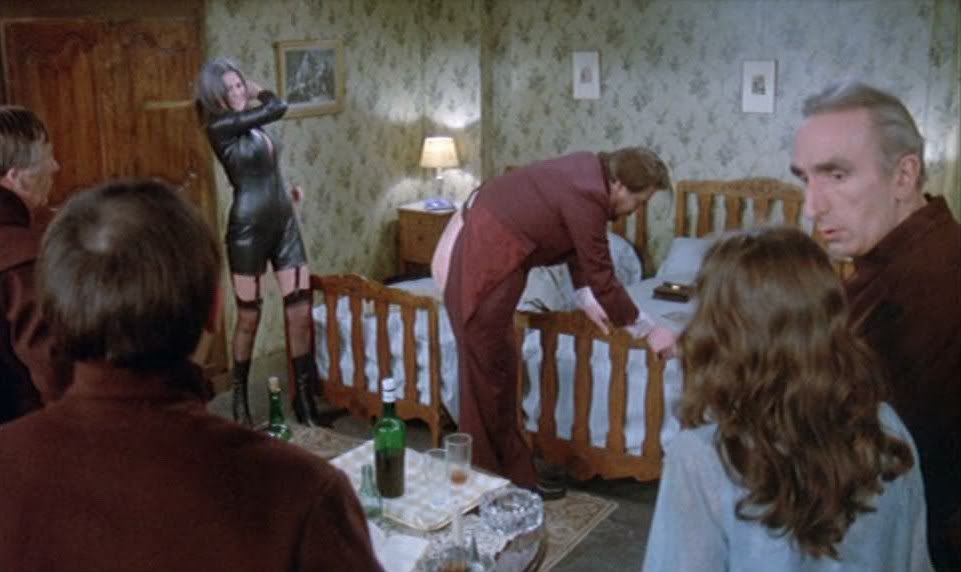
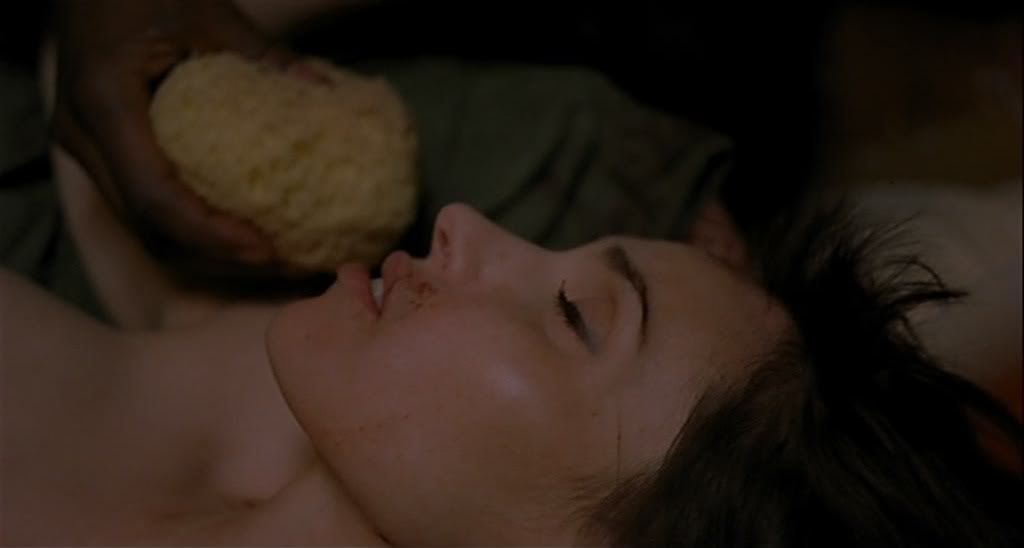
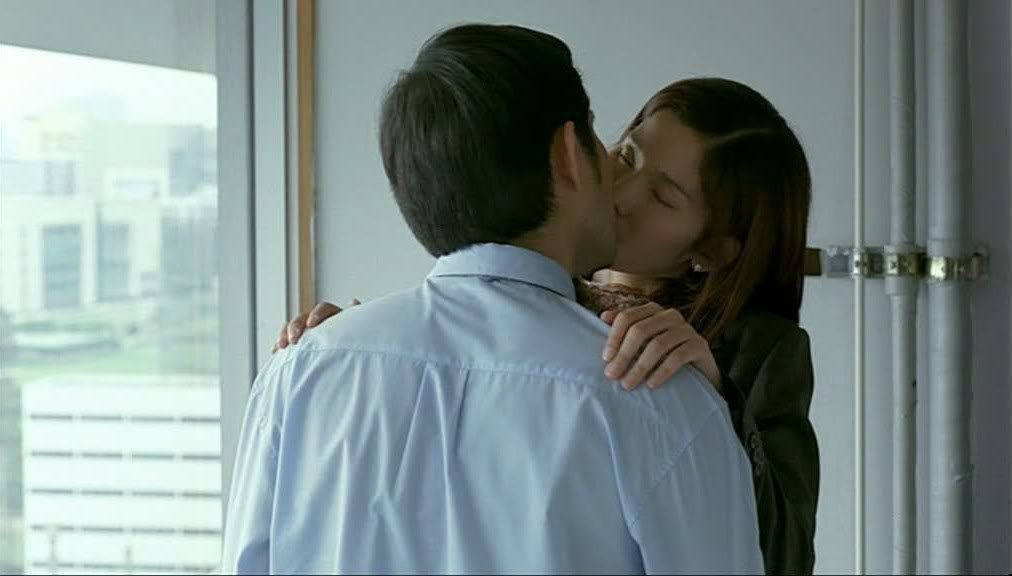
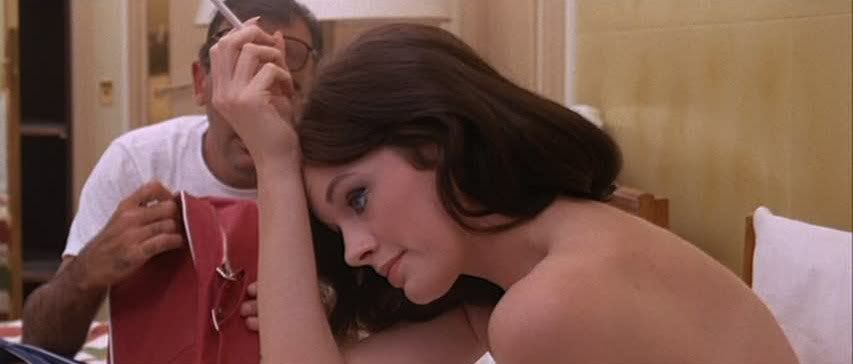
This small gallery is my response, assembled rather loosely around the theme of sensuality and sexuality: images that entice, provoke, and suggest. The images are very different in their context and their content, suggesting the sheer variety with which the cinema has approached this most human of subjects. An image from Godard comes from a scene in which the French master, always fascinated by the eternal battle between man and woman, satirically mocks the fetishization and commercialization of sexuality, a theme he'd explore even more savagely in his 1980 Sauve qui peut (la vie). It is a theme that of course also resonates with Buñuel, who approaches it in an entirely different way while explicitly framing such sexual excesses in response to clerical puritanism, as an audience of priests observe, with horror, a sadomasochistic encounter. Claire Denis and Maurice Pialat, meanwhile, are concerned with the violent aspects of sex, the former delving into bloody horror as sex becomes synonymous with death, the latter dealing with the psychological wounds lovers inflict on one another. (Which doesn't stop Pialat from pausing for a delightful, charming moment of sexual joy.) Finally, Apitchapong Weerasethakul captures a moment of casual intimacy amidst a low-key argument.

It should be noted, too, that I didn't intend for this to be the theme. I simply grabbed five films I like off my shelves, more or less at random, and discovered that the commonality between them was these kinds of images.

The films, in order, with links to my full reviews where applicable, are:

Police (Maurice Pialat)
The Phantom of Liberty (Luis Buñuel)
Trouble Every Day (Claire Denis)
Syndromes and a Century (Apitchapong Weerasethakul)
Two or Three Things I Know About Her (Jean-Luc Godard)

I'm supposed to tag people for this, but I'd rather just leave it open. If you're reading this, go ahead and make your own image gallery. Just make sure to link back to Joel and Stephen's original posts.


The Exterminating Angel


The Exterminating Angel is Luis Buñuel's most darkly funny and vicious satire of upper-class mores, an eviscerating portrait of how easily the façades of civility, nobility and good manners can be broken down. The film's famous premise involves a dinner party for a group of wealthy friends after an opera, hosted at the opulent mansion of Edmundo (Enrique Rambal) and Lucía (Lucy Gallardo). Everyone arrives in high spirits, talking and laughing. In fact, in one of Buñuel's first surrealist intrusions into the surface of the film, the guests actually arrive twice in quick succession, the same scene playing out two times before the guests are allowed to go upstairs. Once there, they find that all the servants have left, without explanation, leaving only Julio (Claudio Brook) to serve dinner and perform all the other necessary tasks. So the party keeps subtly slipping off the rails right from the start. Edmundo gives a toast twice, though this time instead of the scene playing out the same way with each repetition, the host finds that the second time around everyone has completely ignored him. When the waiter comes to serve the first course, which Lucía has announced with much hype and enthusiasm, the servant trips and falls, splattering the meal all over the nearby dinner guests.

What's obvious already at this point is Buñuel's irreverent, comic treatment of the upper-class, who are portrayed as vain and vapid, emptily chatting in non sequiturs. After dinner, Buñuel's camera wanders fluidly around the room, passing from one conversation to the next, chronicling the ignorance and casual cruelty of these people. One of the most telling moments is when a woman talks about being involved in a train accident, in which a whole carload of third-class passengers were killed; "like a slaughterhouse," she says, though she also admits that she could not feel moved by the deaths. She felt more deeply for the death of a prince who laid in state, because of his nobility and his handsome profile. Already, it's obvious that Buñuel is satirizing these people who fancy themselves distinguished and noble and good, but who lack even the decency to mourn for the lives of anyone not from their own class. Death is insignificant to these people, even to the doctor (Augusto Benedico), who seems more concerned with superficial matters than the real health of his patients: he indicates that a man is dying by saying, with great gravity, "he'll be bald by midnight," confounding baldness and mortality.

But all of this is just a setup for the film's real punchline, because as the night wears on and the dinner party continues unabated, it becomes obvious that no one can leave the room they're in, that they are infected by an overpowering lethargy that traps them in place. They casually break with decorum, forgetting their class and the rules of good manners, and begin settling down for the night scattered around the room, the men taking off their jackets and everyone lying down on couches and pillows and on the floor. This represents an unthinkable breach of conduct for these people, so obsessed with appearances and reputation and class; as one guest says the next morning, horrified by her own behavior, "we turned this room into a gypsy campground."


There's worse in store. The premise of The Exterminating Angel is a brilliant surrealist gag, one Buñuel would later reverse for The Discreet Charm of the Bourgeoisie. In that film, a group of wealthy dinner guests are continually interrupted, often violently, before they are able to eat their meal, while in this film a dinner party is stretched out for weeks with the guests mysteriously unable to leave. In both cases the idea is the same: Buñuel is violently assaulting the sacred rituals of the bourgeois, committing what is essentially blasphemy against whatever images of itself the upper-class holds dear. As the days wear on and the guests still find themselves unable to leave, the party increasingly degenerates into savagery, cruelty and primitivism, with the guests shedding one by one the restraints and manners of polite society.

It's as though, isolated from society, deprived of food and unsure of what's happening, these people forget who they are, forget all the rituals and distinctions that they have used to elevate themselves above the common man. Sexual mores and restrictions break down: the engaged couple darts off into the closet to consummate their relationship without being married yet, while the lecherous old composer sneaks around in the middle of the night kissing sleeping women. The rules of politeness also disappear, and the men stop disguising their contempt for one another, openly making their nasty feelings known and hovering on the brink of violent altercations. Of the assembled company, the only ones who retain their civility are the host Edmundo, who tries to soothe the conflicts between the guests, and Leticia (Buñuel favorite Silvia Pinal), who the other guests have dubbed the Valkyrie for her purity and unapproachable manner. During their confinement, she seems to float among the guests, tending to their needs, giving water and comfort to those who are ill and weak. Her nickname, a gossipy taunt that the other guests whisper behind her back, becomes appropriate during the period of confinement: the Valkyries, in Norse mythology, are battlefield figures who bring the slain to Valhalla, attend to the wounded and bring cups of ale to dead warriors in the afterlife.

Like Edmundo, Leticia retains her dignity and grace throughout the film, never succumbing to the bestial tendencies of the others. When a trio of lambs inexplicably wander into the room, she even blindfolds one of the animals before it is slaughtered, a gesture of sympathy for a creature facing a death sentence. The rest of the group shows no such respect for the dead, even for their own fellows. When one man dies, they unceremoniously dump his body in the closet, and the suicide of the two young lovers (also in a closet) prompts gales of laughter and then sudden disinterest. One recalls the story from the beginning of the film, the train accident whose lower-class victims elicited no pity from the bourgeois. Apparently, savagery for these already vile people consists of losing the ability to care even about the members of their own class; their sympathy extends no further than themselves.

Buñuel presents all of this with a deadpan tone that accentuates the ridiculous dark comedy of the scenario, the disintegration of manners yielding absurdist humor as well as abjection. At the same time, Buñuel never seems to be just making fun of these people, and his portrayal of their suffering is sympathetic. One can easily imagine a similar scenario in which these privileged people are mocked for over-reacting to modest deprivations, but their suffering here is genuine, and unites them (if only for a few weeks or months) with deprived people everywhere, people lacking food and drink and adequate living space. As usual, Buñuel's satirical sensibility is complicated by his refusal to score easy points against obvious targets. The film ends with a sequence at a church which posits the possibility of a whole other mirror film, taking the same subject and transposing it from the bourgeois to the clergy. This ending is as multi-layered as everything in this complex film, suggesting the cyclical nature of suffering, its perennial presence and the randomness of its appearances, as well as the union between the upper-class and religious institutions; Buñuel implies that both the Church and the bourgeois can be satirized in the same way.

Simon of the Desert


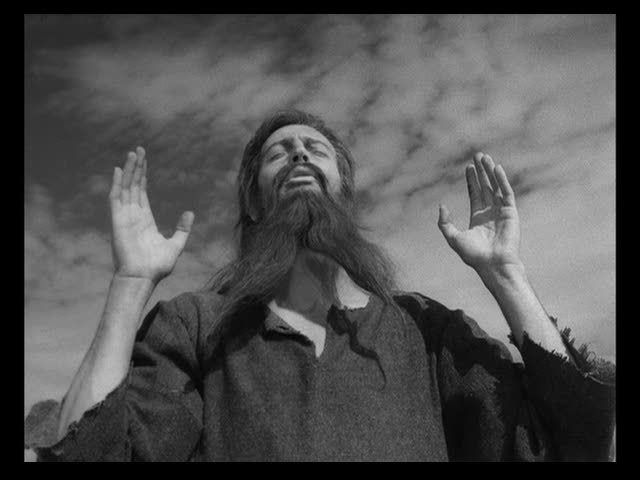
Luis Buñuel's final film of his Mexican period is the short, punchy Simon of the Desert, possibly the great surrealist's wittiest and funniest film, and certainly his most focused meditation on a subject that interested him throughout his career: the combined folly and nobility of profound religious faith. Certainly, there is no protagonist in Buñuel's oeuvre who better represents this dialectical representation of religion than the holy fool Simon (Claudio Brook), an ascetic who lives alone in the desert on the top of a pillar, fasting, praying, willfully turning his back on the entirety of the world. When the film opens, he has in essence been rewarded for his solitary suffering: the local priests come to offer Simon a better, taller pillar, donated by a rich man, and Simon accepts. The man who professes to want no worldly things, to have no need for his fellow beings, thinks nothing of taking this gift, a worldly and ornate pillar on which he can make his ascetic offerings to God. Buñuel makes even more of a sly joke of it by having the priests tell him that he's been standing on this pillar for six years, six months and six days: the Biblical number of the Beast from the Book of Revelations, a sign of the Apocalypse.

For Simon, this apocalypse of course comes in a very worldly form, specifically in the form of the luscious, womanly Silvia Pinal, a recurring Buñuel player most famous for her lead role in Viridiana. She is a seductive, strangely appealing Devil, appearing beneath Simon's pillar or even on it with him to offer him various temptations — not least of which is her own disrobed body. She appears first as a hip-swaying local woman who catches the eye of one of the priests but not of Simon, who uses her only as an example of the evil lure of women. She appears next as a faux-schoolgirl with sexy garters and stockings beneath her innocent uniform, singing a shrill and sing-songy mockery of Simon's religious devotion while trying to seduce him with her long, serpentine tongue or bare breasts. Most cleverly (and hilariously), she briefly tricks Simon by appearing to him as an embodiment of God himself, a young shepherd in a tunic with an unconvincing blonde beard and curls obscuring her femininity. Pinal is, in fact, not Buñuel's vision of the Devil but the vision of the Devil that Simon himself might concoct: the man who turns his back on the world is of course tempted by a Devil who offers nothing but worldly, fleshy pleasures. Simon, though, is stoic, and Pinal's Satan seduces the audience long before she is able to hold any sway over her faithful target.


Despite the obvious twinkling-eyed glee that Buñuel takes in his incarnation of Satan, the film's sympathy is more closely aligned with Simon despite his religious asceticism and ridiculousness. Buñuel seems to have a grudging respect for the extent of Simon's devotion, even as he mocks and satirizes the pointless disconnection from the world that it entails. Simon is a kind, generous, noble man, a true gentle spirit who seems unable even to comprehend the petty nastiness and jealousies of other men. He has real problems communicating with his fellow men, not understanding concepts like conflicts over property or the desire for food that provides more than basic sustenance. His separation from the world is extreme, but there's something pure and sweet about Simon, especially in comparison to the crassness of the people around him. In one early scene, Simon performs a miracle by restoring the amputated hands of a man in the crowd. The miracle is accompanied by typically sweeping, ecstatic religious music, culminating in a wondrous moment when the man looks at his former stumps and finds his hands, suddenly, returned. The religious ecstasy is short-lived, however. The man abruptly, without giving thanks or showing any further sign of wonder or happiness, gathers his wife and children and heads back home to hoe his garden; his first action with his new hands is to slap one of his daughters for pestering him with questions. In the crowd, as two men walk away, one asks if the other saw that. "What?" "That thing with the hands." The answer is an indifferent grunt and a shrug.

Clearly, Buñuel is to some extent satirizing the self-centered, disinterested outlook of these people, who have little wonder or gratitude for Simon's miracles; their selfishness and bitterness seems like a dark contrast to Simon's gentle nature and devotion. But this scene is not as simple as it seems on its surface. In fact, what Buñuel is pointing out here is that these people literally can't afford to live in the same way as Simon does. When the man gets his hands back, his first thought is not to give thanks or offer prayer, but to get back home as soon as possible so he can start doing what he could not do before: hoe his garden, growing crops to make money and feed his family. Even the two men in the crowd who react so stoically to this miracle turn to talking about food instead, inquiring if there is any bread left. For these people, Simon's life of religious devotion is a kind of luxury, a freedom from practicality and everyday concerns like caring for one's family and having enough to live and eat. Simon's diet might be meager, but his food and water are brought to him every week by the priests. He does not provide for himself, and so can afford to give himself up utterly to God, to place himself on a literal pedestal above his fellow man: a gesture of pride at his ability to avoid the petty struggles for survival that occupy the poor beings scurrying around below him.


In this way, Buñuel makes Simon a curiously ambivalent figure, a man genuinely striving for spiritual purity and communion with God who, in doing so, alienates himself from both the pleasures and the responsibilities of humanity. Simon is certainly not immune to the sharp crack of Buñuel's satirical whip. With his bizarre forked beard and oblivious manner, Simon is an obvious target for mockery, like the scene where he stumbles in the middle of a prayer and forgets what to say next. He's so disconnected from the world that he constantly threatens to lose track even of his own actions. At one point, he acquires a passing mania for blessings, blessing the poor and their soil, a goat and its profane midget owner and a cricket before looking around for more things to bless, rambling and mumbling to himself. He even reaches into his mouth, pulls out a tooth and begins gesturing as though about to bless it, stopping short when he realizes what he's doing and tosses the tooth aside. Brook plays Simon as a combination saintly holy man, delirious lunatic and senile old fogey, and his distracted behavior is both endearing and silly.

Nowhere is Buñuel's ambivalence towards this religious icon more apparent than in the film's brilliant final sequence, in which Pinal's Satan devises her final temptation for Simon: she whisks him, via passing jumbo jet, into a modern-day city. Here, Simon and Satan attend a dance club together, watching the teenagers do a new dance; Pinal says it's called "radioactive flesh," the "latest dance and the last dance," and the teens' spastic, frenetic movements indeed suggest the contortions of flesh on fire. But this is a seduction that Simon doesn't resist too fiercely. He simply sits off to the side, not participating in the dance but not running away either, calmly smoking a pipe, his beard groomed and his rags exchanged for a smart college professor sweater. He doesn't quite give in, it's more like a compromise with Satan. Perhaps, ultimately, the world just proves too much fun, too energetic, too wild and free to sit entirely apart from it. As the bodies whirl across the screen and Pinal's smirking Satan joins the party, the film simply ends, with Simon trapped, not altogether unwillingly, in the midst of the chaotic frenzy of the dance, a worldly, sexualized dance he'd spent his whole live until then scrupulously avoiding. Buñuel neither celebrates nor mourns Simon's "fall," but views it as necessary, a condition of existence: we must all make peace with the dance.