Showing posts with label horror films. Show all posts

Let Me In


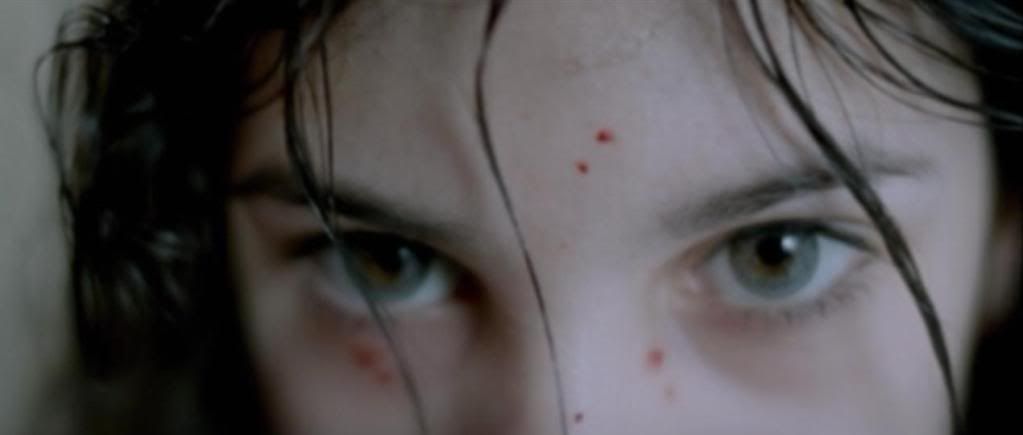
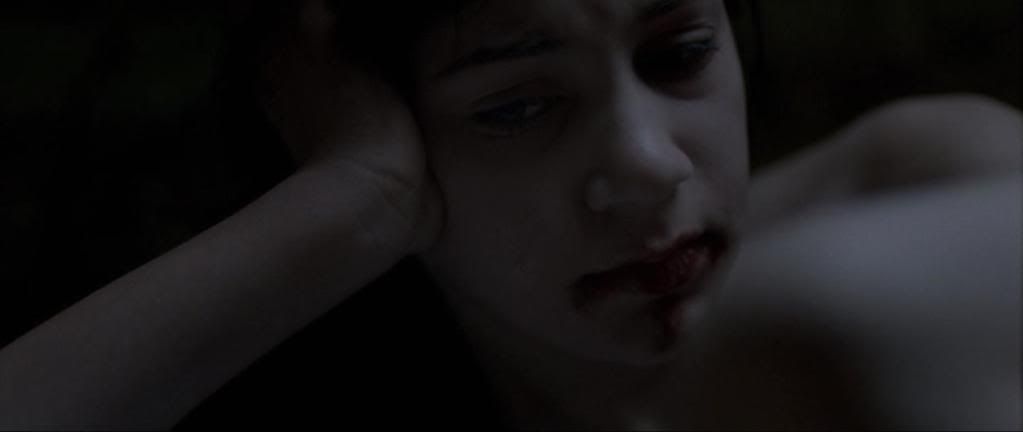
Let Me In is Matt Reeves' remake of Tomas Alfredson's Swedish vampire movie Let the Right One In, which was itself based on John Ajvide Lindqvist's novel. Reeves' film is part of a not-so-honorable tradition of remaking foreign movies — particularly foreign horror movies, and particularly Japanese horror movies — in the English language in order to make them more palatable to American audiences. The main reason for the prominence of this trend in the last decade or so is fairly obvious, as well as regrettable: the original films, for the most part, are interesting, creepy, frightening, well-made horror fare, and they would be eagerly consumed by mass audiences if not for the fact that so much of that English-speaking mass audience, certainly in the United States, is very averse to reading subtitles. Reeves' film starts with one strike against it, then, in that its origins are so blatantly commercial, motivated not by the artistic necessity of remaking Let the Right One In a mere two years after the compelling original film, but the commercial necessity.

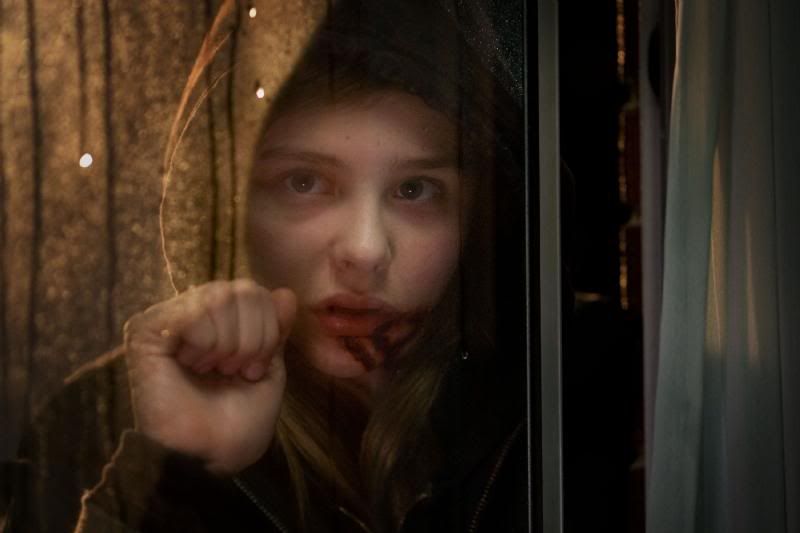
Reeves both lives up to those low expectations and, in some ways and more surprisingly, surpasses them. The film is almost slavishly faithful to Alfredson's film: it leaves out some of the subplots and scenes from the original, but what it includes is often copied from the Swedish film, if not in exact dialogue or exact shots then at least in close paraphrases and images that evoke the mood of the original very strongly. The relationship between the perpetually young vampire Abby (Chloe Moretz) and Owen (Kodi Smit-McPhee), the disturbed, violently simmering boy she befriends, plays out very similarly to the same relationship in Alfredson's film (where the characters were called Eli and Oskar, as in the book). What's missing is the full extent of the warped, ambiguous sexuality that wafts through the original — not surprising considering American audiences' skittishness about sex and especially the developing sexuality of children — and some of the warmth and tenderness of this vampire/human friendship. A few chopped shots aside (including the infamous closeup that explicitly called Abby's gender into question) Reeves includes most of the same scenes that Alfredson staged between Abby and Owen, but some crucial spark, some energy and intensity and mood, seems to have been lost in translation. The relationship goes through the same motions and winds up in the same place, but the strange chemistry between the leads is missing the vitality and dark humor of the original.

In another respect, however, Reeves expands upon and possibly improves the original, by subtly drawing more out of the character of the older man (Richard Jenkins) who accompanies Abby and kills for her, gathering blood for her to drink from his victims. Reeves perhaps suggests the heightened importance of this character by opening the film with him, pushing back the introduction of Owen; the young boy had the first lines of Alfredson's film, creepily intoning "squeal like a pig" as he imagined violent vengeance on the schoolboys who bully him. In Reeves' film, the killings of Abby's "father" play out very differently from the corresponding scenes in the original film. Where Alfredson made the old man seem like an incompetent killer, floundering and past his prime, the father in this film simply hits a run of bad luck that leads to his horrifying climax. Jenkins also delivers a deep, powerful performance that makes this character even more poignant: he seems weary, done, tired of a long life mostly spent killing for Abby. One of Reeves' cleverest changes is inserting a brief scene in which Owen finds an old photo of Abby with a young boy who doesn't look very different from Owen himself. It's obviously the "father," and by including this detail, Reeves makes explicit a subtext that haunted the earlier film: that Abby's friendship with Owen is the beginning of a relationship very like the one she once had with the old man. This more fully developed subtext gives special weight to the scene where the old man tells Abby to stop seeing Owen: it's not fatherly protectiveness that motivates him, but jealousy, and perhaps the hard-won knowledge that a friendship with Abby isn't a gift to the young boy who is obviously already falling in love with her.
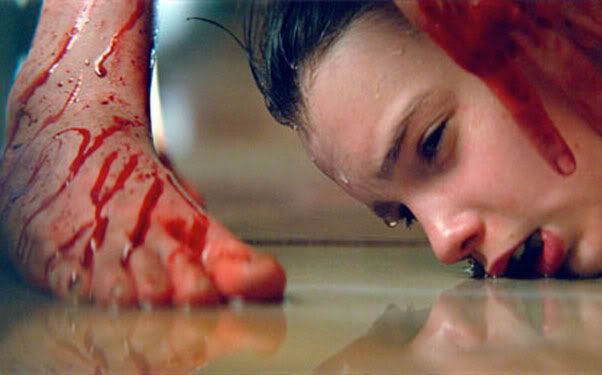

In other respects, Reeves' film simply trims a lot from the original without adding much new material to counterbalance. Alfredson's focus on some of the characters around Abby and Owen — Owen's parents, the other inhabitants of the apartment complex — is mostly reduced to a few token scenes. That's a shame, because though Let the Right One In was also always focused on the young vampire and her new human friend, Alfredson also found time to develop other characters in surprising ways. Alfredson lingered much longer than expected with one victim of Abby's bloodlust, creating pathos and horror (and also some absurdist bleak humor) from this character's fate. The few disjointed scenes with that character that remain in Let Me In don't do justice to that tonal and emotional complexity at all. Similarly, Alfredson spent time hanging out with some of the men who lived in and around this apartment complex, listening to their casual banter and their political dialogues, many of which centered on the death penalty, an important theme in Alfredson's film. Reeves moves the time and setting of the story to 80s Reaganite New Mexico, but curiously not only drops the death penalty thread but fails to develop any political context. Reagan is purposefully evoked in a striking shot in which the president's face, on a TV, is reflected in the glass door of a hospital, but this political reference is just empty window-dressing, never mentioned again.

The development of the "father" aside, what Let Me In does well is more or less limited to effectively and faithfully repeating the central ideas of Let the Right One In: the burgeoning friendship between a vampire and a malcontent loser whose violent impulses are slowly building up. The film captures the confused emotions and simmering rage of a kid who is tormented at school and ignored at home (Reeves' decision to condense the roles of Owen's parents accomplishes something similar to the more fully fleshed out portrait of familial neglect in Alfredson's film). To a lesser extent, it captures the sexual confusion of adolescence, particularly in the scene where the sexless Abby slips into bed naked with Owen, who's obviously equal parts baffled and titillated as he asks her to "go steady."

Taken on its own merits, Let Me In is a fascinating twist on the vampire myth, exploring the vampiric condition as a metaphor for adolescent fantasies of violence and revenge. The film's snowbound atmosphere doesn't come close to matching the eerie beauty of the original, which got a lot of mileage out of the contrast between pitch-black night and the fluffy white snow on the ground, but it's still effective. If the film wasn't so closely related to its superior Swedish source, it could even be considered a very fine modern horror movie in its own right. But comparing the remake to its source is nearly unavoidable, as most of the time it follows the original film slavishly, and where it departs it's usually to simplify the subtext and peripheral plots of the original. Reeves makes some intelligent decisions in adapting Let the Right One In for English-speaking audiences, and he does a decent job of repeating some of what made the original film so memorable and powerful. What he doesn't do is establish Let Me In as its own film with its own reason for existing and its own set of concerns, which would've gone some way towards legitimizing this otherwise rote remake effort.

Don't Look Now


Nicolas Roeg's Don't Look Now is a chilling and mysterious film, a ghost story in which John Baxter (Donald Sutherland) and his wife Laura (Julie Christie) are haunted — literally or figuratively, it hardly matters — by the drowning death of their daughter Christine. Shaken by the tragedy, they close up their home and move to Venice, where John engages himself in his work as an expert on restoration, working on a crumbling church, while they attempt to put the memories behind them, to go on with their tragically changed lives. Instead, their grief and their fear are only intensified, magnified by the grotesque Gothic atmosphere of the city itself, with its shadowy mazes of corridors and its dark, dank waterways that hide the corpses of murder victims, as a killer stalks the city, dumping bodies into the canals to be dredged up as reminders of the watery grave the couple's daughter was lost to. If it seems like an almost absurdly bad idea to get over the drowning death of one's child by moving to a city in which water is omnipresent, the film very quickly makes it seem even worse, like a fatal mistake.

The city of Venice becomes a place of ancient, creeping terrors. John's work forces him to delve into the past, to restore the decayed artifacts of history to their former glory, which means that his work is a poignant metaphor for what he is utterly unable to do in his own life. Against the permanence of death is juxtaposed the work of restoration, of creating modern-day replicas to imitate the past. Several times, John repeats, like an angry mantra, that his daughter is dead, reinforcing the finality of it, the inability to reverse that event the way he's able to reverse the decay of a church's mosaics and statues by filling in the missing places with tiles fabricated to resemble those of the past. The past seems to taunt John: at one point, hoisting a gargoyle up onto the façade of the church, he comes face to face with the grotesque creature, its yawning mouth close to his face, as though poised to hungrily kiss him. He is uncomfortably intimate with the past, with its horrors and its ugliness, and this moment will reverberate in the film's startling ending, as though it was a premonition of John's eventual confrontation with the face of evil.

Laura deals with the tragedy in a different form, strangely comforted by the intervention of a blind psychic (Hilary Mason) and her sister (Clelia Matania). The psychic tells Laura that she sees Christine with them, that the little girl is sitting between her parents, still in the red raincoat she drowned in, happy and laughing as though nothing had happened. It's against this possibility — and the warnings and prophecies that the psychic says the little girl is delivering to her parents — that John offers his repeated and insistent reminders that their daughter is dead, that she is gone for good, that no messages or omens can come from beyond the grave. John, an engineer and a man of books, is rational and worldly, even though his work requires him to come into contact with the sublime and the spiritual on a daily basis. The grandeur of the churches, the sinister menace of the gargoyles, the fragmented images of spiritual scenes in various states of disrepair, these signifiers of the otherworldly do not touch John beyond the physical, tangible necessities of his work.

The strange atmosphere of this film is enhanced by Roeg's associative editing, which often brings together discrete places and actions with parallel editing rhythms. In the crisply edited opening minutes of the film, Roeg cuts back and forth between John and Laura inside and their two children, playing outside by the small pond in the lush green space around their country home. The editing connects parents and children, as a gesture begun by the daughter (throwing a ball) is completed by John as he throws a projector slide to Laura. The editing subtly injects a sense of creeping dread into the sequence, particularly in the visual rhymes between the daughter's bright red raincoat and the mysterious figure in red who John finds in one of his slides of an Italian cathedral. Roeg quietly calls attention to the subtle strangeness of this figure, even creating a split screen effect by placing the slide, projected on a screen, on the right side of the frame, with the black border of the screen separating the image from Laura, seen from behind, reading by the fire. A little later, when John spills water on the slide, the red runs, like blood tracing a curved path across the slide, spreading out across the image, which triggers John's abrupt certainty that something terrible is happening outside.


The inexplicable, slowly building sense of dread established in this opening sequence gradually seeps throughout the entire film; the menace seems to emanate from nowhere and everywhere, creating an un-centered feeling of terrible things lurking just below the surface. Something just seems off about everything, from John's employer, a bishop (Massimo Serato) who projects the aura of an Old World gangster, to the police investigator (Renato Scarpa) who John goes to see when he believes that his wife has gone missing, kidnapped by the psychic and her sister. The inspector listens to John's concerns with abstracted disinterest, absentmindedly doodling on a police sketch until the drawing resembles a monster — and looking out the window and actually seeing the sisters who John is trying to find. These kinds of weird scenes contribute to the sense that the film is just weird at its core, that there's something unsettling and horrible in the very air of the film, in the space between the characters, in the odd disjunctions of the editing. At one point, Roeg inserts a scene of the psychic and her sister in their room, cackling hysterically like a pair of witches, a scene that is otherwise completely unmotivated, which simply adds to the unresolved horror that Roeg is developing here.

That horror is interrupted by a very explicit and surprisingly tender love scene that suggests that the couple's grief may yet be healed, that the sense of approaching doom may yet dissipate. The sex scene is cut together with shots of the couple dressing afterward and getting ready to go out, the shots alternating quickly. A shot of sex, passionate and intense, then a shot of one of them putting on their clothes, or Laura putting on her makeup, smiling as she remembers their earlier romp: two different visions of domestic tranquility, blended together into a portrait of marital love in bed and out. Time becomes fluid, and through the magic of the editing these obviously separate activities are brought together as part of the same sequence. In a later scene, when Laura is with the psychic, who's trying to contact the couple's daughter, Roeg cuts together this scene with shots of John searching for his wife, and the cuts give the impression that the couple is looking at one another even though John never finds his wife. If the sex scene's editing suggests intimacy and domesticity, this scene suggests exactly the reverse, creating only the illusion of connection while the couple remains hopelessly separated, a prediction of the miscommunication and geographic dislocation that marks the second half of the film.

At times, the odd tone of the film even spills over from discomfort into offbeat comedy. When John walks into the police inspector's officer, Roeg films the large, mostly empty room from John's perspective, with the inspector behind his desk with a lamp positioned so that its shade seems to be taking the place of his head, until the man peeks around the corner and greets John. It's such a surprisingly playful image, particularly in light of the disconnected tone — as though the two men are talking past one another — of the subsequent scene. Roeg also builds some peripheral comic business around the employees of the hotel where the Baxters are staying. In one scene, John arrives back in the room to find a maid using the toilet in the room, then apologetically placing a magazine back in a stack by the door, shrugging as she walks by. There's also the hotel manager who's always chattering in Italian, sometimes seeming to make fun of the Baxters to his staff while remaining solicitous to their faces.

Such diversions in tone only contribute to the film's kaleidoscopic spiral into madness, which culminates in the frenzied editing of the creepy climax, in which memories and moments from throughout the film are collaged together in a way that suggests that answers are popping into place, even though in fact the mysteries all remain intact and are even deepened by the unpredictable conclusion. Roeg's film resists easy answers, fragmenting the narrative with the editing and allowing a languidly drifting sense of fear to wind through the film like the fog that churns underfoot during the climactic chase through Venice's back alleys. This eerie, haunting film never explains or resolves its many mysteries, leaving only an intangible horror that lingers long after the film is over.

Let the Right One In


Let the Right One In is an eerie, moody vampire film, the primary innovation of which is to make vampirism a metaphor for the isolation and bottled-up rage of a friendless child's sad existence. Oskar (Kåre Hedebrant) is a tormented young boy who is continually bullied at school, who's tortured and insulted and beaten by kids who call him "piggy" and threaten him. The first words of the film, said by an offscreen Oskar, his reflection hazy and ghostly in his bedroom window, are "squeal like a pig," his nighttime repetition of his bullies' daytime taunts. Oskar goes home at night and imagines getting back at the bullies who hurt him, as he fondles a knife, lying in bed in his underwear. He spends many nights outside, too, in his apartment building's courtyard, stabbing a tree while repeating variations on "squeal like a pig" over and over again, fantasizing about violent revenge. Oskar is mostly ignored at home by a divorced mom who seems too wrapped up in her own problems to care what her son is doing in his room or when he walks out alone into the cold night, and when he does see his dad, it seems like a vacation, a time for fun and games rather than anything serious. In short, Oskar seems primed to explode, a child who's mostly left to simmer in isolation, developing his violent impulses, ignored by everyone who should care — true to form, his teachers, who never took note of his plight, only become interested when he finally strikes back against one of his tormenters. It's easy to imagine Oskar as one of those lost souls who eventually snaps and enacts his revenge in some public and bloody way.

Instead, he becomes fascinated with Eli (Lina Leandersson), a girl who moves in next door to Oskar with her elderly guardian Håkan (Per Ragnar). Eli becomes Oskar's friend and confidant, his only companion during his formerly lonely nights. She tells him that the first words she heard him say were "squeal like a pig," which was also the audience's introduction to Oskar. Eli understands Oskar's feelings, because like him she's an outcast, a freak, and like him she's seized by violent impulses, although in her case she doesn't have much of a choice. She's a vampire, traveling around with her companion Håkan, who poses as her father but has a much more ambiguous relationship to her. Håkan kills for Eli, stalking strangers and funneling their blood into a bucket for the vampire girl. He seems to have been at this for a while, based on his kit of well-used equipment and his routine approach to these expeditions, but in fact he's a fairly inept killer, as though with age he's lost his skill.

The film's first murder shows Håkan randomly accosting a passerby in a park, and what's shocking about it is how public it seems, not at all remote from people, with the lights of passing cars on an obviously major road fairly nearby. Director Tomas Alfredson emphasizes the sense of routine in this murder, the mundane details, the sense of a man going through familiar routines, enacting a set of actions and motions that he's gone through countless times before. He strings up his victim from a tree, arranges a bucket and funnel beneath the man's head, and cuts his throat to unleash a stream of blood, making a plastic pinging noise as it drops into the bucket. Alfredson stages this sequence mostly in a static medium shot, cleverly teasing the audience about the amount of gore they're about to see, then finally withholding the image of the neck-slicing altogether, instead suggesting the horror of this moment through the sound of the blood loudly rushing into the bucket. The murder doesn't go smoothly, however, as a dog breaks away from its nearby owners to watch the murder, standing alertly a few feet from Håkan, its fur white like the snow, visually evoking unstained purity in contrast to the blood rushing from the dead man into a red-stained bucket.


Alfredson stages several similarly striking horror set pieces, but Håkan's second — and even more badly botched — attempt at gathering blood for Eli is perhaps the most powerful. The sequence is broken up by flashes of dark humor and surprising tension, and capped with an absolutely harrowing moment when Håkan realizes he's about to be caught. What's interesting about the film is that Alfredson consistently places the audience's sympathies with the killers and the vampire: the tension builds in this scene over whether Håkan is going to get caught or not, as he's cornered with several people getting closer to discovering him. This tendency is even more pronounced when it comes to Oskar and Eli. The multiple scenes of Oskar being bullied and tormented by kids at school make him a victim in the audience's eyes, and we root for him to strike back, to get his revenge, even as we know that he's nursing a violent streak that could make the moment when he finally snaps truly horrible.

The development of a friendship between Oskar and Eli is tender and moving: Oskar is a boy without friends, and he finds a connection with Eli such as he's never had with anyone before. He glides through his own home without getting much attention from his mom — there's a single scene that suggests some warmth between mother and child, but it's the exception — and no one speaks to him at school except to mock him and threaten him with beatings. His almost immediate comfort with Eli, built on their sarcastic banter during their first meeting, and intensified by the private intimacy of tapping out Morse code signals to each other on their adjoining bedroom walls, makes this a truly special relationship for the lonely Oskar. In a way, Eli is like his sinister imaginary friend, a fantasy girlfriend who can magically appear outside his window, who's strong and fearless, who can help him get the revenge he wants, but more than that who will keep him company, who isn't put off by his strangeness or isolation.

In fact, though this burgeoning relationship is touching, there is a continual sinister undercurrent to it all, a suspicion that Eli might see a certain dark potential in Oskar. After all, the first words she heard him say, the words that might have drawn her to him, were "squeal like a pig," as he stabbed a tree, practicing his revenge like a miniature Travis Bickle. The question left lingering at the end of the film is what's next for these characters: is Oskar becoming the next Håkan, a human guardian and killer for his beloved vampire friend? Is this tender relationship simply Eli's form of seduction? And why is it so satisfying to see the bullies revenged at the film's startling climax? The film has some surprising similarities to Gus Van Sant's Elephant in its poetic observation of alienation at school and at home, and it similarly raises questions about root causes and hidden evils. A barely developed subtext about the death penalty drifts through the film, as several characters discuss whether it is ethical to punish criminals with death, and Alfredson seems to be questioning, in subtle ways, the willingness of movie audiences to go along with gory revenge scenarios and even to root for the killer. Let the Right One In complicates that audience identification by making most of the vampire's victims sympathetic, and by lingering particularly with the aftereffects of violence on one man, who's devastated and ultimately destroyed by his grief. The film doesn't flinch away from that very human grief, even as it focuses on the confused feelings of childhood and the alienation that might drive a victimized, bullied kid to lash out violently and angrily at the world around him, dreaming of the power of the vampire, the power to kill and get revenge.

Suspiria


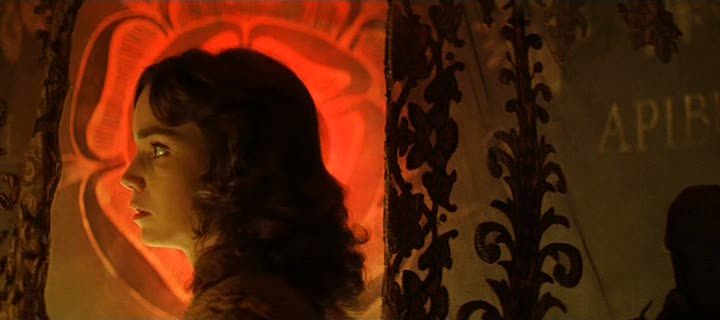
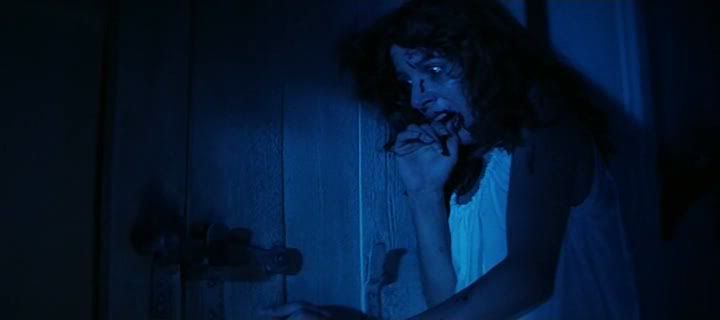
Dario Argento's Suspiria is a horror film based almost entirely around mood and the slow escalation of tension through music and garish color schemes. The film's concrete horrors — a sequence of murders and creepy occurrences at a German ballet school — don't arouse nearly as much terror or suspense as Argento's habit of filming nearly every scene as though something indescribably awful were lurking just out of sight. The film's design is lavish and ornate, and rather than finding terror in shadows and dark tones, Argento bathes these scenes in bright, saturated colors. The ballet school where American student Suzy (Jessica Harper) goes to study is a high Gothic palace with hallways decorated in bright red, its wild architecture topped only by the geometric lunacy of the apartment building where doomed ballet student Pat (Eva Axén) flees to in the opening scenes of the film.

The film's opening in general is a masterpiece of slow-building horror. Suzy arrives at an airport, and as she walks towards the doors leading outside, Argento immediately begins building up the suspense, well before there's anything to get the least bit scared about. Suzy seems hesitant and timid, somewhat rattled already; Harper makes good use, throughout the film, of her big brown eyes, which are often widened in anxiety, shifting back and forth, her pupils small and skittish, seeming lost in the broad whites surrounding them. Argento alternates closeups on Suzy's fragile face with shots of the airport doors. The closeups are silent, but the door shots are accompanied by the sinister but gorgeous chiming tones of the score, by Italian prog rock band Goblin, whose eerie chanting and chugging rock set the tone of the film. When Suzy leaves the airport, into a dark, rainy, windy night, the doors slide shut behind her with an air of finality that suggests a break with normalcy, the terror to come foreshadowed by the gloomy, stormy night that engulfs her. Her cab ride to the ballet school, with Goblin's pulsing main theme returning on the soundtrack, is equally chilling. It's only in the subsequent scenes, following Pat as she flees from the school just as Suzy arrives, that these premonitions of terror turn out to be warranted. Pat escapes the school and shows up at a friend's apartment, the very design of which, with its colorful patterns and high, vaulted ceilings, establishes that something strange is going to happen here.


Argento is excellent at using lighting and design to create the film's unsettling tone. He frequently focuses on closeups of the film's women — Pat during the opening, Suzy and her new friend Sara (Stefania Casini) later on — as they confront the strange events surrounding them. Faces mean a lot to Argento, faces in various contortions of terror and uncertainty, faces with eyes widened in fear and mouths gasping breathlessly. Agento films Suzy with colored lights washing across her face, especially hovering around her eyes, emphasizing her deer-in-headlights stare. It's obvious that he likes exploring the vulnerability of these women: Suzy seems afraid even before she arrives at the school, in the opening scenes at the airport, as though she's anticipating the rest of the film. The faces of the women, bathed in various colored lights, telegraph the film's mostly abstract horrors, because despite the murders that occur throughout the film, Argento seems more concerned with capturing the pervasive, undirected sense of dread and strangeness that exists within this film, taking hold of these women and slowly driving them to madness.

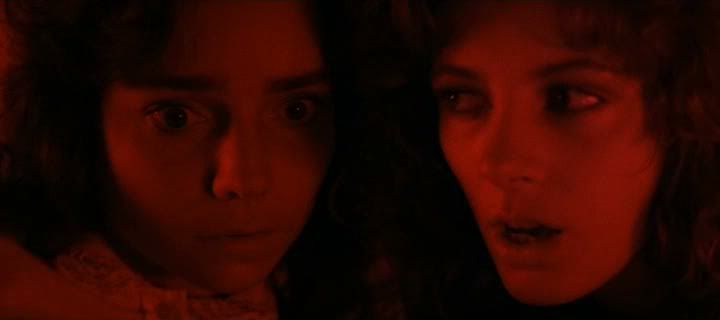
The film is thus a study in feminine vulnerability and fear. Argento allows the tension to build and build. At one point, he zooms in for a closeup on Suzy and Sara, their heads pressed together in conspiratorial whispering, the whole image filtered red. The women are talking about the odd snoring of one of their teachers, sleeping nearby, her silhouette cast against a curtain, black in the red room. It would be innocuous or even comical, except that Argento pitches it towards unhinged terror, the two women looking terrified, working themselves into a state of weird excitation over the raspy snoring of an old woman.


The impact of the film's music in creating this state of irrational anxiety can't be overstated, either. Goblin's music is as integral to Suspiria as the stylized imagery, despite the fact that the band — who had previously scored Argento's Deep Red — composed the music before seeing the film. The music just fits perfectly, becoming inseparable from the bright, creepy images. The tinkling chimes and bells of the main theme, which reappears frequently, is often joined by whispery chanting and moaning, ghastly voices that seem to be communicating with the film's characters. The word "witch" is whispered in the music long before any of the characters actually utter it, which makes it seem like the music is emanating from a kind of demon band who are foreshadowing the film's plot with their haunting music. In one scene where Sara is reacting to some unsettling sounds in the darkness, the sounds she's hearing blend into the sighs and thuds of the music, so that it's not clear if she's reacting to an actual noise in the room, or to the music that's creeping in from outside the diegesis.

That the film eventually provides a supernatural explanation for all these odd occurrences and acts of violence does little to resolve anything. Argento is so good at whipping up an atmosphere of edgy, all-encompassing dread that harnessing this aimless terror to concrete causes is somehow unconvincing. The film never seems to be actually about a coven of evil witches who run a ballet school, even though that's a fair description of its plot. Suspiria is rarely constrained or dominated by its plot; at times it seems almost plotless, more of a mood than a story. That's what makes it so affecting, so unsettling. In typical horror movie fashion, it wraps everything up in the end, driving the protagonist towards a confrontation with the evil lurking within the school. But the operatic excesses and flashy violence of this denouement do nothing to ease the sense of unmotivated fear roused by the union of Argento's visuals and Goblin's music. In the final scene, Suzy grins with relief as she rushes out into the rain, mirroring the stormy opening scenes, but the unease generated by the film lingers well past its supposedly happy resolution.

Diabel


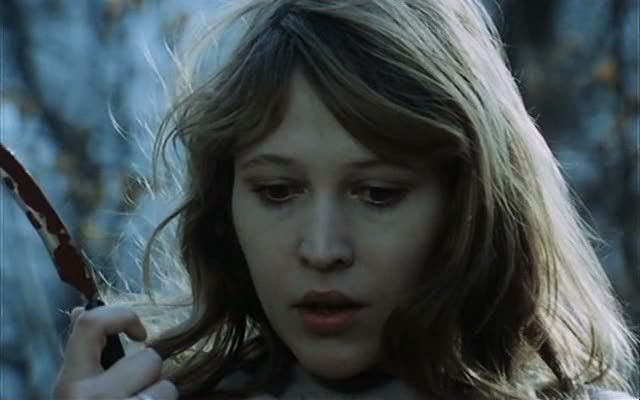
Andrzej Zulawski's Diabel (The Devil) is a messy, baroque, jagged film, all sloppily chopped up and ragged, dripping in blood and grime. It is unrepentantly, unceasingly ugly and vile, wallowing in the filth and degradation of a world in which morality and ideals mean little, and in which everyone seems either half-mad or already fallen into the abyss of insanity. The film opens with its chaos already in progress, at a convent that is being stormed by soldiers. Everywhere, women are screaming, fires rage, gunshots ring out, and the whole place seems more like a mental asylum than a home for nuns. Zulawski is thrusting the audience into the middle of things, signaling that this will be a film of madness and horror, and this bracing introduction is stunning and effective, even if eventually the unrelenting hysterics and shrill pitch of the film will become more tiring and numbing than harrowing. Into this chaos wanders a mysterious man in a long black cloak (Wojciech Pszoniak), who kidnaps a nun (Monika Niemczyk) and breaks a political prisoner named Jakub (Leszek Teleszynski) out of a holding cell in the convent. Jakub had been arrested as a conspirator in a plot against the monarchy of Poland, a leader in an apparently failed revolution, but now the mysterious stranger urges him away from the convent, back towards his home, accompanied by the nun.

When Jakub arrives home, however, he finds only madness and devastation. His sister is insane and is apparently betrothed to their half-brother Ezechiel (Michal Grudzinski). His father is dead, having committed suicide in disgrace and insanity; Jakub is told that in the old man's final months, he'd mistaken his daughter for his wife and raped her many times. Jakub also finds that his mother (Iga Mayr), who'd long ago abandoned her family, was living nearby as the madam of a brothel. The final injustice is the realization that Jakub's fiancée (Malgorzata Braunek), believing him to be dead after his arrest, had married his former best friend, one of his fellow conspirators in the revolution. Everyone in the film seems to be mad or half-mad, possessed by horrible spirits. The film is shrill and loud, with a hectoring, hysterical tone. The performances are pitched in only one key: everyone is constantly screaming and crying, tearing at their clothes, falling to the floor and thrashing around, shivering and shaking, laughing like lunatics. It's as though the whole world was an insane asylum — or as though Zulawski had assembled a cast of epileptics to act through seizures and convulsions. What's compelling for fifteen or twenty minutes quickly becomes exhausting; everyone Jakub meets acts in the same dazed, distant manner, then falls to the floor and thrashes around while screaming.

Although it's obvious that Zulawski is trying to create a portrait of a world gone mad, seen through the eyes of a man who finds only degradation and horror everywhere he goes, the uniformity of the film's tone and the repetitiveness of its incidents quickly become boring. Zulawski can only eke so much shock value out of his bloody, horrible scenarios, as the stranger leads Jakub on a guided tour of the wasteland that has become his life. The man urges Jakub to wallow in this devastation, and to react to it with murder, using a razor provided by the man at key moments. It is obvious, from the film's title, that the stranger is a metaphorical devil perched on Jakub's shoulder, always showing up whenever Jakub needs a little push to commit the next atrocity, always providing another little nudge towards evil and sin. The stranger wears Jakub down until he is totally weak and defeated, unable to resist any act — and it is only then, in one of the film's cleverest conceits, that the stranger reveals the very base, very human motivations behind all this horror and ugliness.


This very human devil is, in fact, the most interesting aspect of the film. He is a sniveling, cowardly figure, not at all intimidating or frightening. He is jittery and nervous, like the low-level clerk he's referred to as at one point. He is a servant rather than a leader, an anxious fly buzzing obsessively around Jakub's head, whispering in his ear, planting seeds of ideas and letting them sprout into actions. Zulawski cleverly does not give this "devil" too much power, does not make him imposing. He is a base, pathetic creature, a parasite who feeds on the weaknesses of others — and he finds plenty of weakness to satiate him. Towards the end of the film, the aimless Jakub asks if the world is really so ugly as he believes it to be, or if it's actually beautiful. The stranger praises the world's beauty in ineffectual terms, then purports to demonstrate its beauty through dance — but his dance is as spastic and chaotic as everything else in the film, a lame testament for the world's beauty from an ugly, pathetic man. The film puts little stock into art in general: Jakub comes across a troupe of performers and actors, but they are predatory and aggressive, with the troupe's gay leader trying to rape Jakub. The troupe's performance of scenes from Hamlet only mirrors back to Jakub the themes of betrayal and familial dysfunction that he finds everywhere he turns in his own life. Later, he says he finds comfort in the arms of the woman who plays Hamlet's mother in the play, but this is a short-lived pleasure that ends in more violence, and in any event it can only be linked to Jakub's own incestuous "punishment" of his own mother.

There is, doubtless, an allegory hidden within this film somewhere, if one could dig through its layers of blood and dirt. It is a film about the corruption of humanity, about how an idealistic young man who wishes to fight for his dreams is instead twisted into an instrument of violence and terror, serving interests contrary to his stated ideals. Zulawski apparently intended the film as a response to a very specific incident involving student riots in Communist Poland, but it can just as easily be taken as a general statement on the destruction of ideals through temptation and exploitation.

That is, if one can get past the film's exhausting hysterics. Zulawski conveys the disconnection and dazed state of Jakub effectively through his fragmentary editing, through which the young man often seems to be leaping spasmodically from location to location: one moment he might be in a springtime forest, the next passed out on a snowy hill. This disjunctive editing is effective at adding to the film's destabilizing feeling, and also lends a supernatural aura to the film's "devil," who often seems to appear out of nowhere, always in the right place. The editing winds up being one of the film's most compelling elements, however. Diabel as a whole is simply too shrill, too repetitive, too silly in its theatrical overacting and constant fits of contrived "madness." It opens in insanity and maintains the same fevered pitch throughout, which over time dulls whatever effect Zulawski was going for. Diabel is sporadically interesting, often visually provocative, but ultimately inconsequential.

Dawn of the Dead


Dawn of the Dead is the second of George Romero's "Dead" movies, made ten years after his powerful debut Night of the Living Dead, which established a world in which the dead were mysteriously and suddenly coming back to life as lumbering, flesh-eating monsters. Dawn picks up in the immediate aftermath of those events, as this horrible state of affairs continues to spread, terrorizing people everywhere. From the start, Romero signals that this is going to be a very different kind of movie from the slow-burning tension and suspense that characterized the dark, claustrophobic Night. The film opens abruptly, in mid-scene almost, as, while the credits slowly roll, a TV news broadcast degenerates into chaos and shouting. Two on-air announcers bicker over different interpretations of the zombie menace, while off-screen everyone's equally divided over what to do, what to think, where they can go next. Everything's falling apart, the usual institutions can offer little solace or help, and the familiar trappings of modern society, like TV itself, become absurd and even dangerous, leading viewers astray. This is the theme Romero is exploring here, in which the collapse of society reveals something of the absurdity of that society's conventions and ideas. It's an idea that will continue to resonate throughout this wild and frenetic film once the credits end and the real action kicks in.

The initial minutes of the film are a whirlwind of activity and fractured plotlines, as police storm a tenement — many of them spouting racist invective the whole time, since Romero's concept of satire is anything but subtle — and an employee at the news station, Francine (Gaylen Ross) plans to run away with her pilot boyfriend Stephen (David Emge). Eventually, after a tour of the chaotic countryside, where the army mingles with redneck posses to take potshots at hordes of zombies who look suspiciously like hippies, the film narrows its focus to a quartet of survivors fleeing in Stephen's helicopter; the couple is joined by SWAT team members Peter (Ken Foree) and Roger (Scott Reiniger). This quartet eventually takes refuge in a mall that's swarmed with zombies, gradually clearing the place of the infestation and settling into a life of isolation and relative safety.

Over the course of the film, the zombies begin to seem less and less important, except as a symbol of mass conformity and mindless consumerism: the setting of a mall is not accidental, and the dialogue continually repeats the idea that the zombies are congregating at the mall because some impulse left over from their human days is telling them that this is a special place. The zombies are American consumers, shambling through the mall's bland corridors, rambling from shop to shop, staring wildly into the windows with uncomprehending hunger for what's inside. There's something eerily familiar about all the long, distancing shots of figures lumbering aimlessly through this antiseptic space, staggering about with blank expressions, going through the motions of a shopping expedition by rote, repeating mindlessly some faint echo of their old lives. When Romero archly stages a balletic sequence of lines of zombies parading across a skating ring, the satirical intent of the setting is solidified: middle America envisioned as a place of such deadening conformity that all these unthinking consumers might as well be dead, or undead.


Romero contrasts this mindless repetition against the uneasy new community formed by the four survivors. These four suggest a microcosm of society, and the issues they face with each other are as important to the film as their actual confrontations with the zombies. Francine's character provides a feminist archetype, as she fights to be considered equal with the three men, included in their decisions and debates, allowed to contribute to the group's efforts. Early on, she listens in as the three men try to decide, not only what to do about the zombies, but whether they should abort her three-month pregnancy in these terrible circumstances. Francine is forced to fight against a situation where she's assumed to have no input on anything, even as related to her own body, where she's treated as a helpless damsel in distress even though she shows every sign of being capable of handling herself. In contrast, Peter, as a black man, does not face these same pressures; in fact, in this small community he's accepted and respected on the basis of his intelligence and strength, without any of the prejudice that he presumably encountered as a police officer. At one point, after the zombies have been cleared out of the mall, Peter serves a romantic dinner for Francine and Stephen, acting as a waiter in a way that suggests servitude. But the important distinction is that here he's acting as a friend, doing something nice for these people who have fought and worked side by side with him. These are relationships forged in mutual respect, where anyone can be accepted if they work hard enough — including Stephen, who's initially weak and somewhat cowardly, but who soon becomes a valuable contributor to the group, earning the respect of the more experienced and stronger Peter and Roger.

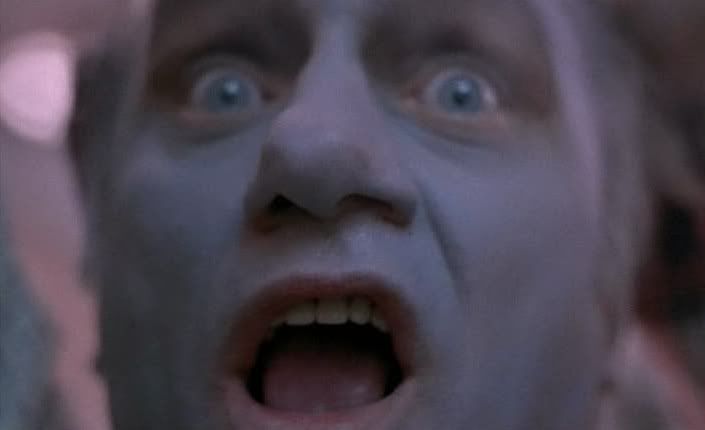
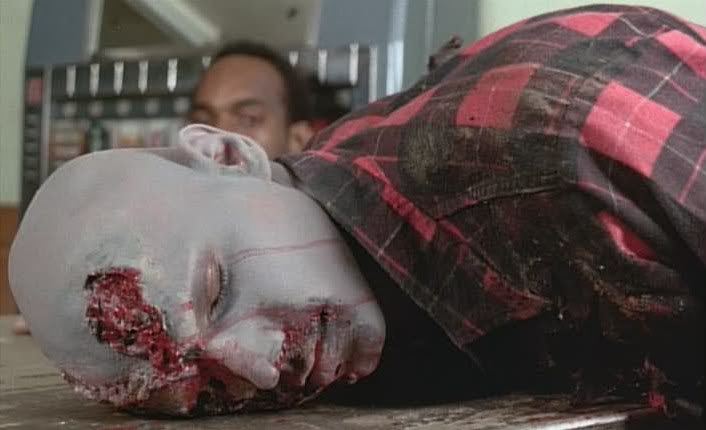
Romero is exploring the possibilities for a society of equals, suggesting that under tremendous pressure the best qualities of people might come out — and also the worst qualities, as evidenced by the group's later apathy and restlessness, as well as the caricatured avarice and nastiness of a biker gang who storm the mall late in the film. The film is in a constant state of tension between chaos and order, human kindness and baseness, destruction and rebuilding, society and anarchy, thought and mindlessness. Romero sees human nature in terms of the opposition of these conflicting values, with individuals vacillating between the two poles at various times. And the zombies are far from the only representatives in this film of the baser values. By the end, as everything falls apart, the film has degenerated into a free-for-all of slapstick violence and dark comedy. The bikers assault the zombies with pies and spray-bottles, hit them with giant hammers, drop-kick them with movie karate moves, all while generic mall muzak plays its bouncy themes in the background. There's a dark absurdity to it all, the violence becoming comic and silly, an effect exacerbated by the profoundly unconvincing makeup effects on most of the zombies. Indeed, an occasional zombie here and there is slightly scary and creepy-looking, but most of them just look like humans with blue paint on their faces, which might be written off as sloppy effects work if Romero wasn't constantly emphasizing the connection between the zombies and the average unthinking consumer. In this respect, the lame makeup effects even become a virtue, making the zombies seem anything but inhuman except for their weird lunging walk.

In fact, the dominant characteristic of Dawn of the Dead is its unsettling mish-mash of tones and themes. Romero's debut, Night of the Living Dead, was a crisp, economical horror film, unerringly creepy and minimalist, presenting its ideas about society and humanity in stark black and white while exploring the tense horror of the zombie attacks. Dawn, in comparison, is loose and even messy, meandering about from one moment to the next with all the aimlessness of a zombie shopper. Its bold, colorful aesthetic and cheesy gore effects drain much of the horror from the premise, replacing it with bloody comedy, broad social satire and, at times, a surprisingly nuanced exploration of the relationships that arise between four very different people in a situation of great stress. In forsaking the simplicity and grittiness of Night of the Living Dead, Romero found enough compensating virtues to make his second zombie flick a fascinating, wild, not always coherent but multi-layered satire.

Cat People (1982)


Forty years after the original 1942 Cat People, directed by Jacques Tourneur under the guidance of sophisticated horror producer Val Lewton, Paul Schrader remade the seminal horror classic. Schrader's Cat People nods to the original in many ways, following its basic premise and even recreating a few key scenes in homage to Lewton's shadowy, evocative horror, but in most ways it's quite a different work. Schrader minimizes the horror of the premise, pushing it even further into the background than Lewton, who often used his horror frameworks as mere excuses to explore deeper subtexts, ever did. Schrader is interested in the baroque eroticism of the story more than anything: the idea that there exist people who, when they make love, are transformed into vicious black leopards, and must kill before they can resume their human forms. Schrader uses this outlandish set-up to create a lush, absurd, sexually ripe film in which sex is dangerous and shiver-inducing, in which the promise of release carries with it an electric charge of terror.

Nastassja Kinski, as the virginal young Irena, is perfectly suited to this aspect of Schrader's vision; she brings to the film a raw, sultry sensuality that convincingly conveys the impression that she might bite or claw you at any moment, as easily as she might kiss you. At the film's opening, she has come to New Orleans to visit her long-estranged brother Paul (Malcolm McDowell, radiating nearly as much deadly energy as Kinski), since the pair were raised in separate foster homes after the death of their parents when they were very young. Schrader gets a lot of mileage out of these two, particularly from the weird sexual tension between them, as Paul insists that they need to make love, that in fact they can only make love with one another. The film sets up a divide between the strange sensuality of Paul and Irena and the ordinary world, as represented by the zoo where Paul, in leopard form, is captured for a time, and where Irena gets a job thanks to the zoo's curator Oliver (John Heard), who falls in love with her as soon as he sees her. As in the original film, Irena's otherworldly sexual energy is juxtaposed against the girl-next-door appeal of Oliver's co-worker and current girlfriend Alice (Annette O'Toole), who wears braids and is girly and playful, a stark contrast to the simmering, pouty Irena.

It's a familiar dichotomy, the good girl and the bad girl, the familiar and the foreign. In the original film, it was the fear of literal foreignness that Lewton was exploring, but here it's a more metaphysical fear/attraction to the unknown, the mysterious and frightening. The film alternates this blossoming sexual tension with dark humor and moments of suspense and horror, but Schrader never really tries to resolve the film's different moods and modes into a coherent whole. Instead, the goofy humor — like an ape intently watching a TV soap opera, or an eccentric cab driver who suggests that the only zoo worth visiting is the Bronx Zoo — is allowed to jar uncomfortably against the truly grisly bursts of gore and the open sexuality. This becomes especially apparent when a zoo orderly, the primary fount of comic relief in the film's first half, meets a particularly gory end in the jaws of the leopard.


The film lopes along after this, its plot never quite making sense, and never seeming to care whether it does or not. Schrader is more concerned with making individual scenes vibrate and throb with the potential of violence or sexual bliss, and whether it all fits together in the end is at best a secondary concern. Paul drifts in and out of the film at will, lurking in the shadows, watching from the trees, smashing through windows and finally being killed and reborn in a way that evokes David Cronenberg's body horror effects — a loose end that's never picked up again as the film focuses more singularly on Irena in its latter stretches. There's something feral and frightening about Irena, virginal and yet so sensuous, even (or especially) when her mouth is smeared with blood. Once she accepts her nature, Kinski plays Irena as though she's constantly stalking her prey, even in human form; her walk, her posture, the expressions on her face become cat-like. Even her sexuality becomes predatory, and she manages to make disrobing seem like a threat, slinking through the shadows, the muscles in her back twitching as though she might pounce at any moment.

In making the film all about mood, about the resonances of the underlying themes, Schrader is in some respects drawing on the example of Lewton, whose films always made the tangible horror secondary to the psychological and emotional subtexts of the stories. Schrader's film draws on the original Cat People in more direct ways, too, with homages to specific scenes. Of these, the most obvious is the famous pool scene, which Schrader recreates more or less intact: a young woman taking a swim when the lights go out, and she hears noises in the darkness suggesting a big cat stalking around the borders of the pool. This is Schrader's most complete tribute to Lewton, beautifully capturing the edgy and haunting atmosphere of the original, heightened here by the lovely green and blue hues of the lighting, and adding a hint of sexual frisson as the topless Alice floats in the center of the pool, bare and vulnerable in the gloom. That's yet another contrast: Schrader makes the pale, fleshy Alice seem soft and prey-like in her nakedness, whereas when Irena takes off her clothes she only becomes more predatory, as when she takes a naked stroll through the woods and winds up on all fours, chasing a rabbit with a hungry gleam in her eyes. This dichotomy suggests the two dominant tropes of movie femininity, the woman as victim and the woman as dangerous femme fatale; Schrader doesn't so much investigate these opposing stereotypes as present them in their raw form, for equal parts contemplation and delectation.

Schrader's other tributes to Lewton are more matter-of-fact, like the sinister and cat-like woman who addresses Irena as a sister and then disappears from the film, a source of unresolved mystery just as the similar figure was in the Lewton Cat People. Schrader's tribute to the famous bus scene in the original is the only homage that falls flat, that sticks out as a naked tribute and nothing more, because Schrader can't recreate the sudden thrill of terror that Lewton achieved just by having a bus abruptly stop in front of a fleeing young woman, making a noise very much like a leopard's growl. In most other ways, though, Schrader doesn't even try to compete with Lewton, a wise move since the original Cat People is a near-perfect horror film, a rich and evocative work that maintains its ability to elicit deep chills even today. Schrader's film, despite its obvious debt to the original, strikes out in a different direction, amplifying the sexuality and violence underlying the original story, allowing these dangerous forces free reign. If the resulting film is messy and jagged, with loose ends dangling shredded and bloody as though a leopard had taken a big meaty bite out of the script, that's to be expected from such a raw work. Schrader risks, and occasionally falls headfirst into, silliness and tackiness in order to get at the silly, risky, frightening, exciting feelings of love and lust.

Peeping Tom


Peeping Tom was a breaking point in the career of director Michael Powell, the end of his productive association with Emeric Pressburger, who had co-directed most of Powell's previous run of films throughout the 40s and 50s. Powell went solo for Peeping Tom, and audiences of the time proved unprepared for its psychosexual darkness, its ugliness and brutality, its stark frankness about the sexual thrills of murder experienced by a shy, quiet young man working in a film studio. One would expect that such shocks would not endure, that audiences would become inured to such horrors — and, indeed, the reputations of Powell and Peeping Tom have been rehabilitated since the initial controversy. But this is not to say that the shock of the film itself has worn off. It is still an extraordinarily tense, raw film, dealing with some nasty and discomfiting emotions in a very open way, laying bare the despicable violence that lurks within the impulse to voyeurism, including or especially the voyeurism of the movie theater.

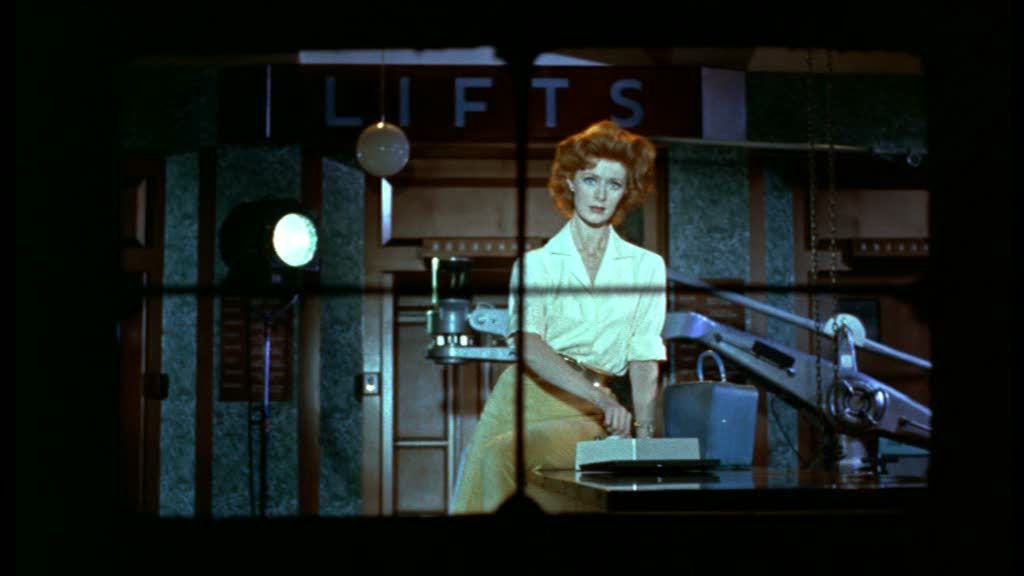
The voyeuristic murders in Peeping Tom are explicitly linked to the cinema, and Powell places his audience in the position of the voyeur, admiring the victim through the lens, thrilling on the expressions of fear and revulsion that pass across the faces of the young women about to be killed. Right from the opening scenes, in which a killer stalks a prostitute, Powell places the audience in a voyeuristic position by filming from the point of view of the killer, with the view-finding crosshairs of the camera centered on his victim as though marking her for death the moment she appears in the frame. Later, a murder takes place on a movie set, with the eager young extra Vivian (Moira Shearer) posing happily for the camera until she realizes that her photographer has a darker fate in mind for her; screen immortality coupled with physical mortality. The camera captures the images of the victims at the moment when they will be lost forever. Of course, the victim is found the next day while filming a scene, stuffed inside a trunk used as a prop by a "real" studio movie, and again the killer is on hand, filming the reactions of the actress who discovers the body, as she screams and faints, her reactions not faked for once. The director, who had earlier spent countless takes trying to get a realistic-looking fainting scene out of this same actress, looks over in frustration, exclaiming, "that silly bitch has fainted in the wrong scene." Later, this same director will cruelly force the actress to repeat the scene with only cosmetic changes, asking her to repeat the same lines that are now inextricably intertwined with murder and the discovery of a corpse. Powell's dark humor makes it apparent that he's tweaking the voyeurism of the audience, suggesting that we're all too happy to take pleasure and entertainment in horrible things as long as we know that it's fake, even when we allow an engaging movie to fool us, if only for a moment, into reacting as though it were real.

Later, the home movies of the killer Mark (Karlheinz Böhm) will be discovered by his innocent young neighbor Helen (Anna Massey), and she'll recoil in horror, crying and begging him to tell her that it's not real, that it's just pretend, just a movie. But there is no such reprieve for her; none of the security that ordinary movie audiences have when watching fantasies of murder and madness. Maybe this is why audiences were so turned off by Powell's film, which takes the potential ugliness of the cinema, its capacity for abstracting real horrors, and rubs it in the viewer's face. Mark's murderous cinema places him in a violent and sexual relationship to the women he films, the "actresses" in his homemade psychodramas. When Mark is filming Vivian, at one point he stands behind her, holding his camera close to his chest, raising one of the legs of its tripod in what can only be called a stunningly obvious phallic symbol, an erection even. But it's the camera that's getting excited on behalf of Mark. It's as though he's transferred his sexuality — he's clearly a virgin, and can barely muster the composure to speak most of the time — into the camera, made its tripod leg (capped with the knife he uses to murder his subjects) an extension of himself, just as its lens is an extension of his own vision. Through the camera, he sees everything with crosshairs layered over it, a subject to be captured and immortalized, all working towards a "perfect" film.


Powell's filmmaking is brilliant here, creating almost unbearable suspense in one scene after another. Böhm turns in such a creepy but oddly charming performance that it's never quite clear what Mark is going to do next, when he's going to give in to the darkness within him and when he's going to resist. This tension is especially acute in the early scene where Helen visits Mark's apartment for the first time, intrigued — why she's drawn to him never really makes sense, other than that she needs to be for the sake of the plot — by this awkwardly shy man upstairs. When she enters his dark room/screening room, it feels like an invasion, like she doesn't belong in such a place of evil and perversion. Powell creates an overpowering mood of dread, infusing every movement, every action, with suspense; even the way Mark glides around the shadowy room, guiding the hesitant Helen to admire his camera equipment, is incredibly eerie. But the most profound suspense comes from Helen's request to see one of Mark's movies. Powell draws out the moment, showing Mark at his cabinet, hesitating over what to show her, and it's so tense because in some way, we understand that Mark's choice of film reels will decide this woman's fate. Will he show her one of his murders? Or the film he was watching when she came in, an only slightly more innocuous documentary reel he shot of his latest victim's body being removed by the police? Or will he actually choose something innocent?

It turns out that in fact he chooses a childhood film of himself, shot by his father, and Powell again ratchets up the tension as this film begins to make sense of Mark's warped mind, at least for the audience; Helen, not understanding what she's seeing, without the knowledge of the adult Mark's actions, is only confused. Powell's genius here is to make the audience root for Helen to stop watching, not to look any deeper into this man's tormented psyche. We don't know what's coming next on this reel, but we fear for her eyes anyway, fear that she'll see something she'll wish she hadn't, fear especially that she'll something that will provoke Mark to turn his camera on her, as he does eventually, trying to film her reactions to this childhood memory. Instead, the camera keeps running, revealing the origins of Mark's psychosis in childhood traumas and the cruel experiments of his father (played, in a brief cameo in these films, by Powell himself, further confirming the film's linkage of cinema with corruption and horror). If the psychology is perhaps a little trite, seen now, it's only because Peeping Tom — along with Hitchcock's Psycho — has served as one of the template inspirations for virtually all the serial killer thrillers to come along in its wake.

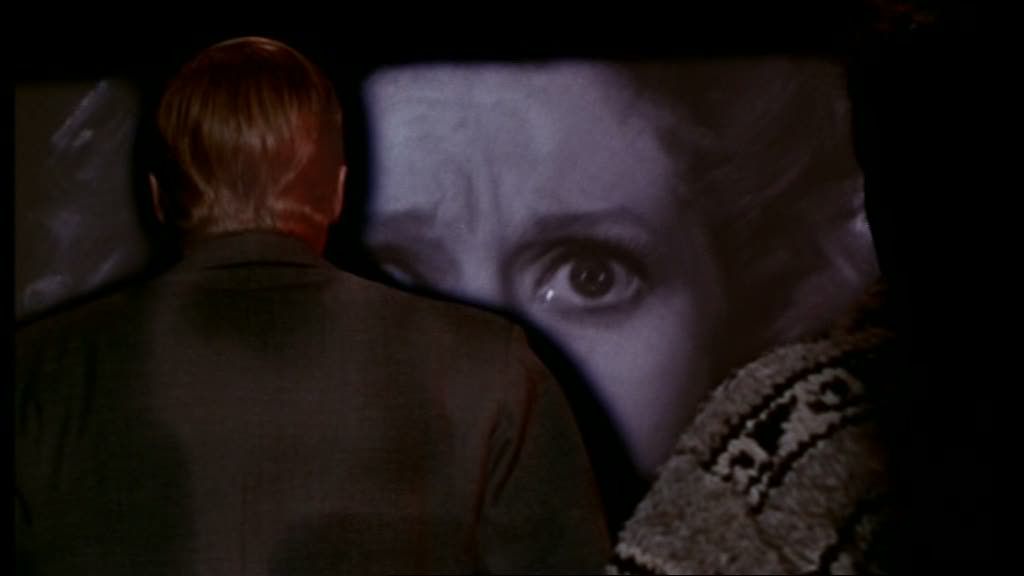
Even so, Peeping Tom retains much of its power for making audiences squirm, tapping in as it does to the psychosexual undercurrents of the cinema, the appeal of the glamorous actress posing for the cameras, the appeal of the action and horror that makes audiences react viscerally. For Mark, the cinema is a mortuary, a method of embalming. When watching one of his films, as he approaches the screen, the face of a screaming woman is stretched out across his back, and where this happens her pretty face becomes skull-like, gaunt with black eye sockets, killed within the camera's trap. This, Powell suggests, is the real horror lurking within the empty entertainment of the movies.

Invasion of the Body Snatchers


It's a classic of 50s sci-fi for a reason, of course. Invasion of the Body Snatchers remains as creepy and frightening today as the day it was made; it's a dark, terrifying satire of encroaching conformity and loss of emotion. It's crisply and economically directed by Don Siegel, who treats the film like one of his film noirs: dark shadows everywhere, engulfing this quiet suburban town that's being taken over by darkness, by the strange things lurking in its basements and back alleys, behind these seemingly ordinary picket fences and manicured lawns.

It's often been suggested that the film is a right-wing parable for the onset of Communism, for how easily ordinary Americans might be taken over, with no visible outward symptoms, by an alien and aggressive ideology opposed to human decency and human warmth. It's a convincing reading, of course, and hard to deny, but in many ways the film is far more affecting when such political subtexts are left out of the picture. It's a film, more than anything else, about what it means to be human, about how a being can look human, act human, even have the memories of a particular human, and still be lacking in that special, unseen emotional spark that really makes up the essence of humanity: call it love, or a soul, or whatever you want. In one of the best of the film's preachy speeches, the protagonist Dr. Miles Bennell (Kevin McCarthy) compares the body-snatching aliens to the process by which some people, even without such outside intervention, allow themselves to become hardened and drained of emotion, to lose their humanity.

Bennell has returned to his sleepy suburban hometown after a month away, to find that everything has changed in subtle ways while he was gone. His nurse reports that numerous people from the town had been urgently calling for him while he was away, but that suddenly no one wants to see him anymore, with no explanation for what had been wrong. And several of the town's residents are complaining that people they know aren't actually themselves anymore, that there's something different about their loved ones. The film's terror is slow and creeping. At first, Bennell doesn't believe that anything's amiss, even though the accumulation of small signs and weird events begins to gnaw at his mind. When the horror does finally take over entirely, it happens suddenly; when Bennell, along with his love interest Becky (Dana Wynter), stumbles across some of the alien pods (which look like giant brussel sprouts) there's no longer any doubt about something strange going on here. It's questionable if Bennell and company, after seeing the pods oozing and bubbling, would so quickly figure out what's going on, but the sequence is perhaps the film's most disturbing anyway. The pods split open and bubble over with white ooze, forming almost fetal shapes, as though a baby were about to spill out of the pod's gooey interior. Instead, beneath the foam are entire human forms, duplicates of the town's residents, primed to take over.


Actually, the whole mechanics of how this happens doesn't seem to have been thought through very well; the film is rather vague about what's actually going on here, what happens to the human bodies once the doppelgangers take over and how the shift actually occurs. Plot isn't the film's strong point by any means. Given any thought whatsoever, the whole conceit more or less falls apart, and the film's script barely even attempts to develop the alien threat into a coherent concept. The reason the film succeeds anyway is that it's so good at developing atmosphere and mood, at escalating the horror, dread and paranoia the protagonists feel as they try to flee from a town that's being taken over and absorbed by the alien menace all around them. Bennell and Becky are increasingly frazzled and terrified as, more and more, they have nowhere to turn, no one to rely upon; all their friends and loved ones are relentlessly swallowed up by the alien "infection," one by one.

Siegel does an excellent job of portraying the couple's isolation and desperation, shooting them with long, narrow corridors stretching off into the distance in front of them, or hiding in shadowy dark rooms or caves. But the film's creepiest moment takes place in broad daylight rather than in these noirish settings. As Bennell and Becky observe from hiding in his office, three trucks pull up in the town square, and all the people of the town simultaneously gather there, moving inward as though compelled by some invisible signal, converging from all sides on this spot. The tarps on the trucks are pulled back and revealed to be full of more pods, and the doppelgangers start calling out names for certain people to come forward and get pods to replace the remainders of their families. It's a creepy scene because of how matter-of-fact it is, how casually this moment disrupts the seeming normality of an ordinary morning in this ordinary town, and how easily everything returns to the artifice of normality after all the pods have been distributed and the trucks have pulled away. It's as if, for just a few moments, the disguise has been dropped and the weirdness, the horror, of these creatures is revealed in the sunlight, before they go back to pretending that they're just typical small-town folks.

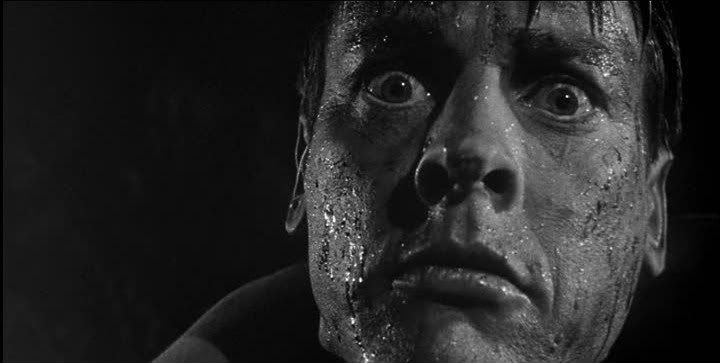
It's that weirdness, that slight tweaking of ordinary suburbia into something sinister, that makes Invasion of the Body Snatchers maintain its creepy, harrowing aura even today. Its itchy, under-the-skin horror even survives the studio-mandated framing device that somewhat dillutes the terror of it all, suggesting a slightly happier ending than the original concept, which ended with Bennell on the highway unsuccessfully screaming at passing cars, trying to warn the outside world. Even with the compromise, though, the final shot — a closeup of Bennell's desperate, warped face, on the verge of crying or laughing hysterically; it's not clear which would be worse — mitigates against any idea that this is a simple "happy ending."

The Descent


Bleak, creepy and, once its true horror premise is belatedly revealed after a lengthy and patient build-up, absolutely brutal, The Descent is as good as minimal, no-frills horror gets. A group of friends, all young women, meet up for yearly adventures in order to bond despite being spread out across the world, dealing with individual lives and individual tragedies. Their latest trip together is a descent into an unexplored cave system, spelunking and crawling through the tight tunnels. The structure's strictly traditional: some set-up, in which the women's chatter and banter at their staging cabin introduces their relationships and personalities, and then it's off into the caves, where the claustrophobia quickly becomes unbearable. The darkness, the constriction, is intense, and these women, crawling through the caves, often crawl right up to the camera, the lights on their heads creating blinding flashes within the darkness. The frame becomes a series of holes, small irregular patches of light chopped out of the blackness that otherwise surrounds the explorers everywhere. It's nearly overwhelming in the way it forces the audience to feel what the characters feel, to be trapped and lost along with them.

And that's all before, after all this build-up towards a claustrophobic but rather conventional story of being lost and trapped in the dark, all hell breaks loose and things start to get really ugly. Director Neil Marshall is excellent at showing just enough to suggest the horror happening in the dark, without actually showing more than a brief burst of motion here, a geyser of blood there, a frenzied struggle thrashing around in the dark. The editing is brisk and occasionally confusing in its rapid pacing and dizzying shifts in perspective, but there's no denying that Marshall still locates numerous striking, horrifying images within this darkness and confusion, honing in on the bracing moments of anguish and devastation that are splattered throughout the film. It's a visceral film, all about capturing the in-your-face sensations of being surrounded by darkness, hemmed in on all sides and assaulted by mutated monsters intent on devouring any soft flesh that gets in their way.

Before this, though, there's an introduction in which the trauma that will linger over the rest of the film is introduced. In one brief moment, Sarah (Shauna MacDonald) loses both her husband and her daughter and, in a subtle exchange of glances and gestures that she misses but that isn't lost on the audience, Marshall also establishes the unspoken origin of a slow-burning tension that develops between Sarah and her best friend Juno (Natalie Mendoza) and will eventually boil over completely at the harrowing climax. The storytelling is simple, even simplistic, but that's all that's required here: Marshall sets up, very quickly and economically, the minimal conflicts that will serve as a subtextual counterpoint to the more physical horror that explodes in the film's second half.


The rest of the women — Beth (Alex Reid), Rebecca (Saskia Mulder), Sam (MyAnna Buring), Holly (Nora-Jane Noone) — are clustered around this central trauma, creating a realistic group of friends with a naturalistic sense of camaraderie. They mock each other in the way real friends do, goofing around, chatting amiably with rapid-fire patter; one recalls the banter of the women in Quentin Tarantino's Death Proof, albeit without the reflexive cultural namedropping. The film is raw and stripped-down, eventually sending these cheerful, confident women through the grinder. Marshall captures certain powerful images that appear as though glimpsed in passing in the flickering flame of torchlight: a lake of blood from which the heroine emerges glistening and wet, with little nuggets of gristle and bone scattered along her forearms; the little bubbles of blood that spurt out when a blade cuts into flesh; a white, animalistic naked body caught for a second in the glow of a lamp, like an animal frozen in the headlights; the women's frightened faces clustered together in the green haze of a light; a twisted closeup of a mole-like mutant's snarling face, ooze dripping down its rubbery chin.

Once the monsters are introduced, the claustrophobic terror of crawling through tight spaces, being constricted on all sides, is replaced by the bloody, harsh violence of the women's fight against these creatures. They're separated from one another and forced to fend off the monsters' attacks, and as the formula dictates in a movie like this, attrition begins wearing away at the group, quickly dwindling their numbers. It's obvious from the start who the last two standing have to be, the two friends opposed against each other in subtle ways, their friendship strained by the shared trauma of the opening scenes and the subsequent events. The last two women alive become gritty action heroes, wading through blood, armed with blades that they'd once used for climbing and that they now plunge ferociously into the warped bodies of their attackers. Marshall's direction becomes frenzied and over-the-top, depicting the women with their faces and bodies smeared with blood, striking melodramatic action poses as they fight off waves of the monsters. In many ways, it's a jarring disconnect in tone and verisimilitude, a startling left turn from the first half's naturalistic depiction of underground claustrophobia and fear. These are ordinary women, if especially athletic and adventurous ones, and one of them makes a point, early on, of saying that she's not Tomb Raider — which makes the film's late transformation into an action movie adventure not entirely convincing.

Which isn't to say that it isn't peculiarly satisfying regardless. The film's bloody, gory denouement is, despite its out-of-nowhere action movie trappings and jittery editing, a rather exhilarating and horrifying ride. The metaphorical emotional and moral descent that Marshall doubtless intends as a parallel to the physical, literal descent, is never handled as well or developed as fully as the director probably intends, but even that hardly matters. The film's aims and successes are relatively modest, but within its area it excels: it is a movie that shocks the senses and provokes a profound sympathy for its generic characters, who one by one are consumed by this giant hole in the ground and its monstrous denizens.

The Host


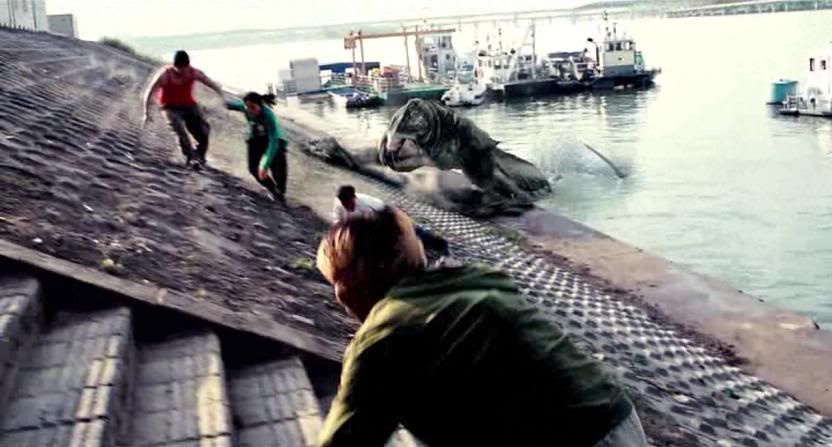
Joon-ho Bong's The Host is a delirious modern monster movie, a throwback to the classic era of the sci-fi monster: all those nakedly metaphorical beasts formed from radiation or other side effects of man's scientific progress. And much like the classic Japanese monster movies, this Korean film is aimed squarely at the fear and anger caused by a foreign target: the United States. The film opens with an awkwardly acted scene in English, in which an American researcher instructs his Korean assistant to pour a shelf of chemical bottles down the drain, despite the assistant's protestations that this will cause harm to the Han River. Cut to a few years later, and something odd is definitely going on in the river as a result. Bong's unveiling of the monster — a mutated, somewhat lame sea creature with numerous vestigial limbs and a massive, terrifying maw — is the film's best sequence, a frantic action set piece that's both absurd and terrifying.

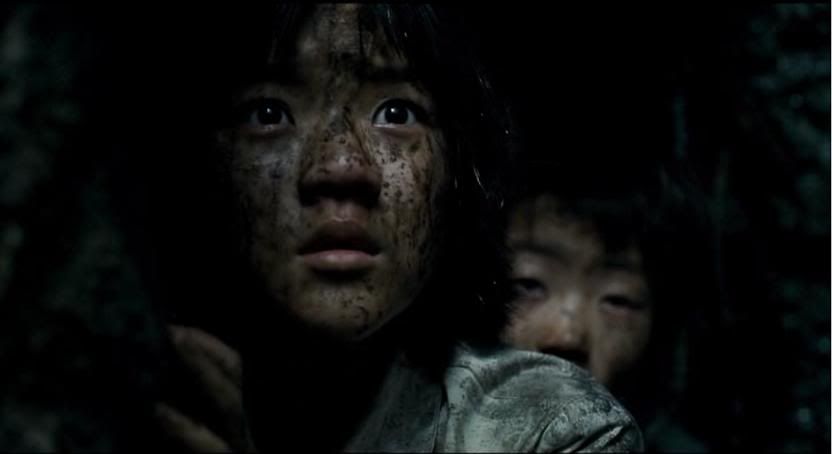
The monster appears abruptly, but before it does, it's just an ordinary day at a riverside park where Hie-bong (Hie-bong Byeon) runs a snack stand with his lazy, distracted son Gang-du (Kang-ho Song). Bong takes his time setting up the family dynamic here, because it's this family that's going to be at the center of the film once the monster does appear. Hie-bong has two children in addition to Gang-du: his educated but unemployed son Nam-il (Hae-il Park) and his athlete daughter Nam-joo (Du-na Bae), a professional archer who's just shy of being the best. When the monster shows up, Hie-bong, Gang-du, and Gang-du's daughter Hyun-seo (Ah-sung Ko) are watching Nam-joo lose a tournament on TV. Bong's presentation of the monster, interrupting this low-key domestic drama with its touches of comedy, is disarmingly offhand. The creature is an obvious CGI construction, with no attempt made to make it fit in naturally as an organic component of this otherwise realistic world: it stands out as something totally different, all glossy, slippery surfaces and distracting artificiality. As it rampages through the crowds gathered on the riverside, gobbling up some of the crowd and tossing others into the water with a flick of its tail, it is frightening and hilarious in nearly equal measures, this oddball CGI monster stalking across the riverbank as people scream and run. The artificiality of it all just makes it all the more disconcerting, especially since Bong approaches it with a goofy sense of humor, relishing the way limbs hang out of the monster's mouth after it eats up a victim, or the way the creature stumbles and somersaults down an embankment, moving awkwardly on its deformed limbs.

The human actors are, in their own way, equally stylized and artificial. They approach their parts with a broad comedic, satirical sensibility, purposefully over-emoting at every opportunity. A demonstration of grief, following the monster's assault, is a particularly good example, balanced as it is between devastating sadness and ludicrous exaggeration. The family rolls around on the floor, screaming and wrestling with one another, tearing at each other in grief and rage, and Bong switches to an overhead shot that shows them stretched out there on the ground, overcome by their feelings, expressing their loss in this embarrassingly naked way. Later, Bong's moments of political commentary are just as unfettered and raw; the film is a pretty clever, if not particularly subtle, jab at American dominance of international affairs, and the media's complicity in this dominance. Here, the Americans created the monster through their blatant lack of concern for the environment (especially the environments of the other countries they visit for cheap labor), then they invent the scare that the monster is causing a deadly disease, and then they insert themselves into the affair by offering a radical "solution" in the form of something called "Agent Yellow," a likely dangerous and carcinogenic chemical that they plan to unleash in Korea to kill the monster.


The film's guiding political concept is the idea that American foreign policy is exploitative and misguided, that the Americans oafishly cause problems and then make things even worse in trying to solve them. In this case, the terror over the supposed disease — which seems to have been made up through a combination of incompetence and a desire to cover up mistakes — creates an artificial panic that then allows the Americans to come in with a typically over-the-top, violent solution. Moreover, the Americans are deaf to concerns from other countries. In one of the film's most satirically biting scenes, Gang-du is confronted by an American doctor who takes Gang-du's insistence that his daughter is alive somewhere, imprisoned by the monster, as evidence of dementia, a sign that the disease (which he's starting to believe is fake, anyway) has taken over his brain. Gang-du cries out, in anguish, that they never listen to him, that they keep interrupting him and not letting him speak: "my words are words, too," he cries. It might as well be the filmmaker speaking, on behalf of all foreign peoples whose interests and concerns are trampled over by an intrusive, profit-motivated, military-industrial America.

Although this makes The Host sound like an unsubtle political screed, there's much more to the film than that, and the politics are approached with the same spirit of exaggeration and stylization as everything else in the film. Bong mashes together various tones and ideas with abandon, never settling into any one mode for long. The film's broad physical comedy, political satire, horror and action thus rub uncomfortably against one another, creating interesting frictions as multiple modes can coexist even within a single scene. It's all leading towards an action-packed climax in which this family, so divided and unhappy with each other, finally comes together, each of them adding their specific skills and qualities to the final confrontation with the monster. It gets to the heart of the film's implicit message: rely on family and community, ignoring the distractions and manipulations of politics. In the final scene, they turn off the TV, shutting down the American politicians using buzz words and euphemisms to absolve themselves of responsibility, and focus on enjoying the simple pleasures of family instead. It's a hard road to get to this point, though, through a lot of blood and gore.

It's a wild ride for the audience, too, thrown through the paces by Bong's free-wheeling sensibility of genre mash-ups. There are stunning action sequences, silly comedic bits with lots of slapstick falls and awkward chase scenes, moments of quiet family drama during the uncharacteristic pauses in the action, and of course the horror of the monster, who shows up every once in a while as though to remind the viewer what kind of movie this is at heart, no matter how many diversions into socio-political satire or absurdist comedy it takes along the way. The monster's most horrifying moment comes late in the film, when it suddenly stops simply slurping up victims and then spitting them out more or less intact in its sewer hideout. Instead, it vomits up a torrent of skulls and bones, the remains of its most recent victims, a seemingly never-ending stream of bodies denuded of all signs of flesh. It's all the more bracing and terrifying because Bong had avoided making the monster too bloodthirsty in the earlier stretches of the film.

In fact, there's something graceful about the monster, something even kind of poignant. It often swings through the girders beneath the bridge where it hides, doing gymnastic flips and swinging by its tail, gracefully leaping from one beam to the next. In one scene, its tail appears before it does, lazily turning in spiral patterns, strangely beautiful and hypnotic until the ungainly monster, all vicious-looking teeth and claws, comes careening out of the darkness. Even the monster's ultimate end is somewhat sad, as the creatures twists about in agony, wracked with pain, letting out a haunting cry as it turns on its back. This moment represents the ultimate victory of the family over its terror, but it's at the expense of this poor creature, deformed and mutated by circumstances beyond its control, transformed from an ordinary innocent sea creature into this monstrosity. Bong allows this ambiguity, this discomfiting affection for the monster, to linger throughout the final moments, preventing the obligatory defeat of the creature from being as entirely triumphant as one would expect.

The Shining


Stanley Kubrick's The Shining undoubtedly deserves its reputation as one of the cinema's creepiest, and most artful, horror films. Adapted loosely from Stephen King's novel about a hotel caretaker who loses his mind over the course of a long and isolated winter, the film is a bizarre and unrelenting experience, a slow pressure cooker that bears down on the viewer in much the same way as Jack Torrance's (Jack Nicholson) isolation affects him. Kubrick strips down the story to its bare core, as a study in slowly suffocating dread and terror. The film's pace is deliberate, and its plotting is minimal; Kubrick establishes the dominant mood through his evocative, distanced visuals and, especially, through the eerie soundtrack, with its pulsating heartbeat rhythms and sinister strings. In point of fact, it's easy to miss that not much actually happens here, that the film's actual horrific incidents are widely spaced and parceled out. More often, Kubrick lets the terror grow and grow, through lengthy and uncomfortable scenes that create the expectation of a horrible payoff, before abruptly cutting them off instead.

What's at the core of the film is the dysfunction of family, the bitter and ugly feelings that emerge from troubled father figure Jack. He's taken on a job as the winter caretaker at the Overlook Hotel, where he'll be snowbound for months with his wife Wendy (Shelley Duvall) and their son Danny (Danny Lloyd). While there, Jack, under the influence of the hotel's many ghosts or just his own unstable mind, begins to seethe with resentment and hate, feeling that his family is in some way holding him back or destroying his life. These sentiments are latent in Jack to begin with, as revealed by a story that Wendy tells to a concerned physician before the family heads to the Overlook. It seems that Jack had once been a drinker, and in an angry, uncontrolled moment had dislocated Danny's arm. This is a remarkable scene, staged almost entirely as a closeup on Wendy's face as she describes this incident, trying to put a positive gloss on it, to pretend that it was just an ordinary mishap. Kubrick captures her twitching smile, the way Duvall conveys the anguish and confusion lurking just below Wendy's chipper exterior. Duvall's performance here is extraordinary, as she bares her gums and her big buckteeth, while Kubrick holds the closeup, and holds it, and holds it, finally cutting to the skeptical, deadpan expression on the doctor's face, a stand-in for the audience, seeing right through Wendy's desperate cheerfulness. The scene perfectly conveys the multiple layers at work here, all in a simple memory that gets at the essence of this story's themes.

Wendy's insecurity about her potentially violent husband only worsens once the family is locked in at the Overlook, and this story about the dislocated arm lends queasy resonance to Jack's interactions with his family. At one point, Jack calls Danny over for a conversation, holding the boy in his lap and hugging him, asking him innocuous questions about how things are going and how he likes the hotel. It's a seemingly normal conversation on its face, but it's made creepy and strange by Nicholson's twitchy performance, and by the slowly escalating dread in the music. Kubrick treats everything this way; even the typewriter that Jack writes on is made an object of terror with a slow pan in towards its carriage, and of course later in the film this terror is revealed to be warranted when Wendy finally reads Jack's manuscript.


The Shining's particular form of terror is familiar by this point, even overly familiar, but it maintains its power because of Kubrick's subtlety, his decision to treat Jack's escalating madness as a surreal break with reality. The famous scene where Jack talks to the ghostly Lloyd the bartender (Joe Turkel) is a case in point. Jack walks into an empty ballroom and sits down at the bar, then Kubrick cuts to a closeup of Jack talking, presumably to himself, before cutting back to the longer shot of the bar, which is now stocked with bottles of booze and staffed by the suavely sinister Lloyd. The climax is even more startling in its disjunction from reality, as a frazzled Wendy staggers through the Overlook, catching glimpses of horrifying and puzzling sights, like what appears to be a man in a bear/pig mask giving head to a man in a suit. This famously inscrutable image, so unsettling in its effect, is a leftover from King's novel, where these characters had a story and a reason for being. Here, in Kubrick's film, without this context, it's simply a destabilizing surrealist break, a non-sequitur without any possibility of explanation or understanding.

Kubrick makes it absurd, and scary, and unfathomable, just as he strips much of the psychological rationalization from Jack. Kubrick keeps Jack's pathology at a distance, not only shooting everything in alienating long shots, but refusing to show the process by which Jack transforms from a slightly troubled family man into a raging lunatic. Instead, Jack's madness is shown from his family's point of view, as unexplainable and abrupt outbursts, as mood swings and sudden fits of rage without any clear cause. By the time Jack actually starts seeing ghosts — like his encounters with Lloyd and the hotel's former caretaker Grady (Philip Stone), who'd murdered his family many years before — he's already become violently angry. Nicholson's portrayal is of a man who is always just barely balancing on the edge of murderous rage to begin with, since Nicholson is almost naturally kind of creepy, with his sarcastic drawl and crooked smirk. Even before the family arrives at the Overlook, Jack tells his son about the Donner Party, taking such obvious satisfaction in freaking out the kid that he already comes across as a bit of a sadist.

Kubrick isolates this distasteful character within the Overlook's oversized rooms, not delving into his character but simply showing his disintegration from a distance. Wendy and the psychic Danny are shown at a similar remove, and Wendy's characterization is particularly limiting, as she is mostly just a weepy, insecure woman who sticks by a potentially abusive and nasty man. She nearly falls apart by the end of the film, and it's only Duvall's gape-eyed performance that gives Wendy some much-needed depth beyond her repetitive terror and crying. Ultimately, Kubrick makes the limitations of his archetypal characters into virtues, as the film is more about an abstract feeling of dread and the threat of violence than it is about a particular family and their horrific experiences. This is especially obvious in the character of the hotel cook Hallorann (Scatman Crothers), a stereotypical "magical Negro" character who can hear Danny's psychic cries. He shows up at the hotel after a lengthy struggle through the snow to get there, and just as suddenly gets an axe in his chest for his troubles. It's essentially a macabre joke from Kubrick, as he spends so much time chronicling Hallorann's journey to the Overlook only to abruptly destroy the pat hope represented by this rescue attempt. This is the film's essence, this reminder that hope and rescue can't come from outside: it's only Danny's cleverness during the final hedge maze sequence that ultimately saves him and his mom.